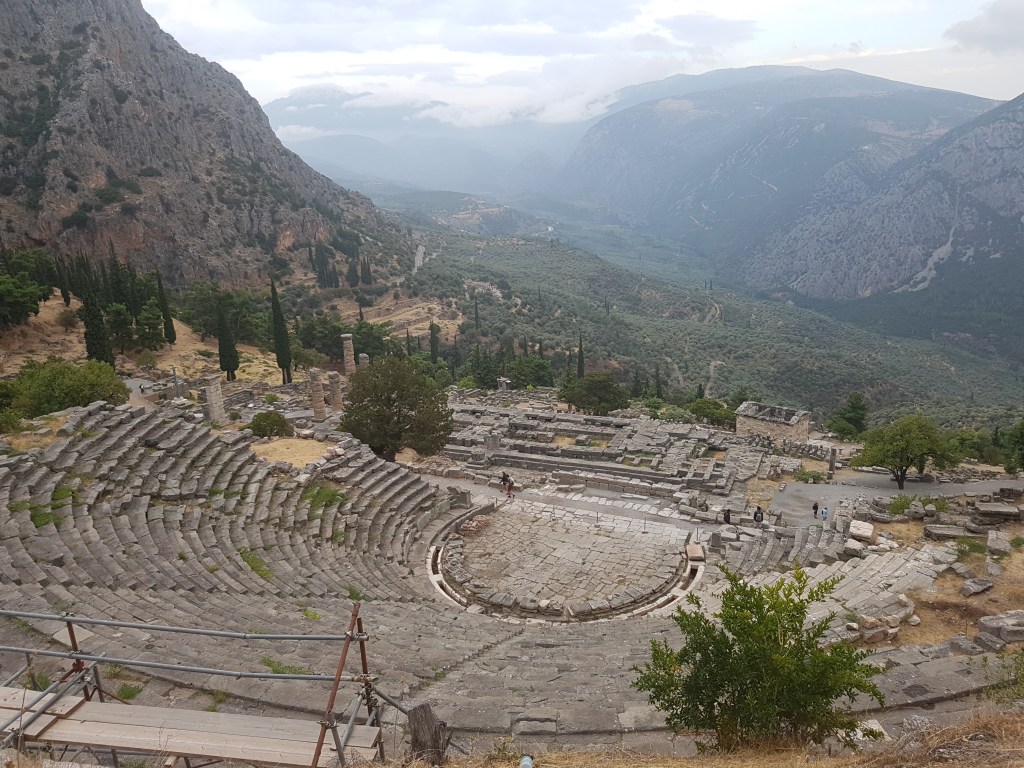
UNESCO World Heritage Archaeological Site at Delphi
Our four hour bus journey from Kalambaka to Delphi took us from north to south over two mountain ranges through the centre of Greece. It was comfortable and took us through the Amfissa Olive Grove close to Delphi. It is the largest continuous olive grove in the Balkans with more than 8,500 trees.
All I knew about Delphi before I arrived is that the ancient Greeks considered it to be the centre of the world. So, naively, I was expecting to arrive in a town of significance. The modern Delphi is little more than a village with numerous hotels and sovenior shops catering for the 500,000 tourists it attracts each year. Delphi is situated about one km from the site of the ancient ruins.
Sheila, our billet officer had booked us two nights in Hotel Epic (it wasn’t). Well, it mustn’t have been too bad as we extended our stay for a third night.
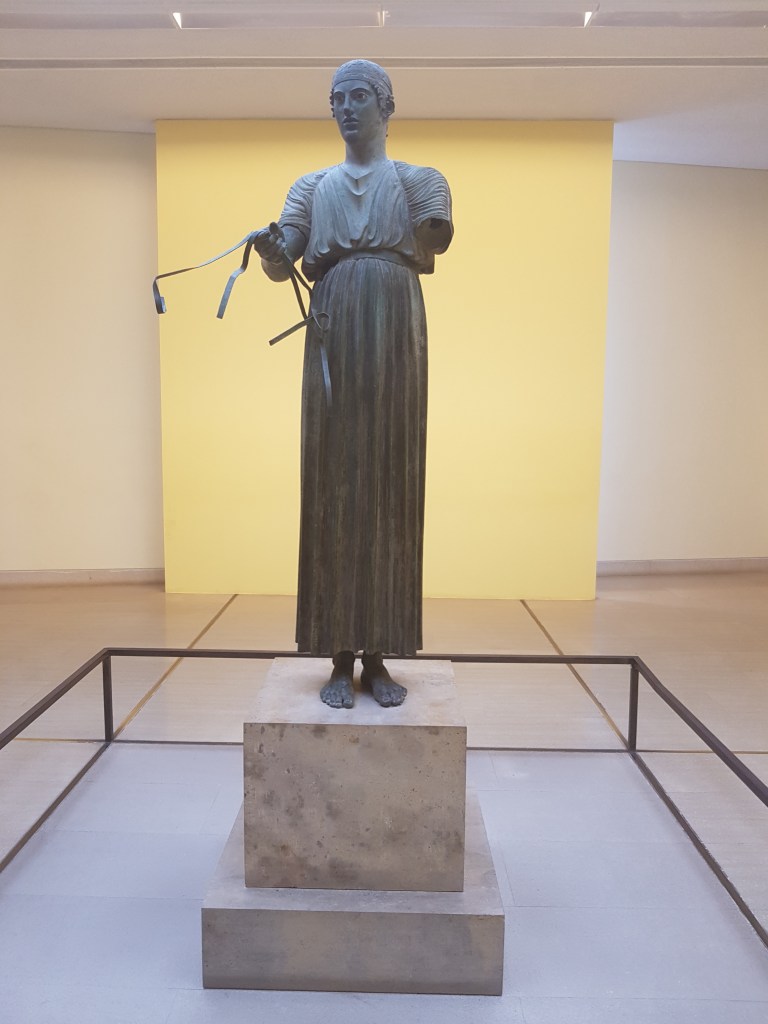
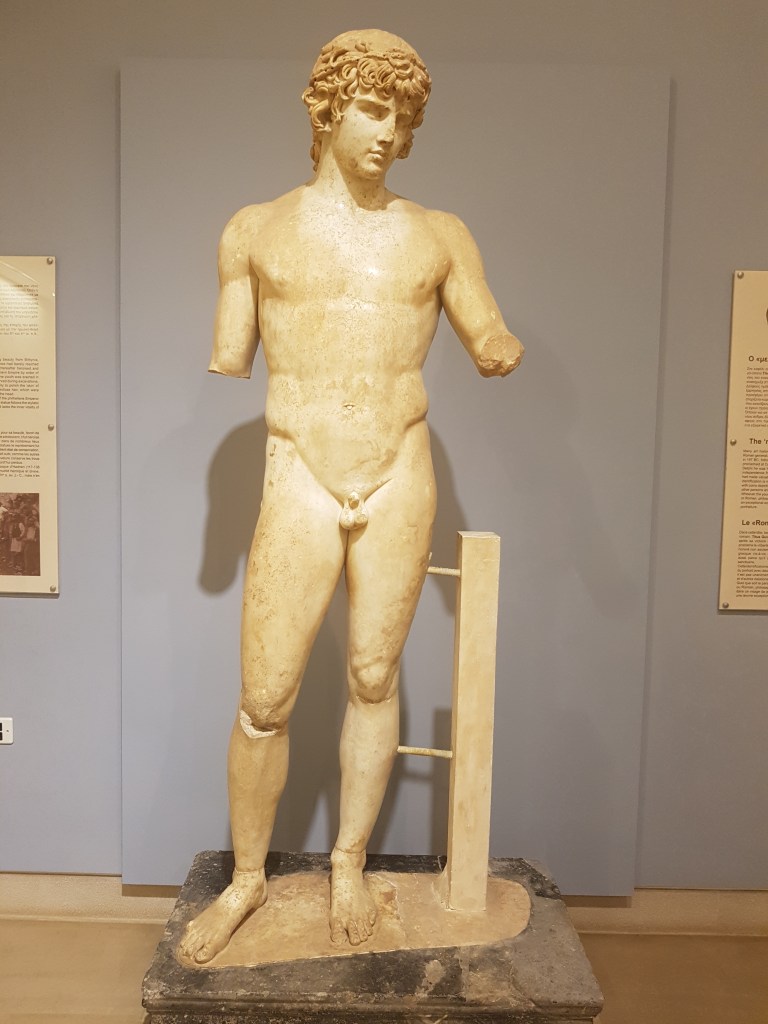
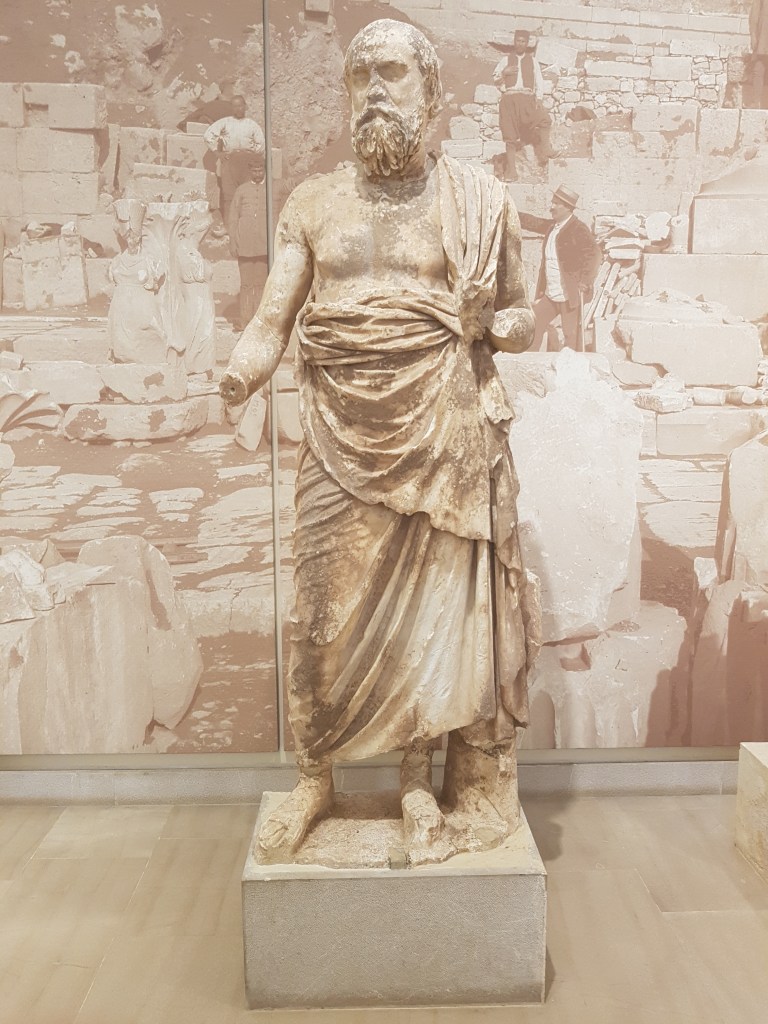
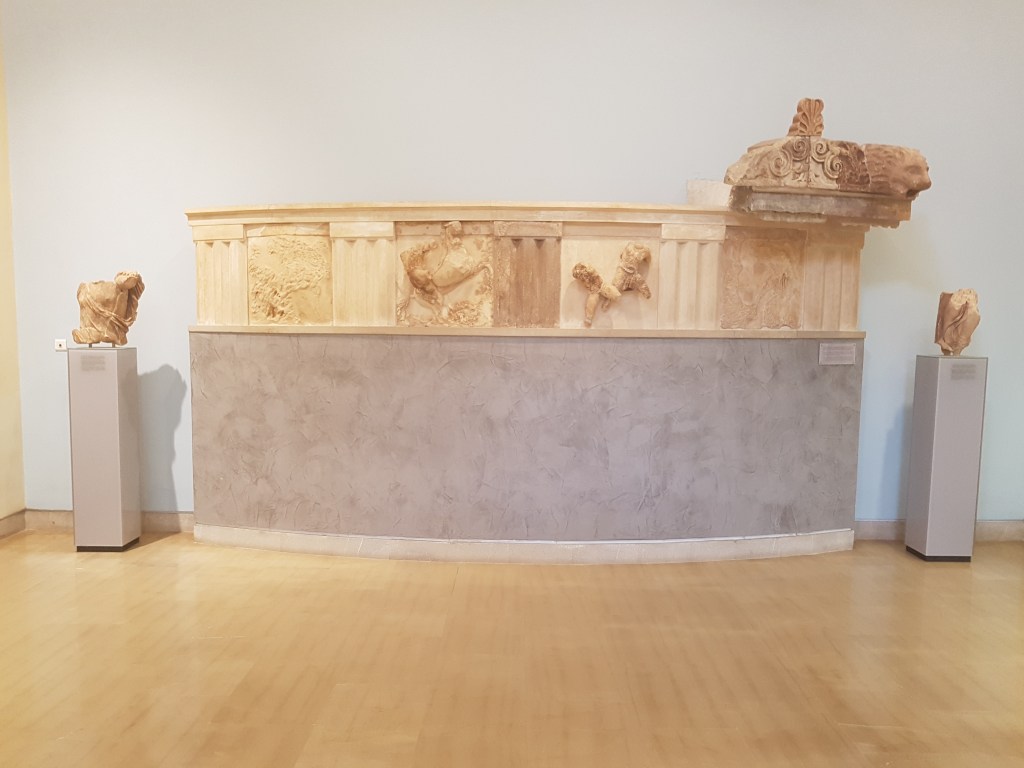
On our first afternoon, we visited the impressive Archaeological Museum. That was a good idea, because it gave us both a little background information about Delphi that we were sadly lacking. From there we went immediately to the site of the ruins. The inclusive ticket price was 12€, very reasonable I judged.
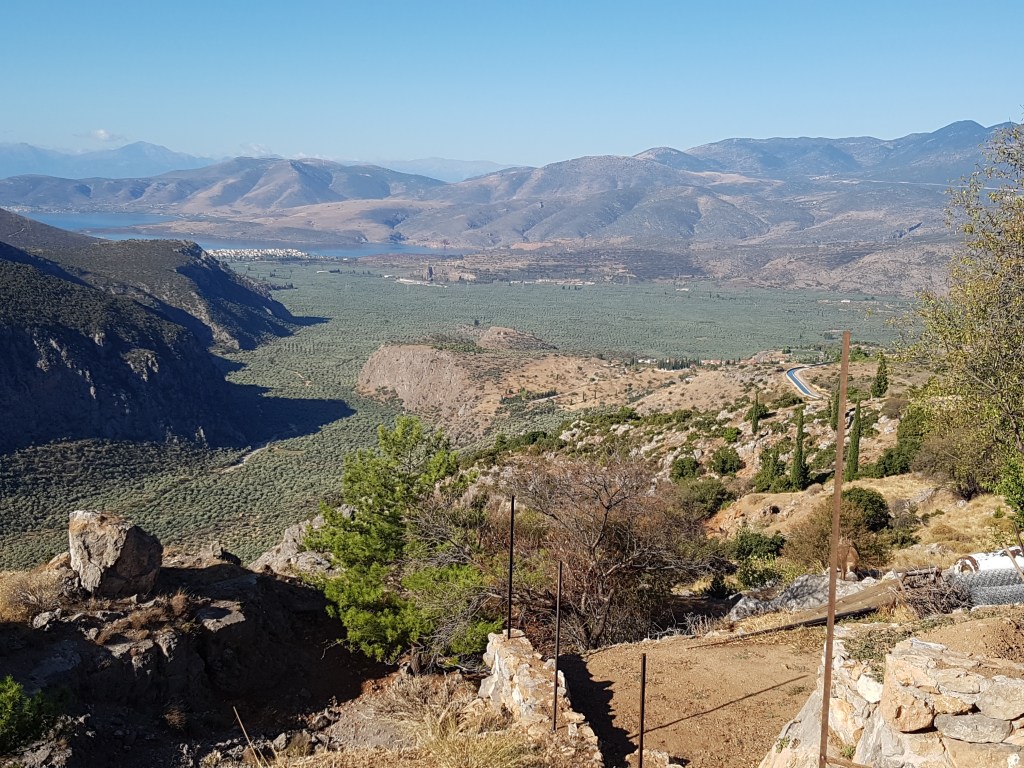
On day two we hiked from Delphi at the foot of Mount Parnassus down to the coastal town of Itea (we referred to it as Ikea) through the huge Amfissa Olive Grove. I have developed a fascination for olive trees. The gnarled shape of the trunks of the old trees gives them character. I can’t help admiring trees that not only survive but flourish in the very harsh (hot and dry) mediterrean climate.
When we reached Itea, after an enjoyable downhill saunter through the huge olive grove, we enjoyed lunch in a seafront restaurant and took a public bus back to Delphi.
Day 3 was spent relaxing and planning our immediate movements. We took the 5.30am bus to Athens on route to my favourite Greek island, Kythnos.
The journey from Mount Olympus to Kalambaka was enjoyable. It involved a 20 minute local bus journey, a 15 minute walk, two one hour train rides and a ten minute walk from the railway station to the Meteora Centre Hostel. The train to Kalambaka was full. A large percentage of the passengers were Asian tourists. This didn’t bode well as I thought it was an indication that Meteora would be crammed full of tourists.
Sheila and I had met a young English woman, on a one year sabbactical, on our hike down Mount Olympus and she recommended the Central Hostel highly. It turns out she was correct to do so. It is very comfortable and the owner Stella (and her husband whose name escapes me) were so very helpful. Stella helped us plan our stay. She even booked a doctor appointment for me. I had a painful ear infection,
caught, I believe in one of swimming pools I’ve used recently.
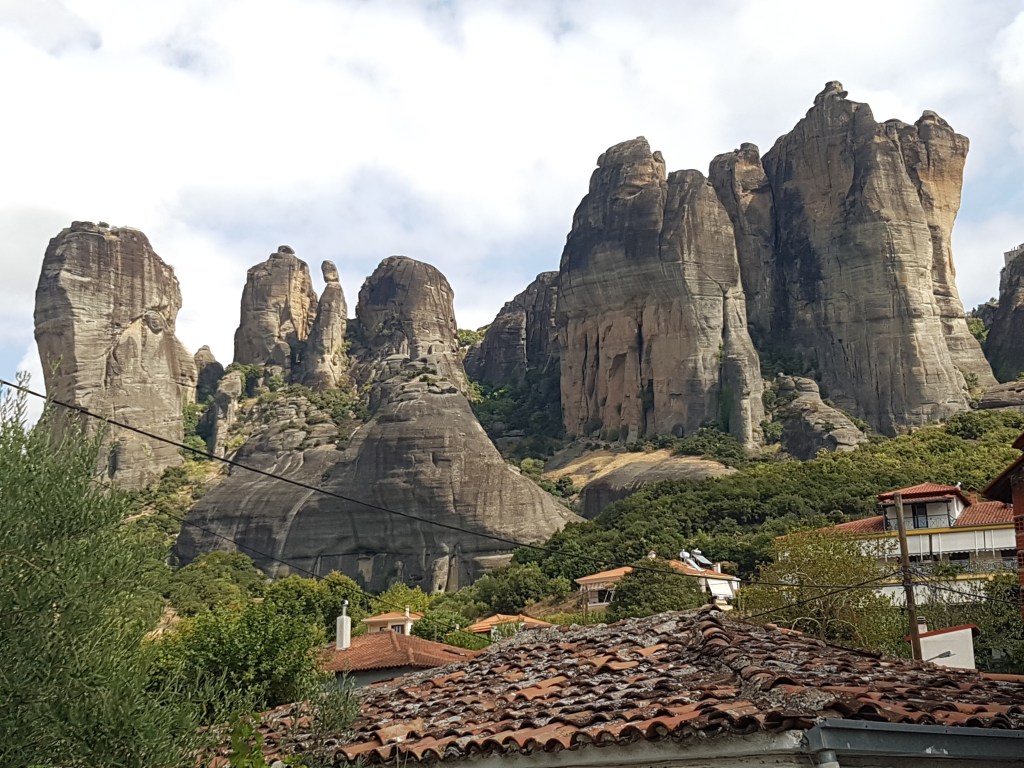
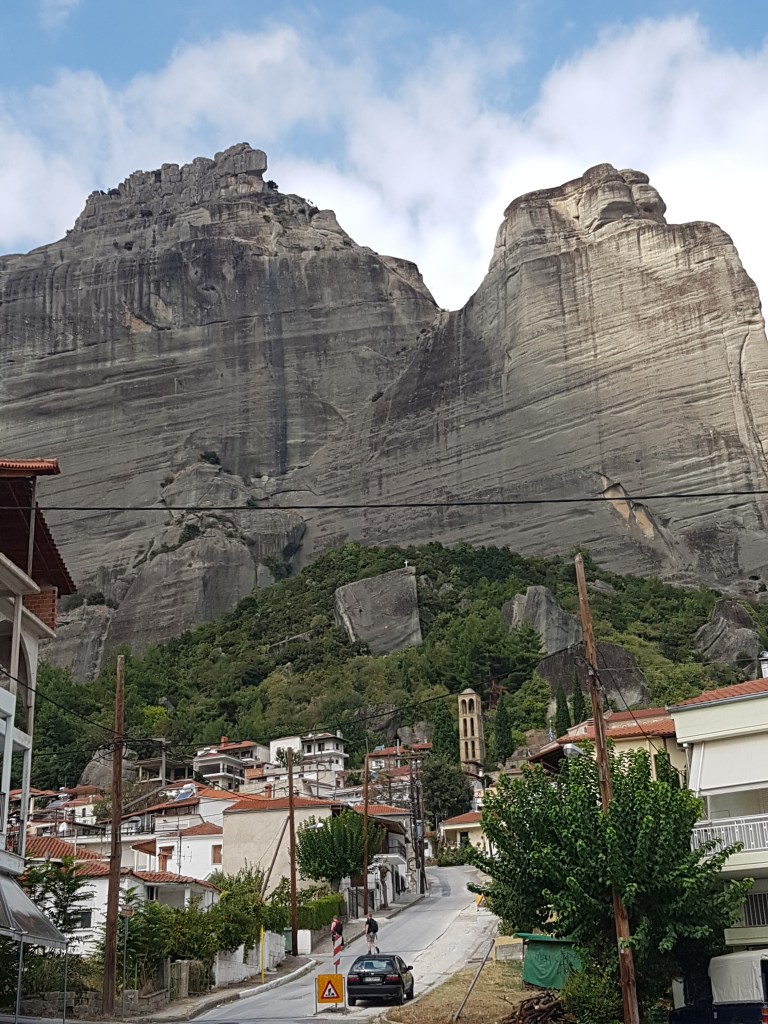
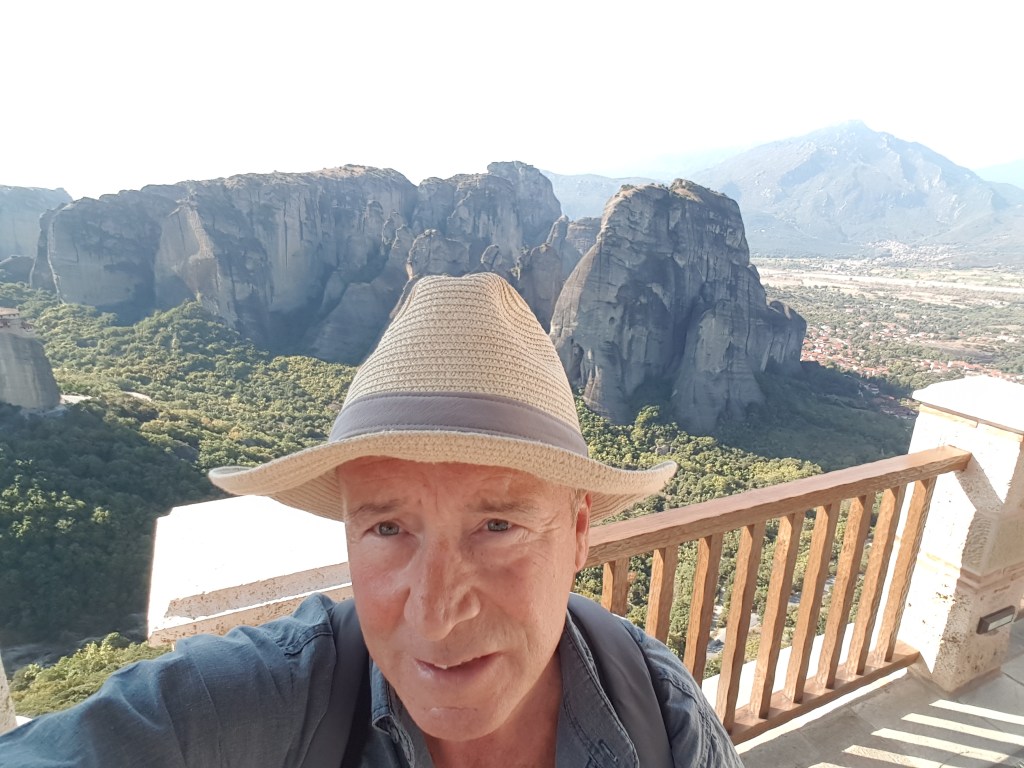
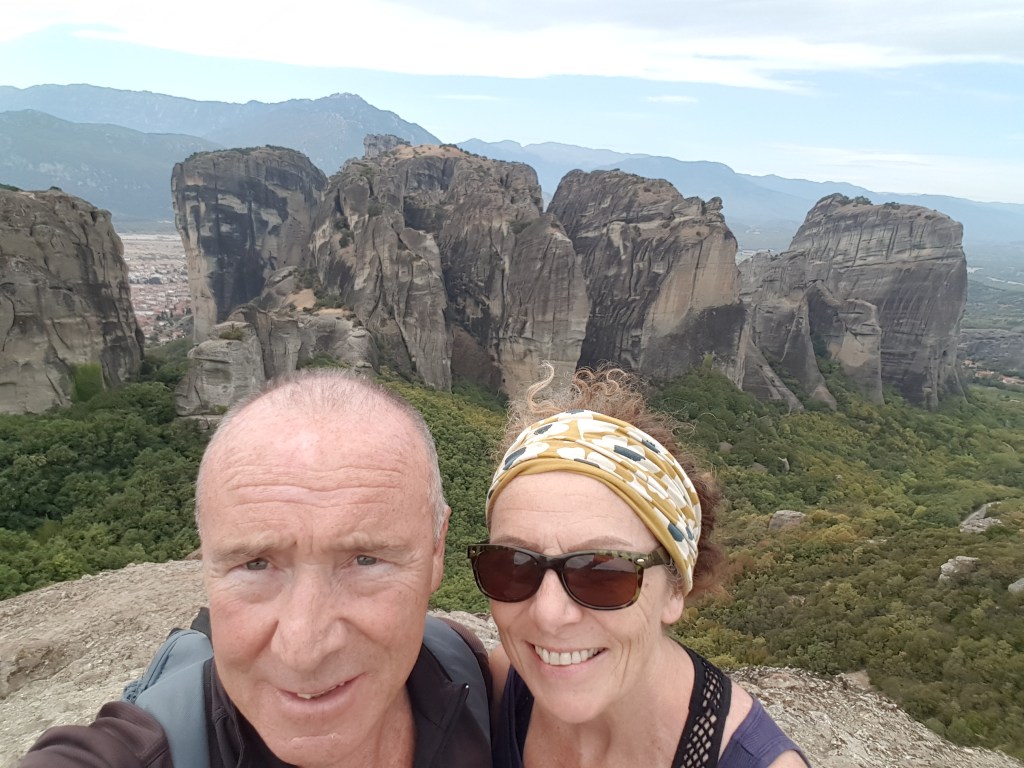
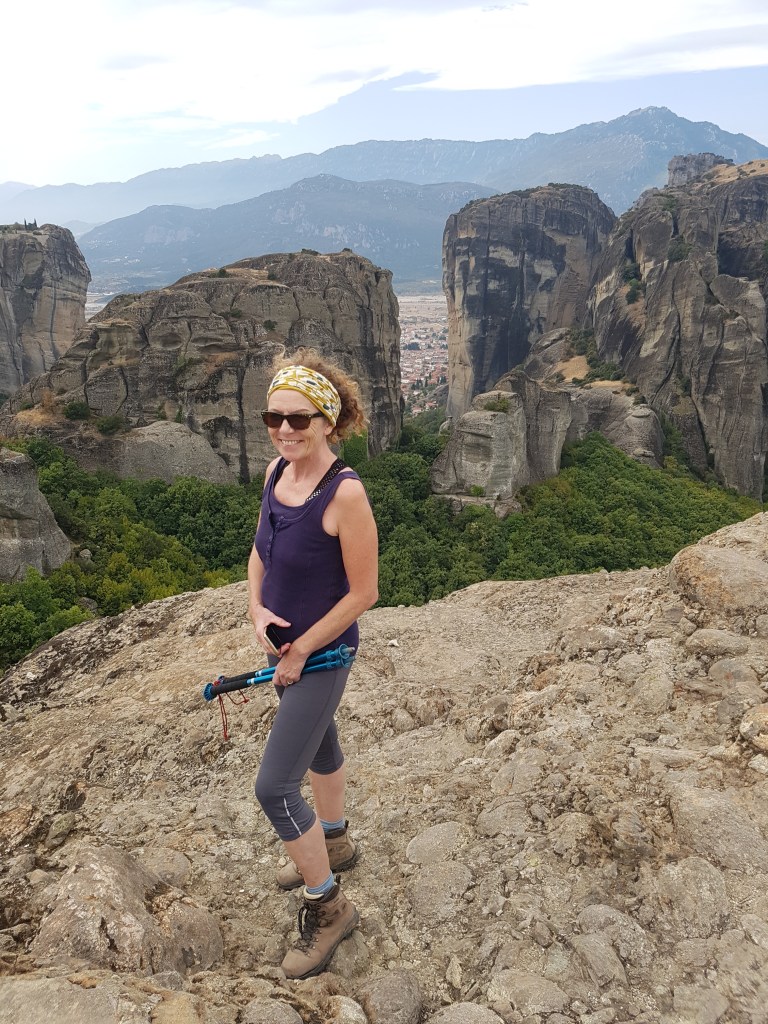
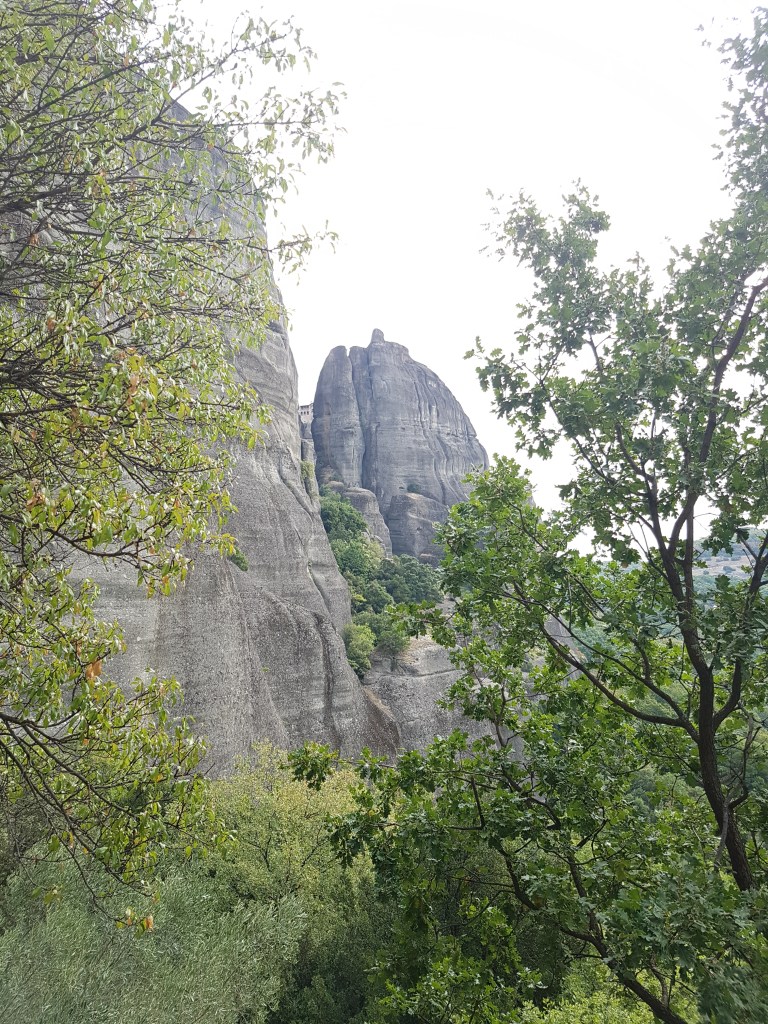
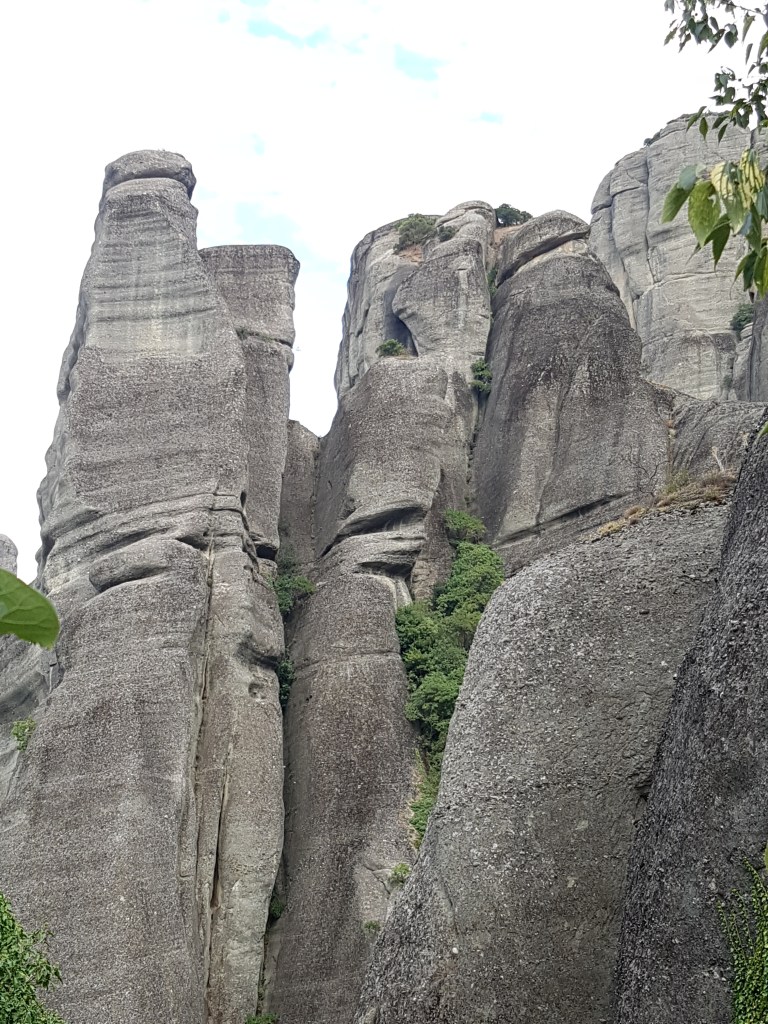
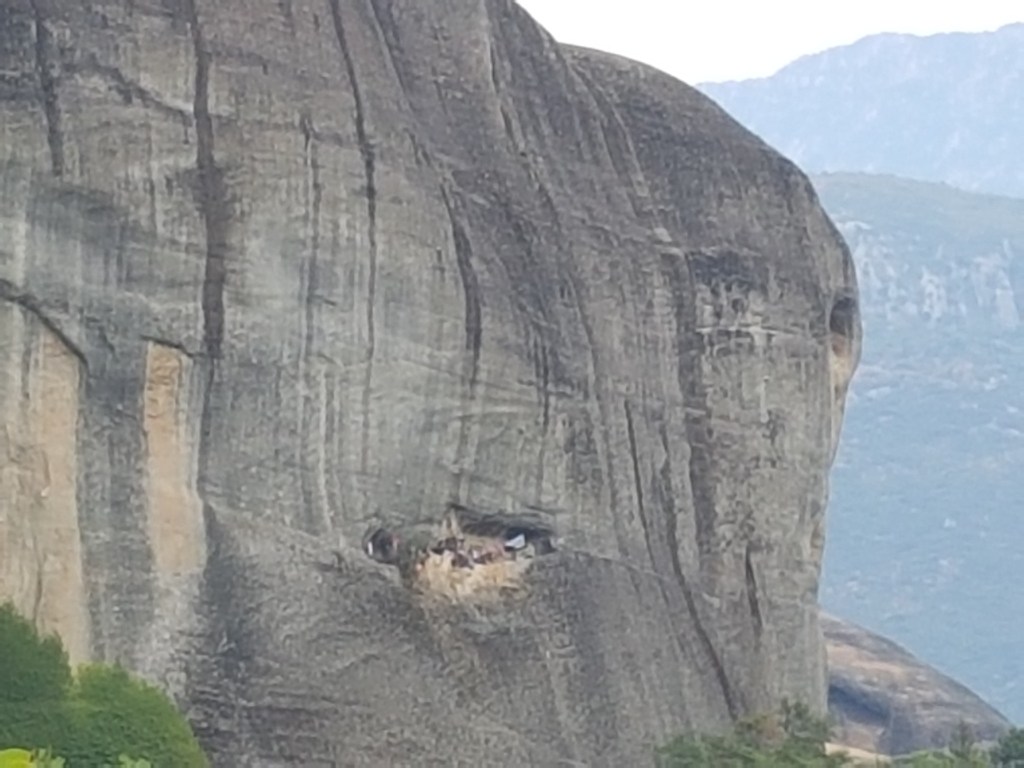
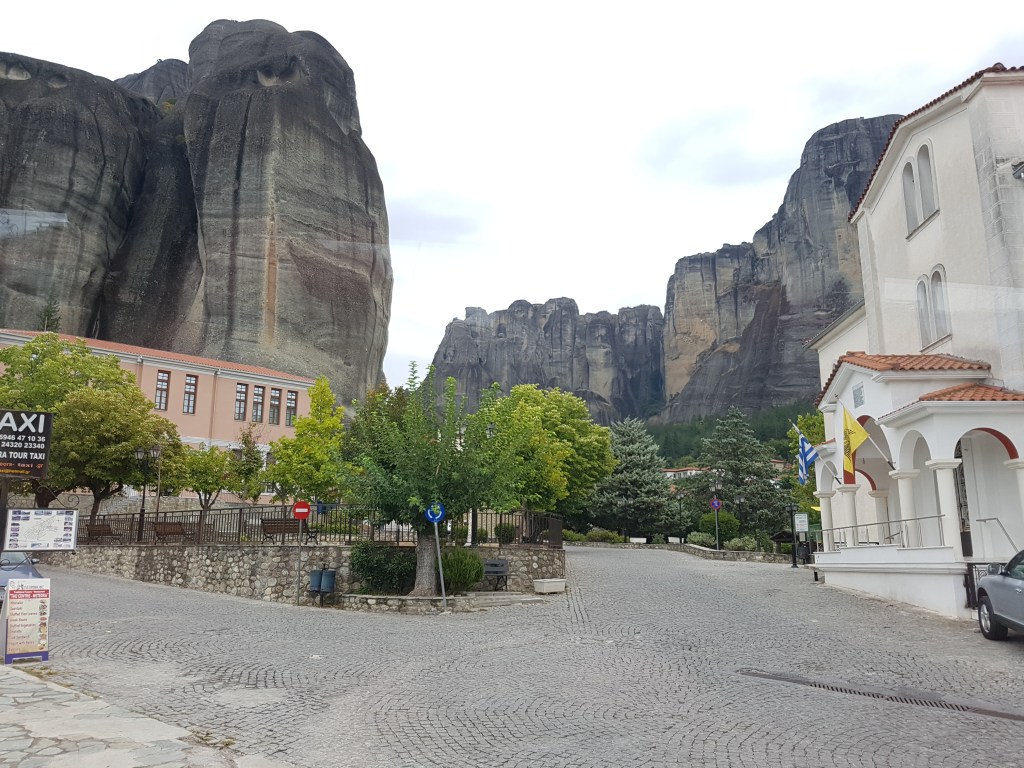
Kalambaka sits at the foot of the spectatular mountains of Meteora. Arriving in town early gave us an opportunity to go for an afternoon walk up to the edge of town to see the mountains and in the distance, a couple of the cliff top monisteries. Stella mapped out a route for us and we went walking in the midday sun. The cliffs were all very inpressive but what really impressed Sheila was that she spotted three tortoises in the wild, during our walk. To say she was made-up would be a gross understatement.
Both Sheila and I had been unwell since our trip to Mount Olympus. I concluded that the three day hike and climb was so strenuous that we were run-down.
Sheila was so ill (swollen knees and sinusitis), she couldn’t face the thought of a full days hike up the mountains to visit the cliff top monisteries. So, I got her the necessary medication and left her in bed to rest, while I took a local bus towards the mountains. The bus soon filled with passengers with many standing in the aisle. The driver said (in Greek) that all passengers must have a seat and he proceeded to eject those standing from the bus.
I was a little apprehensive about the volume of tourists going up the mountain. I thought it might be as crowded as were many other famous tourist sights in Europe I’ve visited.
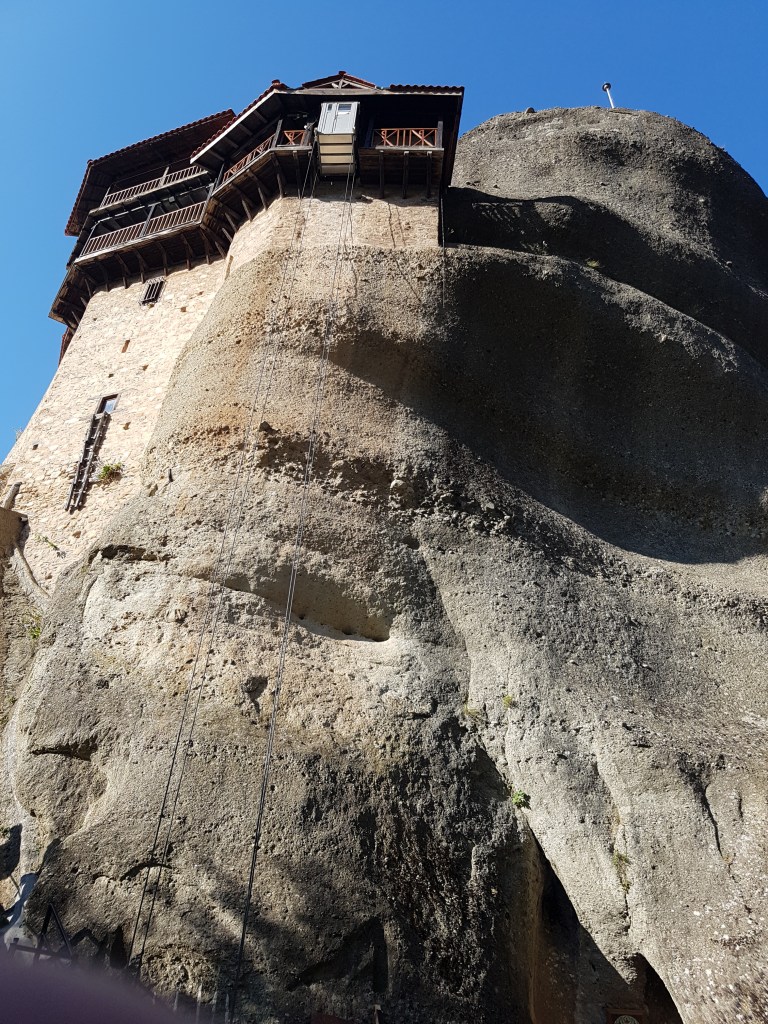
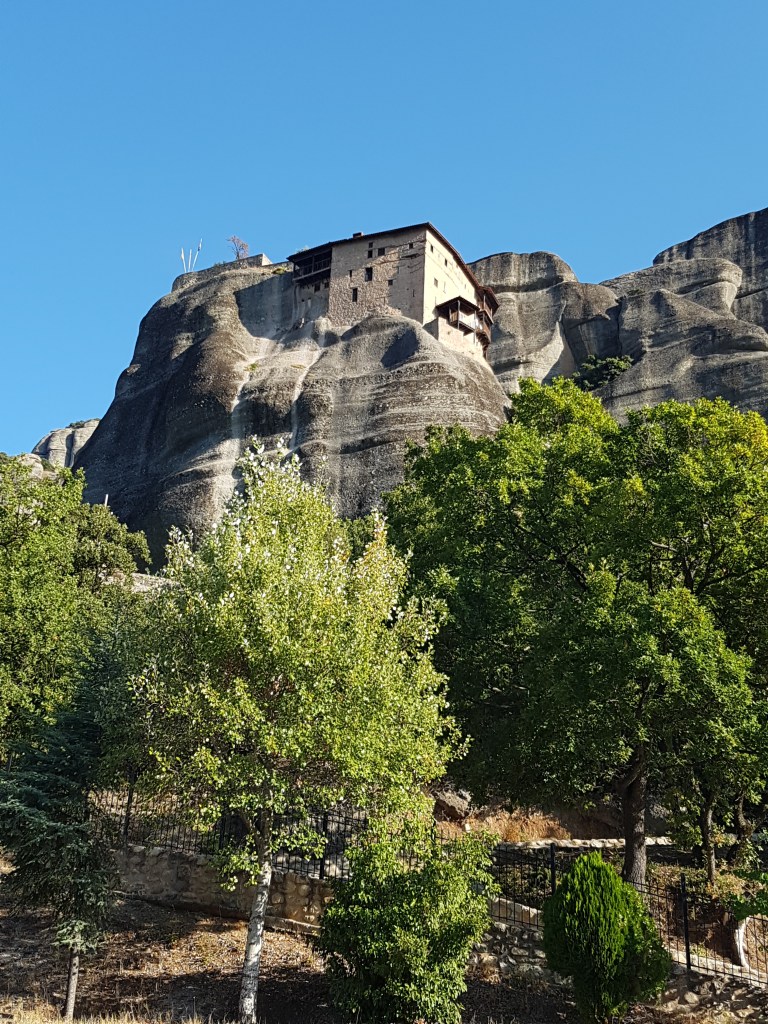
At the first monastery (St Nikolas) we reached, just three of us got off the bus. Two Canadian women and ne. They were staying at the same hostel as us. We had met over dinner the previous evening. The rest of the passengers remained on the bus? The Canadians confirmed that Stella had advised them to do the tour this way, the same as she had Sheila and I.
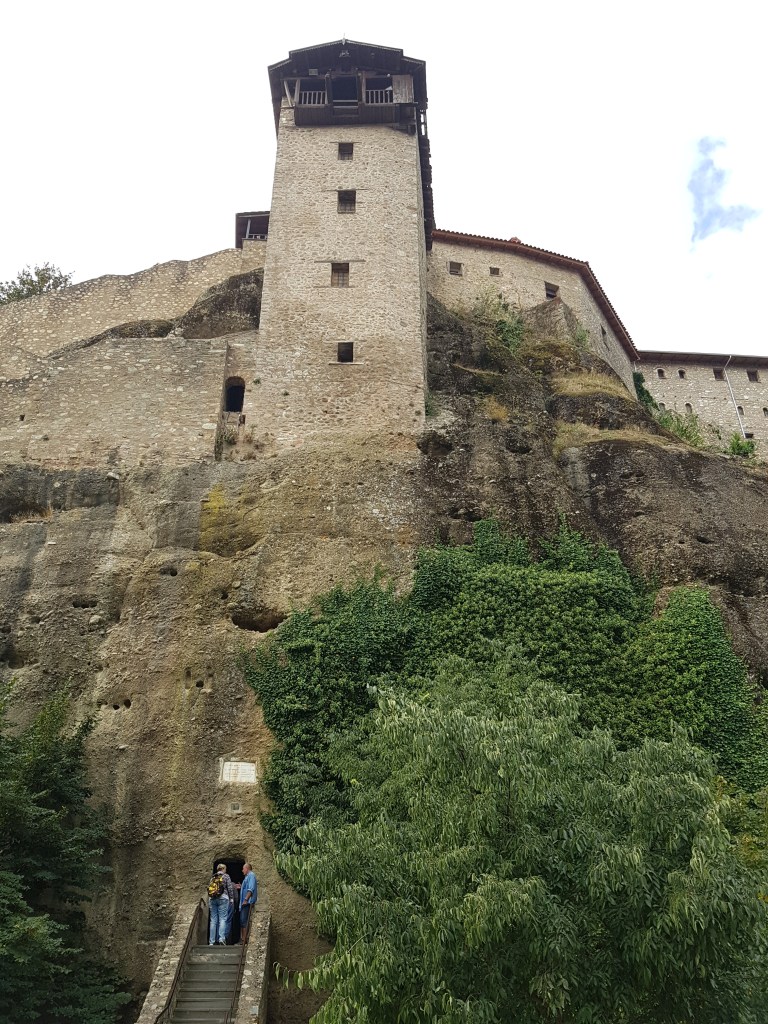
We climbed up to the Monastery and I paid the 3 Euro entrance fee. Stella said don’t pay to enter all of them. She said, once you’ve seen inside a couple of monasteries, you really don’t need to pay to see inside any more. It was a steep strenuous climb up to the Monastery. There were only a handful of tourists up there. At this stage, I thought, there would not be a problem with overcrowding, as a person would need to be fit and mobile to undertake climbs with that degree of difficulty. I was wrong, as I learned that the others could be accessed from coaches with only a short walk.
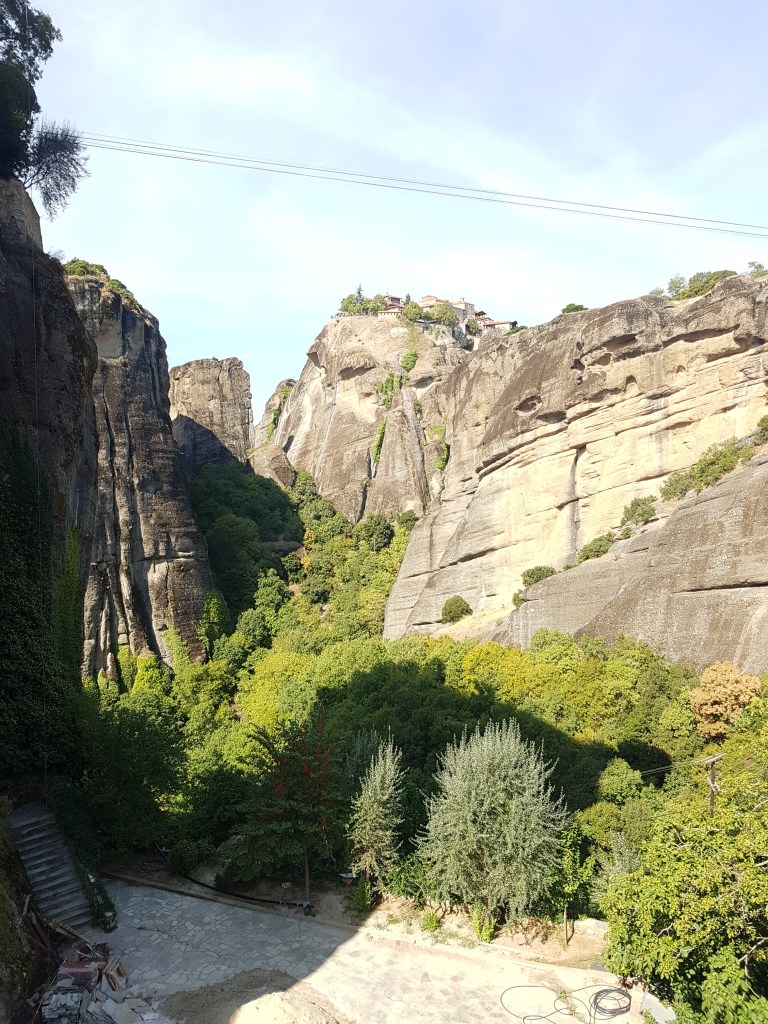
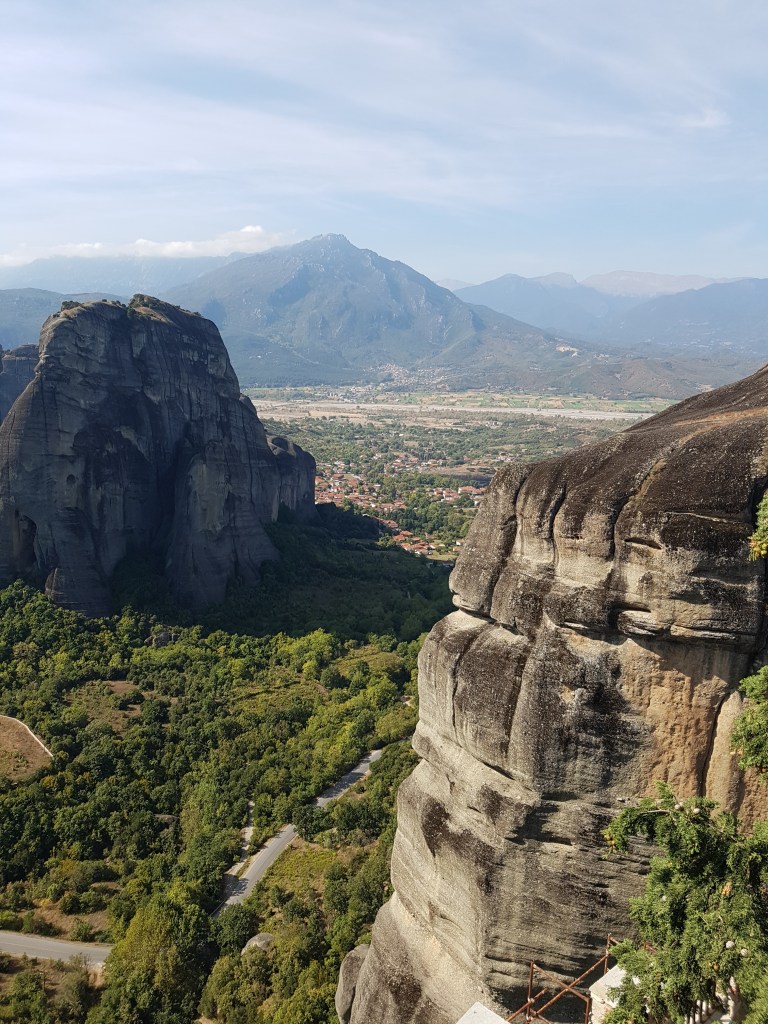
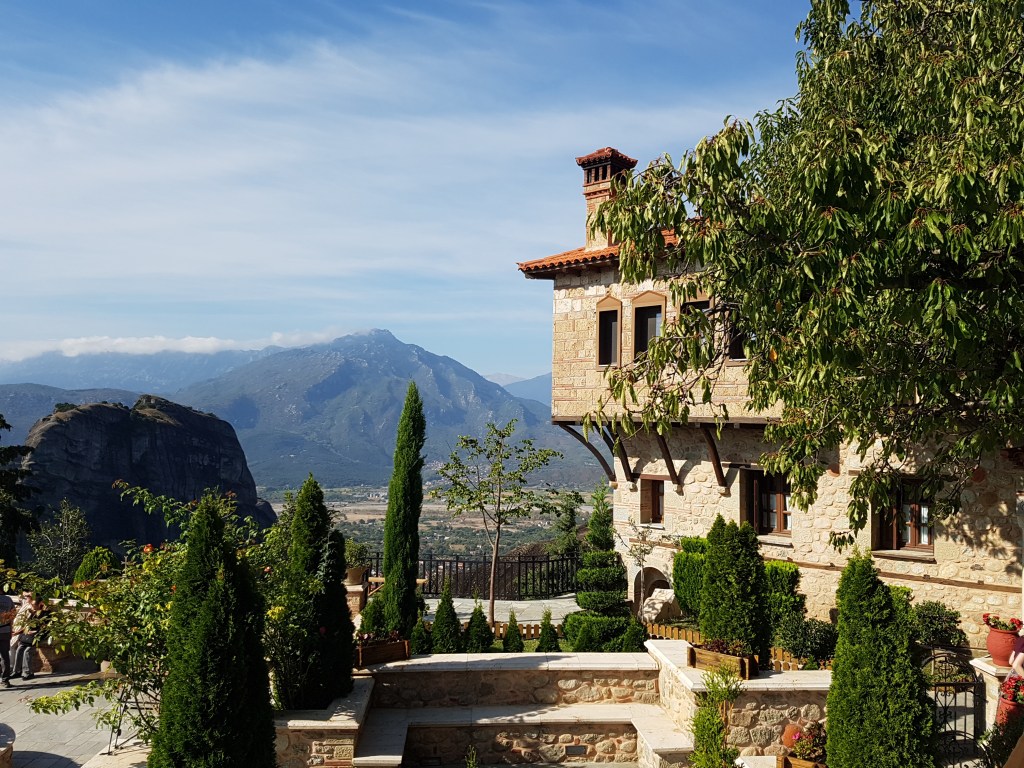
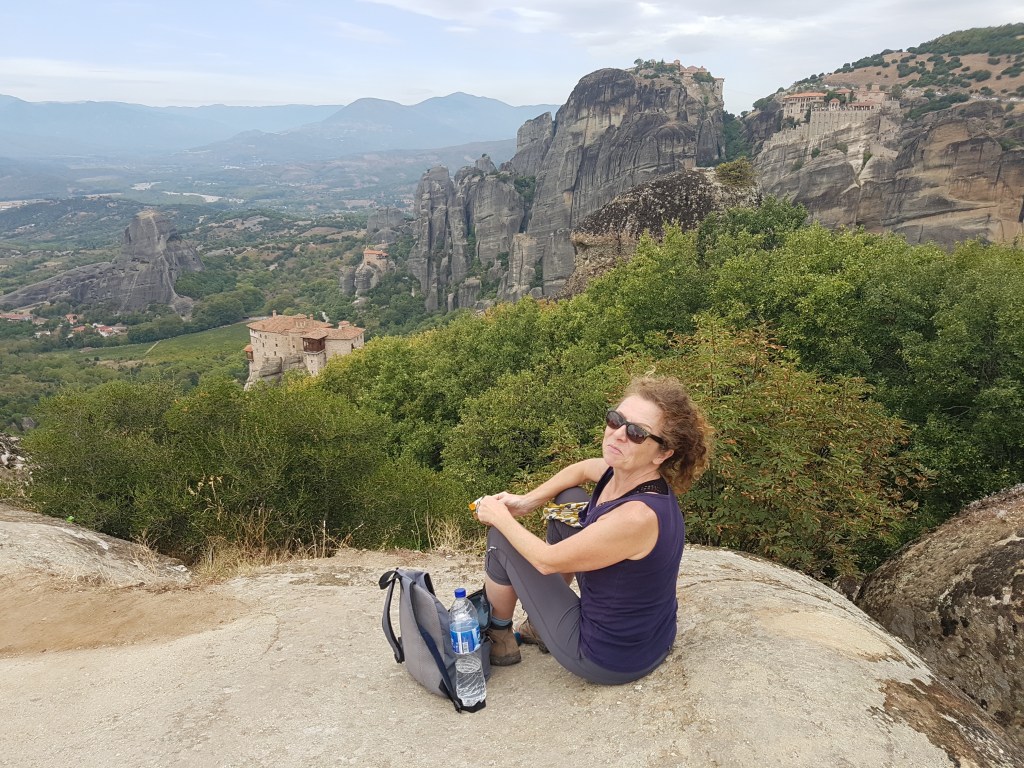
Views around the Monastery of St Nikolas
Stella advised that there is a footpath between St Nikolas and the Monastery of Great Meteoron and tbe Monastery of Varlaam. So, together with the Canadians we took it. It involved a 20 minute steep climb through a lovely forest.
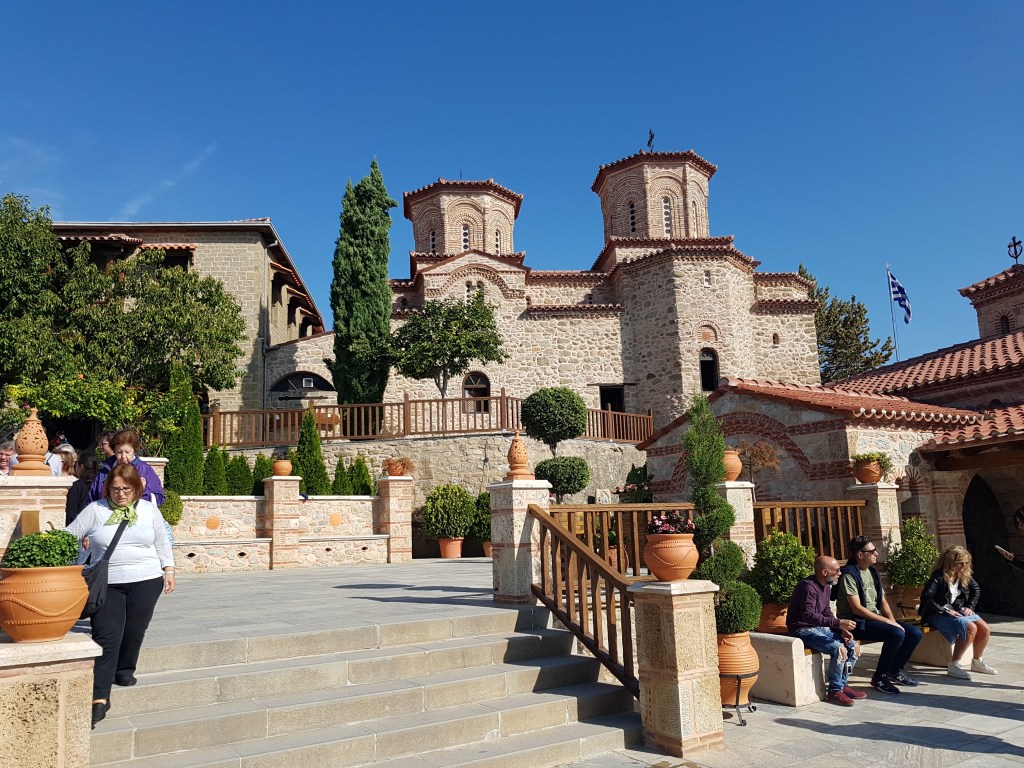
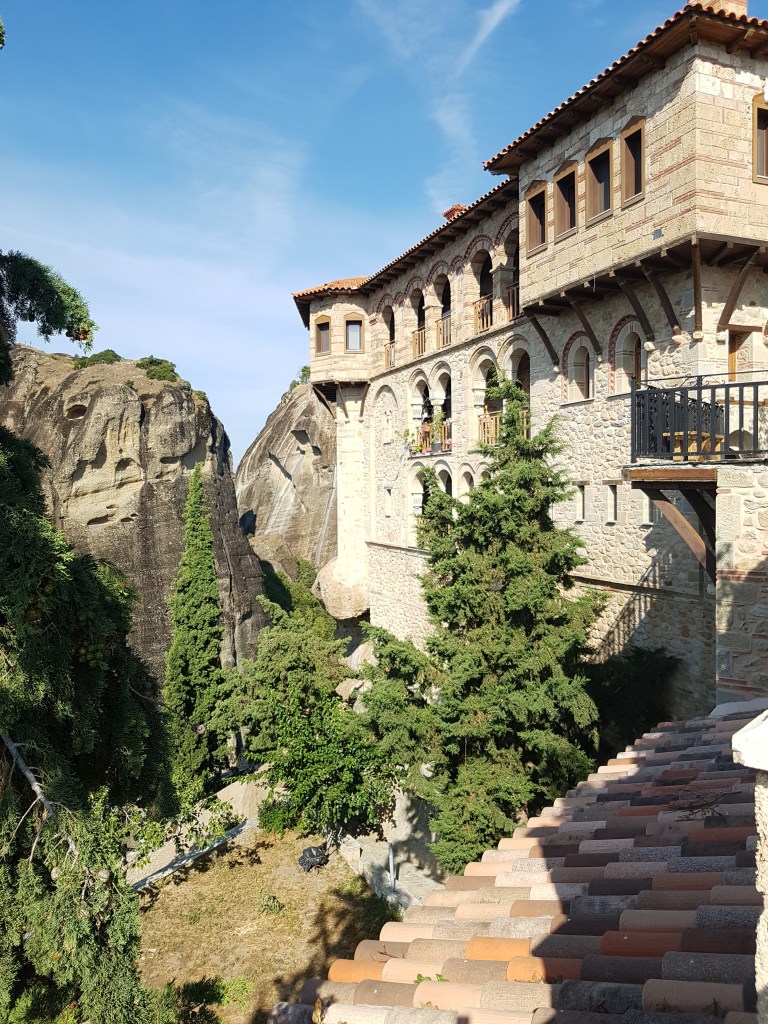
The Monastery of Varlaam is one of the larger monasteries and has the best exhibition. For that reason, most tourists make this one of the ones they visit. After we climbed through the tranquility of the forest, it was a shock to be met by hundreds of noisy tourists. It’s a generalisation, I know, but the Asians seem to make a lot more noise than others?
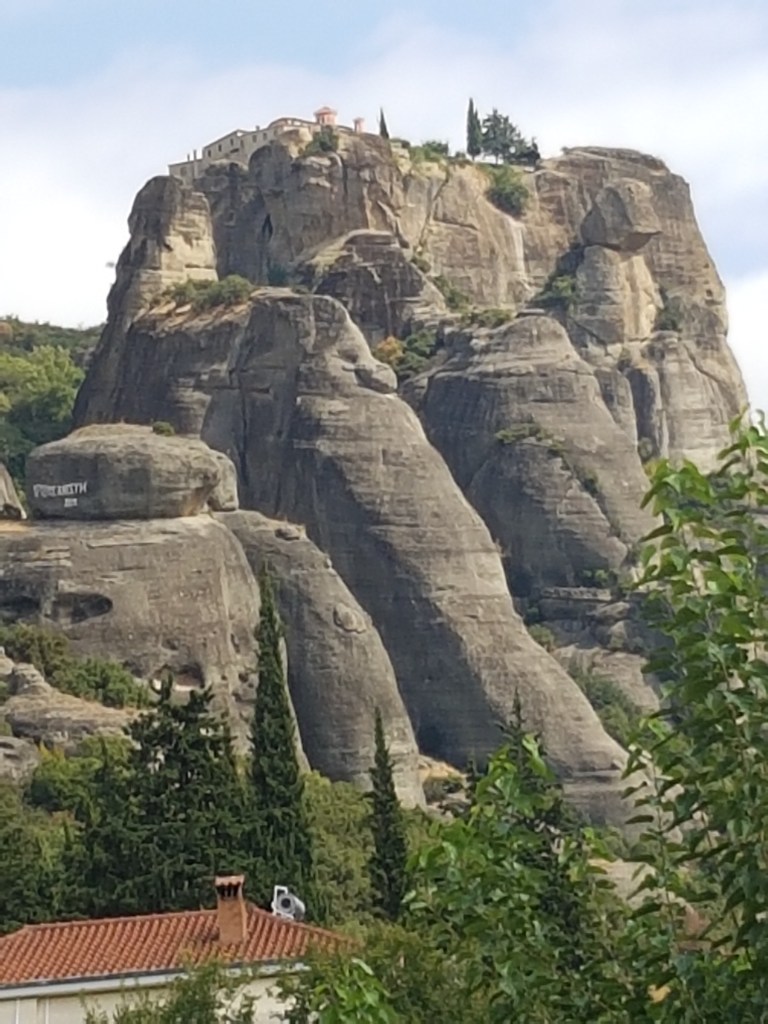
From Vaarlam I walked around to the Great Meteoron and on to the remaining three monasteries. Fun Fact: two of the six monasteries are run by nuns. Does that make them Nunneries?
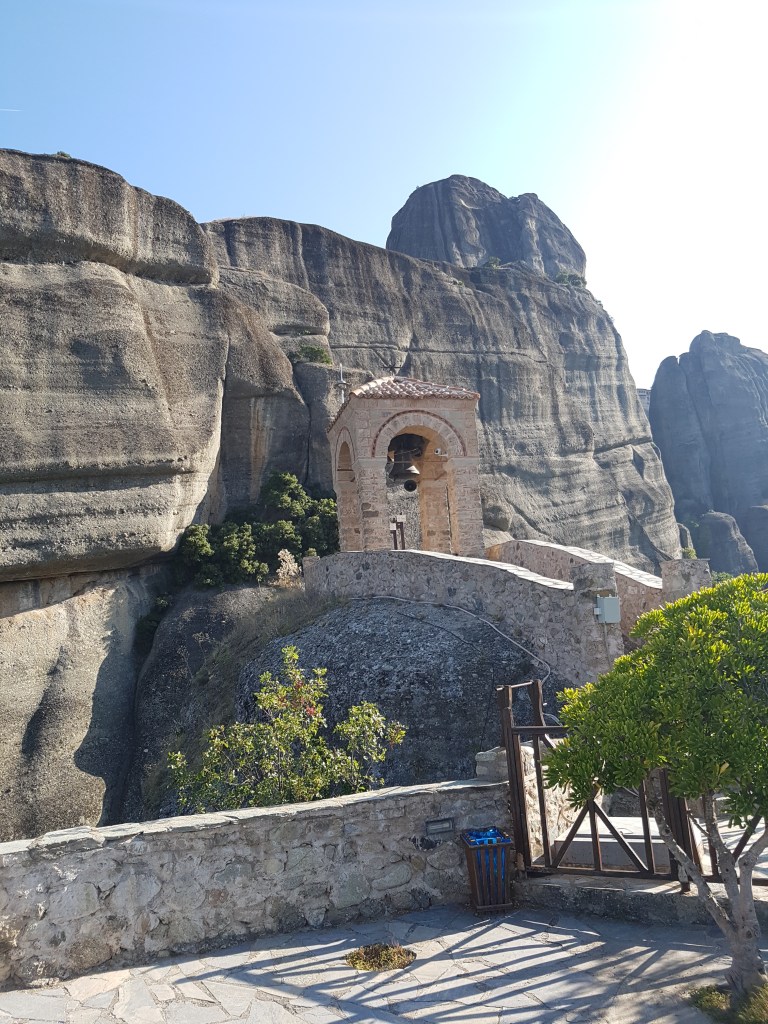
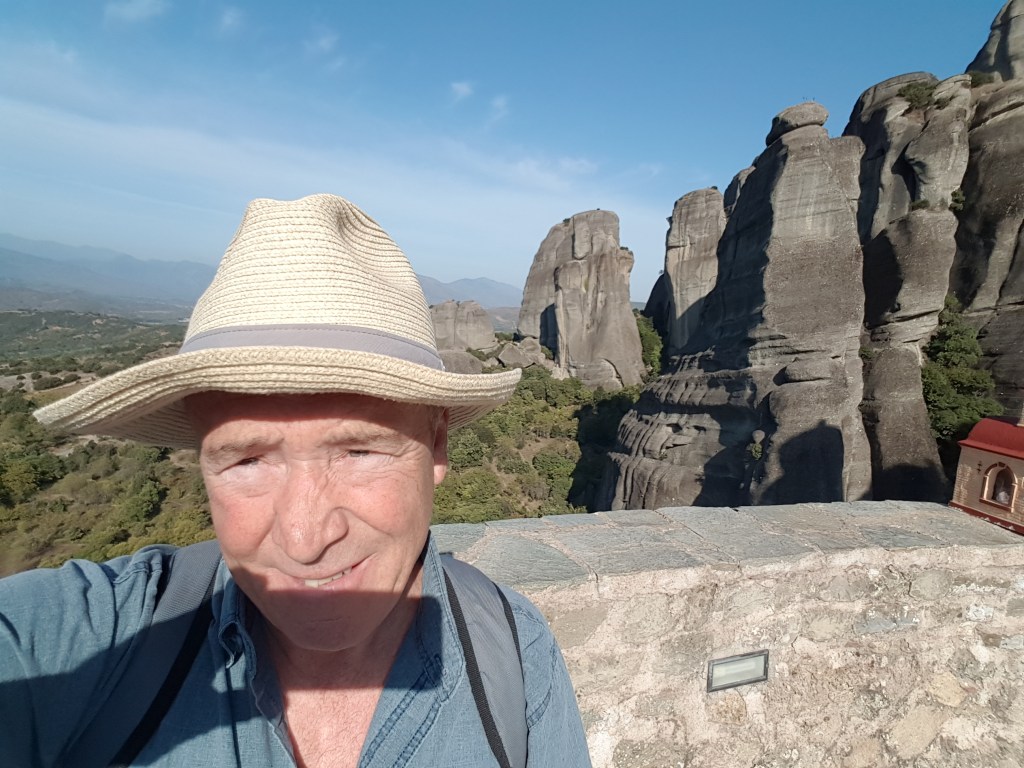
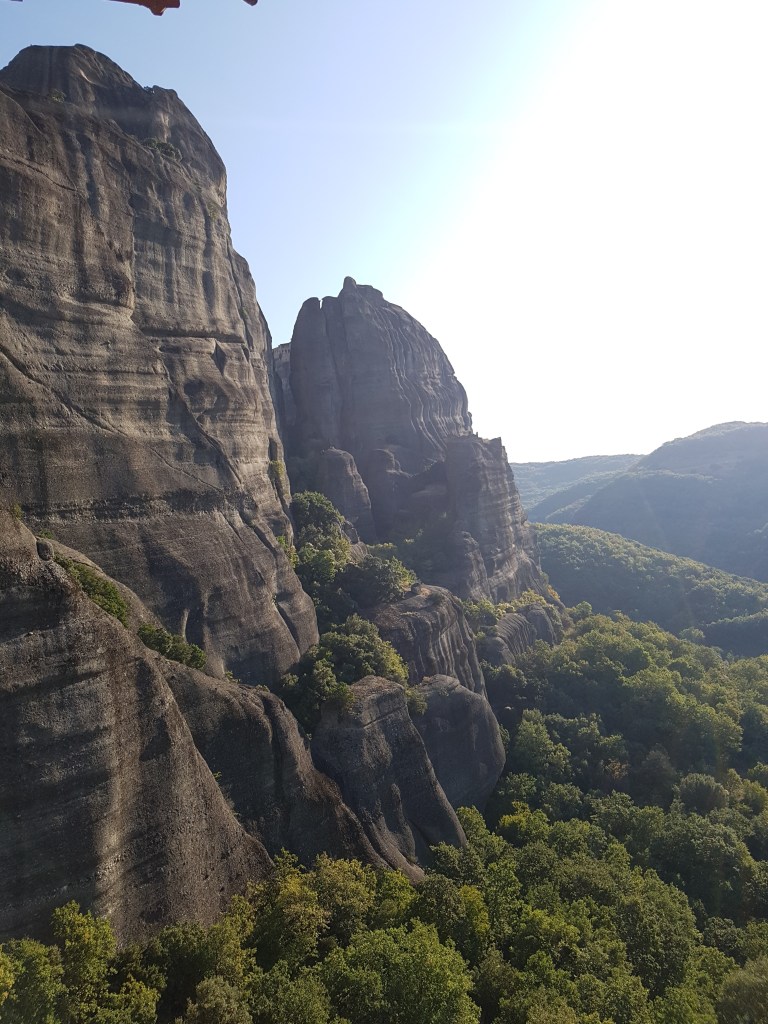
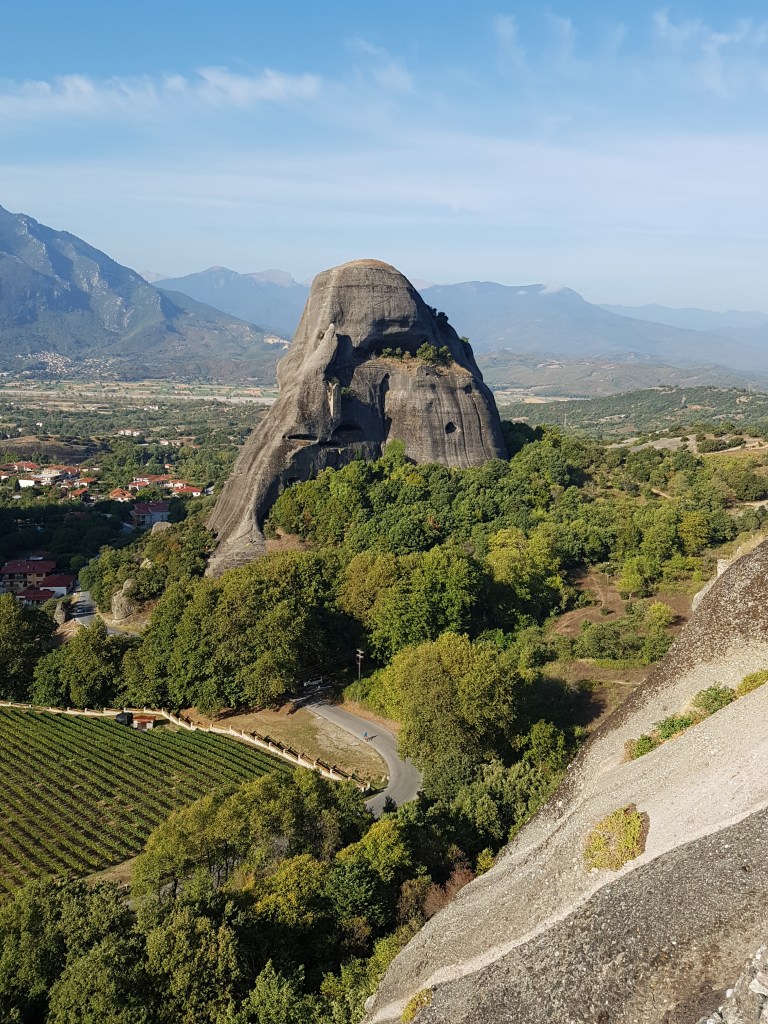
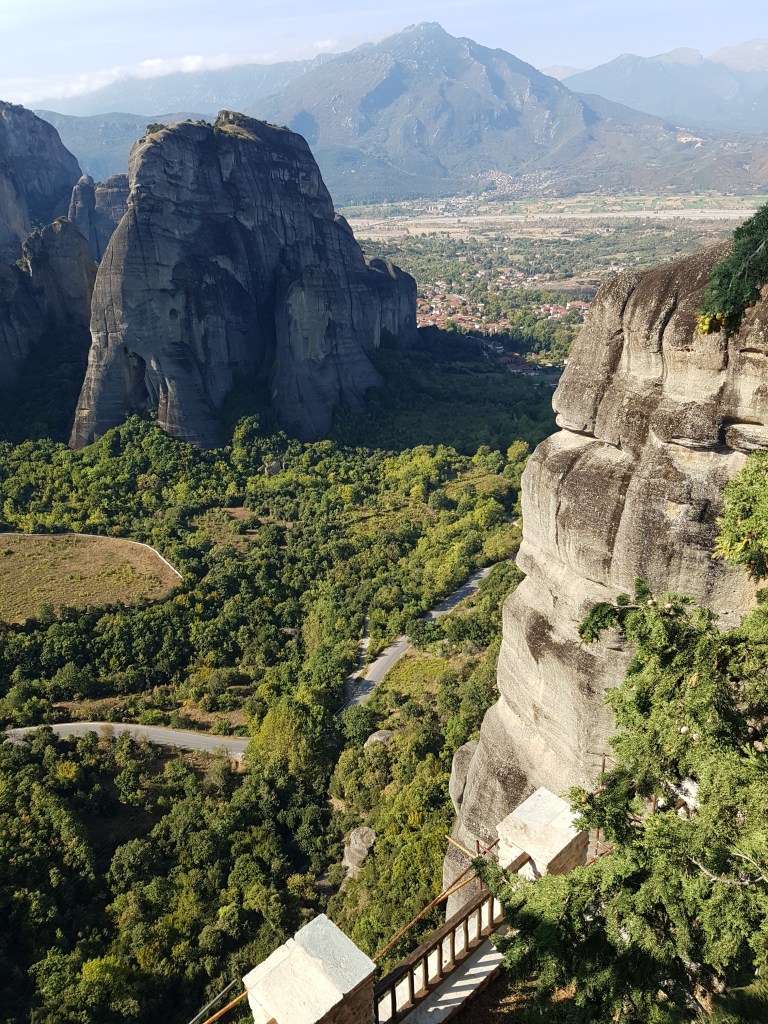
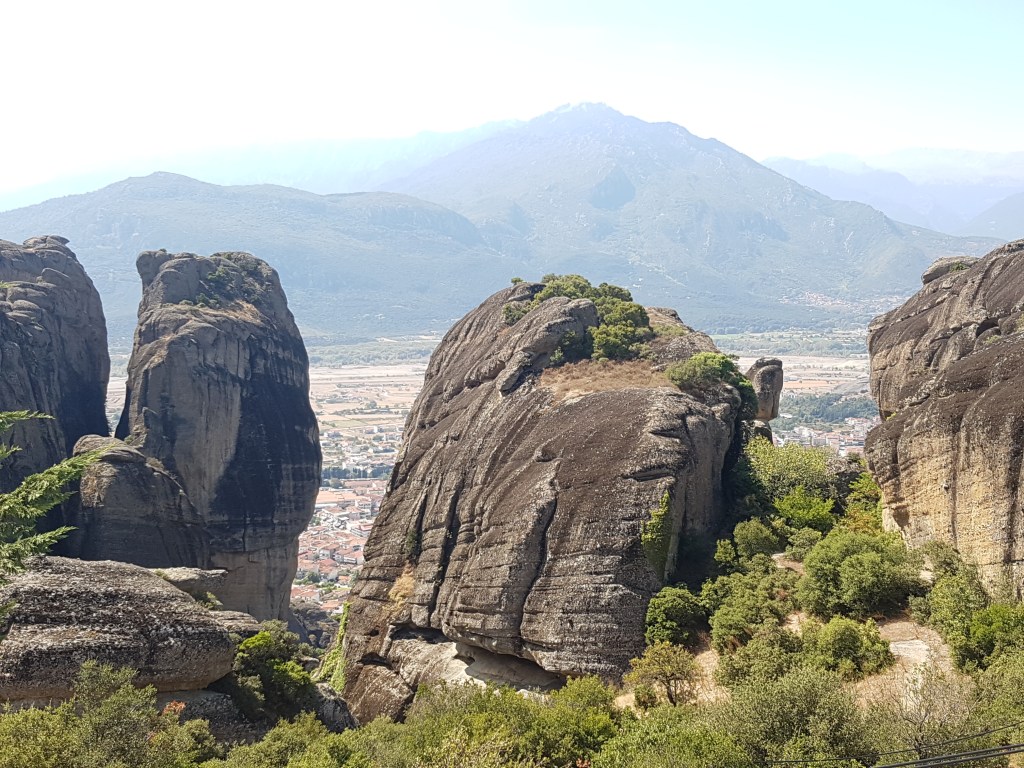
There were dozens and dozens of tourist coaches but apart from the two above mentioned, I never felt it was overcrowded. There are a couple of fantastic scenic viewpoints and my photos show that there were not hoardes of tourists.
The monasteries are very well maintained to a high quality standard. Not something I would say about many of the places we have visited in recent months. The monks obviously have the money generated from the revenue from 000,000’s of annual visitors.
The hike down was an easy 25 minute walk. I passed 10-15 other people going up and down the trail, which surprised me as, apart from the Canadian women I had not seen anyone else walk between the monasteries. Not sure how far I walked in total. I took the 9am bus out and arrived back at the hostel at 2.30pm. I estimate that it would have possibly been 8-10kms.
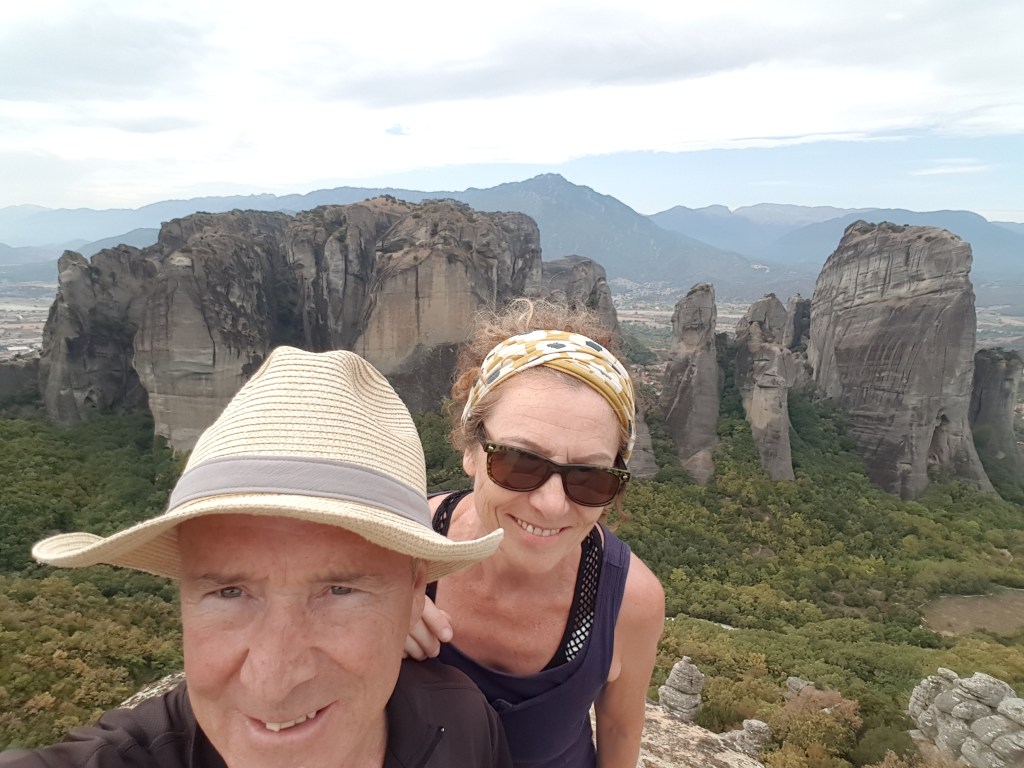
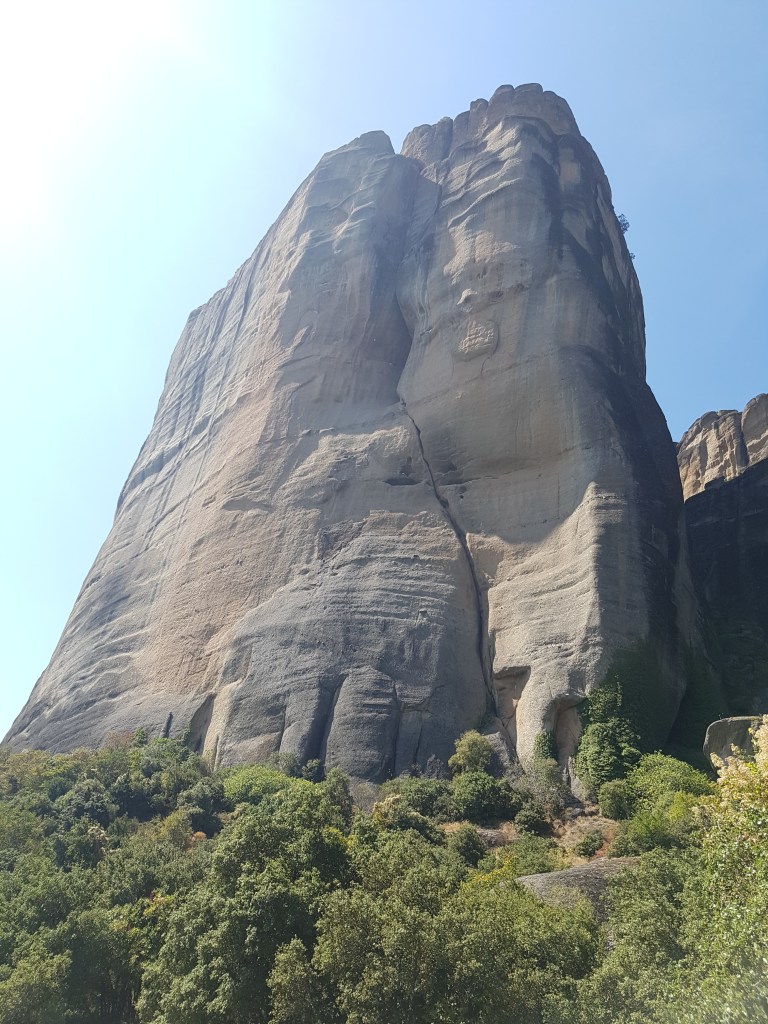
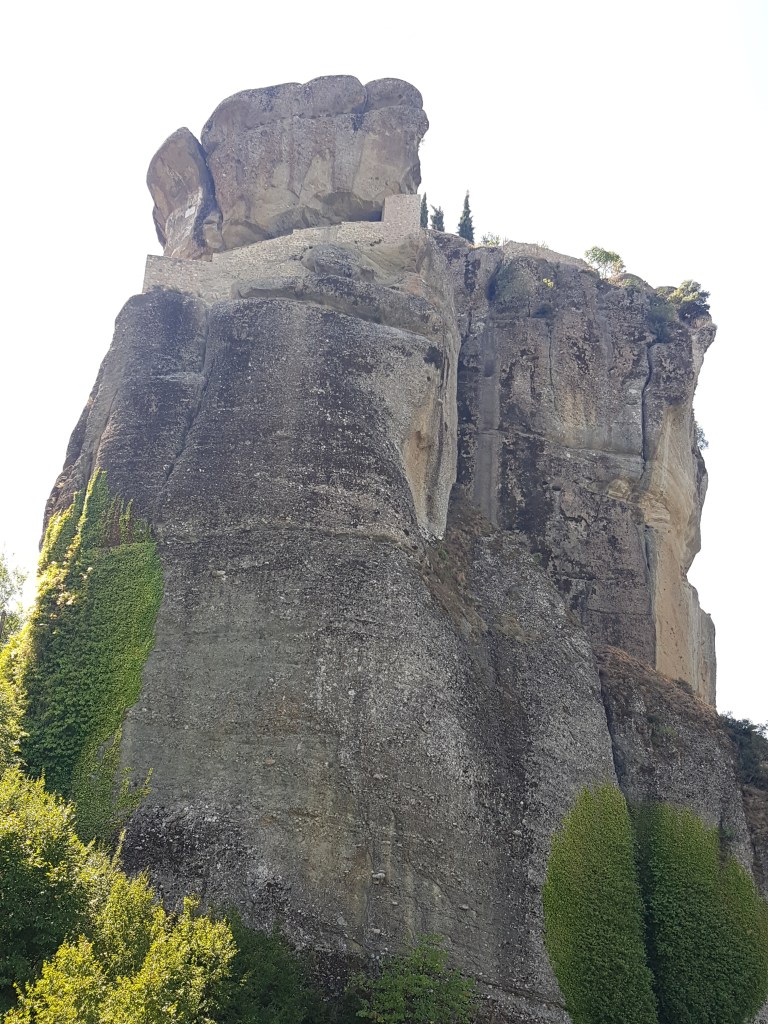
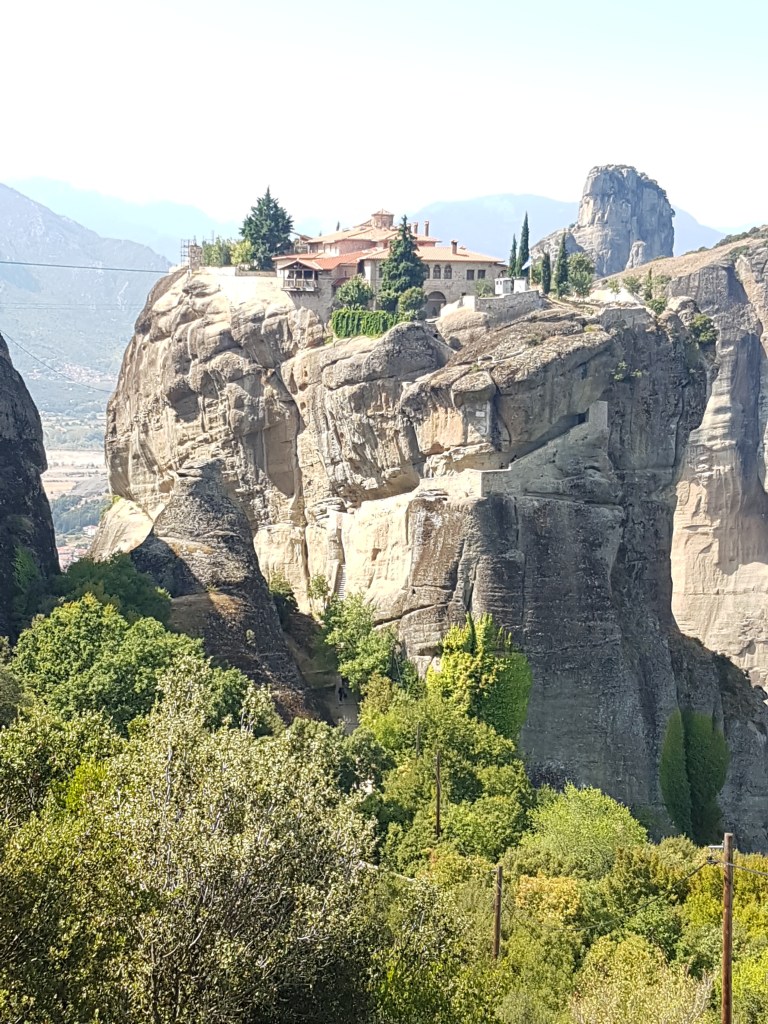
Meteora in an UNESCO World Heritage site. It probably deserves that accolade more than anywhere I have been. Together with the Grand Canyon, it ranks as the most spectactular place I have ever visited. In fact, for me it ranks higher than the Grand Canyon because of the way man has built monasteries in the most inaccesible locations, adding to the natural beauty of the environment.
The following day, Sheila was much better and fit enough to visit Meteora. I joined her and we followed the same route as I had the previous day. It was no hardship for me to visit Meteora two days in succession, in fact, sharing the wonder of the place merely enhanced the experience.
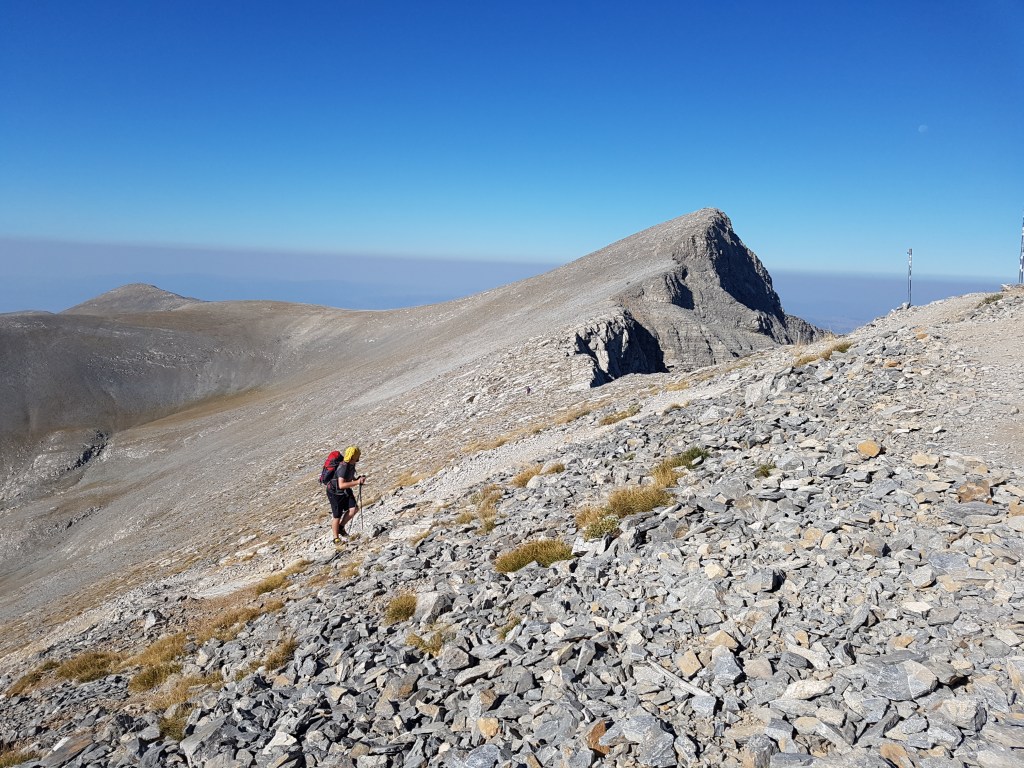
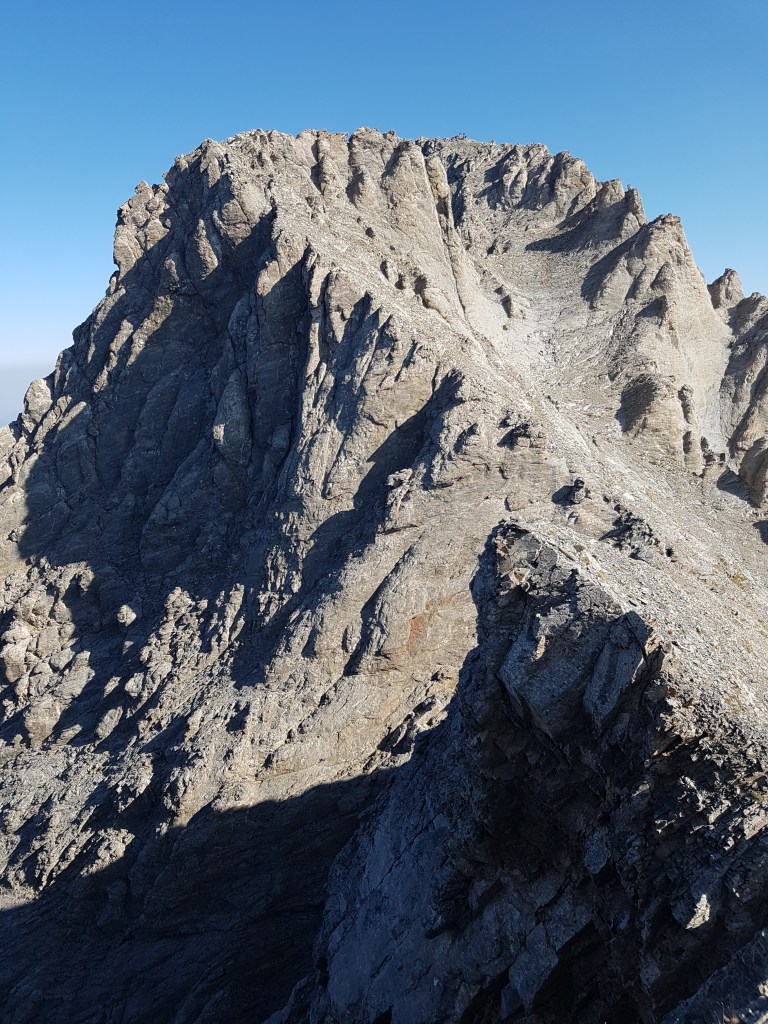
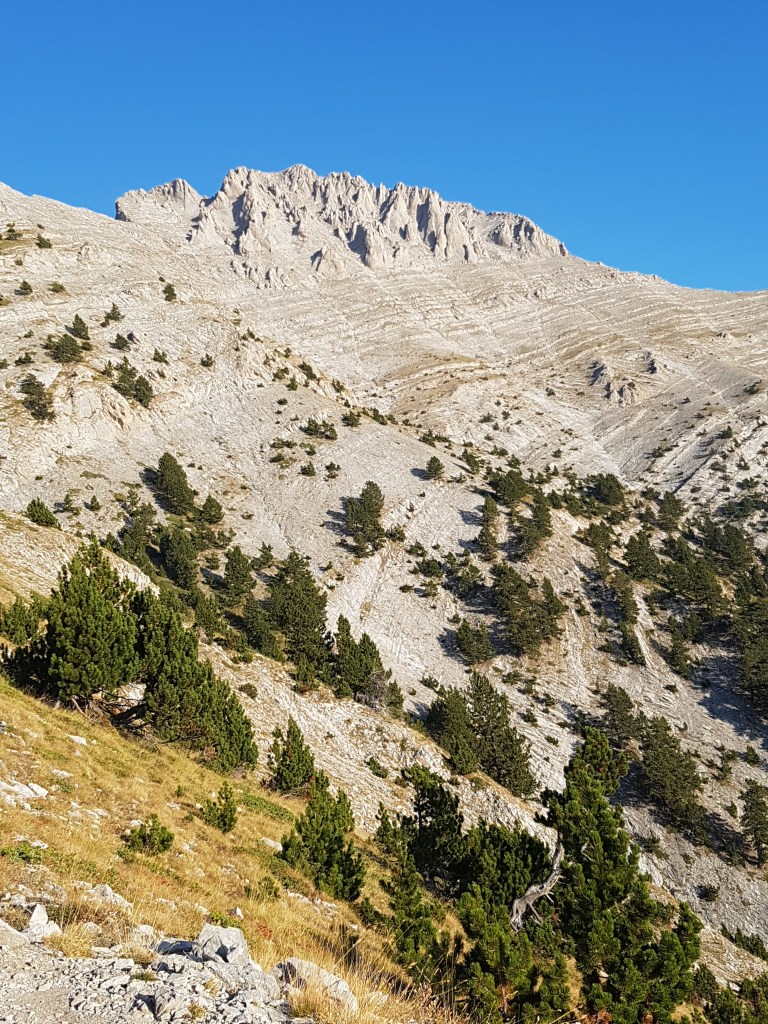
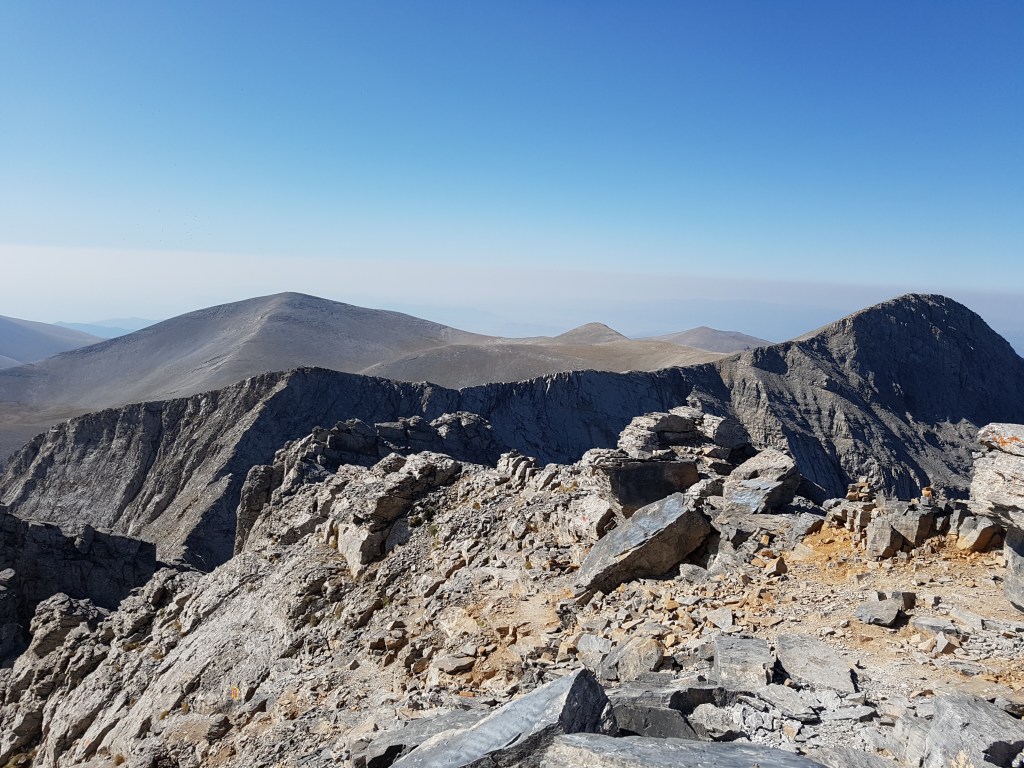
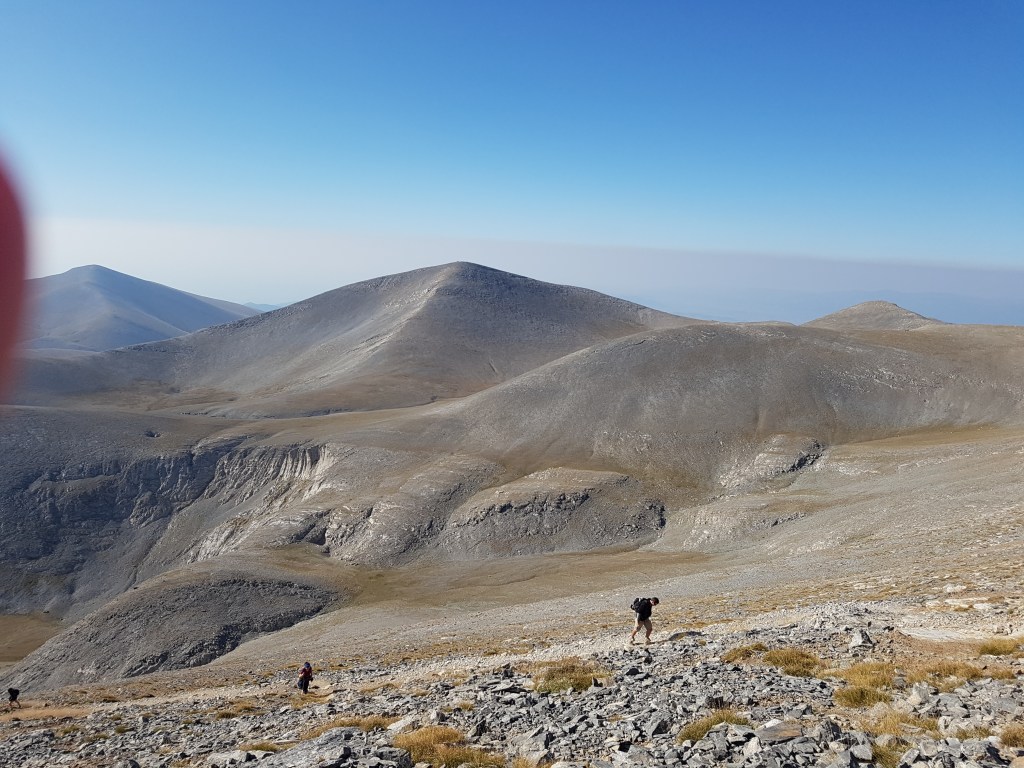
The view west from Skala towards Scolio, two of the highest peaks on the Olympus massif.
Day 136: We reluctantly took the decision to travel to Mount Olympus to climb the mythologically famous peak because it involved a gruelling six hour bus ride from Kyllini. We are now so pleased we made the effort.
We stopped over one night at the Hotel Helena in Larissa, a hotel that is in desperate need of some serious investment to refurbish it. With that said, it served a very good Greek style breakfast and the duty receptionist gave us a gift of a bottle of wine. Another example of the famous Greek hospitality.
The following morning we took a train to Katerini and a local bus on to Litochoro, at the foot of Mount Olympus. I don’t usually pass comment or grade train stations. I was however, very impressed with the train station at Larissa. We walked there the evening before taking our onward train, to confirm its location and the train timetable. What we found was more of a community centre than a mere train station. There is a large covered outdoor space with a children’s play area and tables and seating for locals to meet and socialise. There was a children’s birthday party in progress while we were there. Some of the seating was designed as railway carriages. I didnt see a train while we were there but the place was buzzing. Other railway station designers take note.
In Litochoro, we booked into Hotel Aphodite. This now officially ranks as the best accommodation we have enjoyed since we left home. It oozes with style, is spotlessly clean, the staff are wonderful and it serves, possibly the best breakfasts I’ve ever eaten.
Like all well prepared travellers, we had arrived a day before we intended to begin our quest to climb the famous mountain. The idea was to hitch hike the following morning to Gortsia outside Litochoro to start the climb, as the local bus stopped running some time ago.
We decided to walk out to the road on the outskirts of town to ‘scope it out’ only to find the Mount Olympus Information Centre and its marvellous exhibition about the mountain.
We soon realised we were very very lucky we stumbled across the Information Centre. The lady at reception advised us that the Refuge B, where we had intended to stay overnight on the mountain had closed due to a water shortage. It hadn’t rained on the mountain for 45 days. I said, well, we’ll stay at Refuge C, just 15 minutes away. No, you won’t, advised the woman, its fully booked until next Thursday
Your only option, we were advised is to take the alternative and much more popular route from Prionia to Refuge A and stay two nights there. The lady was very helpful, she helped us plan our route and phoned Refuge A on our behalf to book two beds. I thought this appeared to be overkill as the hostel accommodates 108. It wasn’t, as I learned, Mount Olympus is a hugely popular hiking destination.
When taking my booking the lady at Refuge A made it clear that because of the water shortage, there were no showers and the toilets are only operational from 6pm to 8am. I agreed without hesitation, such was my desperation, to get an opportunity to climb the mountain after the effort of getting there. It would only be latter that Sheila and I would realise what a huge discomfort we signed up for. Going three days without a shower and with only limited use of a toilet proved a very uncomfortable experience.
So, my well constructed plan to hike a ‘loop’ up and around the mountain was in tatters. The good thing about the revised plan was that it was a physically less demanding option. This would be something that we would both be grateful for at a latter stage.
The new plan would involve three days and two nights on the mountain.
After an early breakfast and having left most of our belongings at the hotel as we didn’t want to carry heavy packs up the mountain, we set off on the 15 minute walk to where we intended to start hitch hiking.
The second car that drove past, with three young Romanian tourists in it, stopped to give us a lift after just five minutes. They planned to climb the mountain as we did. Only they planned to do it in two days and not the three we planned. That meant they would have to climb to the peak on one day and down again as far as the Refuge. Stay overnight at the Refuge and descend to Litochoro at the bottom on day 2. A manageable plan if you are young and fit.
During the 45 minute drive up to Prionia we chatted and exchanged stories and future plans. It shows how chance meetings can change your plans because by the time we reached Prionia, I had convinced them to go and hike the Vikos Gorge after Mount Olympus.
At Prionia, Sheila and I set off on the E4 up the mountain towards Refuge A. The E4 is one of two European long distance footpaths that cross Greece. These European footpaths are good trails to use as they are invariably well signposted and normally but not always well maintained.
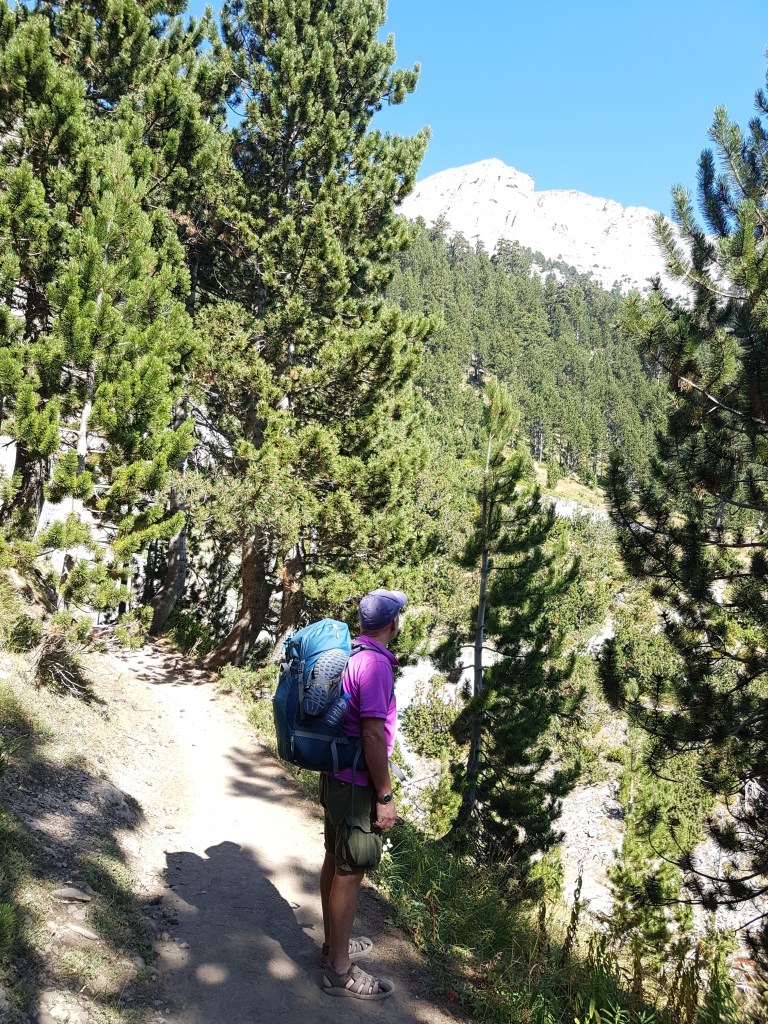
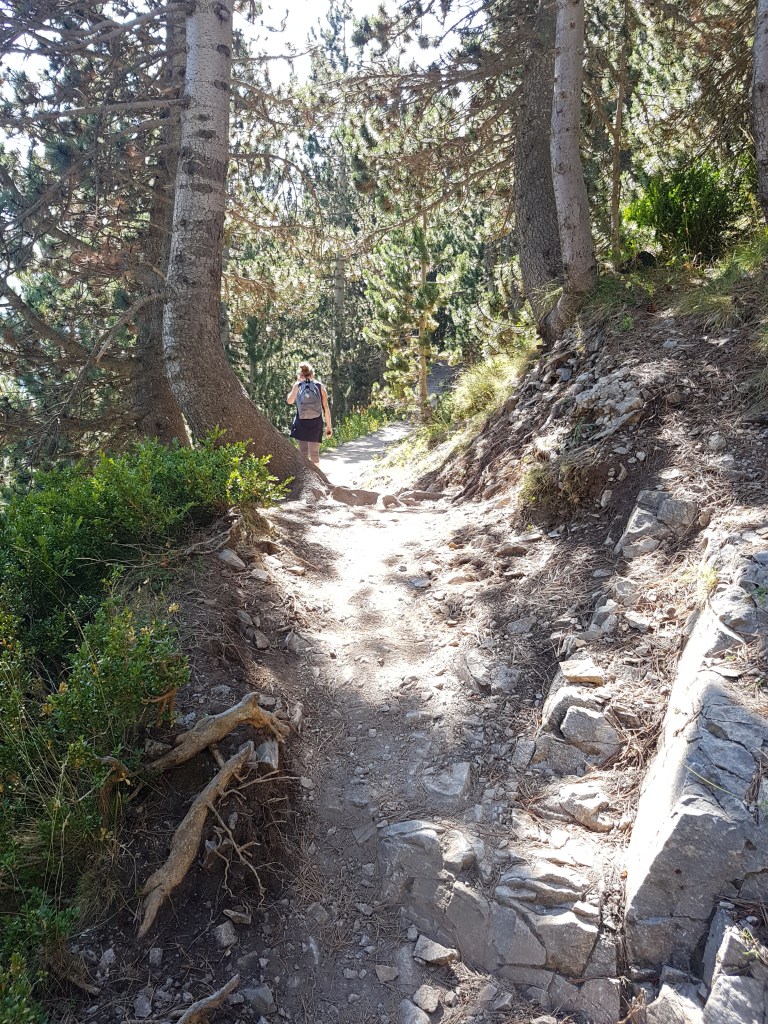
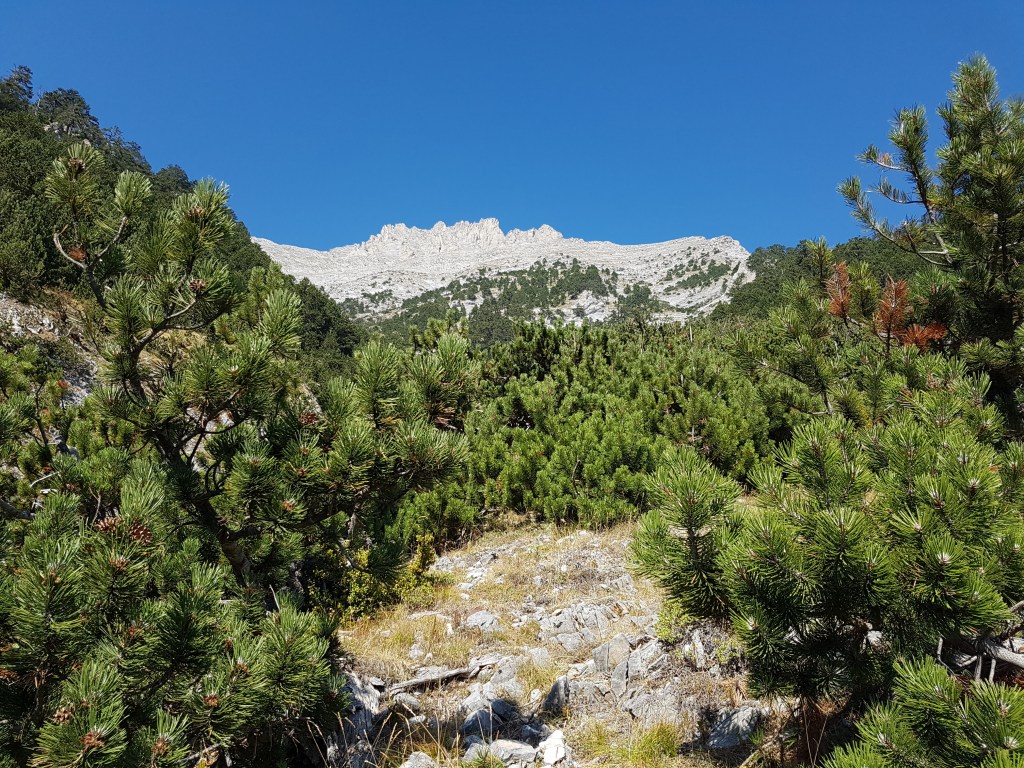
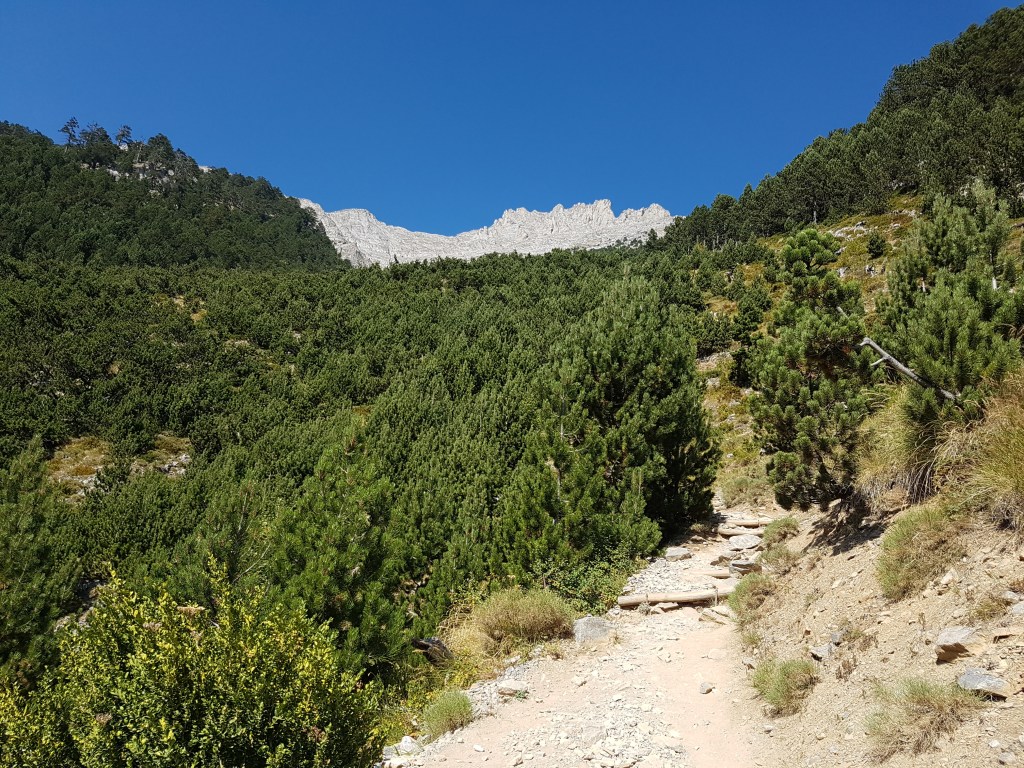
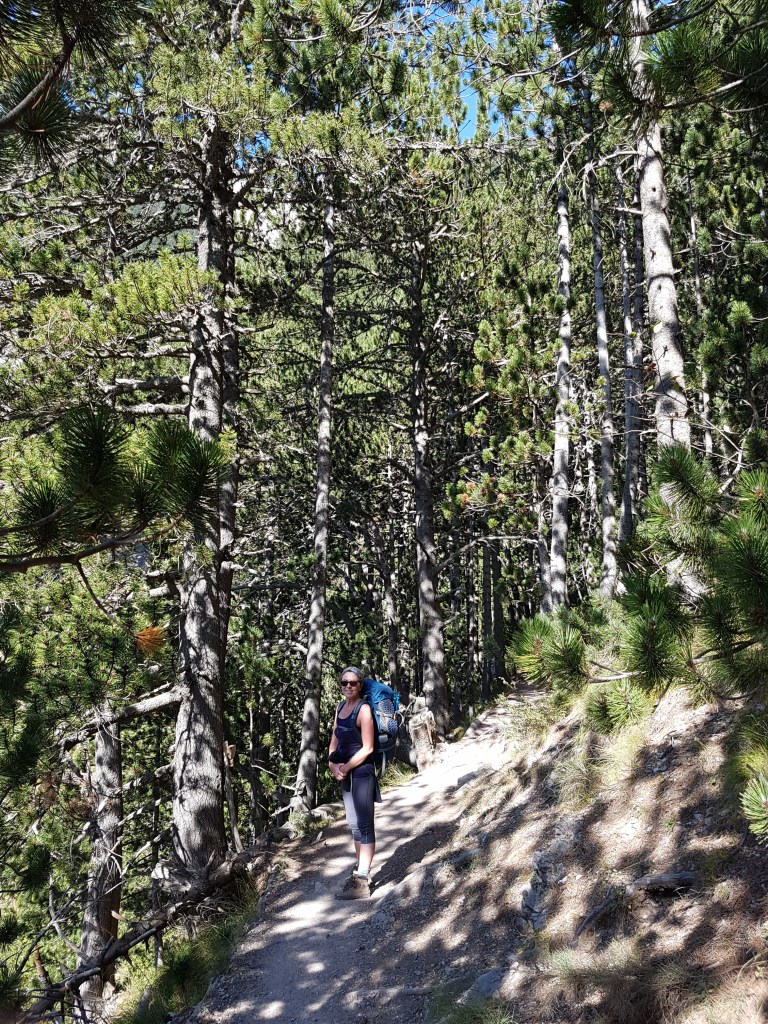
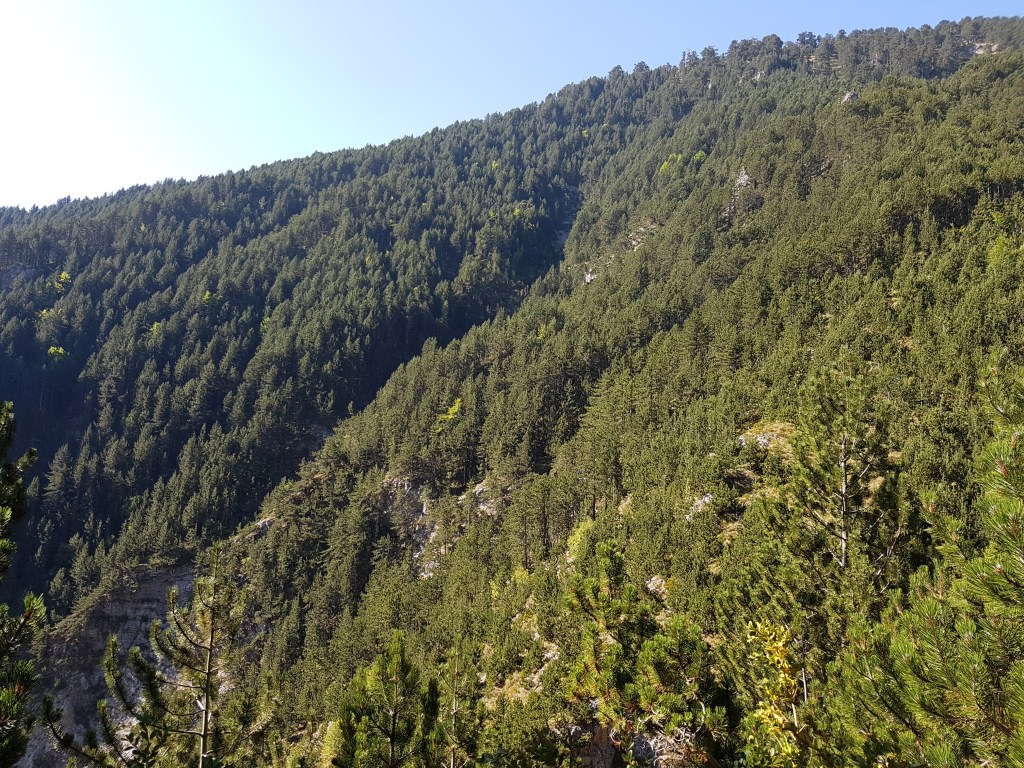
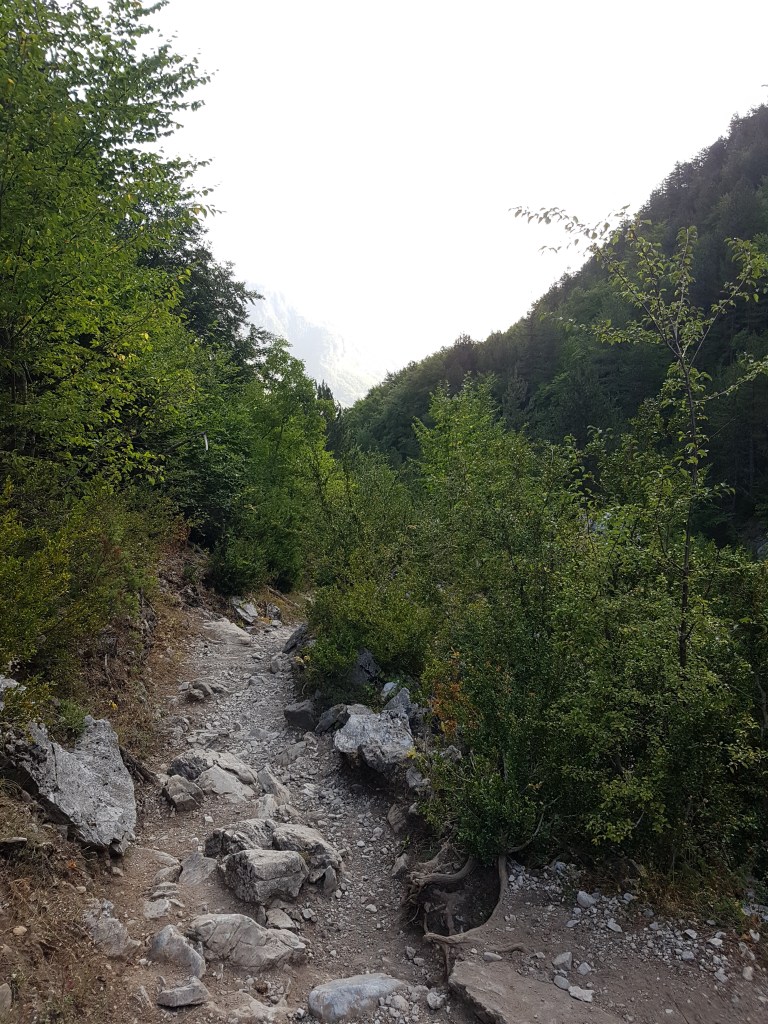
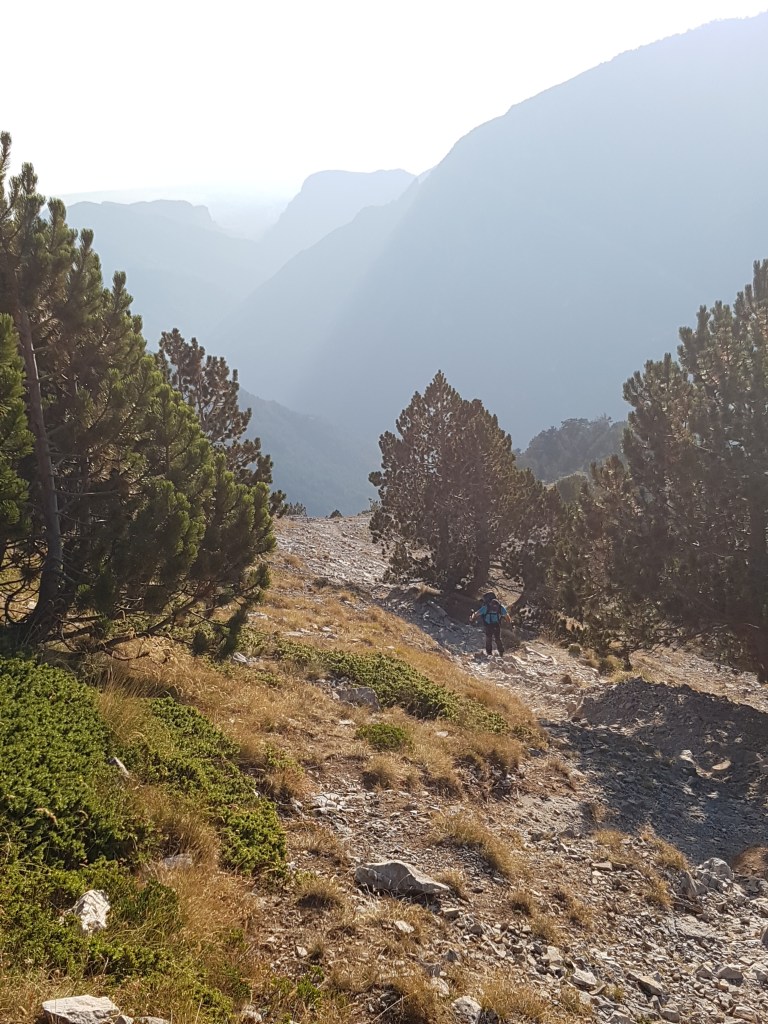
The hike from Prionia to Refuge A, through a forested landscape was as close to my idea of heaven, as I could reasonably hope for. The forest was mixed evergreen and deciduous. Mostly Black Pine and Beech trees.
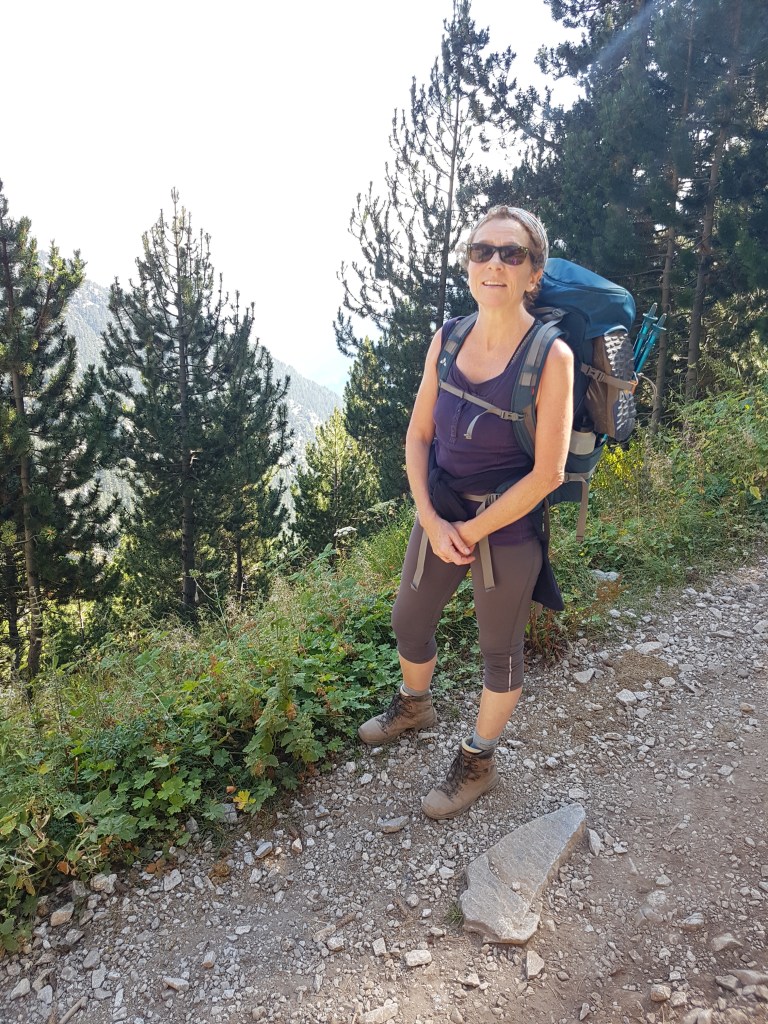
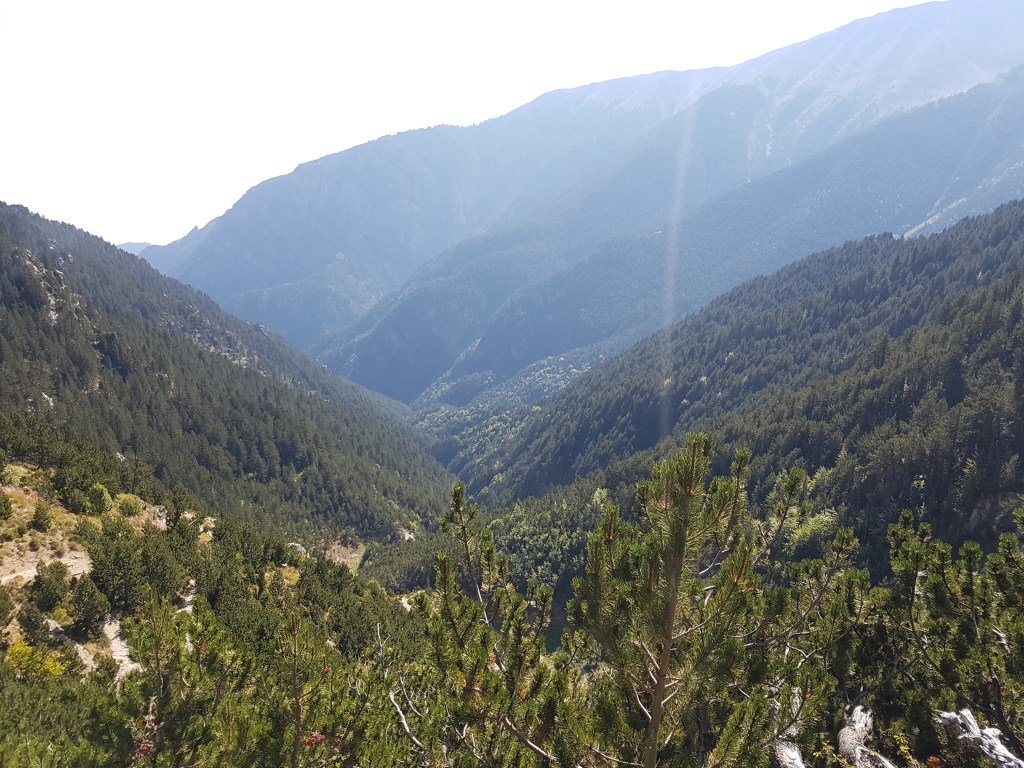
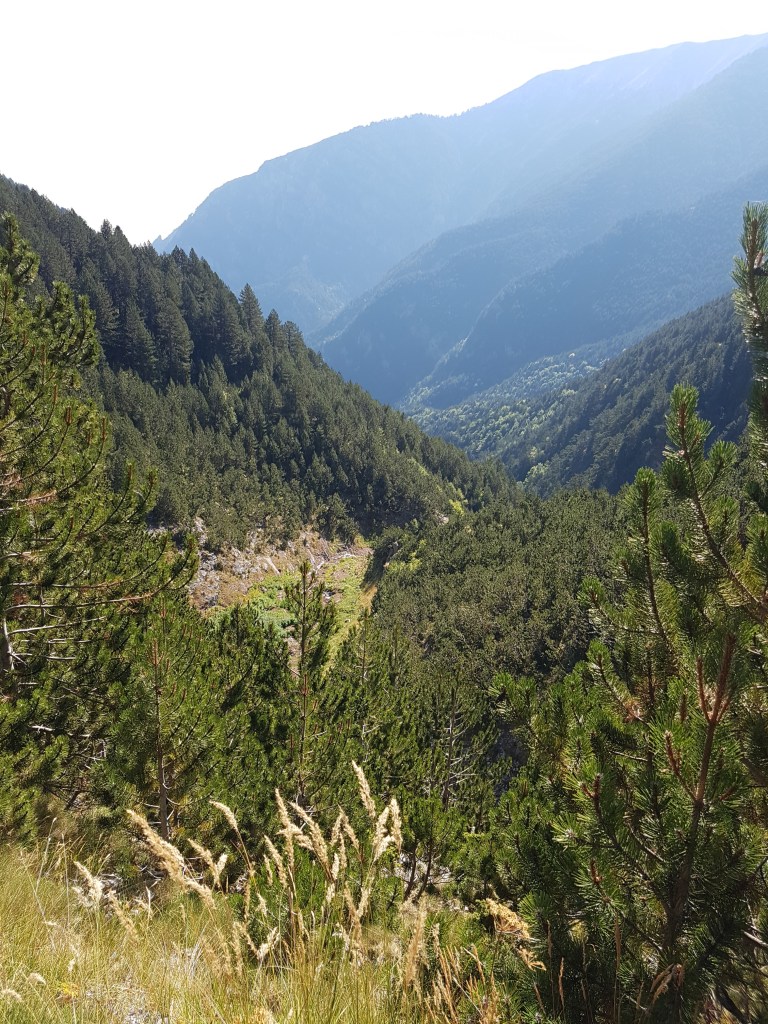
We climbed 1,100m to an altitude of 2,100m in 2.75 hours and arrived at the Refuge just after midday. We possibly could have managed it a little quicker but instead took our time and enjoyed the views. At times we could see the mountain peaks above us and at other times, down the Enipeas Canyon to the sea some 20+ kms below us. It was a tough hike but hugely enjoyable.
We took the opportunity at the Refuge to speak with others who had returned from the summit. Opinions were vastly different. Some said, it’s a relatively easy climb, most reasonably fit people could do it with ease. Others said, it is a very strenuous climb and only experienced mountaineers should attempt to climb to the summit.
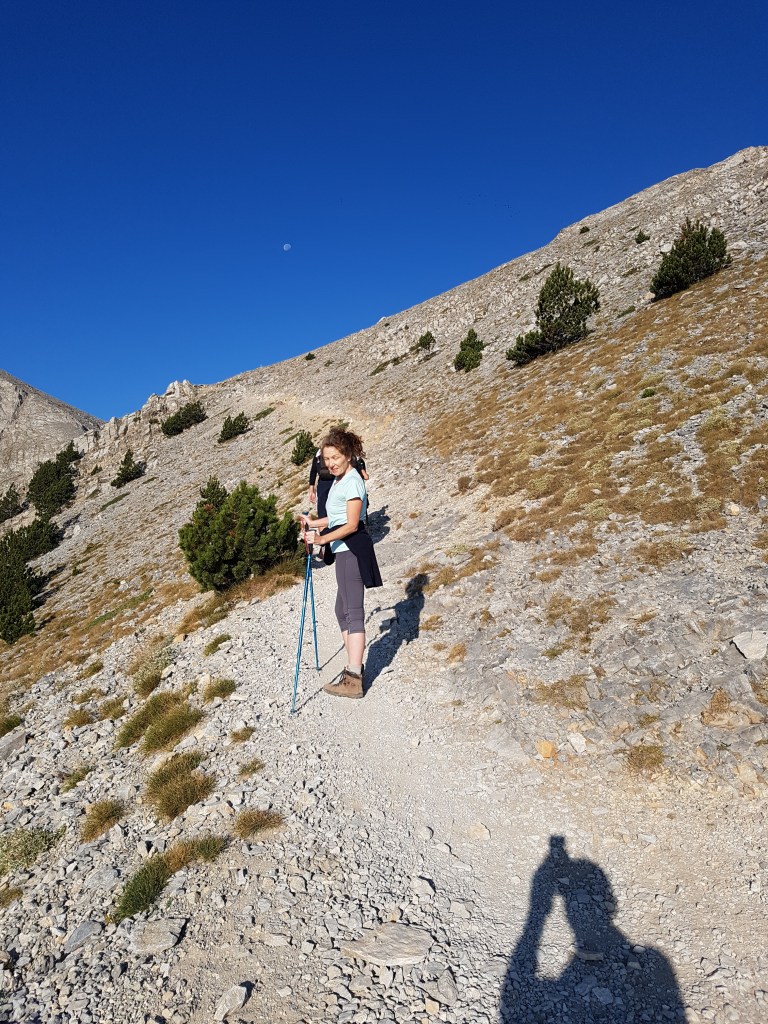
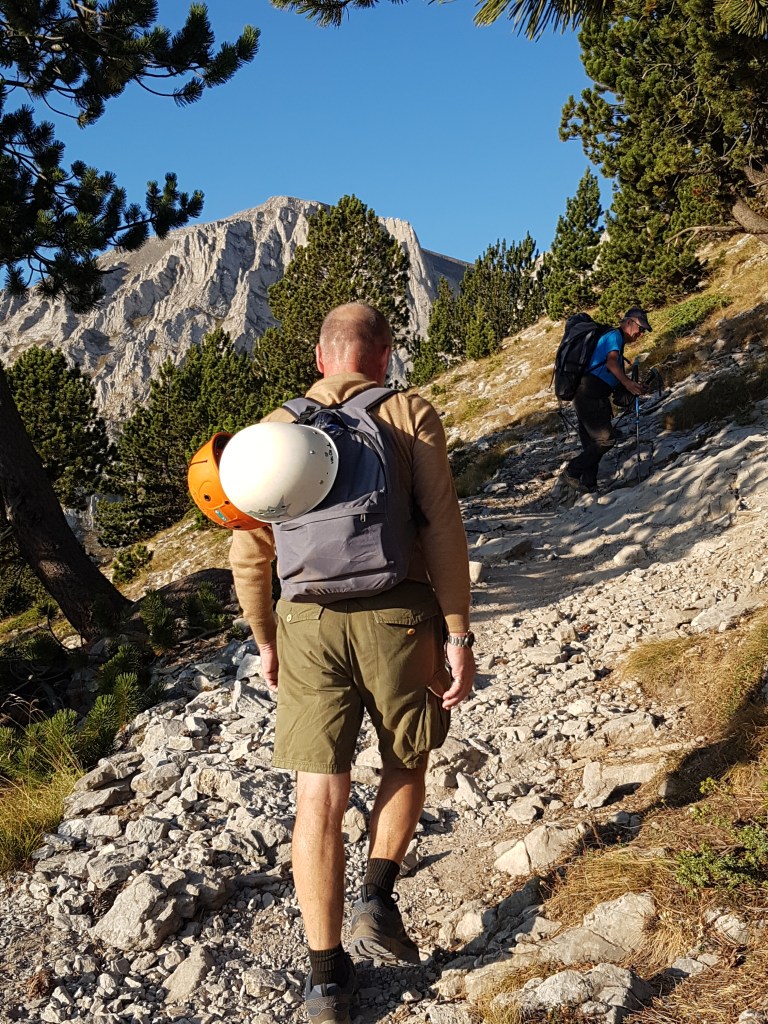
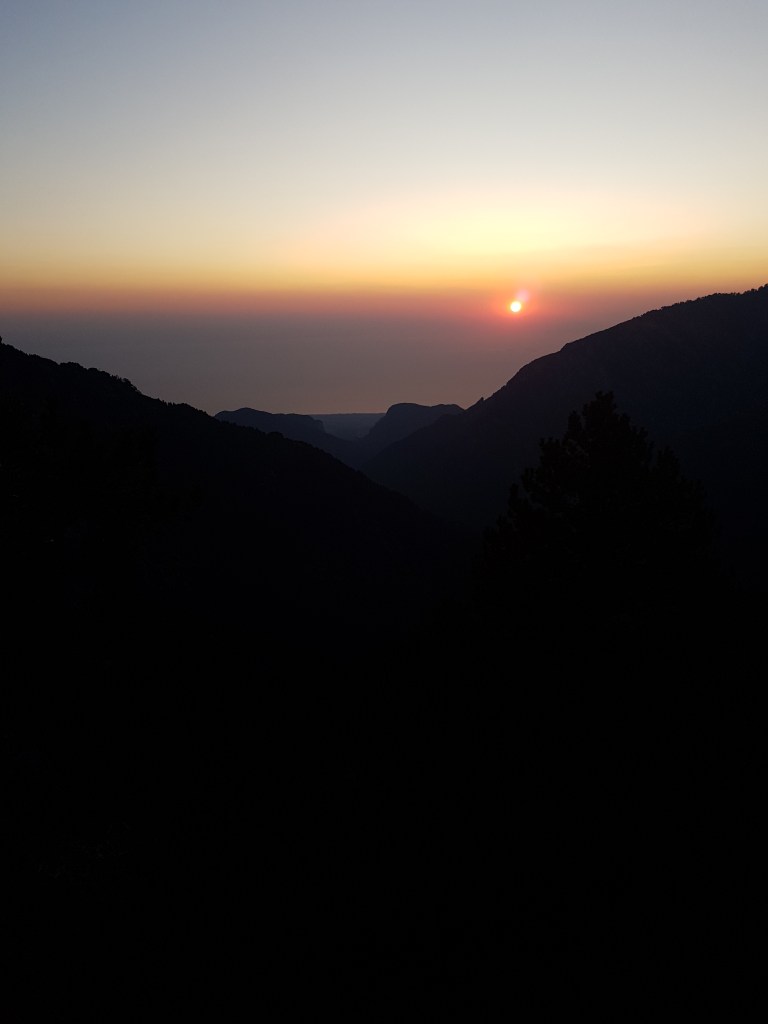
We rose early to catch a magnificent sunrise and set off excitedly and apprehensively at 8am behind a number of others. From the start, it was hard going, hiking up a steep gradient. The trail is reasonably well signed and obvious. We took the wrong path twice but realised quickley and didn’t lose much time.
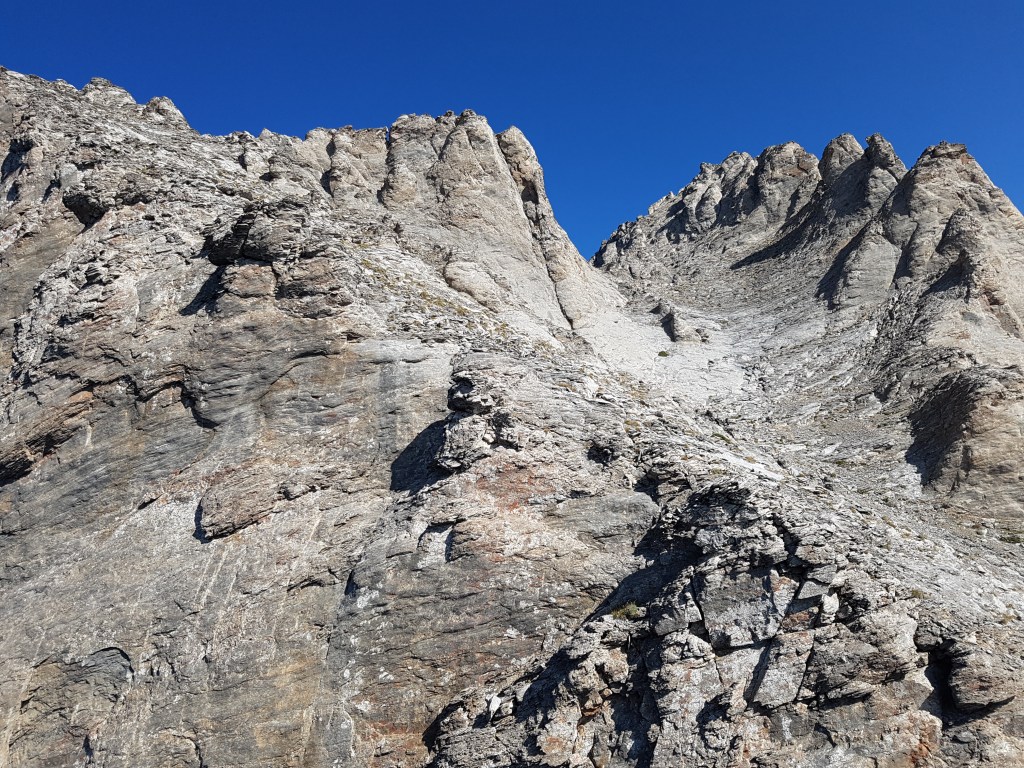
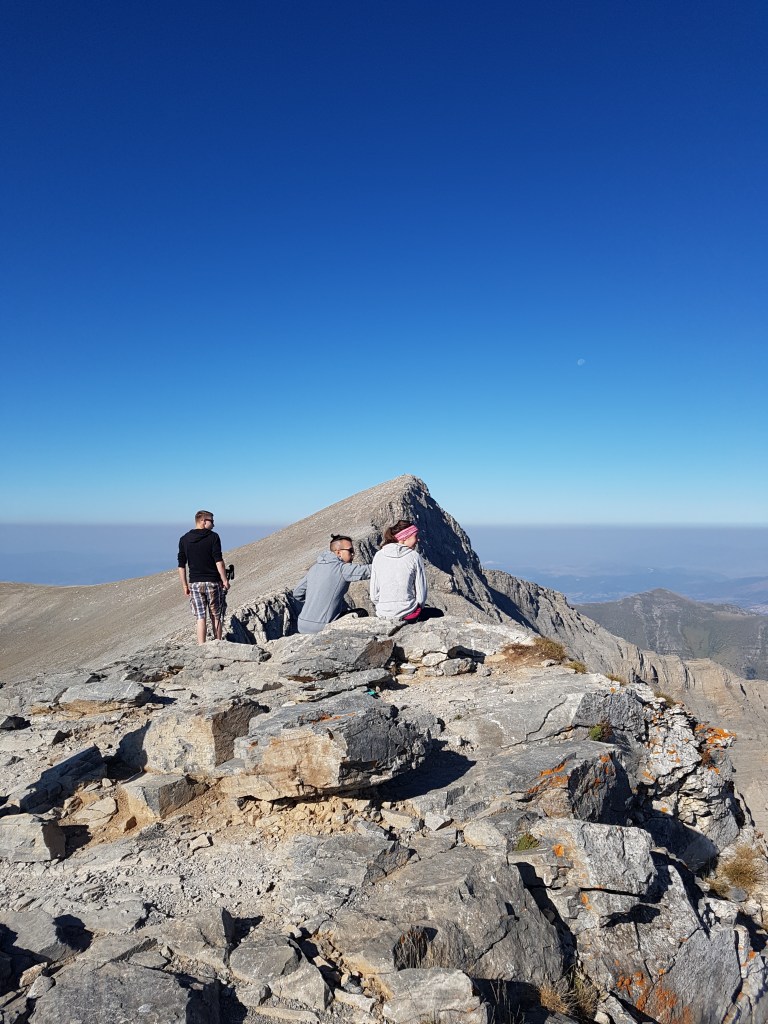
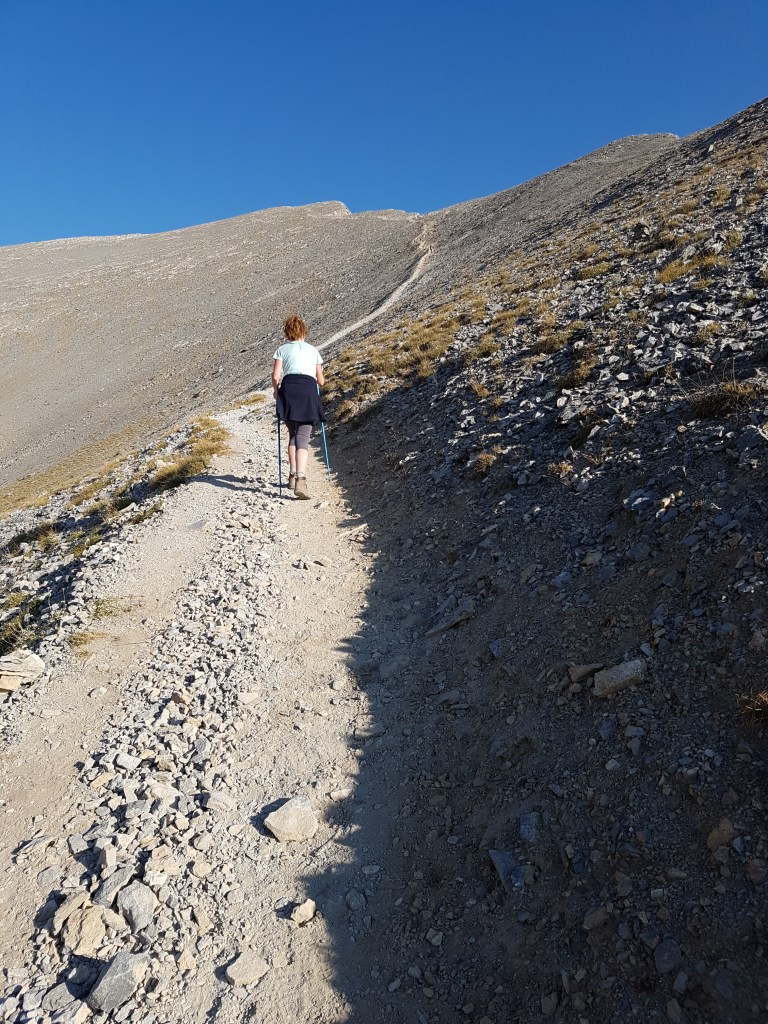
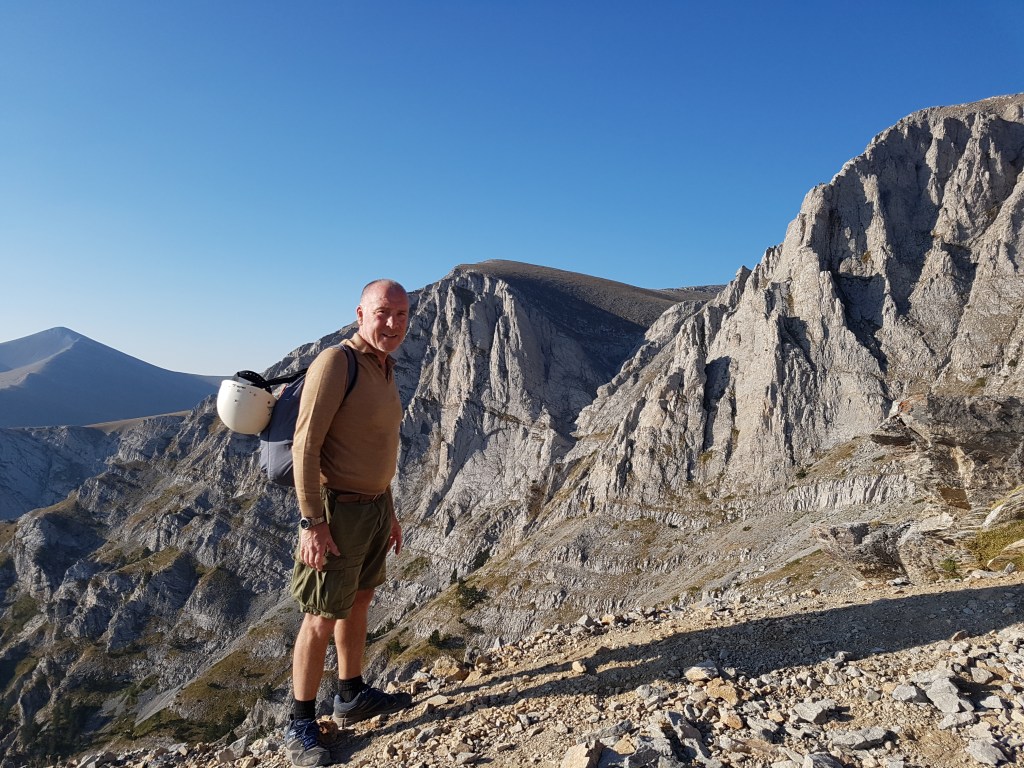
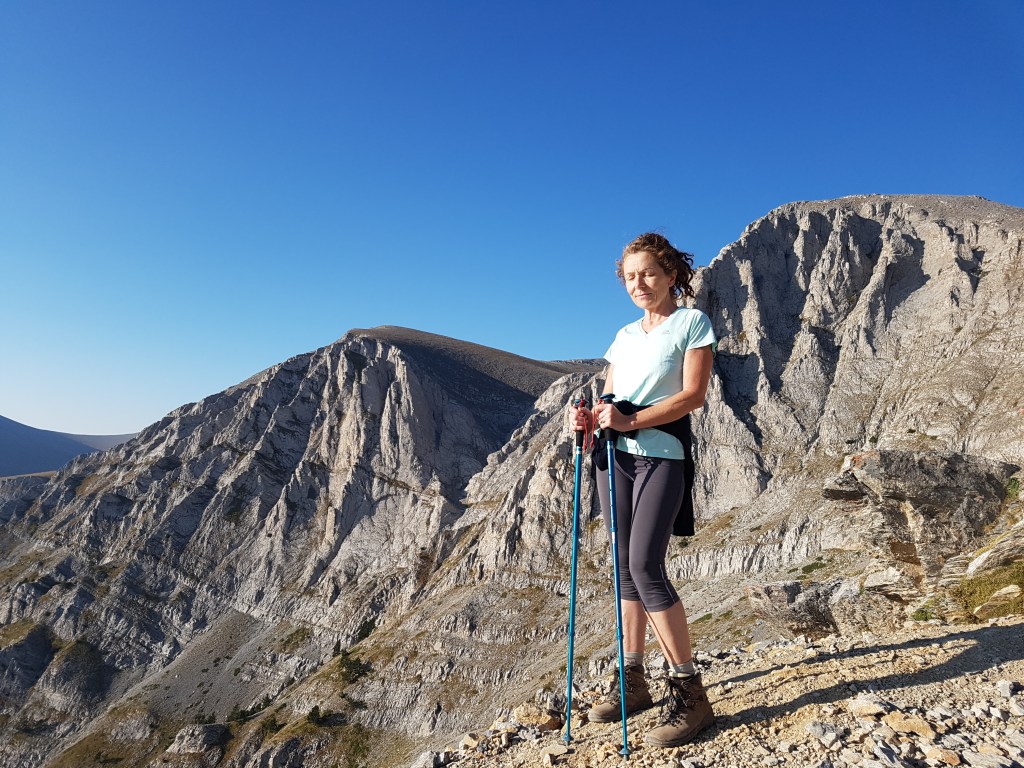
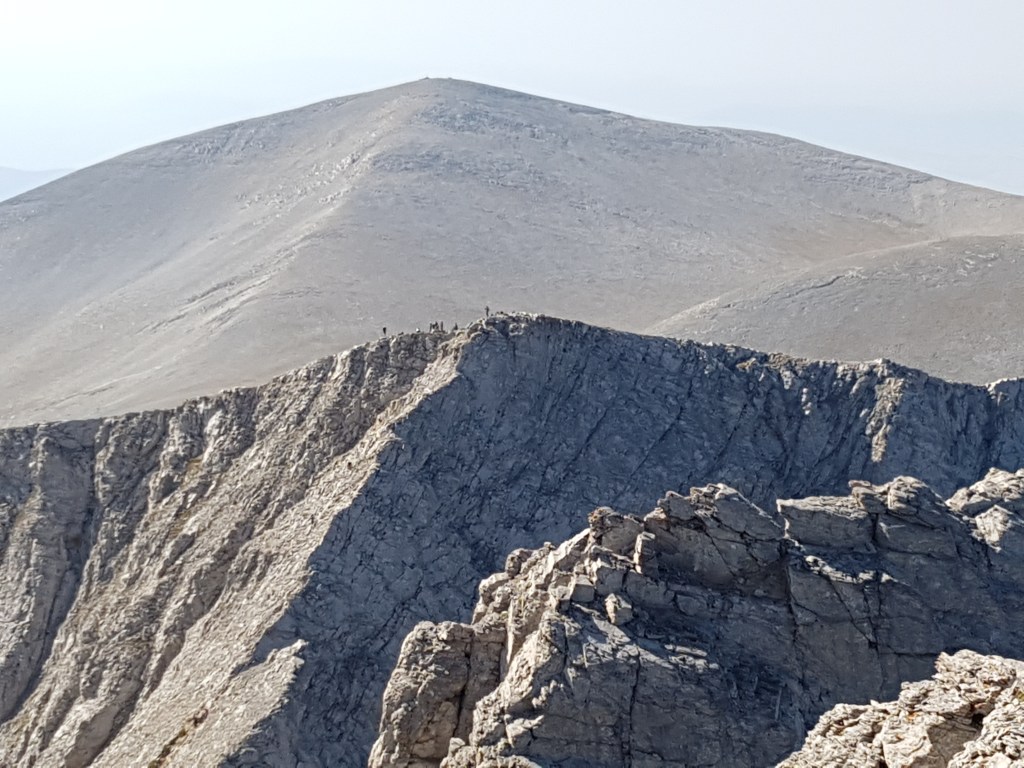
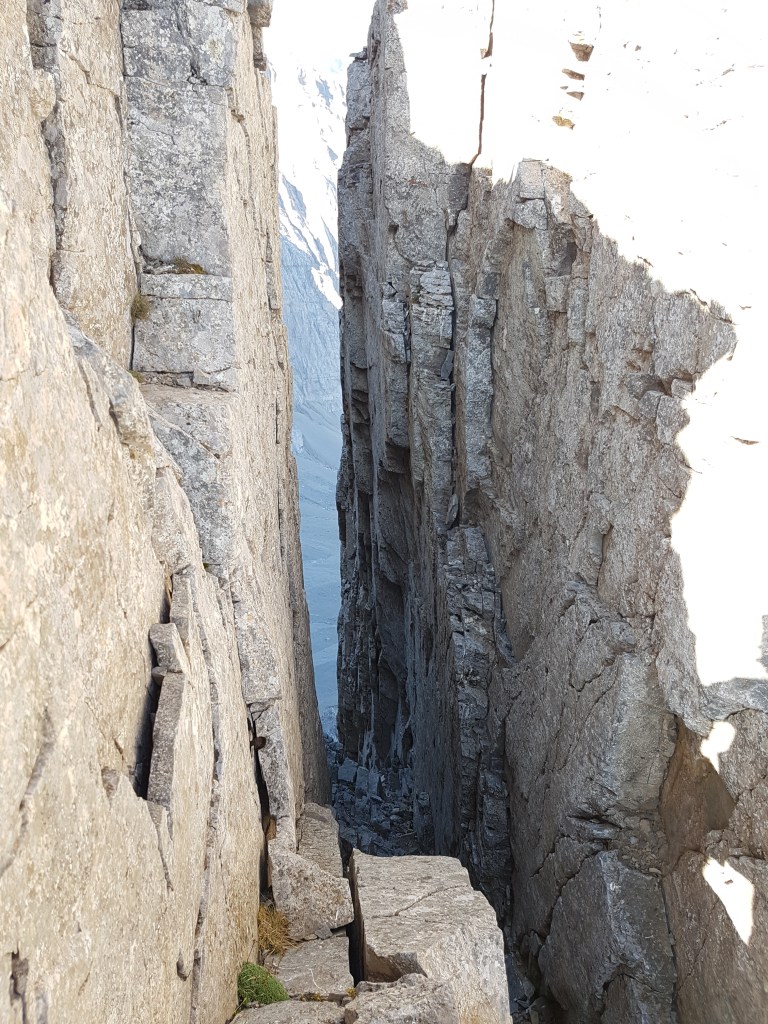
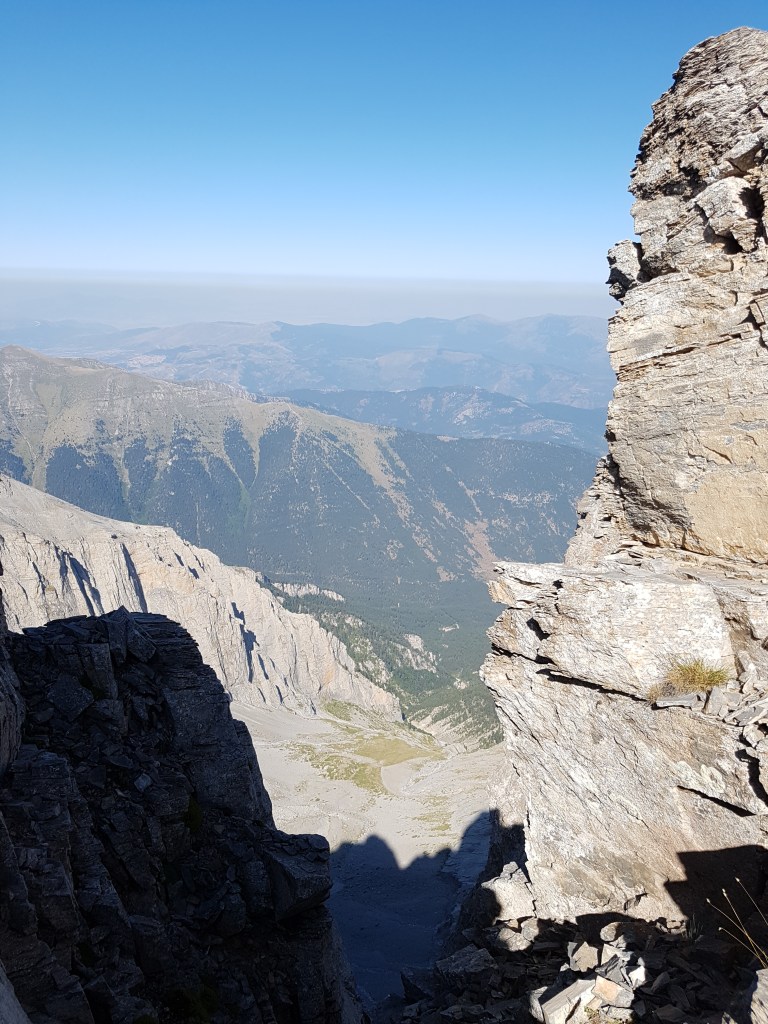
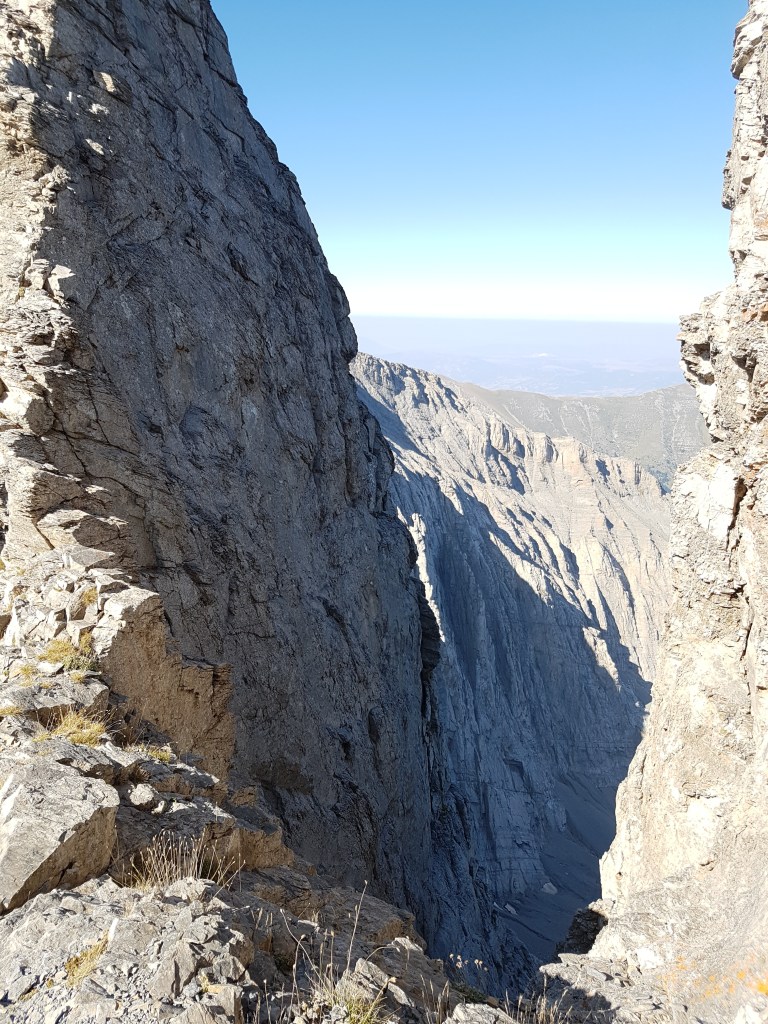
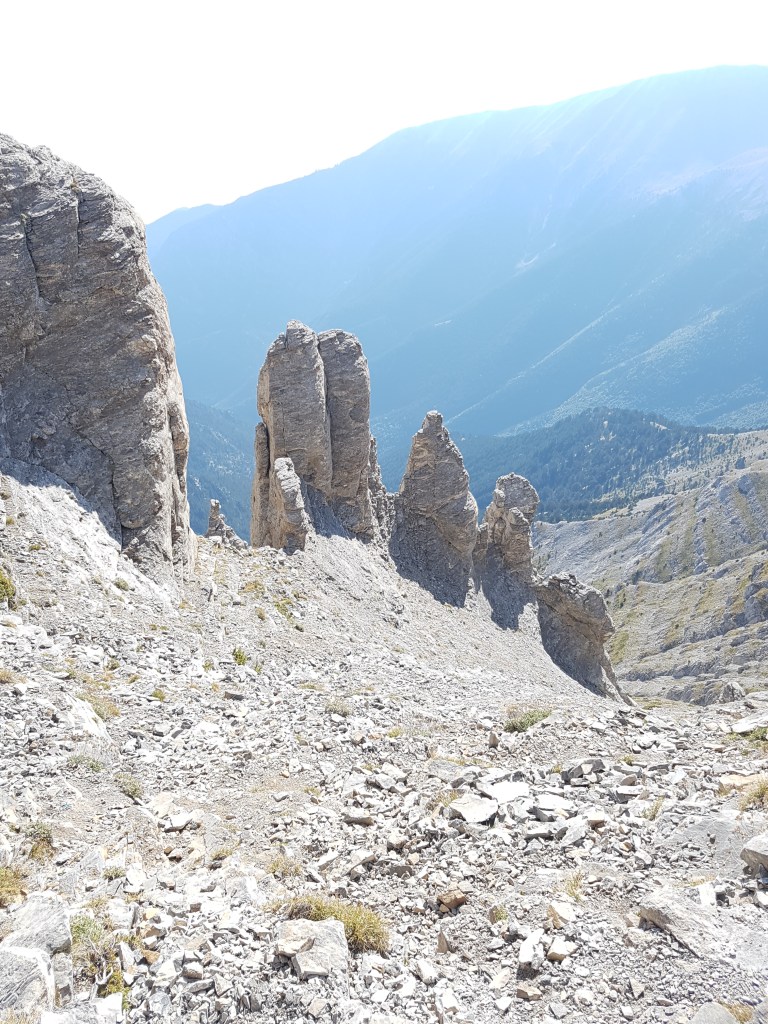
We climbed slowly above the tree line and continued up the lunar landscape. The views up and down were sensational. After 2.5 gruelling hours we reached the summit of Scala. Sheila and I were tired and elated in equal measure.
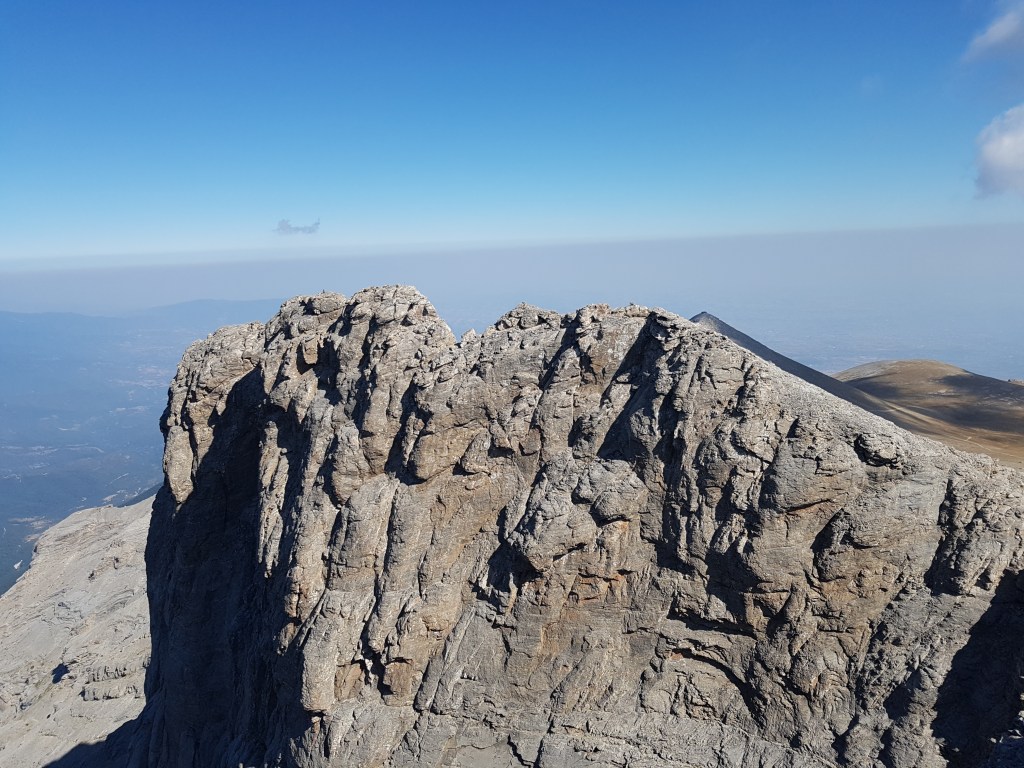
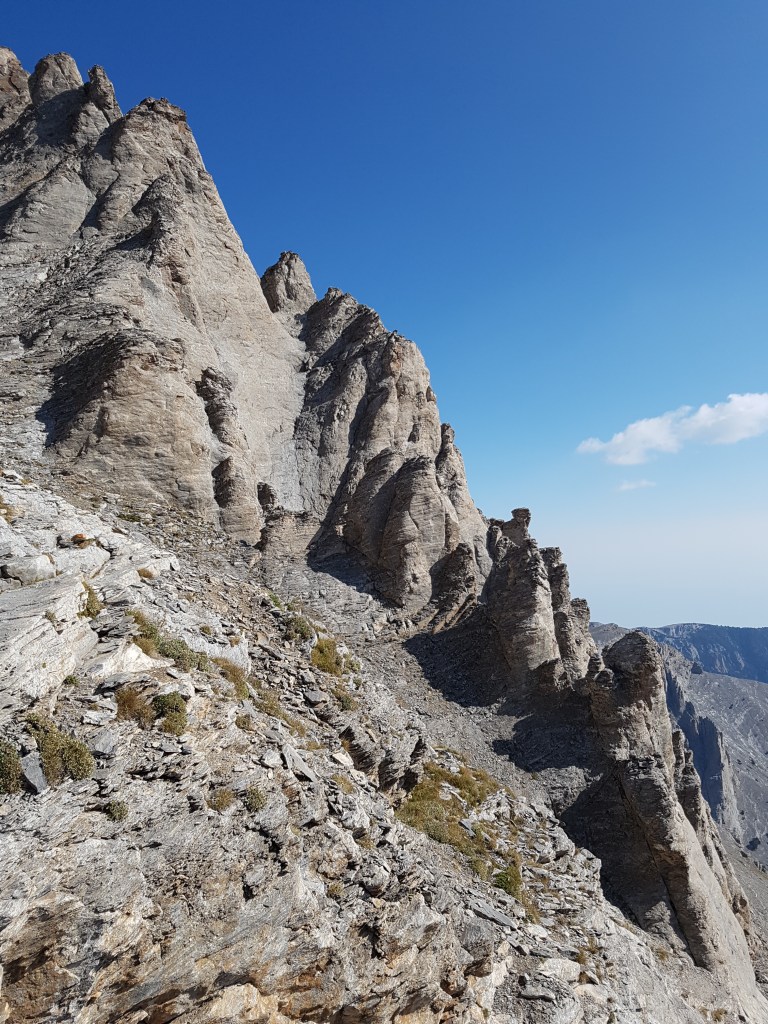
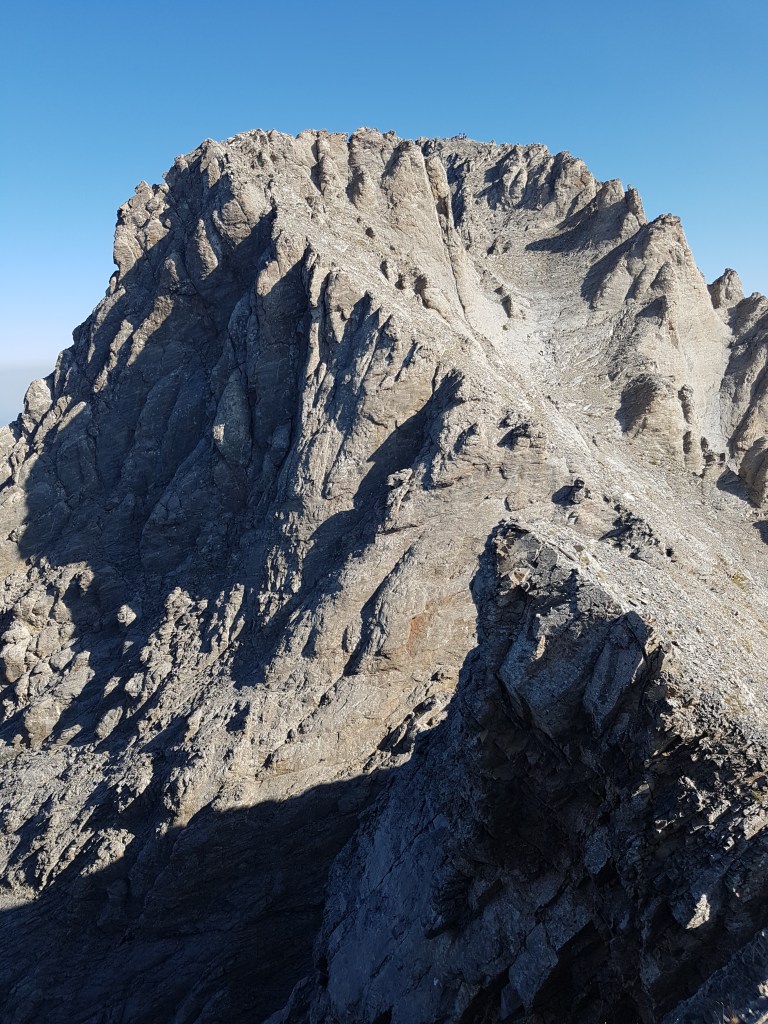
Olympus is a massif with something in the order of 30 peaks, the highest at 2,919m is Mytikas. All the different assents of Mytikas involve a technically challenging climb. Only a small percentage of those that climb Olympus tackle Mytikas.
Sheila decided against climbing Mytikas and choose instead to climb to Scolio, alt. 2,912m. I decided to attempt Mytikas. Well, start towards it and if it got too hairy, to come back down.
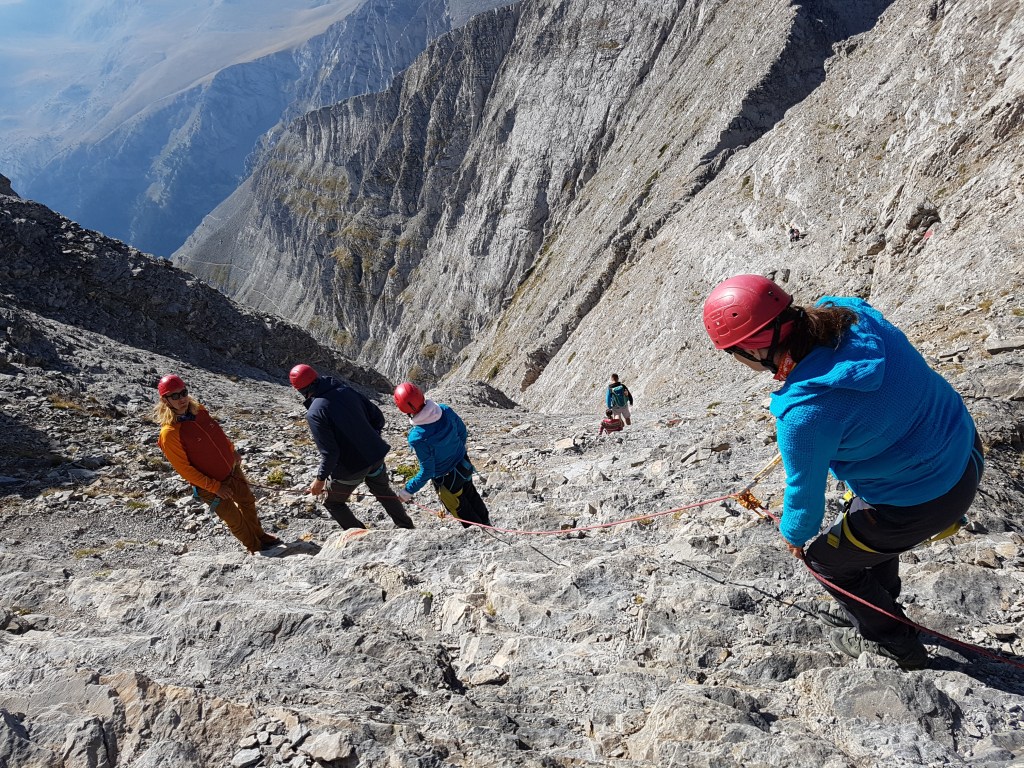
The climb to Mytikas should take between 30-60 minutes from Scala. It took me a full hour using both hands, It was the most challenging climb I have ever attempted. My heart was in my mouth for much of the time, as one slip would have resulted in a fall of hundreds of metres.
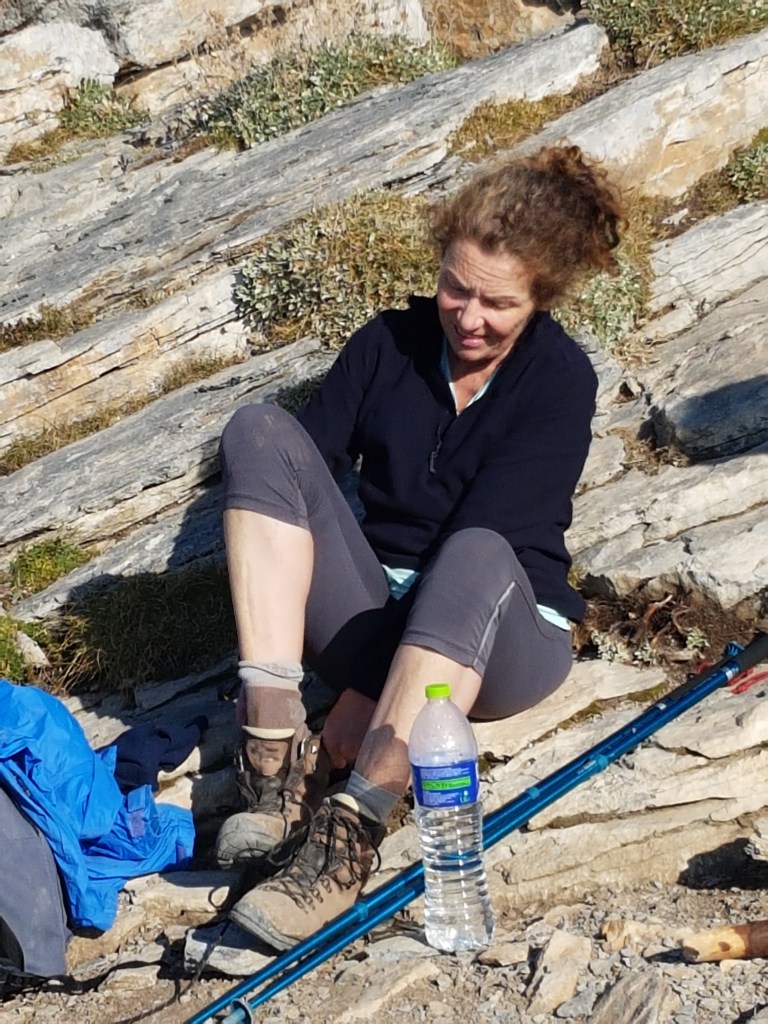
It took me a further 40 minutes to climb back to Scala to meet with Sheila. The climb had been the most exilerating thing I have ever done. The hike back to the Refuge was just as hard, if not harder than the journey up. We arrived back ay 3.30pm, 7.5 hours after we left totally and utterly exhausted but with a huge sense of acheivement.
Both Sheila and I had been looking forward to the hike back down the Enipeas Gorge to Litochoro. It is reputedly the most scenic part of the 3 day adventure. The hike down to Prionia where we started, we knew would take just over two hours. Then instead of getting a lift back the rest of the way we intended to hike the 4 hour trail. Those we asked estimated it would take between 5-7 hours. I figured 6 hours .
It was the most beautiful hike I’ve ever taken however, although it was downhill, a drop of 1,700m, it was no walk in the park. In the end it took us just short of 8 hours. Obviously, the previous two days had taken it out of us. We arrived back at the marvellous Hotel Aphrodite utterly exhausted but with a huge sense of acheivement. Spending time in this most sacred of places in the home of the Greek Gods was a privilege and something I will never forget.
After our six week grand (bus) tour of tbe Balkans, we have undertaken a three week Ionian island hopping tour taking in Lefkada, Kefalonia and Zakynthos.
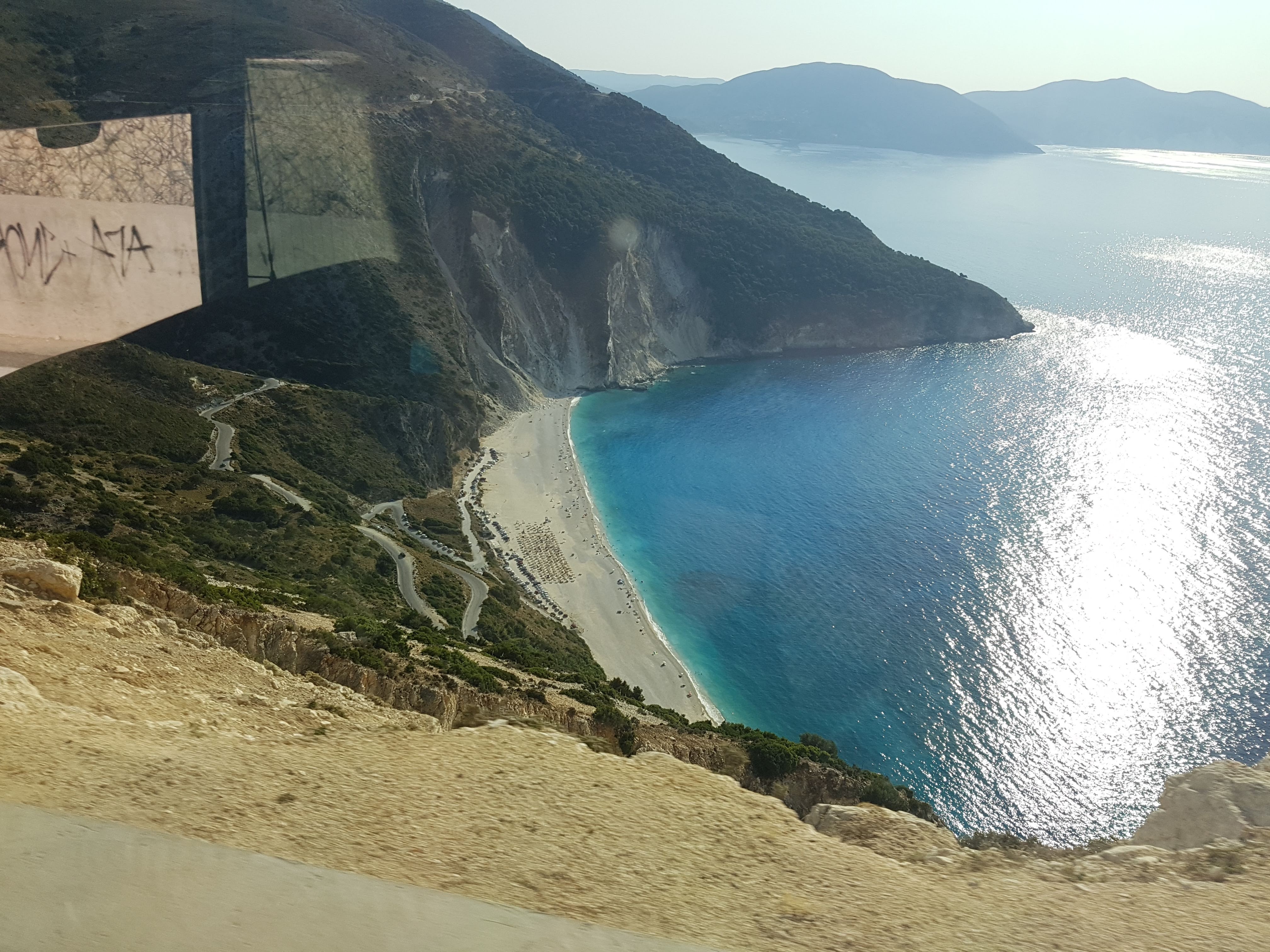
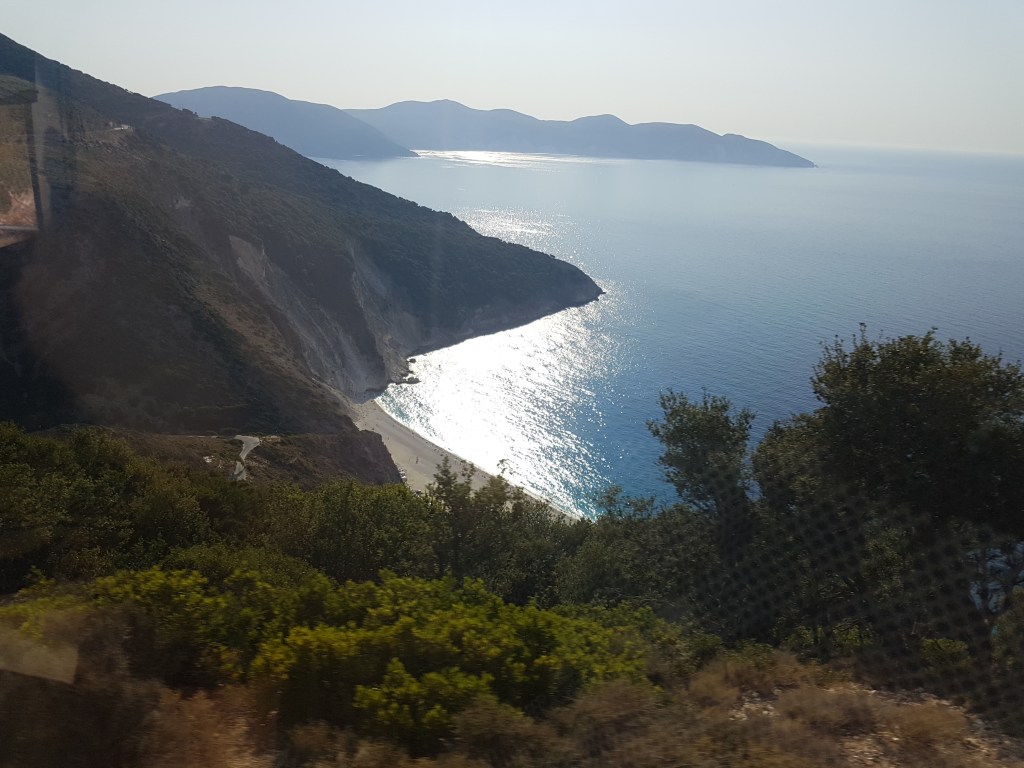
Myrtos Beach, Kefalonia
We arrived in Ioannina on a bus from Albania. Sheila and I enjoyed two very comfortable nights in Hotel Kentrikon in Ioannina including, what I can only describe as quirky eclectic breakfasts, which I enjoyed (pastries and pancakes) but Sheila didn’t. I like Ioannina. The streets are well maintained and clean. The town appears to be more affluent than many other parts of Greece. Arriving there from the Balkans was a shock to the system in that streetlife is orderly and things seems to work!
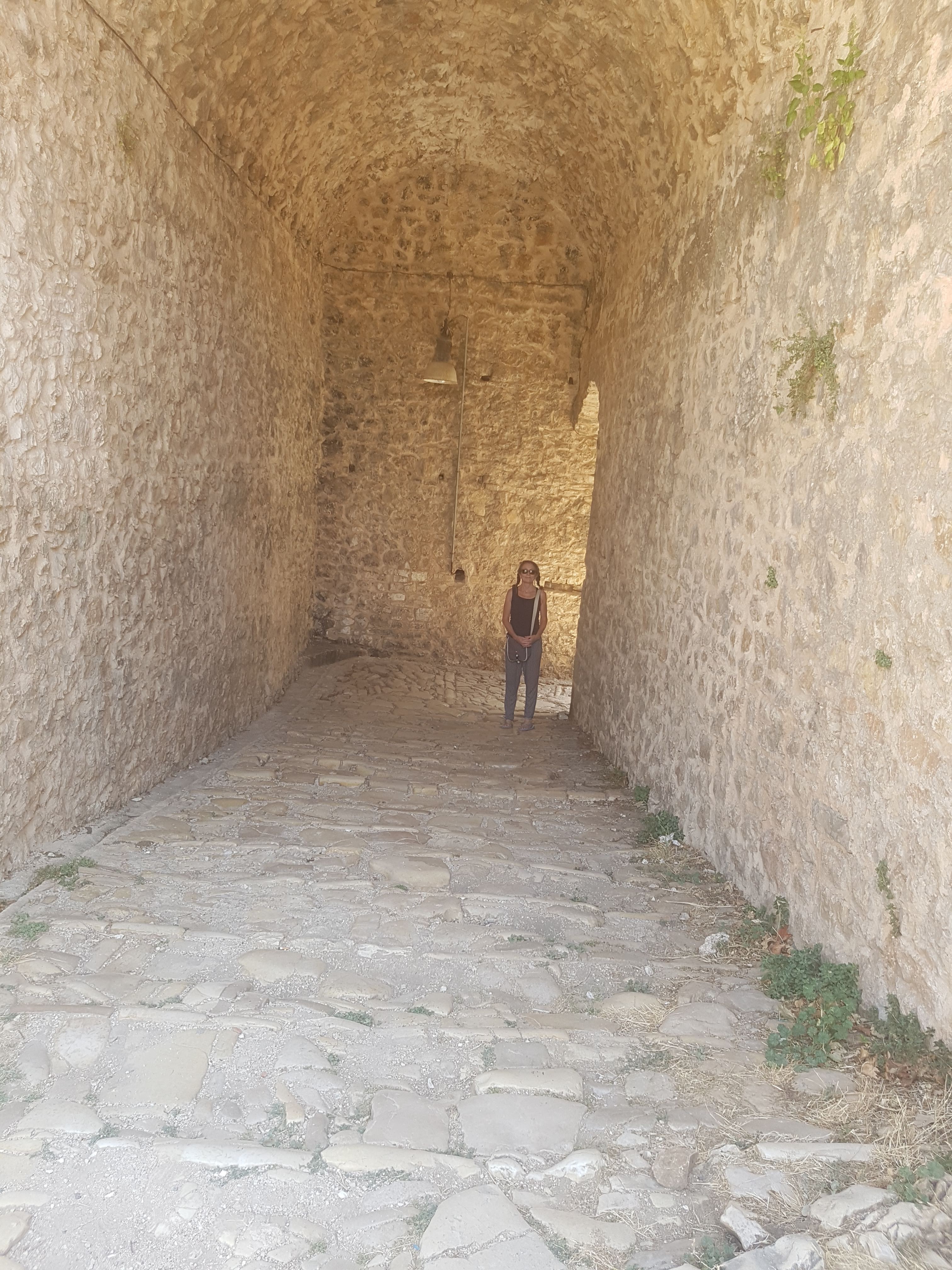
Sheila at an entrance to the Castle at Ioannina
We took a pleasant two hour bus ride from Ioannina to Pescada on the banks of the Ioanian Sea. There, we met the Sea Gypsies, our friends Brian and Nev from Clacton.
Sunset at PescadaNev providing a little illumination
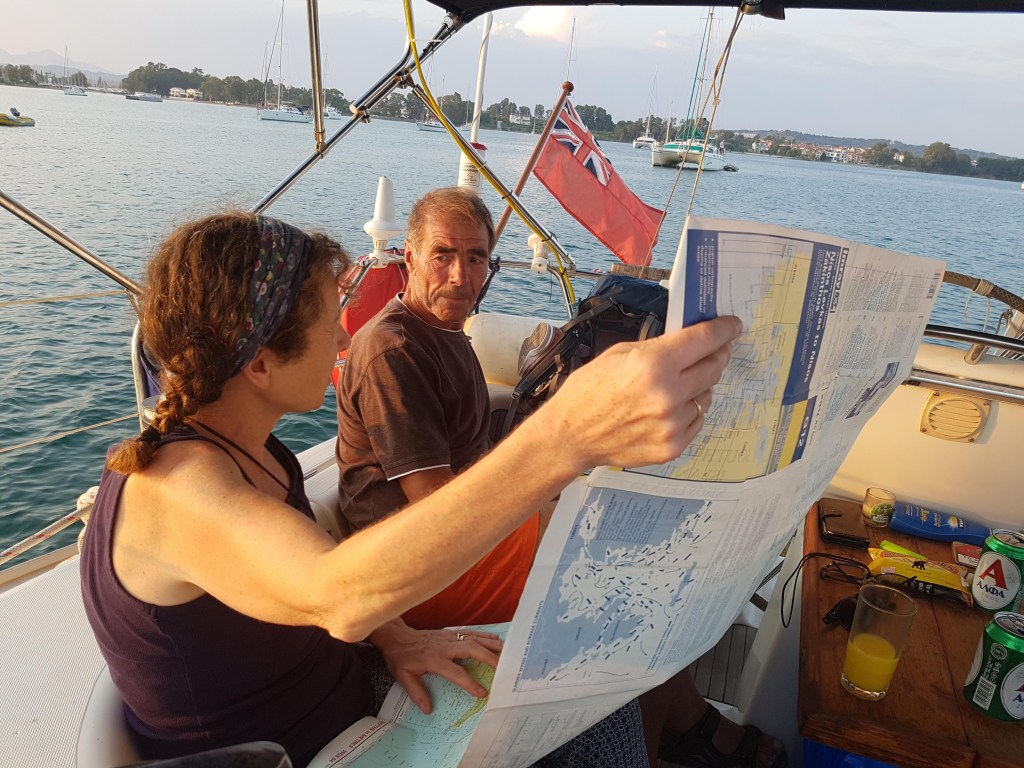
Brian and Nev sail around the Ioanian islands during the summer in their yacht Poppet. A fairly idyllic way for men of a certain age to pass their summers. Anyway, they were kind enough to extend an invitation to us to stay a few days with them. We spent the first night moored at Pescada. The following morning after picking up Michelle, who had flown in from the UK, we sailed to Desimi Beach, a small bay on the east coast of the island of Lefkada near Nydri.
It was flat calm but Sheila somehow managed to get horribly seasick. To the extent that we were unable to stay aboard after the second night. They cruised round to Nydri where we disembarked and checked in to a hotel for a couple of nights.
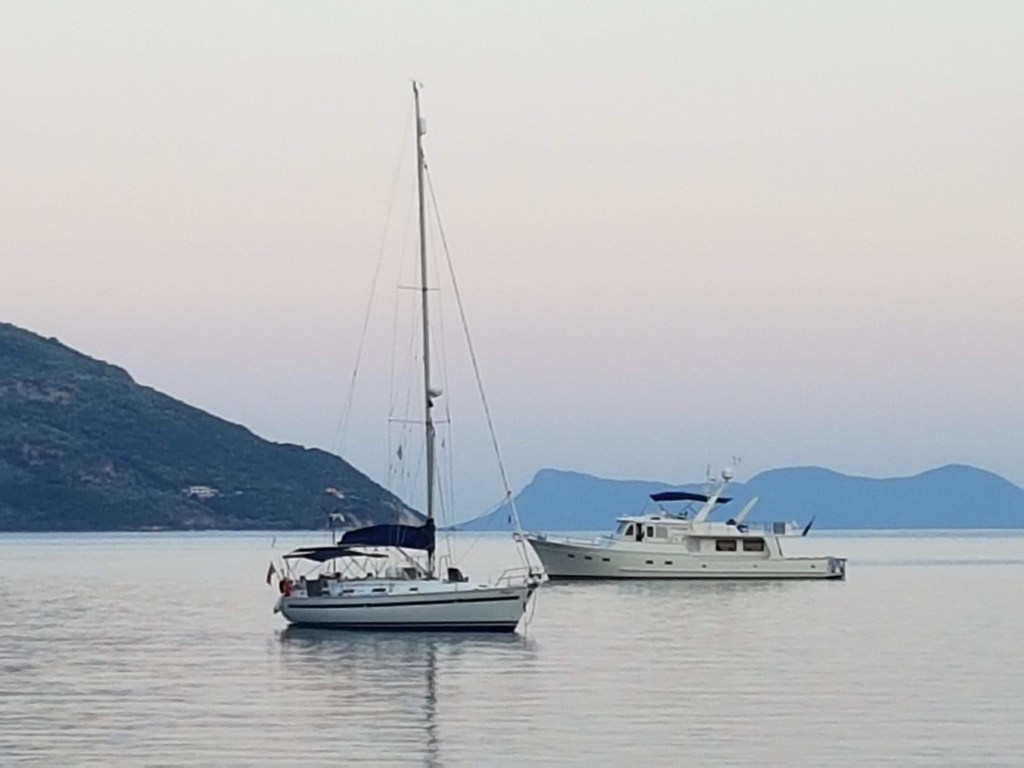
Poppet moored in Desimi Bay
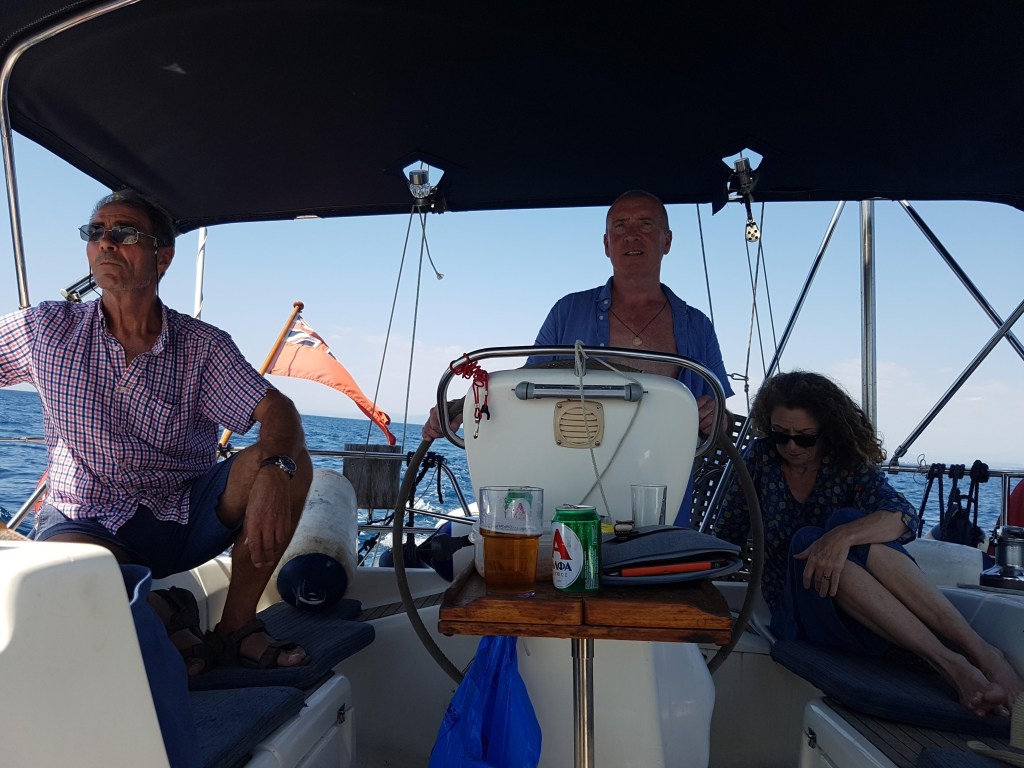
A nervous new helmsman
From Nydri Sheila and I took a ferry to Fiscado on the northern most tip of Kefalonia. We spent the day on the beach waiting for the 5pm bus to the capital Argostoli. Fiscardo is a quaint little port catering for sailors and tourists. Well, I suppose most of the coastal communities on the Greek islands are just that.
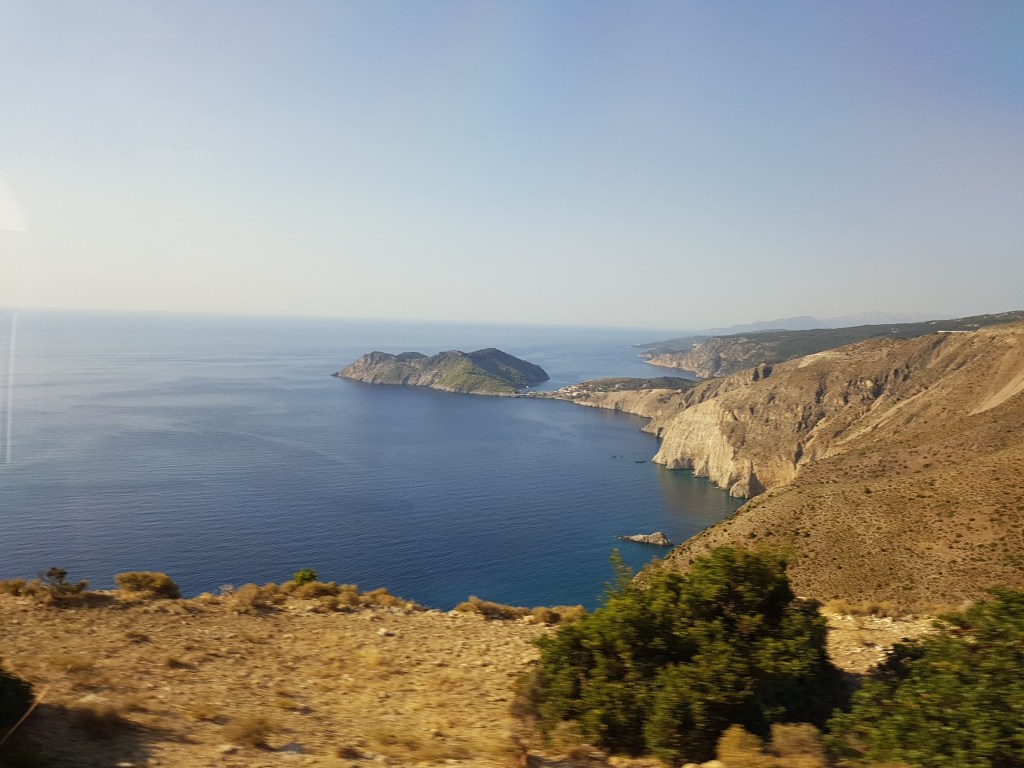
The bus ride around the coast to Argostoli is wonderful with huge panoramic views of the sea cliffs, bays and beaches. We had booked six nights in an airbnb, Apartment Aggeliki. It was very comfortable with a first floor view over the international cruise ship port. We saw at least one or two huge cruise ships mooring there every morning during the time we stayed there. With hundreds, if not thousands of passengers disembarking every morning, what a great revenue stream it must be for the island economy and other cruise ship destinations in the Med.
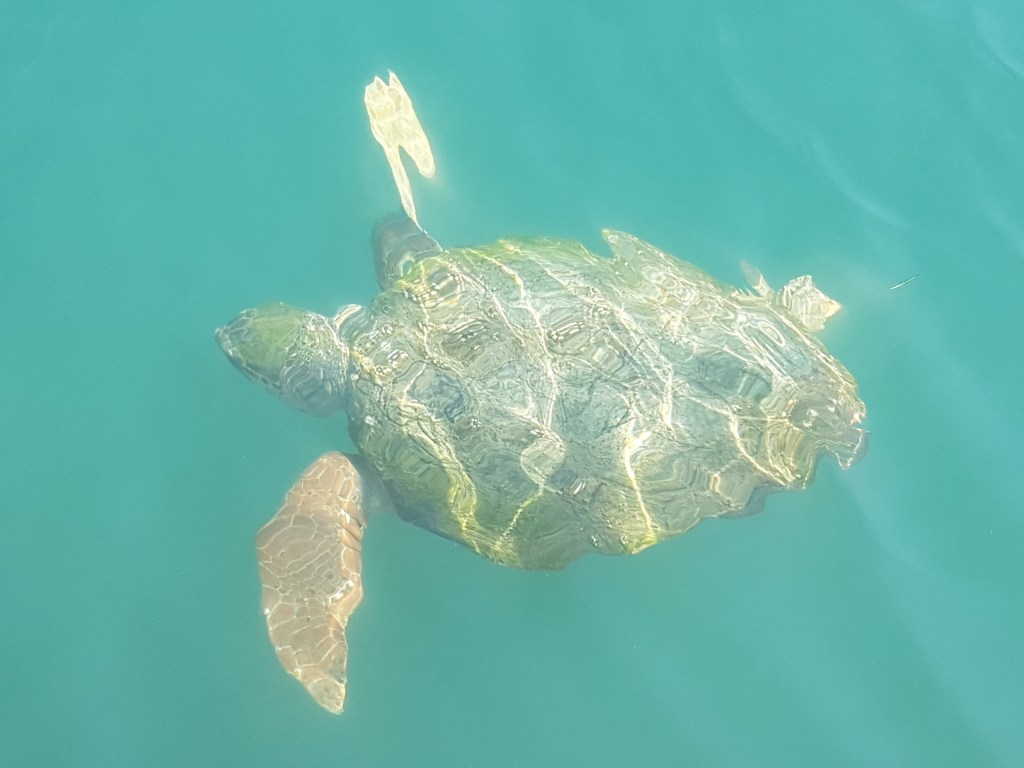
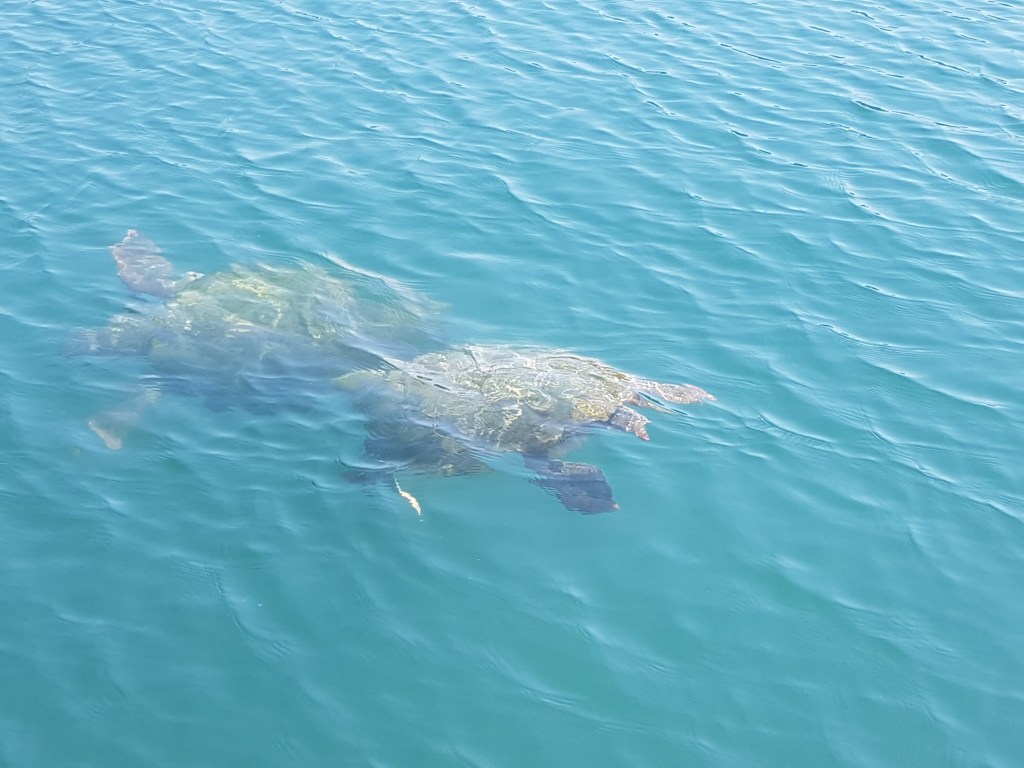
We spent our six days relaxing and visiting the beaches close by. The highlight of our stay was seeing a pod of dolphins from the ferry, on the crossing to Kefalonia. Then, on the same day, when we got to Argostoli, we saw Sea Turtles in the harbour. Apparently, Kefalonia has one of the worlds largest concentrations of loggerhead sea turtles caretta caretta. They are attracted to the fishing boats in the harbour, when they dock with their catches every morning. Sheila and I were absolutely thrilled. What a day, seeing dolphins and sea turtles in their natural environment.
I am going be be a little controversial now. I haven’t been overly impressed with Greek beaches. I realise that there are spectactular beaches on most islands. However, the regular beaches near the busy tourist spots are overcrowded and in my view, inferior. I say this as someone who is not a beach lover but someone who has seen more than my fair share of beaches in different parts of the world.
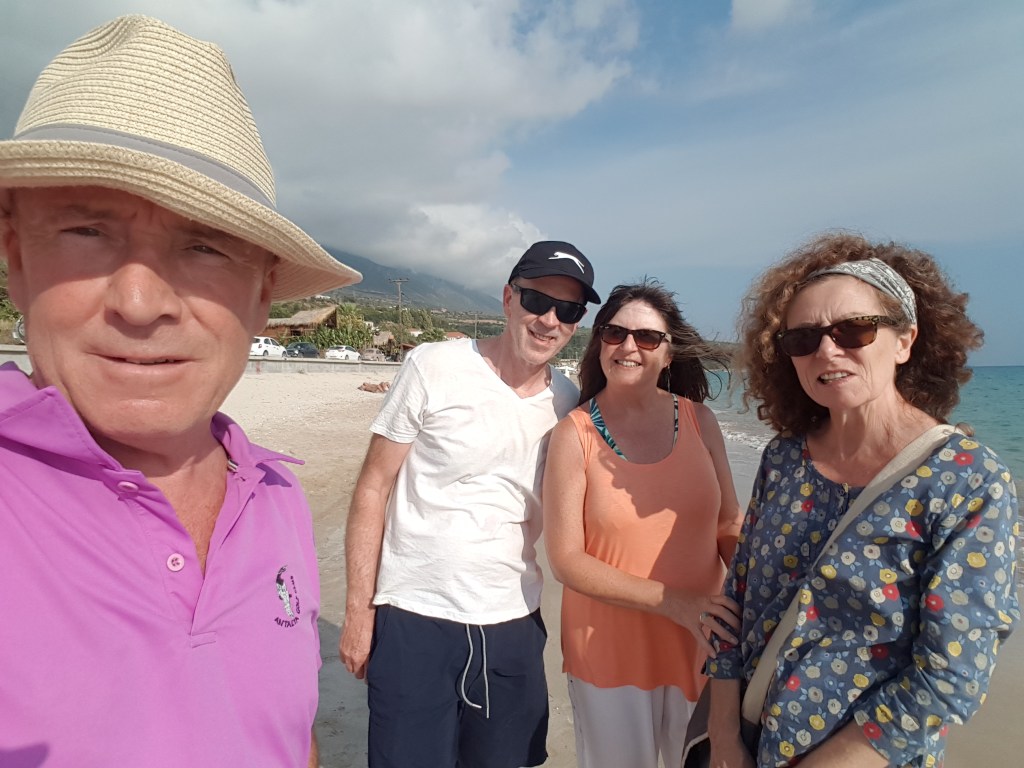
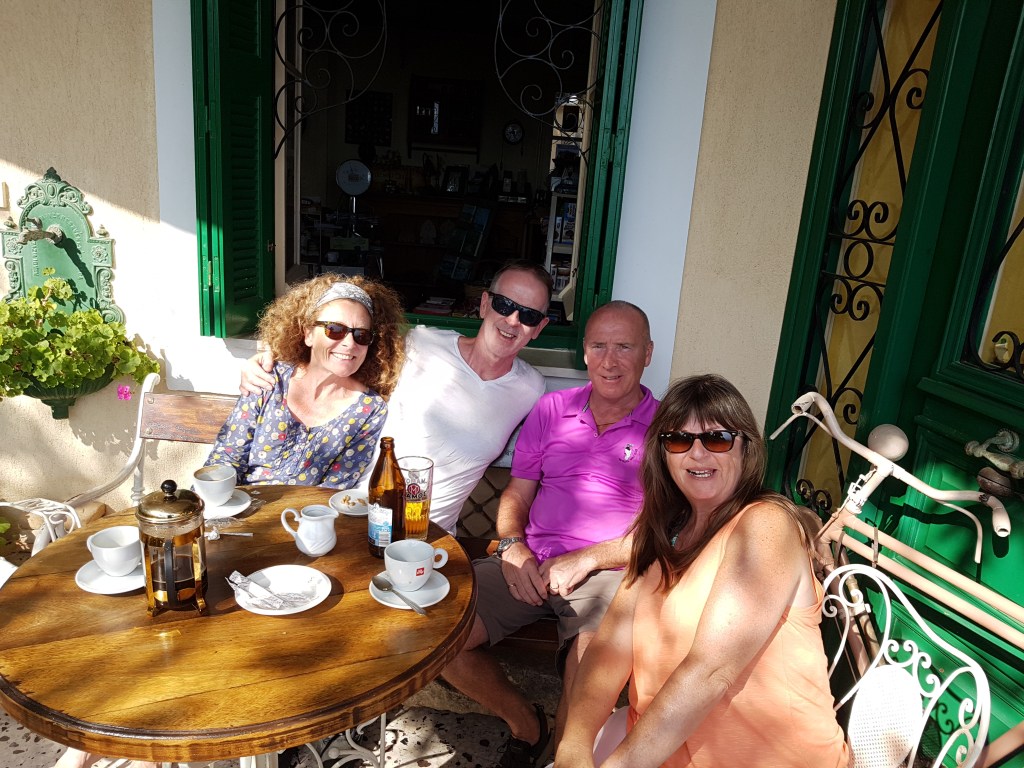
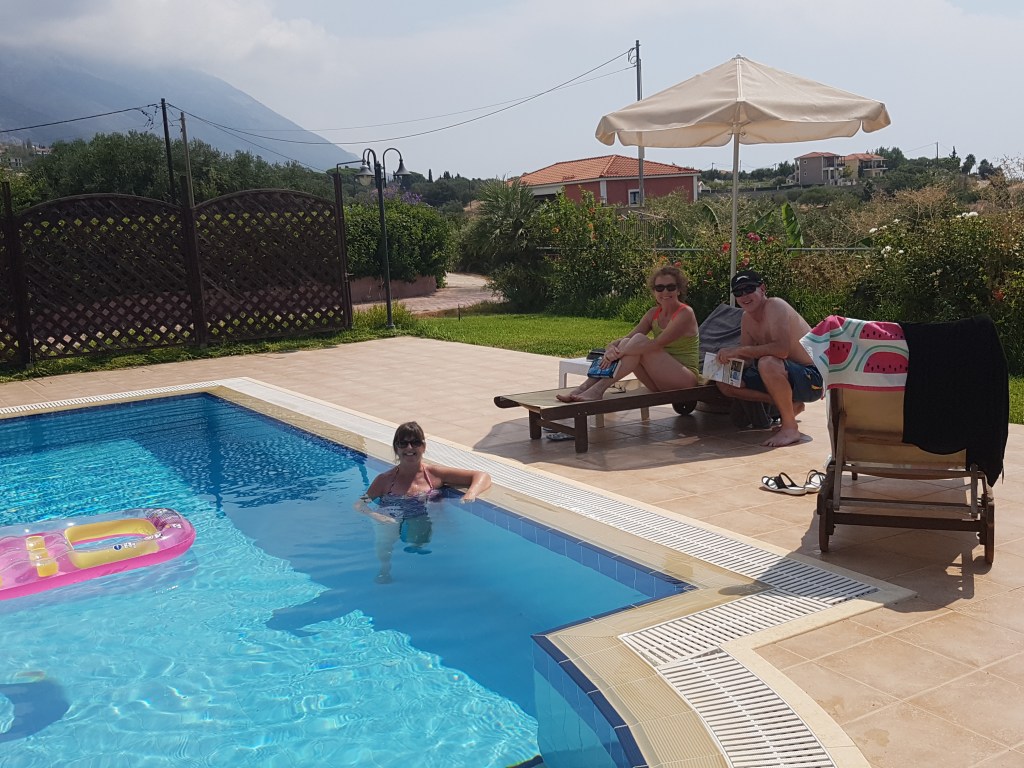
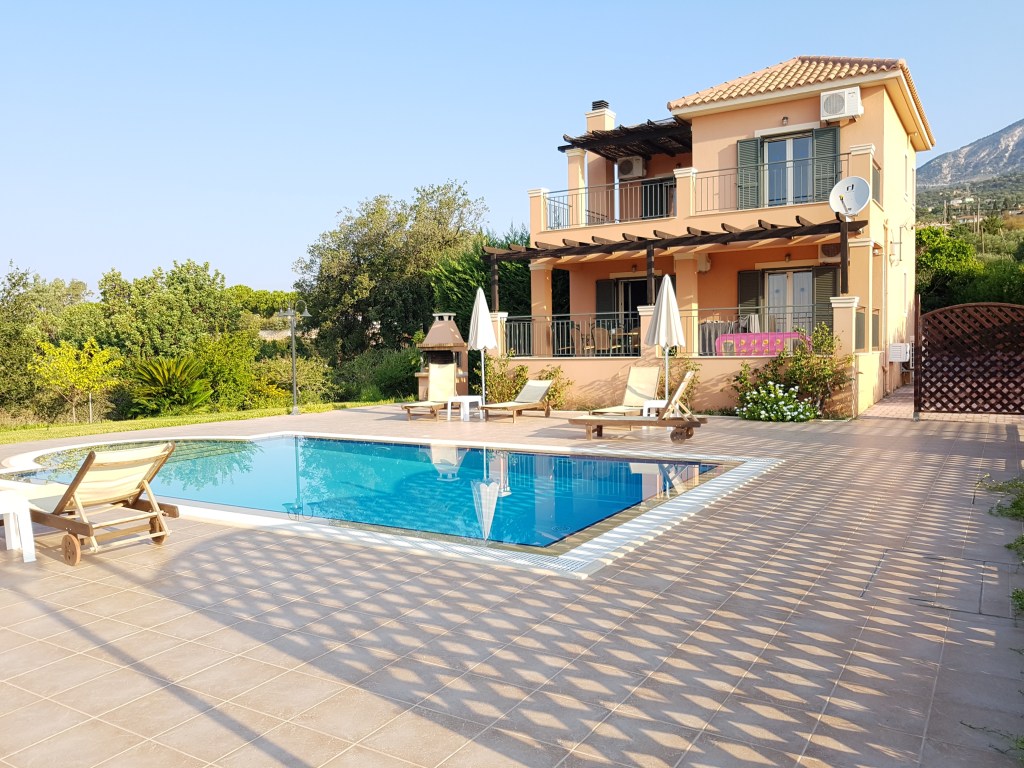
Jackie and Anthony had invited us to spend a couple of days with them at their villa near Lourdada. They collected us and drove us to their spendid villa. We shared a couple of lovely days in their company before they flew back to the UK and we prepared to take a ferry from Pessada to Agios Nikolaos in the north of Zakynthos. Waiting for the ferry we booked in to the Karavados Beach Hotel. We liked it so much we resheduled our plan and booked in for a second night.
The ferry crossing to Zakynthos was just less than 2.5 hours and past without incident on what must have been the coolest evening we’ve had since we arrived in Greece on 4th July. Very agreeable. Both Sheila and I are weary with all this hot weather. We have experienced 2.5 months of temperatures of 30°+ now and the cooler autumn weather cannot come quickly enough for us both.
We had less than 24 hours in Agios Nikolaos. Our hotel was very tastefully built and decorated. Every room had its own outdoor space. The rooms were built as a series of single storey villas. Agios Nikolaos appeared to me to be the latest trendy location for the middle classes. All shabby chic and over priced. I hadn’t realised that both Kefalonia and Zakynthos are crowded with mainly British (well English) tourists. There is a smattering of other nationalities but a huge percentage is British.
Although the internet indicates that Agios Nikolaos has a regular bus service, it turns out, there are just two buses a week. We took a taxi to Elykes on the east coast to meet up with Sheila’s ex work colleague and good friend Brenda and her old college buddy Anna. We had booked in to the cheapest place we could find. You know before I say it that it was false economy. It was one of the worst rooms we have stayed in. That is some claim as I estimate we have stayed in nearly 100 different rooms in the past 4 months.
We mitigated our position by reducing the duration of our stay from 4 nights to 3. We enjoyed a great night out with Brenda, Anna and two of their friends Jane and Andrew who live close by after relocating to Zakynthos 13 years ago. Our night consisted of dinner at a traditional Greek restaurant (Albanian waiter) and the on to a Greek Taverna for what was advertised as a Jazz Night. As it turned out, it was a band playing Brasilian music with lots of drumming. It turned in to a late night fuelled by a little too much acolhol.
Sheila had a second night out with the girls in Zante town. She informs me that that was a much tamer affair than the previous evening.
This morning we said our goodbyes to Brenda and Anna and relocated to Zante ready to take a ferry to Kyllini on Peloponese we have bus tickets to Larissa on our way to endeavour to complete a two day climb of Mount Olympus. The highest mountain in Greece and home of the Greek gods.
I set out below a selection of random photos from the hundreds taken. They are not necessarily a representative sample as I’m having trouble uploading photos
Day 119: our six week tour of the Balkans has come to an end. It has been fascinating and frustrating in equal measure. We’ve visited seven Balkans countries and now feel we have a better knowledge and understanding of the region.
I couldn’t finish my Balkan blogs without reference to the buses. We took trains when we could in Bulgaria and Kosovo but most of our movement was by bus. I’ll start with a confession. In order of preference, I like to travel by train, then bus, then car and lastly airplane.
Until the 1970’s, flying was fun when most passengers received first class service. Now, us economy passengers are made to feel like terrorists, smugglers or illegal immigrants. I’m not saying I won’t fly again but if I didn’t it would not be a lose. In addition, I am uncomfortable with the environment implications. I have no time for people who fly 10,000 miles to sit on a beach for two weeks… Rant over.
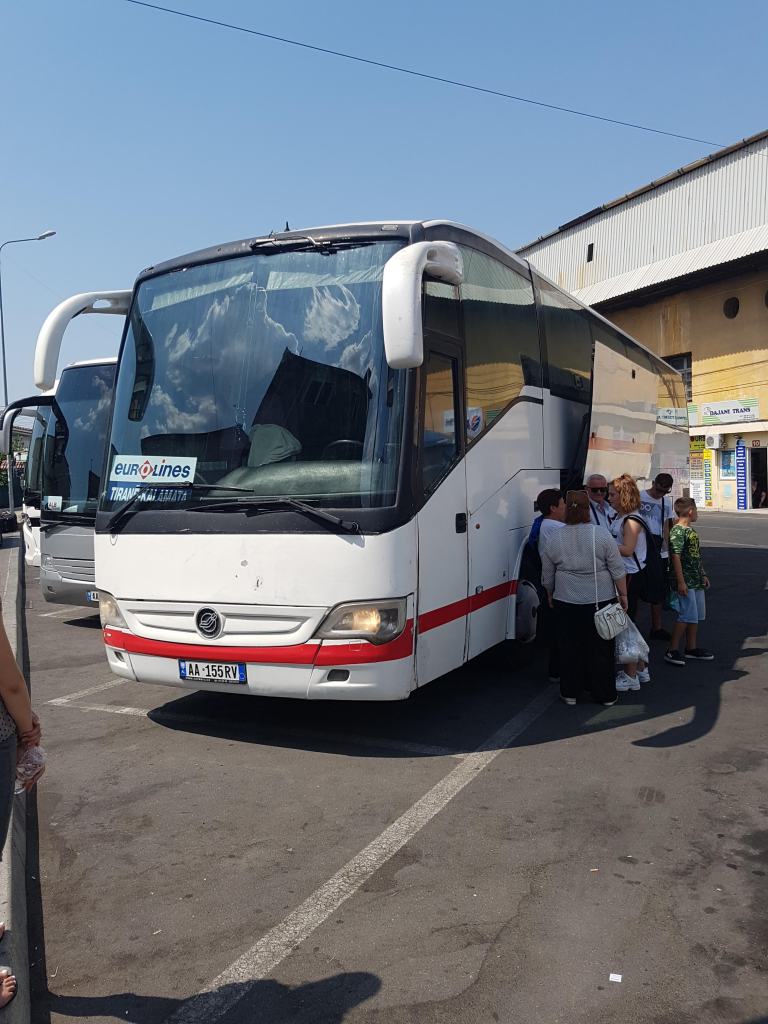
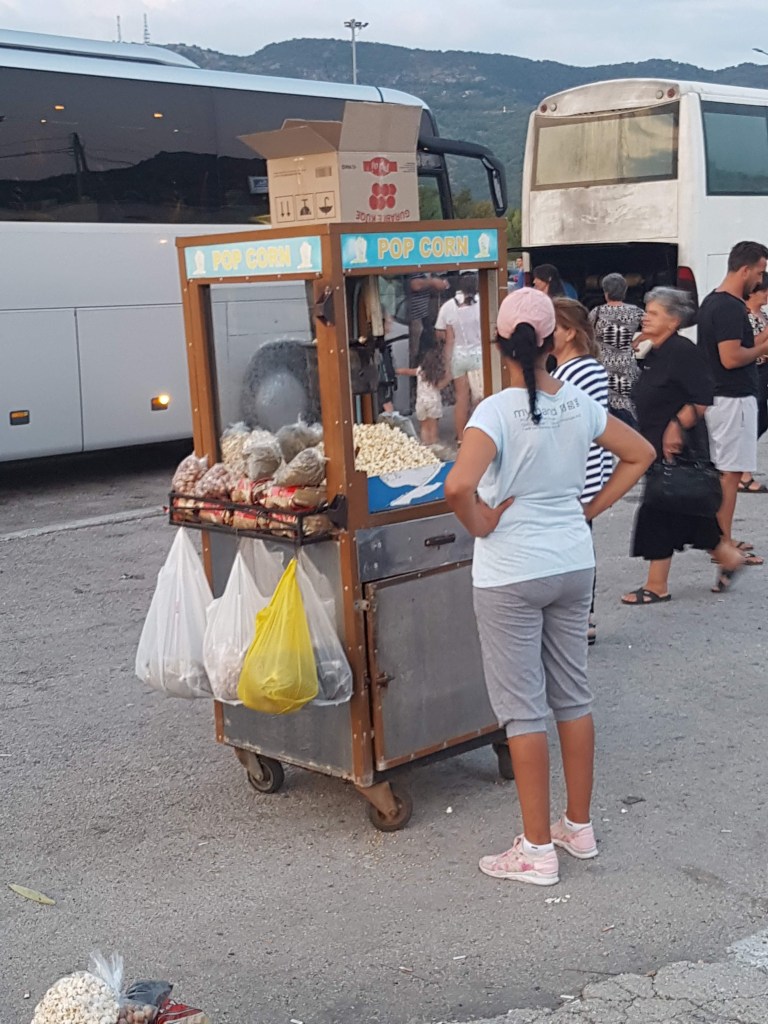
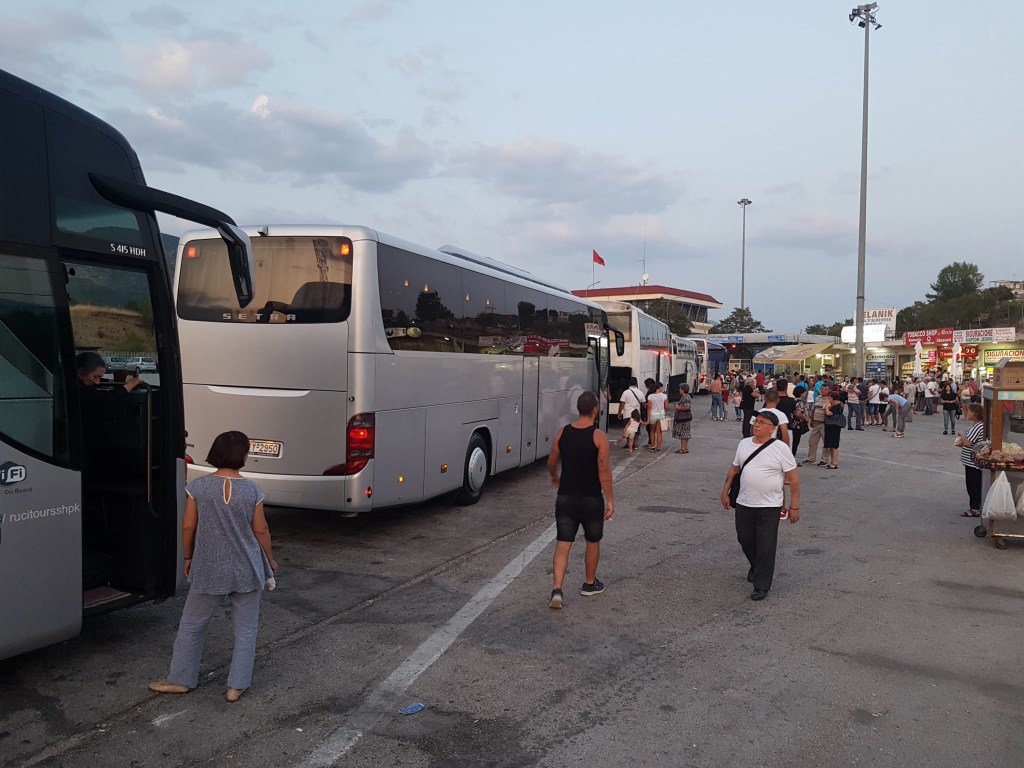
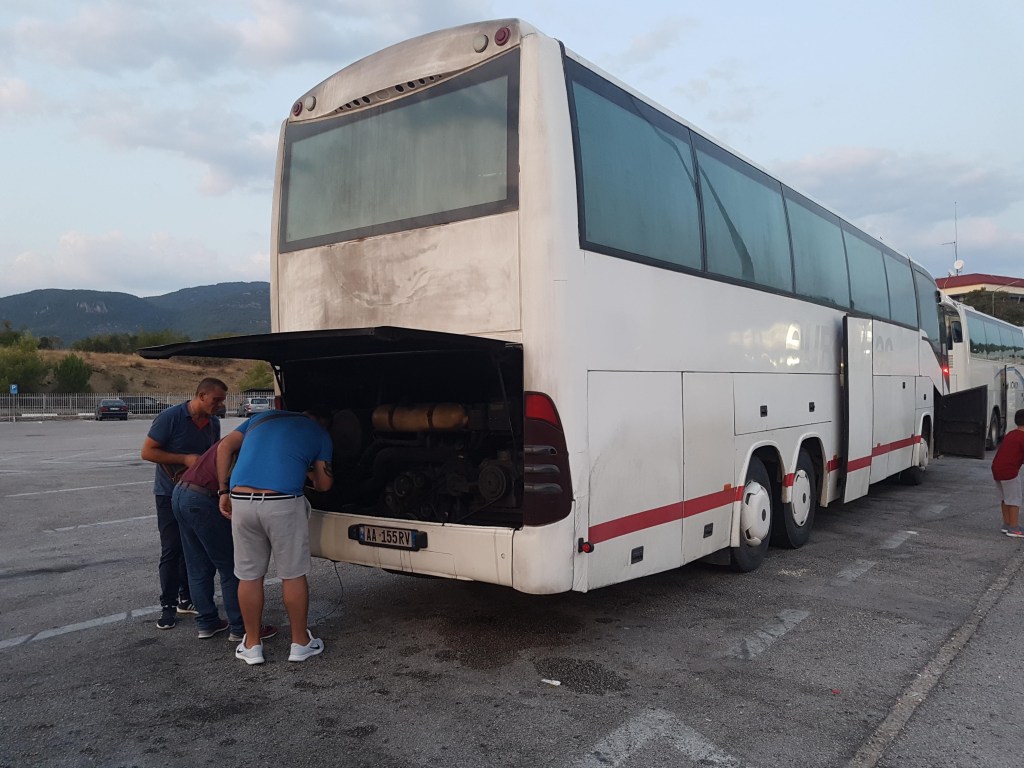
Back to Balkan buses. Our last bus journey was Tirana, Albana to Ioannina, Greece was perhaps the best example of the problems we encountered throughout the Balkans. It was frustrating from start to finish.
We did our research online and tried unsuccessfully to buy a ticket. I got all the way through the convoluted website, identified the date and time we wanted to travel, completed the registration and ticket application. Entered my bank card details only to be informed that somone would call me… they never did.
We then decided to go to the bus station to buy the tickets. In Tirana International Bus Staion I estimate there are 15 ticket offices Each of the private companies that operate from there has its own office. Sheila and I visited 8 of them, some on multiple occassions in our quest to buy tickets. We were told there was no bus today, only an overnight bus. We eventually bought two tickets on a bus leaving at 2pm.
The bus was a little rickety, the front passenger door was locked closed with a piece of wood and a rope. It was filthy inside and out but it left on time. We were informed that it would be a 6 hour journey but with a border crossing we anticipated it would take a little longer. Little did we know.
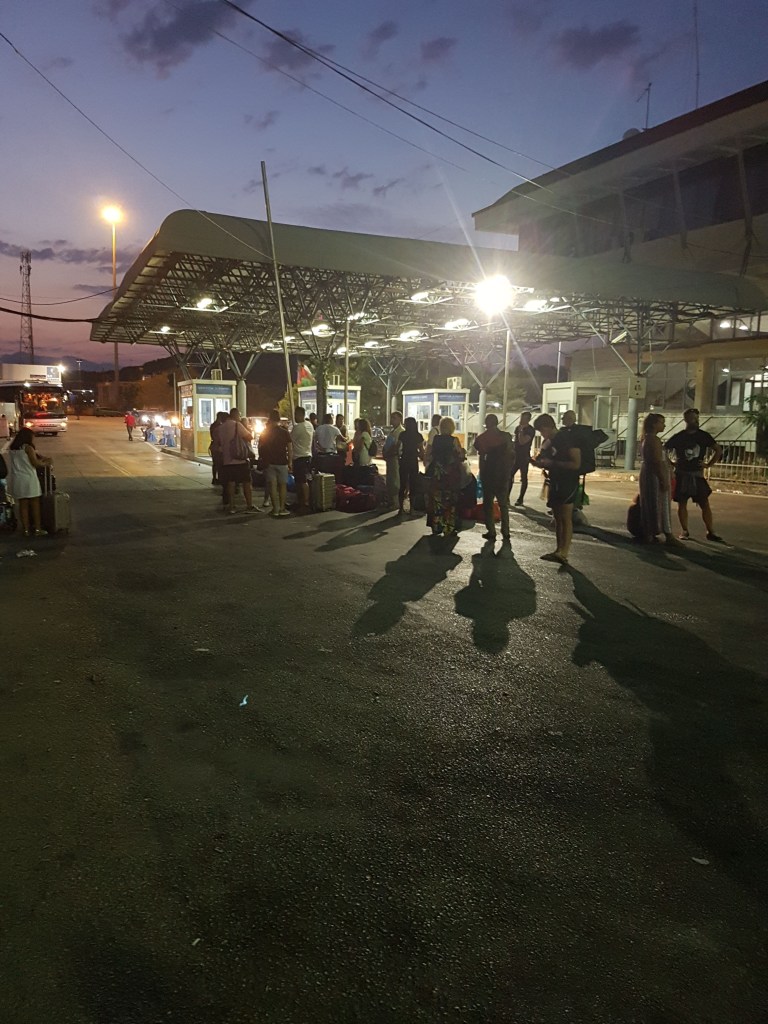
We arrived at the border after 5 hours in a long queue. I recalculated. One hour at the border and a further hour to reach Ioannina. Not too bad.
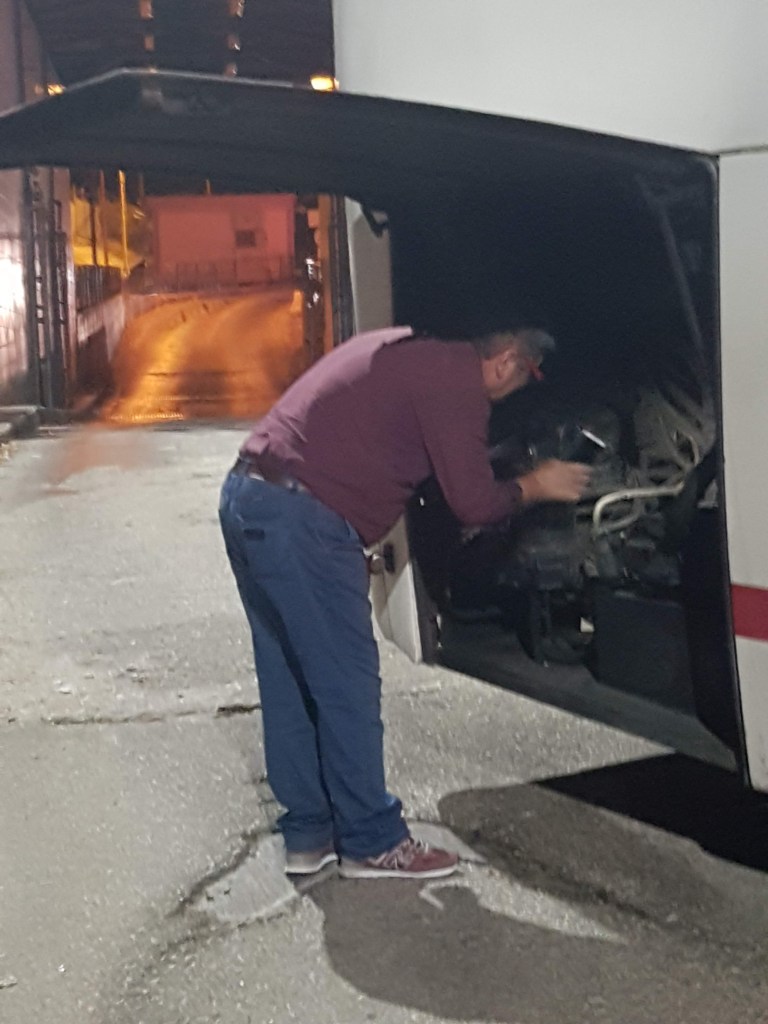
It took an hour to get through the Albanian customs. That involved all the passengers removing their luggage from the bus to allow it to be checked by Customs Officers. They were uninterested in mine and Sheilas luggage but took great interest in some of the locals possessions.
Onto the Greek side. Our bus waited in a queue until it was our turn. There was a little excitement but as we don’t speak Albanian, we couldn’t understand what was going on. I approached our driver to be told that the border had been closed, presumably to allow the border guards to take a break. When I asked for how long? The driver shrugged his shoulders! At this stage, I was close to going into ‘Victor Meldrew’ mode.
We eventually passed through the border into Greece after a 2.5 hour delay.
We were told by the ticket agent in Tirana that the bus did not go into the centre of Ioannina but stopped at the airport 4 km from the city. She advised that it would simply be a case of taking an €8 taxi ride from there to our hotel.
At 11.30pm, the bus stopped at the airport. We walked the short distance to the main entrance only to find that it was closed! Worse was to come. We looked around in a growing sense of panic as we realised there was not a living soul anywhere. No taxi’s or anybody to obtain advice from.
Sheila said, “Oh well, we’ll just have to walk the 4km in the city”. I responded, yes, that would be fine, if we knew which direction to start walking. We were literally stranded.
After 10 minutes, with just the odd car driving past, I saw a young guy on a bike. I flagged him down and explained our predicament. He proceeded to call us a taxi. Not only that. He waited with us until it arrived. An absolute star. The taxi driver, a lovely chap, couldn’t find the hotel and drove us around tbe city centre for what felt like ages, before, finally dropping us off. As we got out of the cab, I said to the driver, the hotel looks like its locked up how will we get in? He responded, don’t worry, go to the front entrance. Apparently, he had stopped at the rear. We eventually got into our room at 12.20am, over 10 hours after we got on the bus for a 6 hour journey.
Sheila and I will not miss Balkan buses.
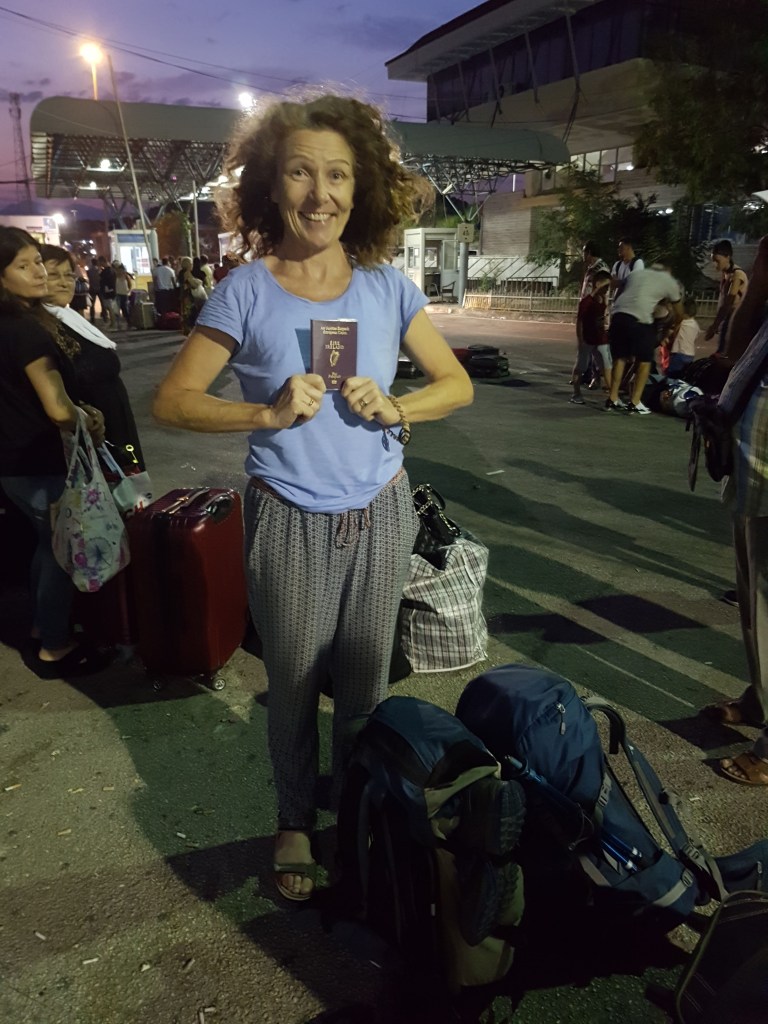
Proudly showing off her Irish passport, welcome everywhere .
We spent five days in Albania. Staying initially in Shkoder in the north before moving south the capital, Tirana.
I have long held a fascination with Albania probably because it has been isolated and cut off from the outside world for most of my life. Since the fall of communism in 1991, the country has opened its doors to the rest of the world. It is now attempting to catch up, economically and technically with other parts of Europe and the world.
Because of its isolation, Albanians appear to have a curious fascination with all things western. Cola Cola was the first western company to get access to Albania. Mercedes Benz cars are held in high regard.
There are many more Mercedes cars than any other make in the country. One of reasons suggested to me was that Albania had only 3,000 cars in the whole country when communism collapsed. When they started to import cars, it was found that Mercedes were so well made they coped better with the appallingly maintained roads than other makes of car. I was informed that to this day, many Albanians aspire to own a Mercedes. Interestingly, like Cuba, you see a large number of cars that are 30 or 40 years old being driven on the streets. Not so much in Tirana.
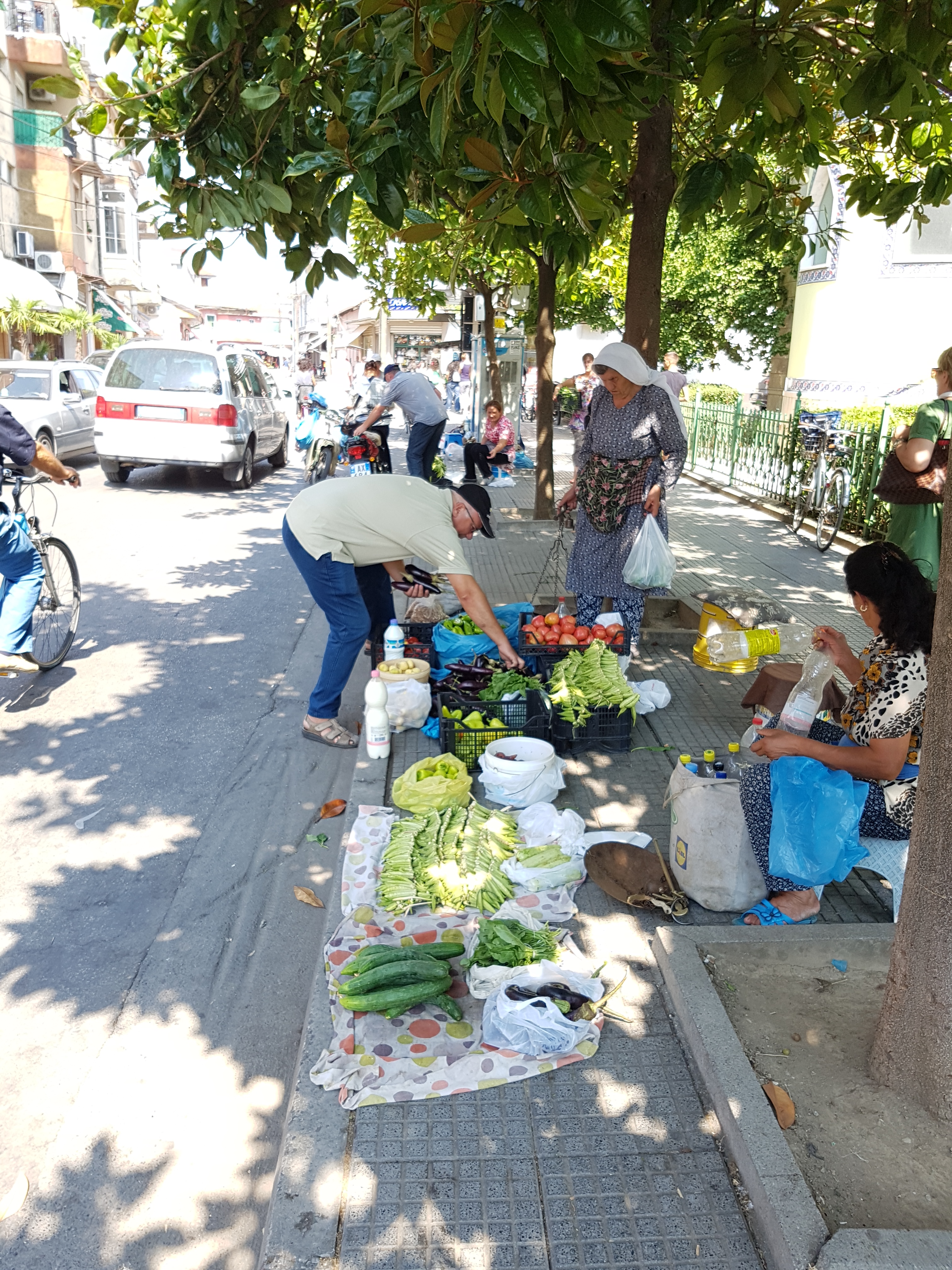
It is apparent, just looking around that Albanians are economically disadvantaged. Its the general look of people but also their activities. You see people selling fruit and veg by the roadside in the towns and cities, again, not in Tirana.
The average age in Albania is 35 years old, young by European standards but increasing quickley because many young people are emigrate to find better prospects in other countries.
Virtually everyone I came into contact with was friendly and polite. Many of them went out of their way to be of assistance.
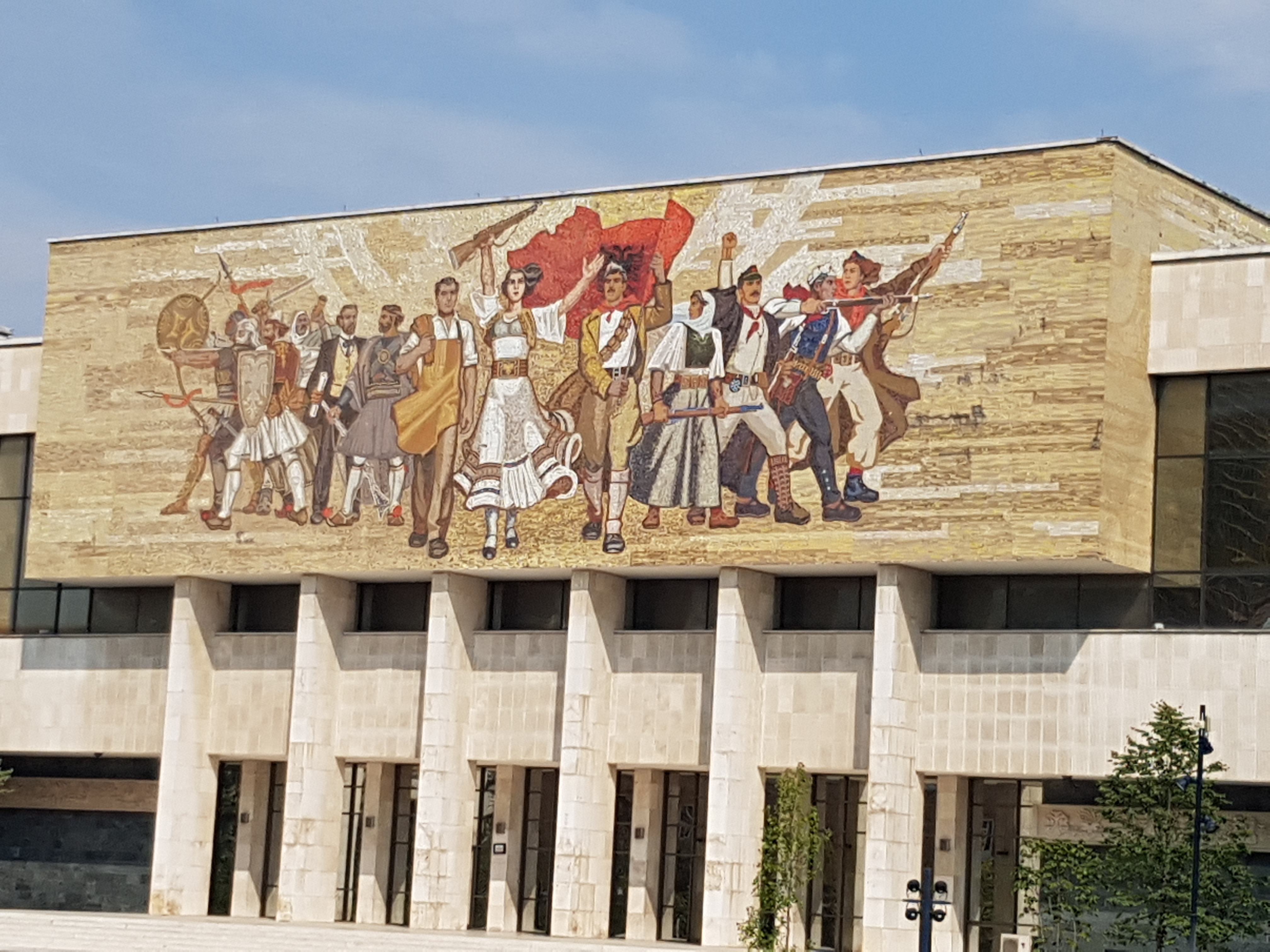
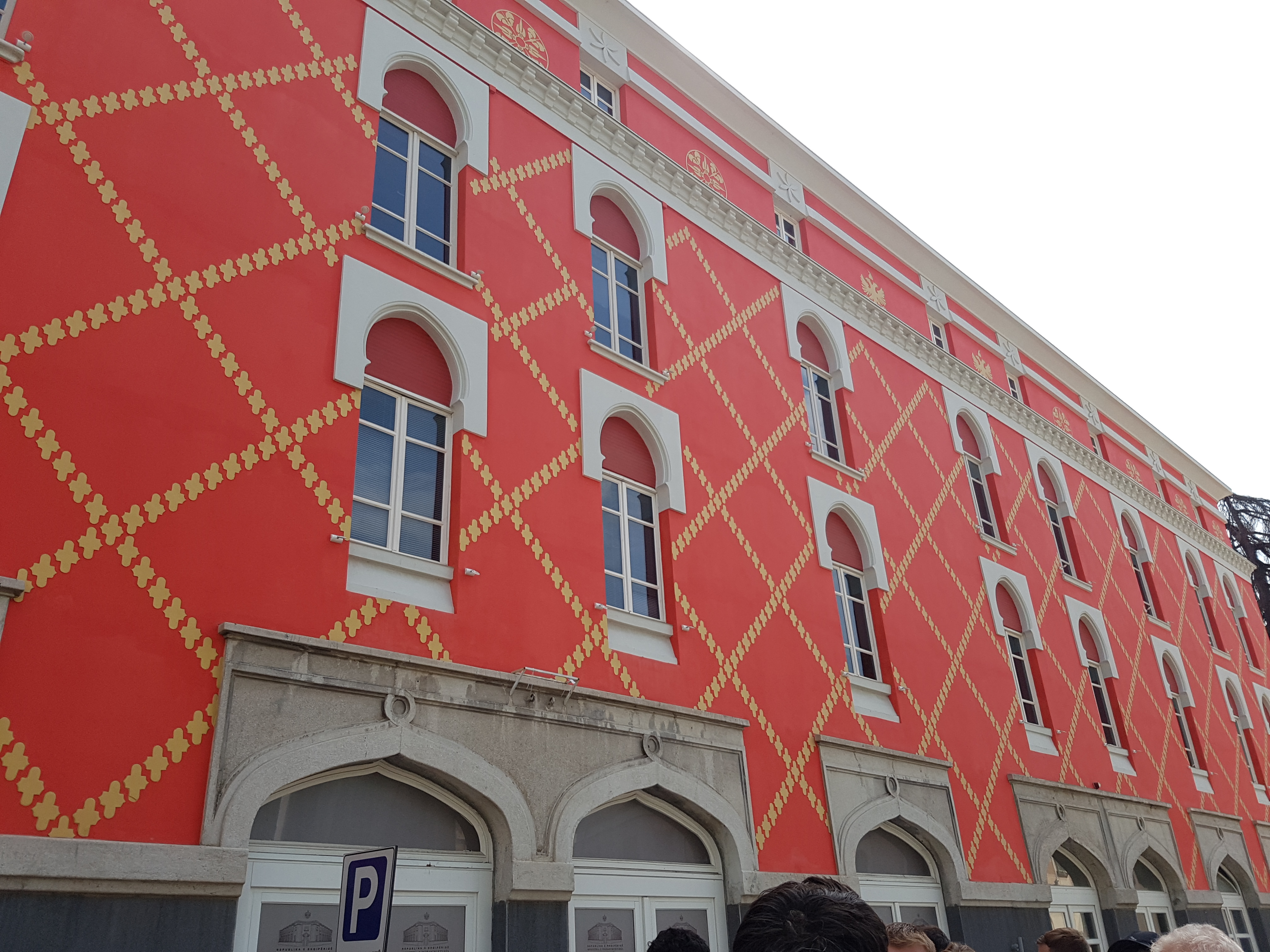
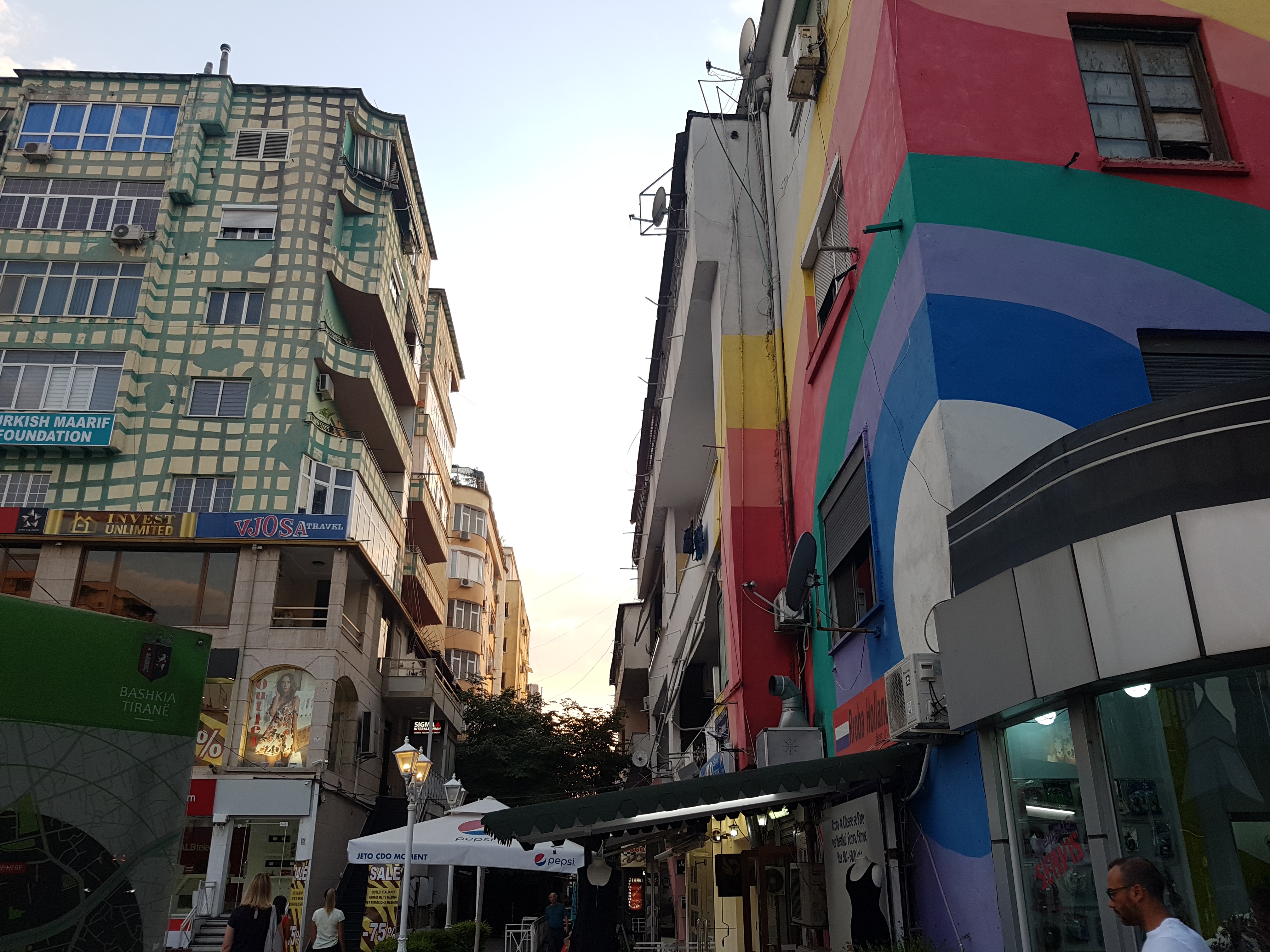
I liked Tirana, its easier to get around as a pedestrian than many other cities in the Balkans. The pavements and roads are better maintained. I like the way a former Mayor who is the current Prime Minister had many of the buildings in the city painted bright colours in an attempt to lift the dull communist architecture.
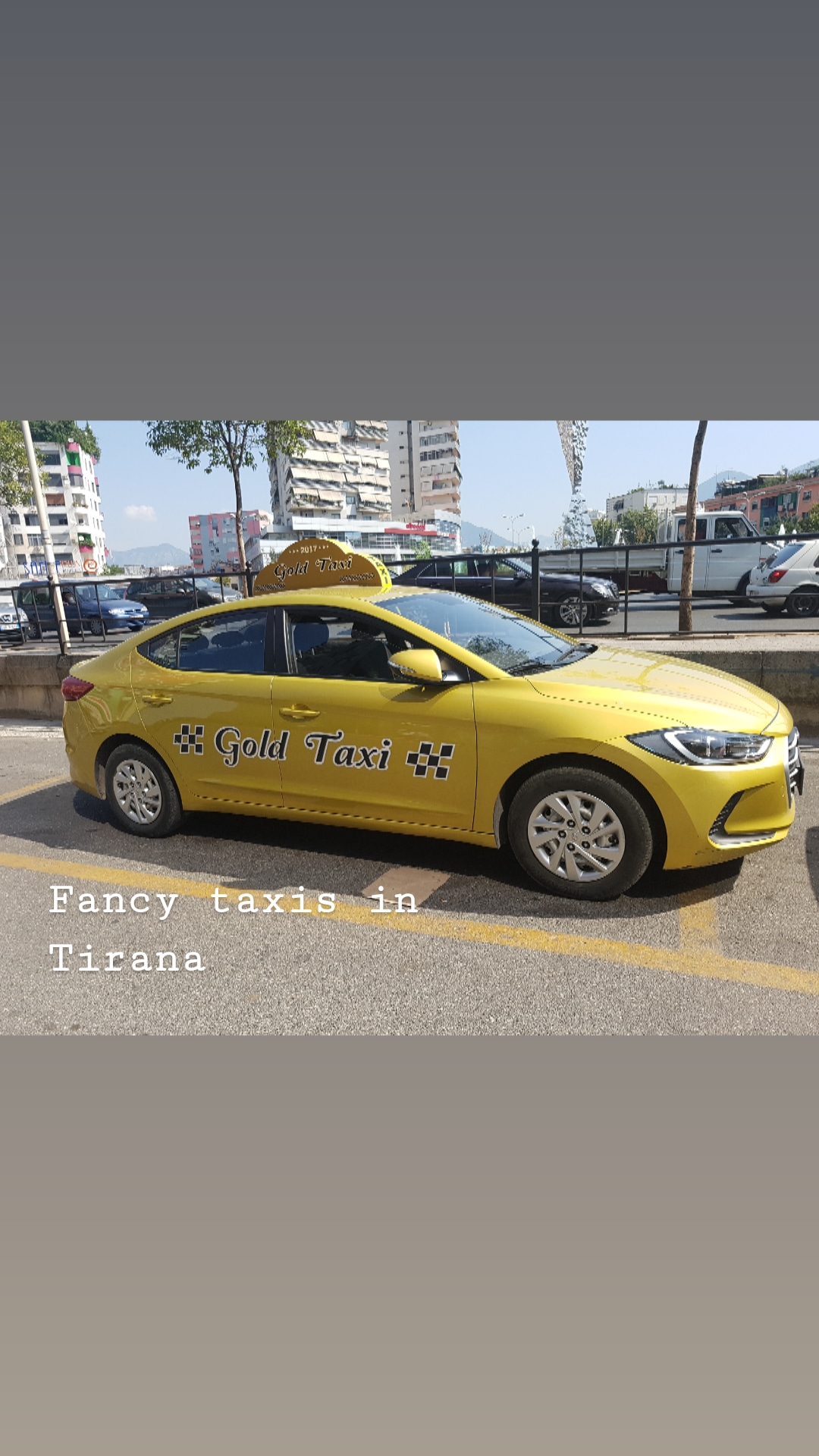
The taxis in Tirana are all new vehicles with yellow liveries, logos and advertisements displayed on them. They have clearly embraced capitalism.
We did the usual walking tours in both Shkoder and Tirana. Our Guide in Shkoder was a young American woman who’d lived in Albania for 4 years after marrying an Albanian. As a native English speaker and a foreigner, it was interesting to get her perspective.
In the other Balkan countries, you’ll find some people who preferred the communist era. These are mainly people who live in the former Yugoslav republics. The reason given is that Tito was a strong leader who was able to control and manage the various regions, ethnic groups and the religous factions. The passing of Tito saw the collapse of Yugoslavia.
Its different in Albania, I was told that few if any have anything good to say about the ruthless dictator that was Hoxha. The country was so isolated from the rest of the world that the population didn’t realise how far behind and how much poorer they were than people in other countries. Our Guide in Tirana told us that his 63 year old father had never eaten a banana until the collapse of communism.
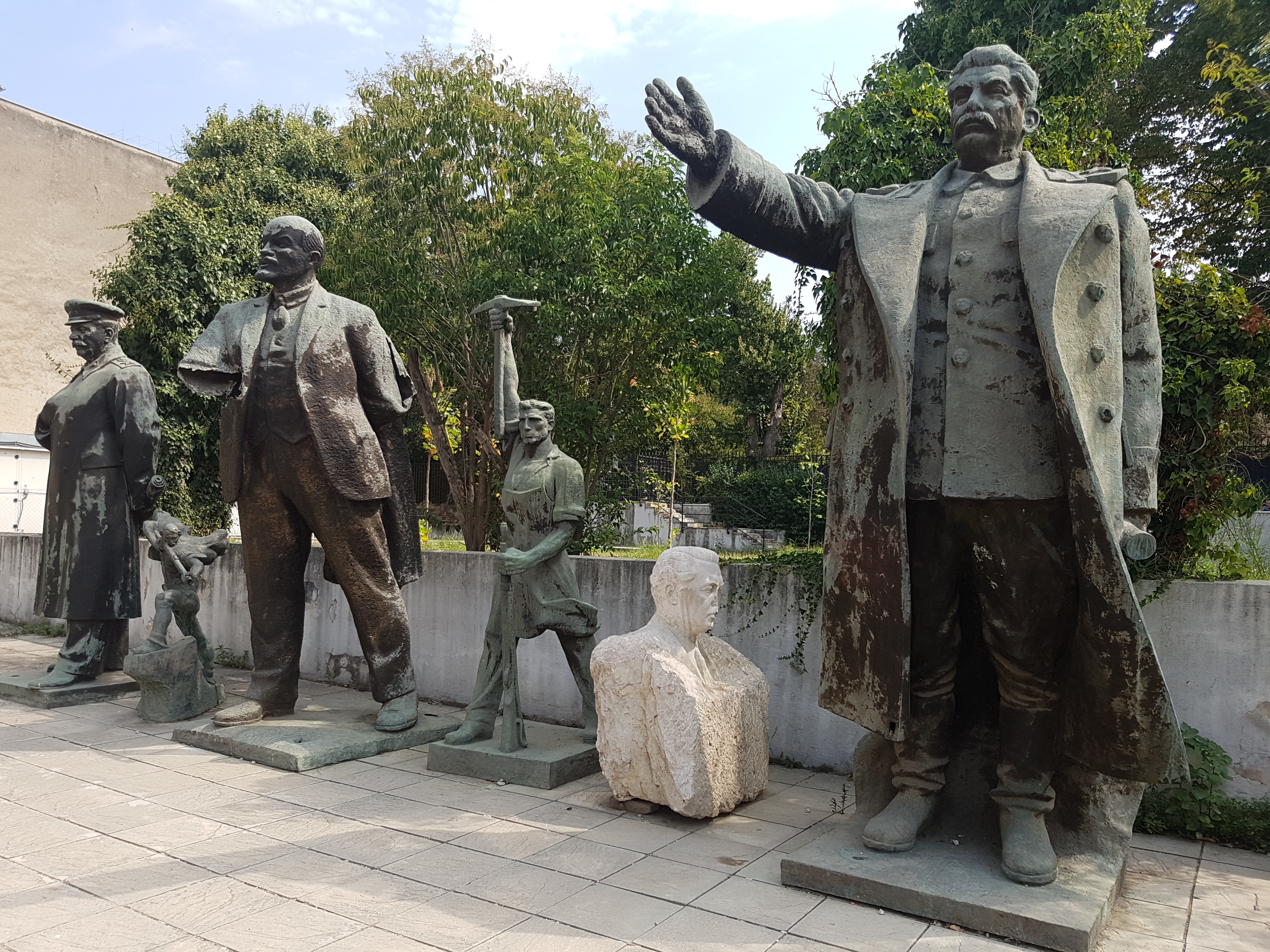
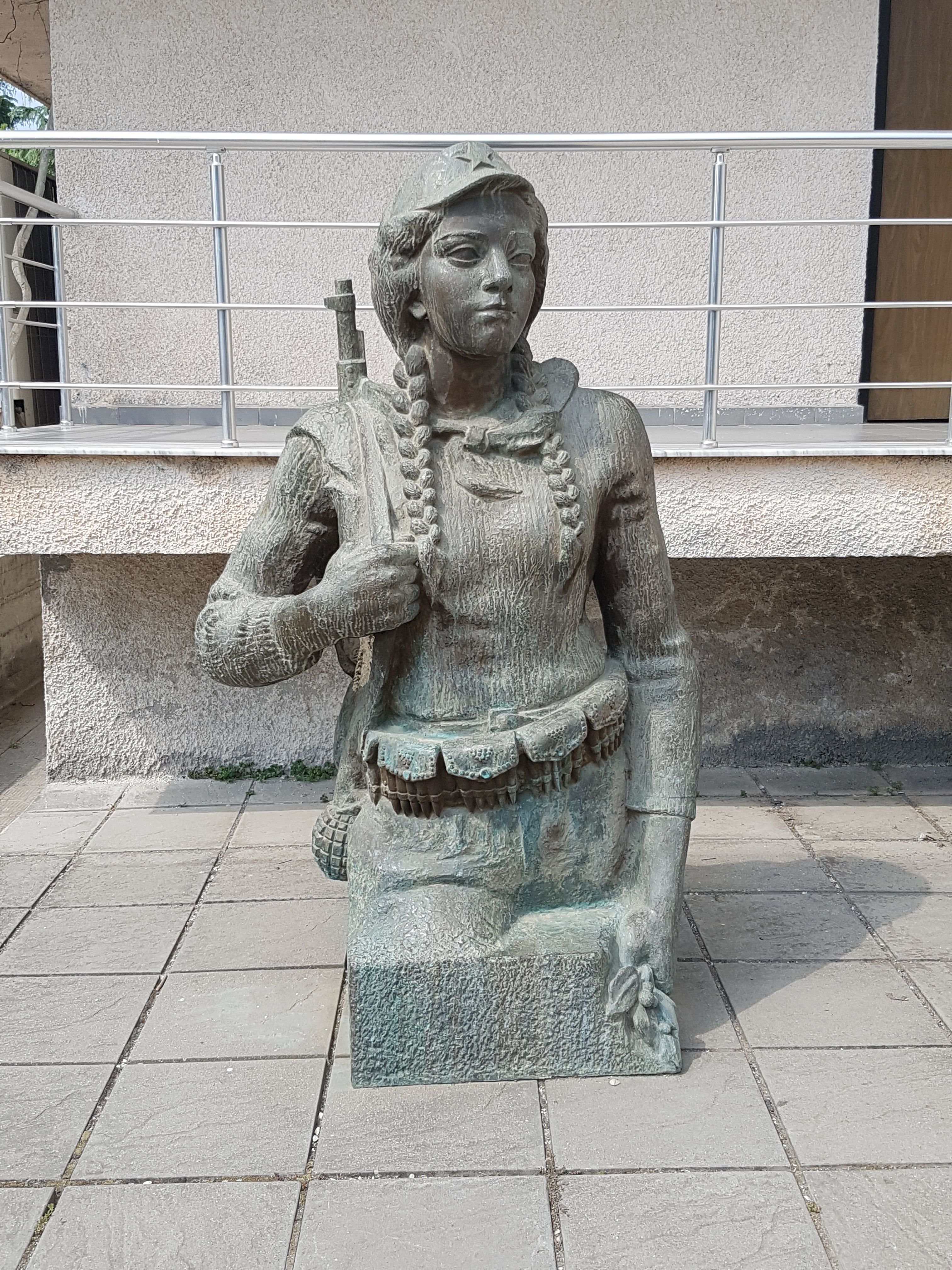
During our Tour in Tirana, we were shown around the back of a building to find hidden, a row of statutes of former communist leaders including Stalin, two of Lenin and Enver Hoxha. As in many of the former communist countries, statutes have been removed from their original locations. I realise that these people brought hardship to their people but removing them is like expunging history. I would leave the statutes in place. Not to glorify them but to remind people of what can go wrong.
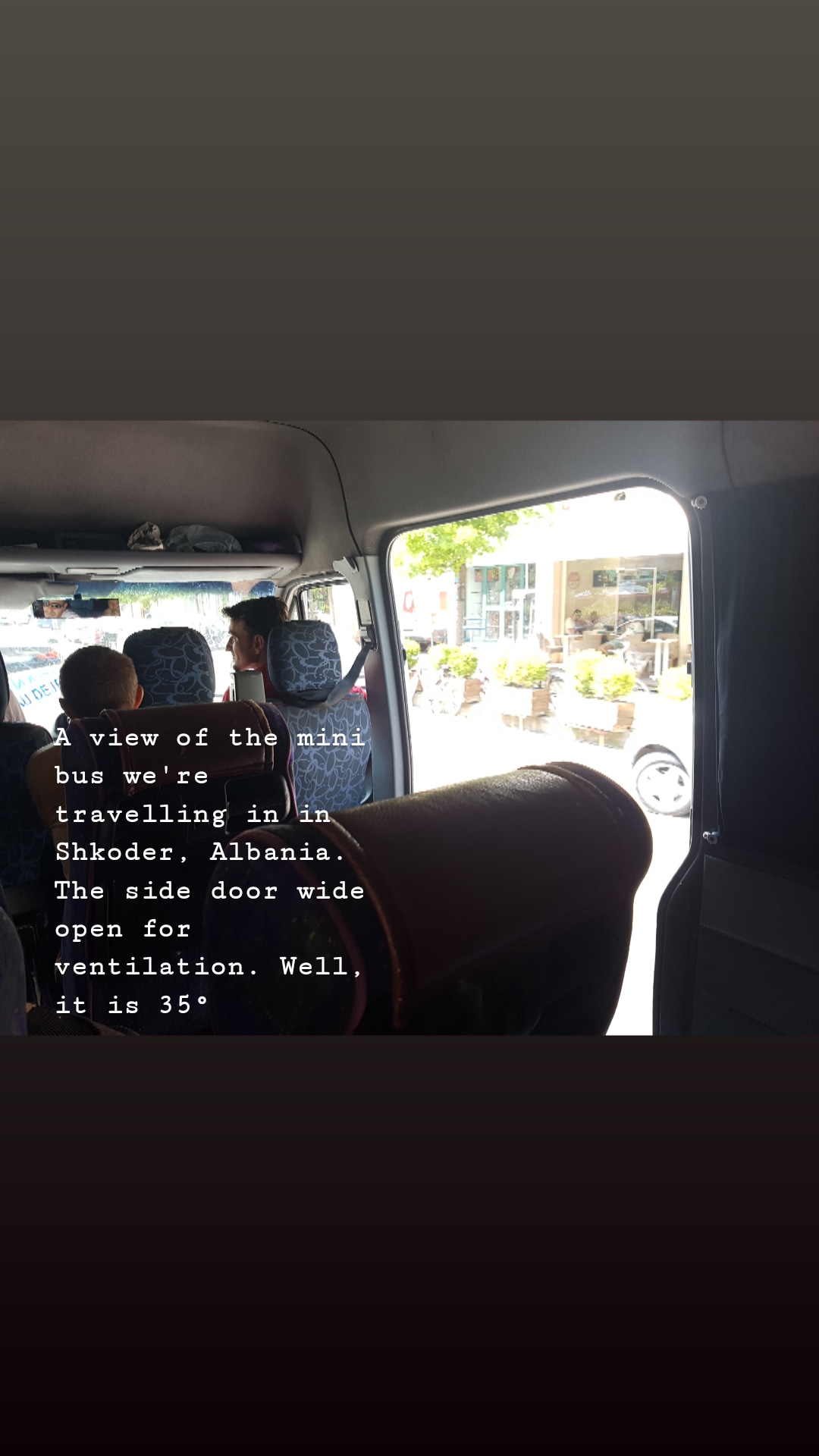
Our journey from Shkoder to Tirana was an experience. We took a minibus as there are no regular buses. Sheila flatly refused to take the train when she read about how badly maintained they are. A shame, as I would have loved to ride an Albanian train, if only to brag about it. In a temperature of 35° and with no air con, the mini bus driver left the side door of the mini bus wide open until we left the city and got on the open road. It was a 2.5 hour journey to Tirana. We were exhausted when we arrived. Sheila and I then proceeded to fall-out as tensions rose in the sweltering heat.
The temperature while we have been in the Balkans has been 34/35° and higher every day. I think we have had just one day when the temperature was under 30° in the past two months. Frankly, for people like Sheila and I who are not sun worshippers and like temperatures of 22°, it has been very difficult. Roll on autumn.
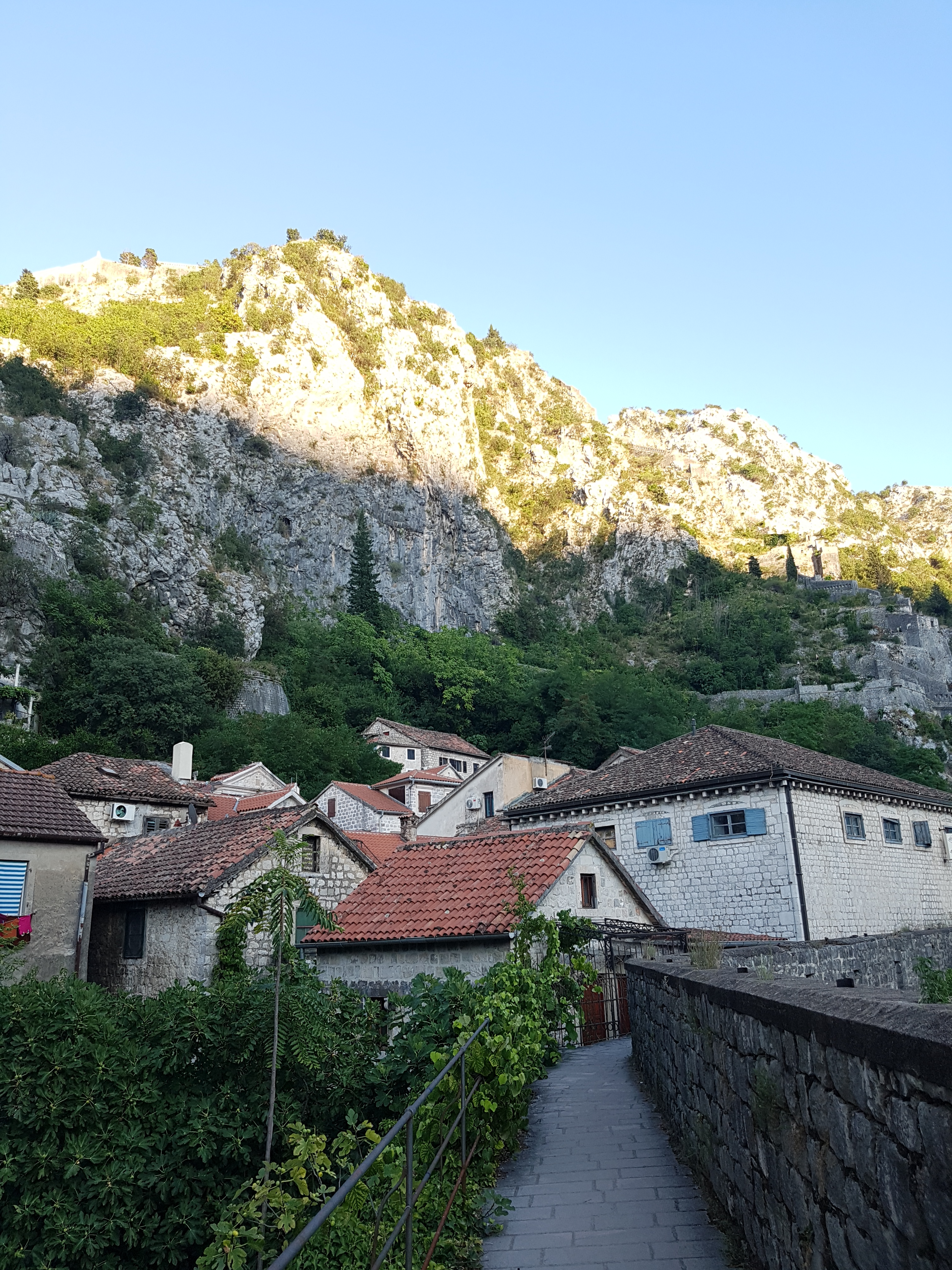
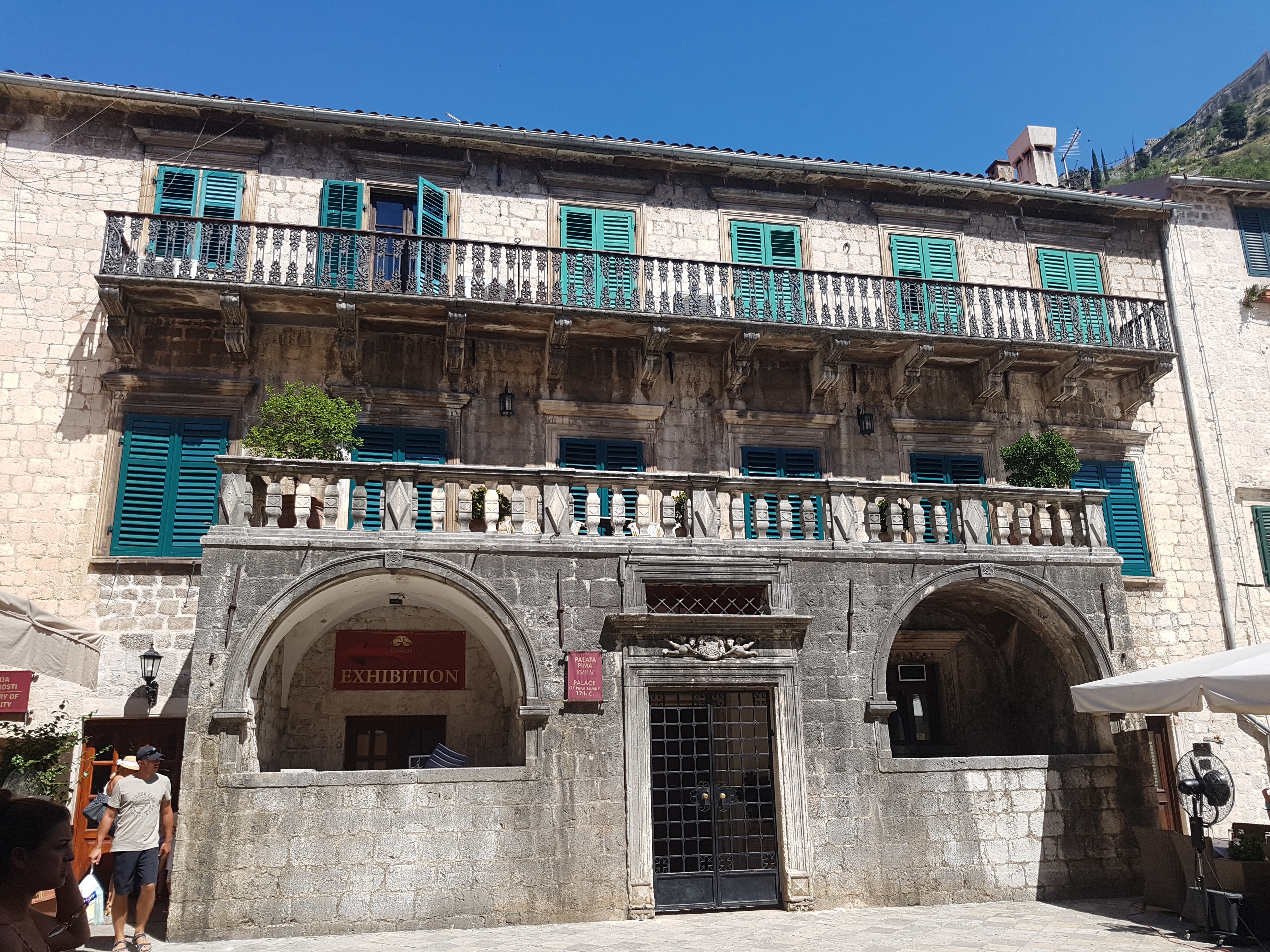
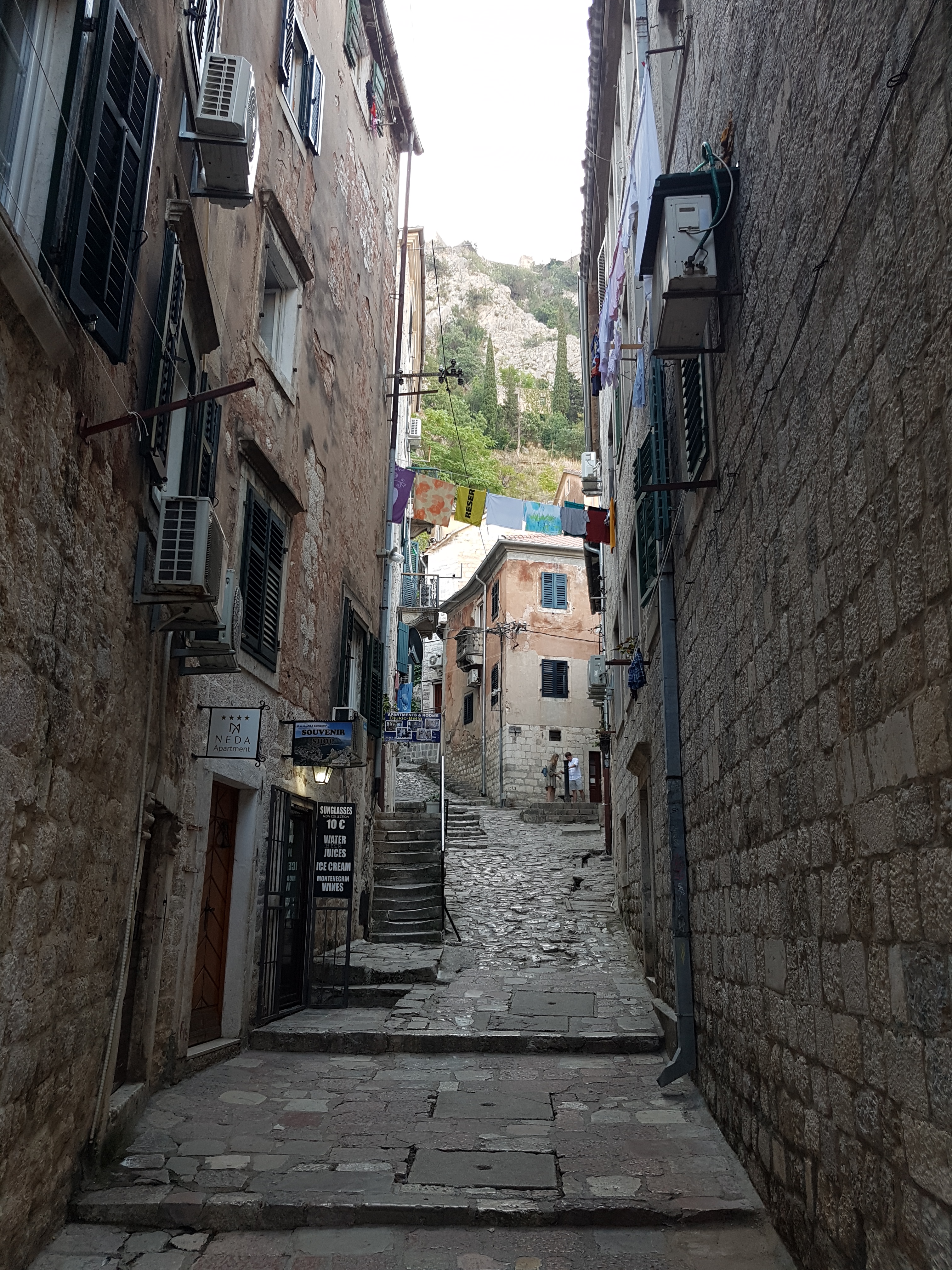
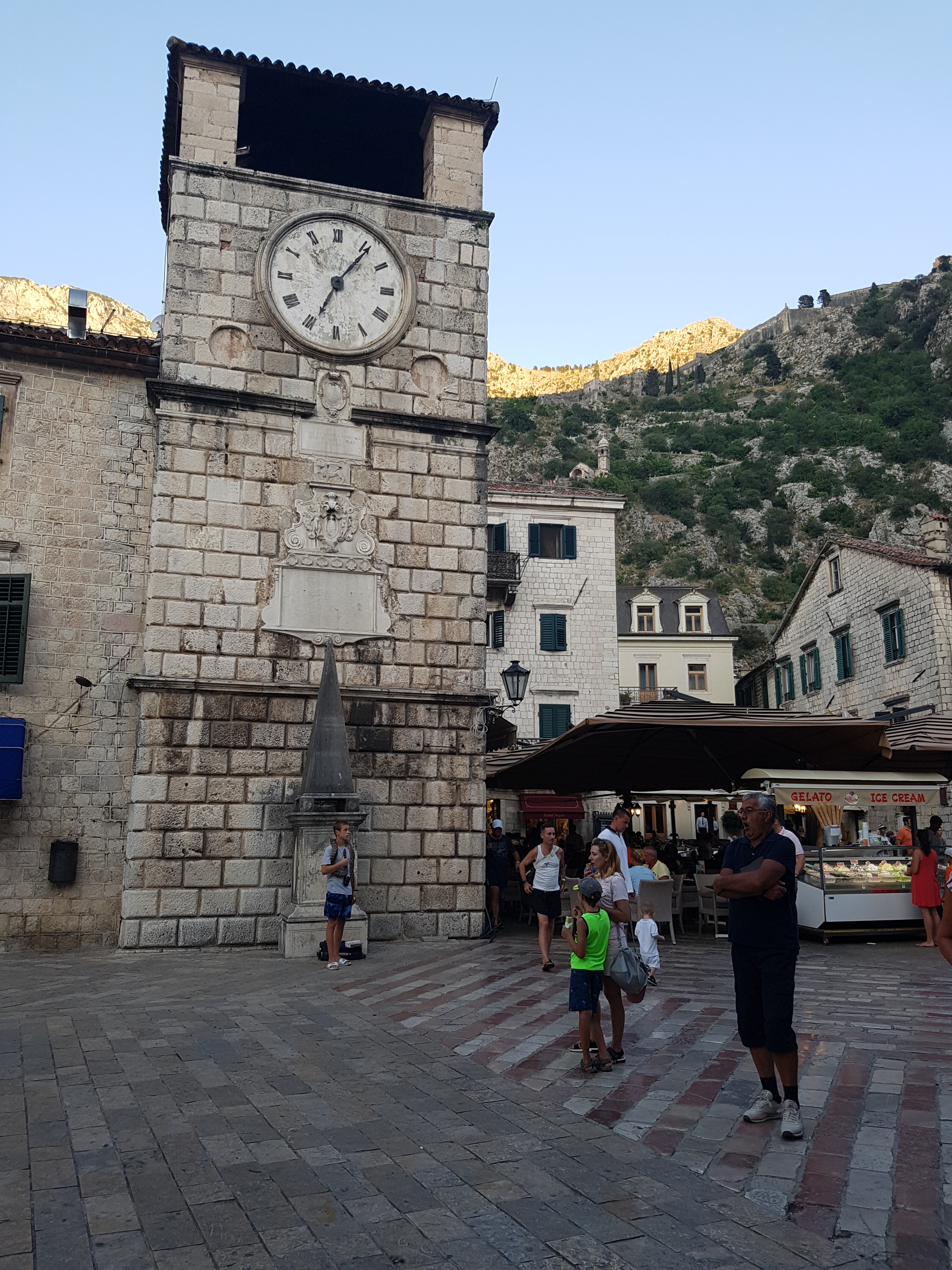
Sheila has become our Accommodation Officer. She did very well in Kotor booking us a marvellous room just one minute from the Square of Arms. We spent two nights there in comfortable surroundings.
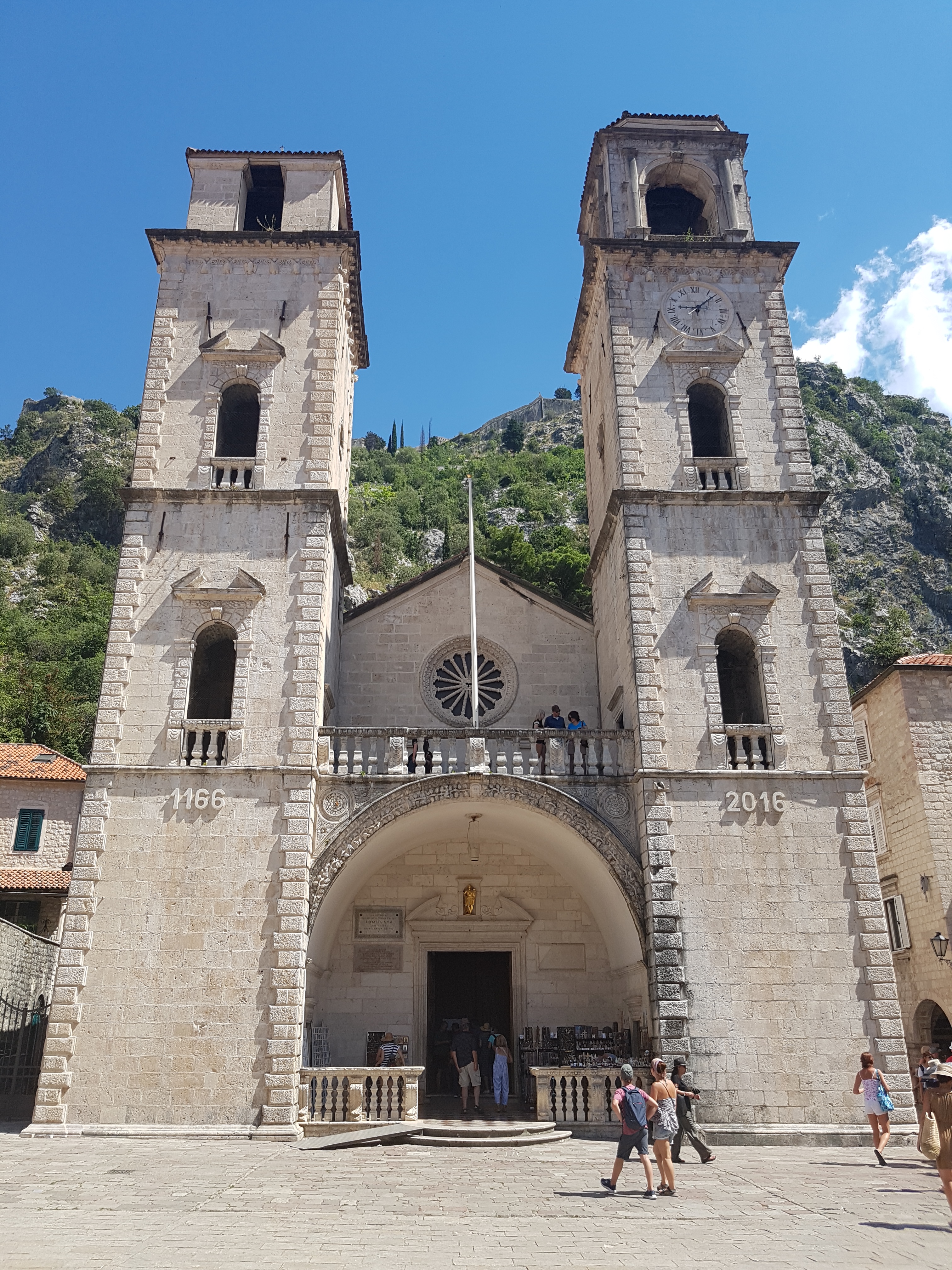
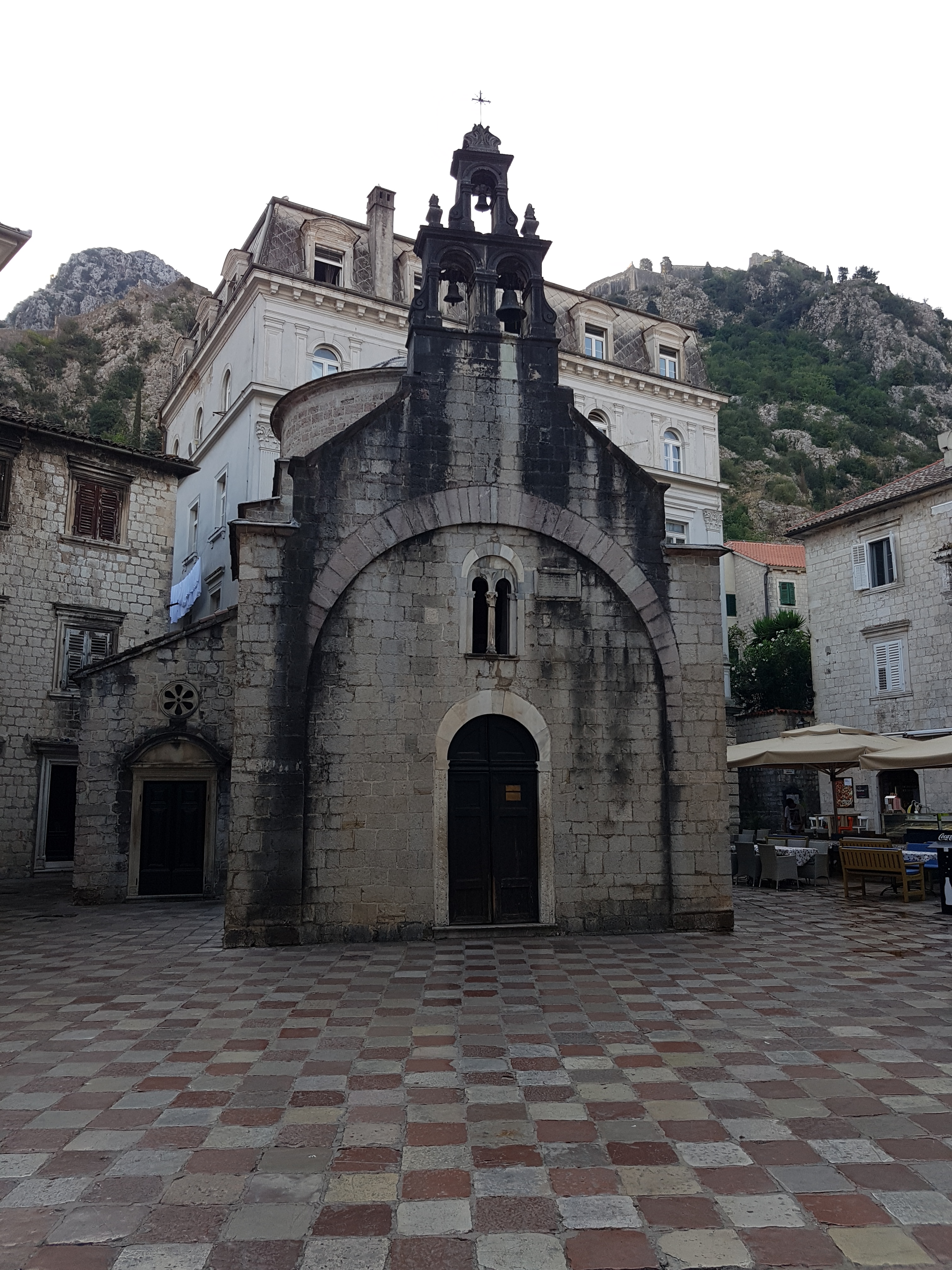
We did the mandatory city walk. This one was short by city walking tour standards at just one hour. The Guide (his name escapes me) was not very well, he looked ill and I think he wanted to get it over. With that said, he did a good job. I came away with as much background knowledge of the history of Kotor as I needed.
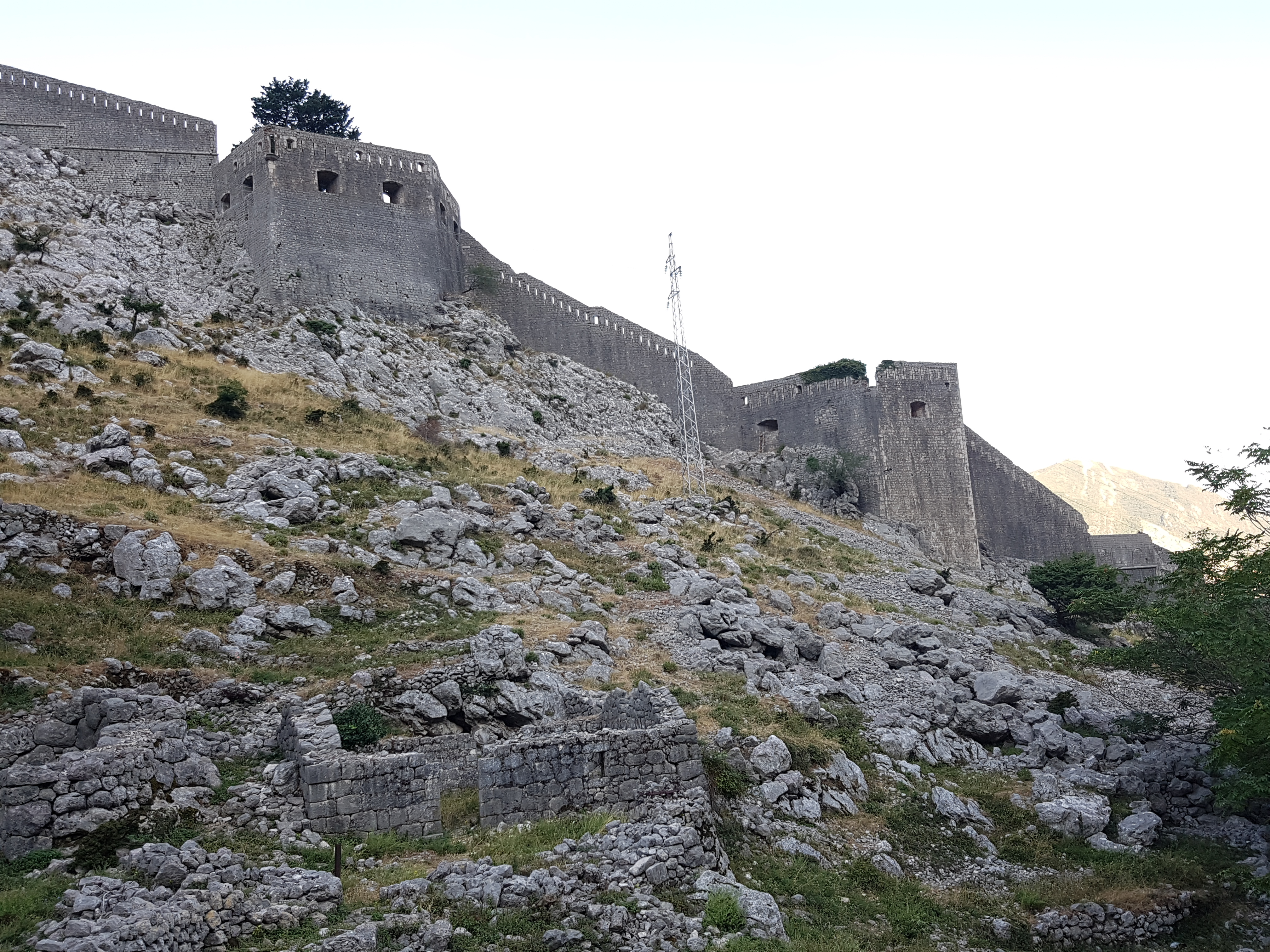
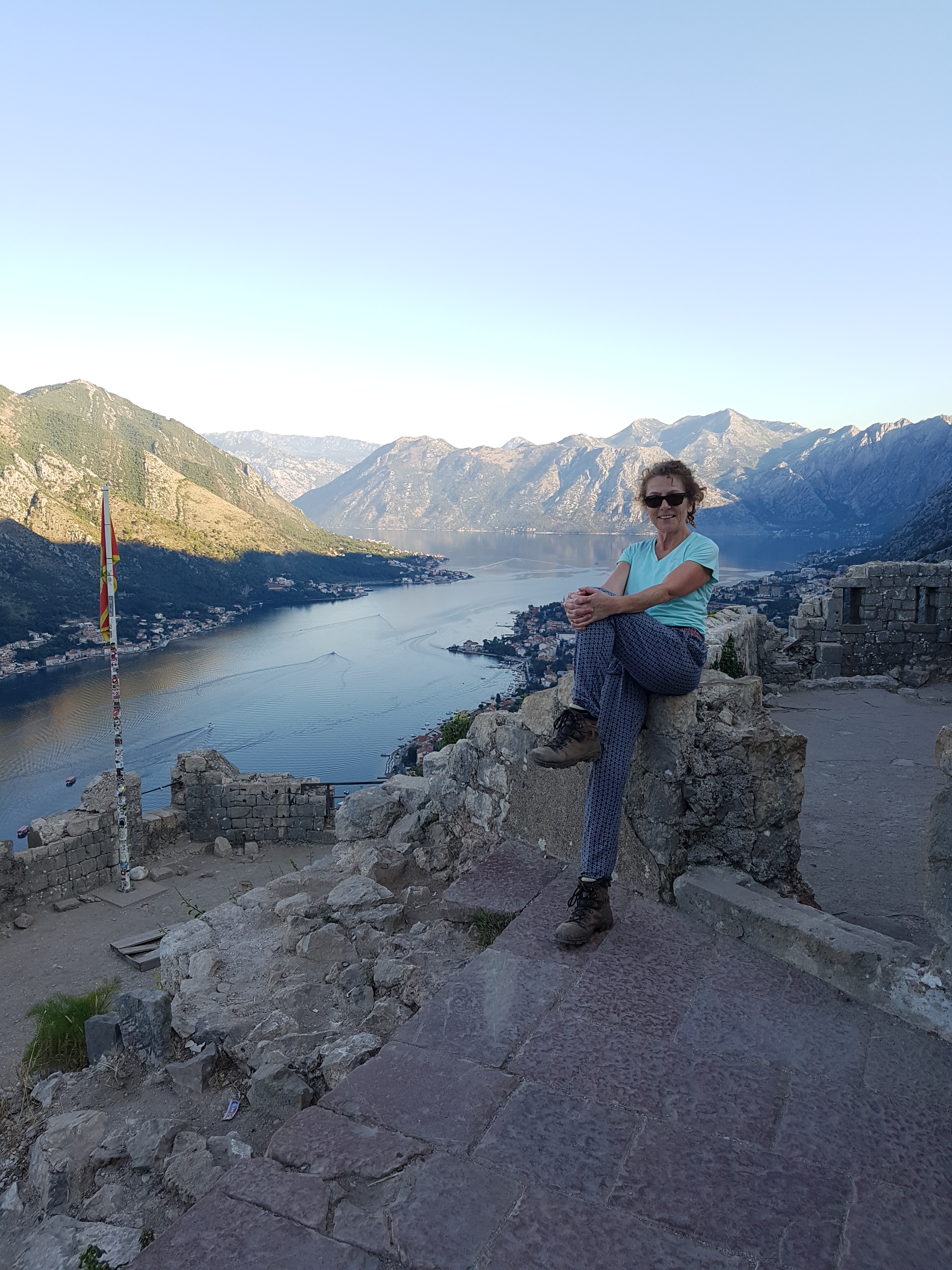
The highlight of our visit was the climb out of Kotor’s Stari Grad (Old City) up to the Castle di San Giovanni.
We had read that it was a tough one hour climb and to allow three hours for the climb and descent. The Guide and others reaffirmed this message. In the circumstances, with the temperature in the mid 30°’s, we decided to set off at 7am in hiking footwear before it got too hot.
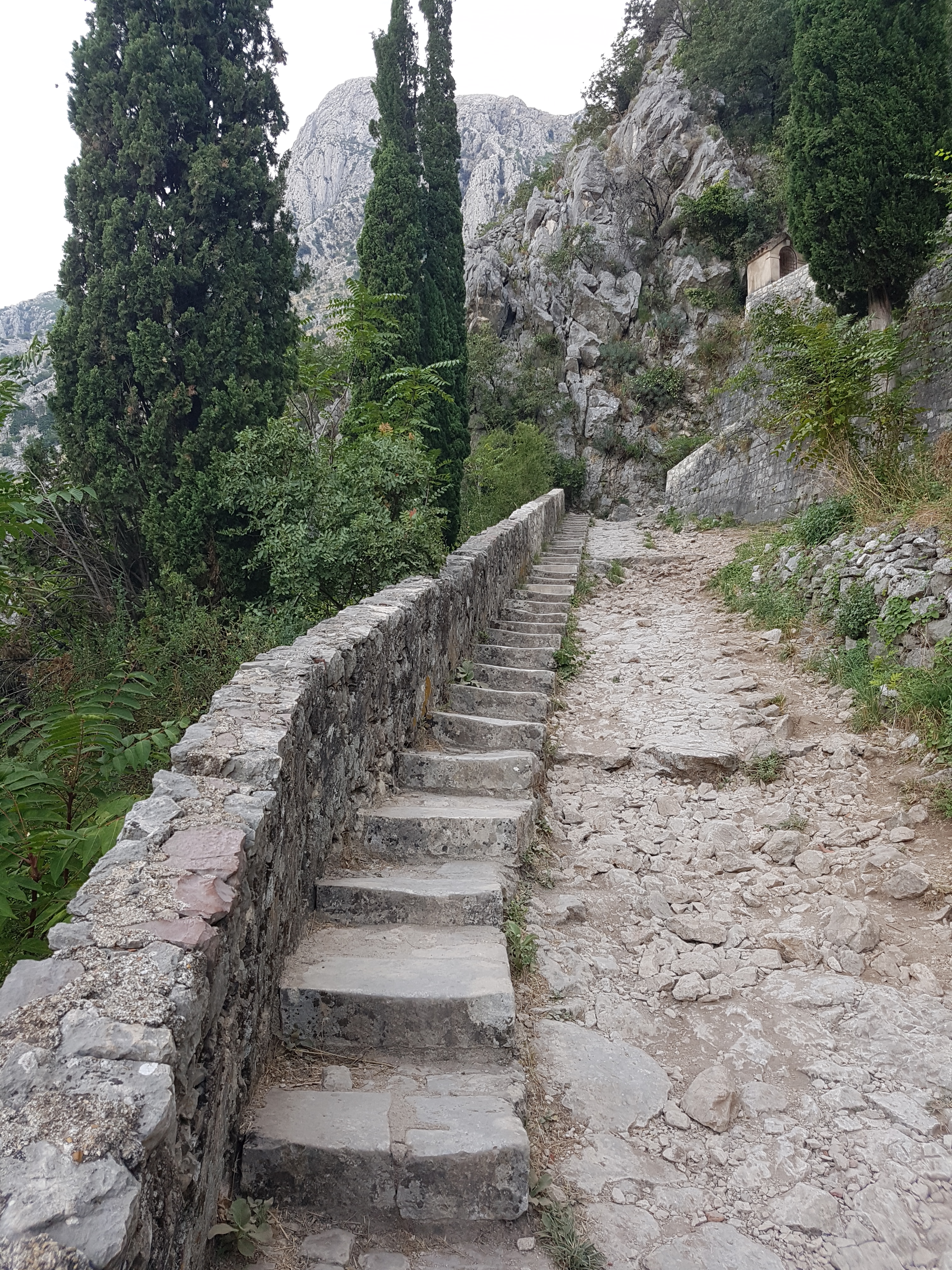
You can imagine our surprise when we reached the fortified castle in just over 30 minutes with no problem whatsoever. We found the 1,350 steps, 1,200m climb, if not easy, definately not difficult. I think they make it sound like it”s difficult for the cruise ship visitors who may not be in the habit of walking any distance or possibly not hiking
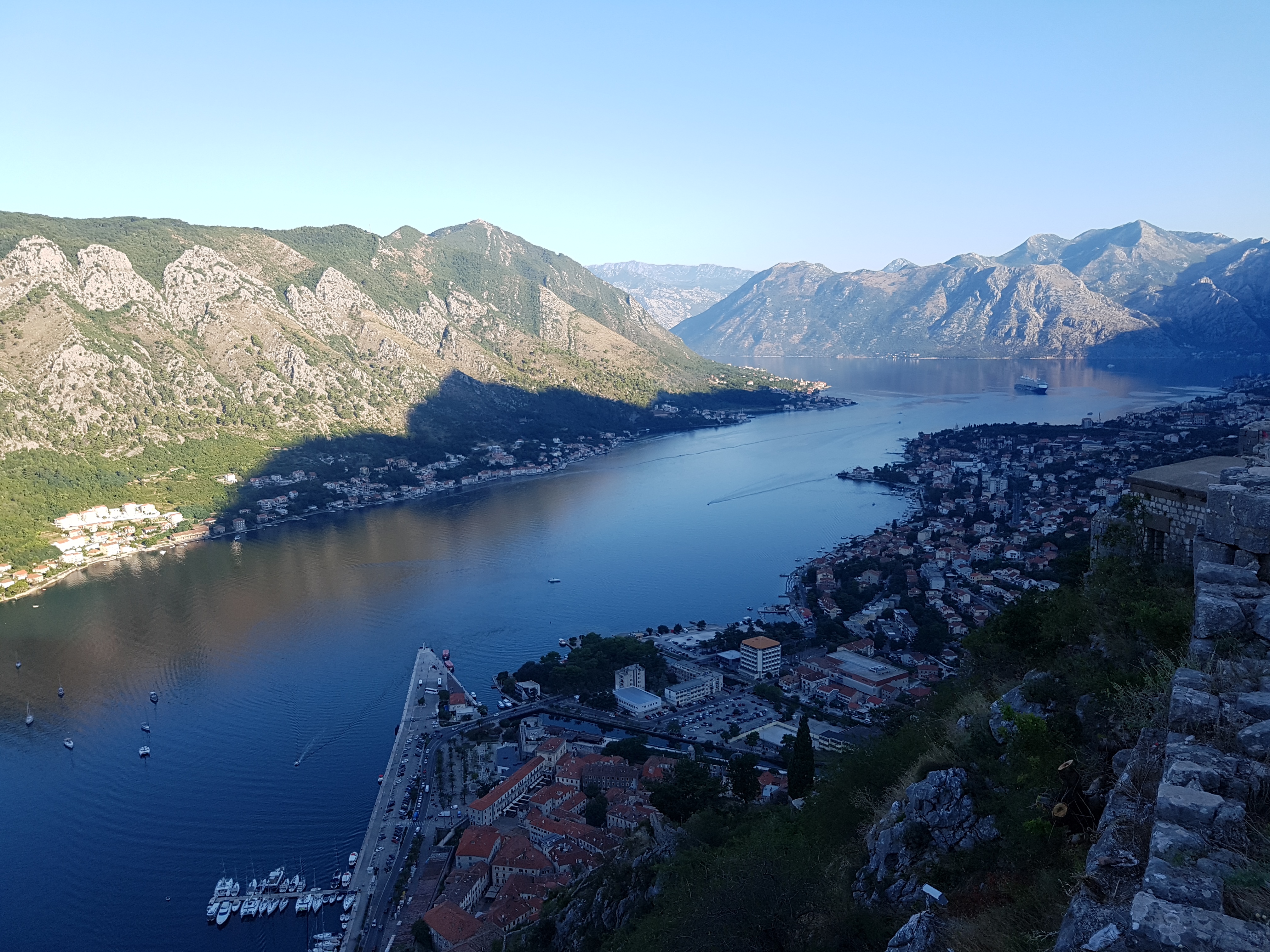
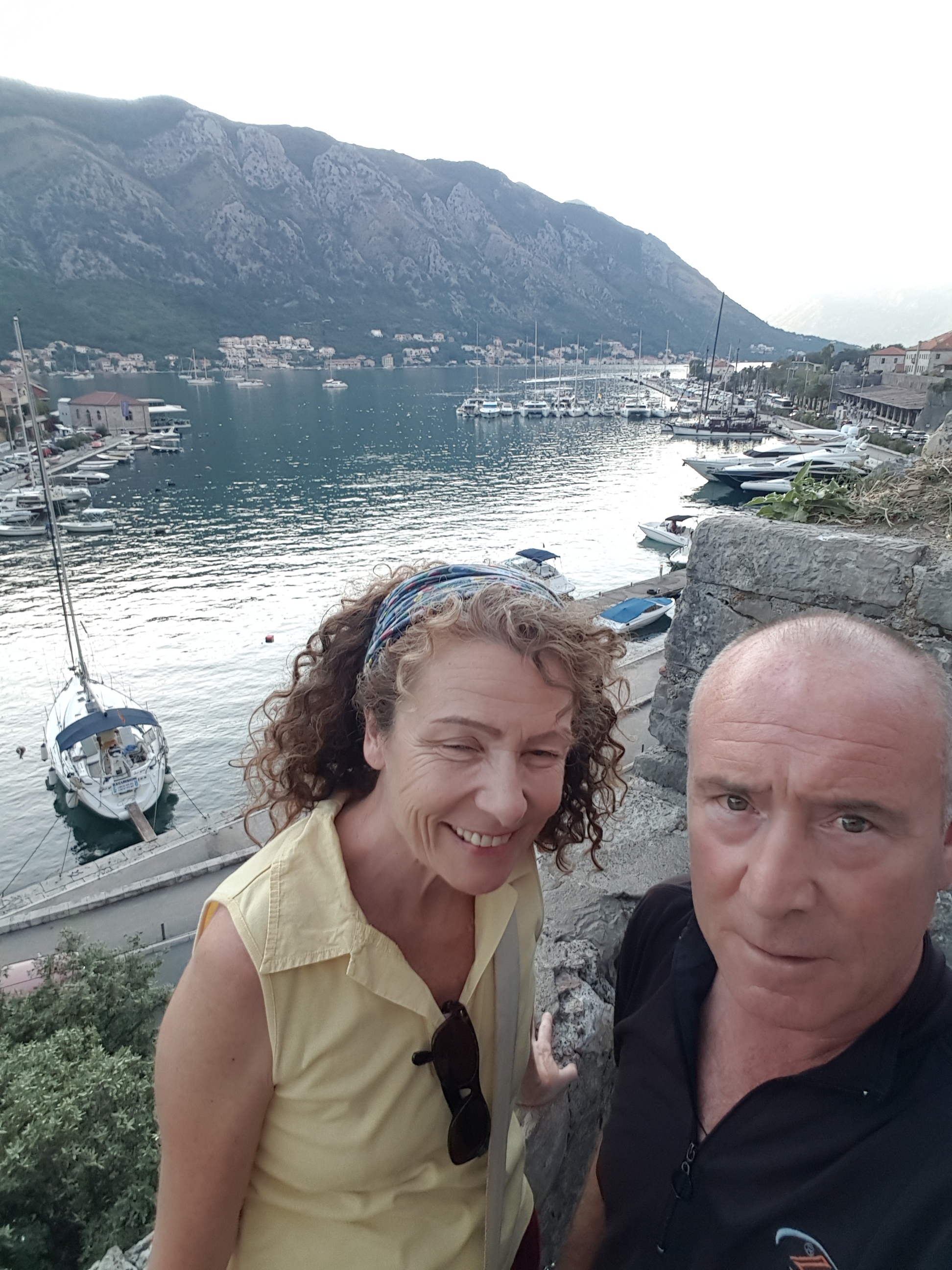
View from the City walls
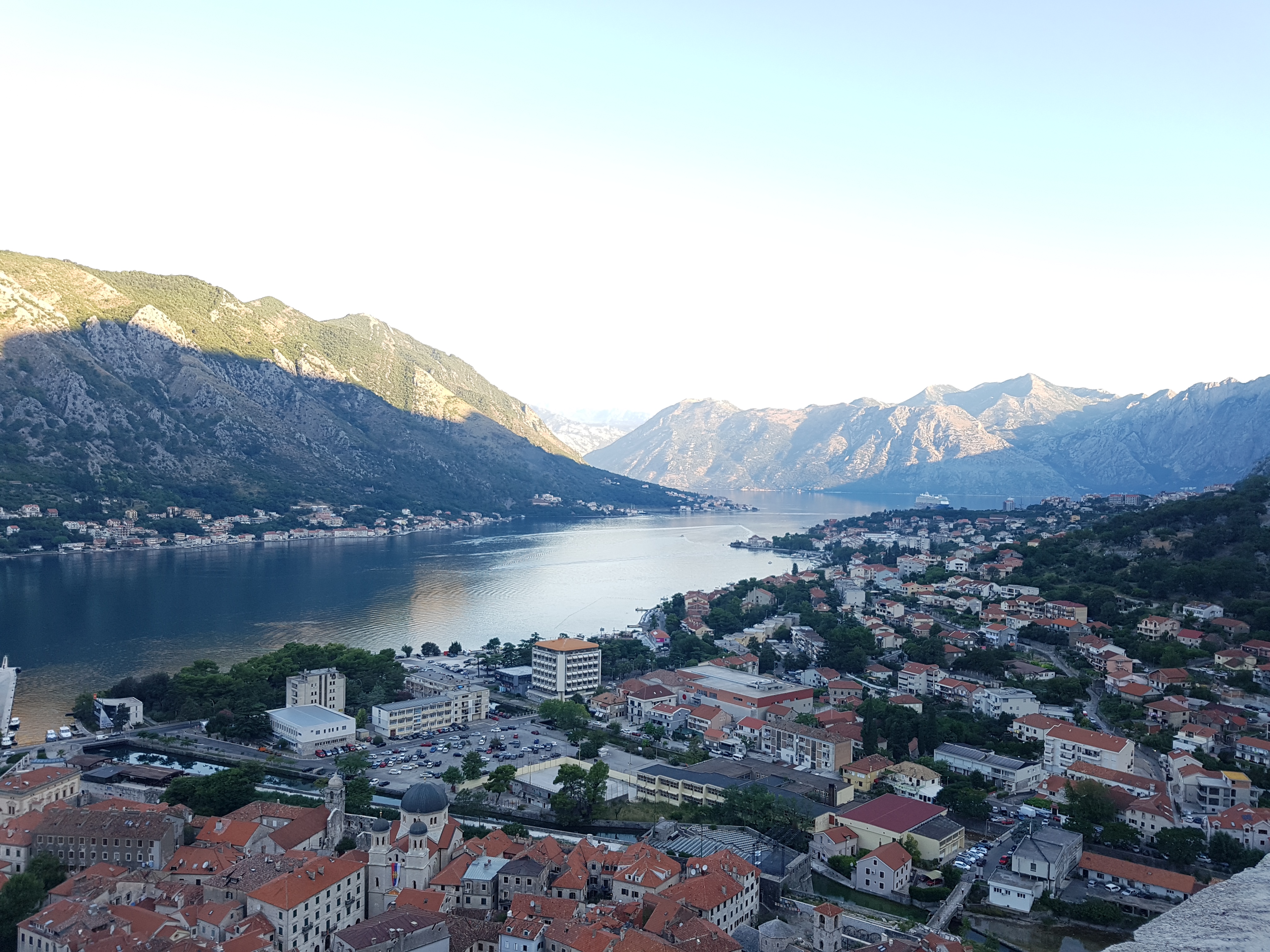
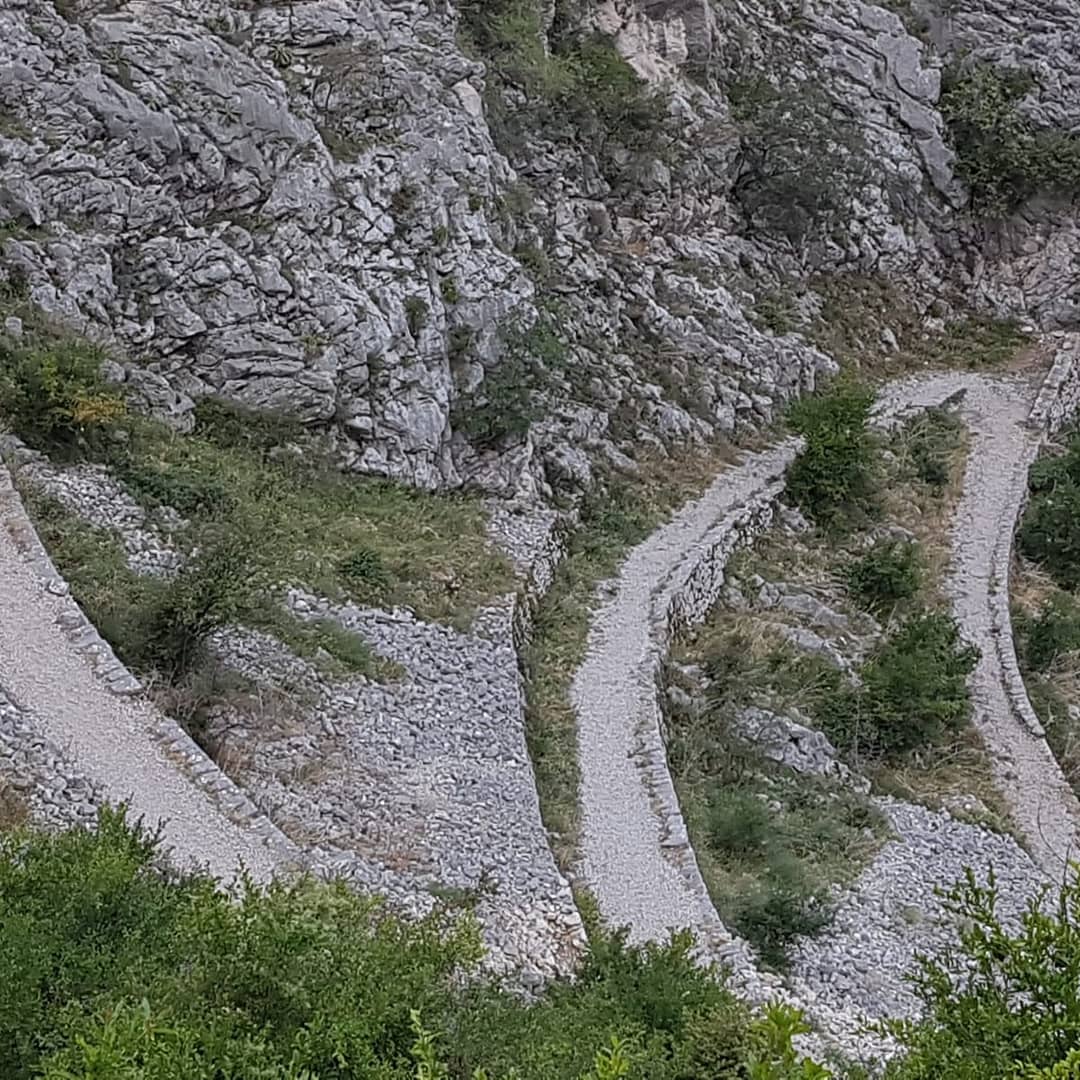
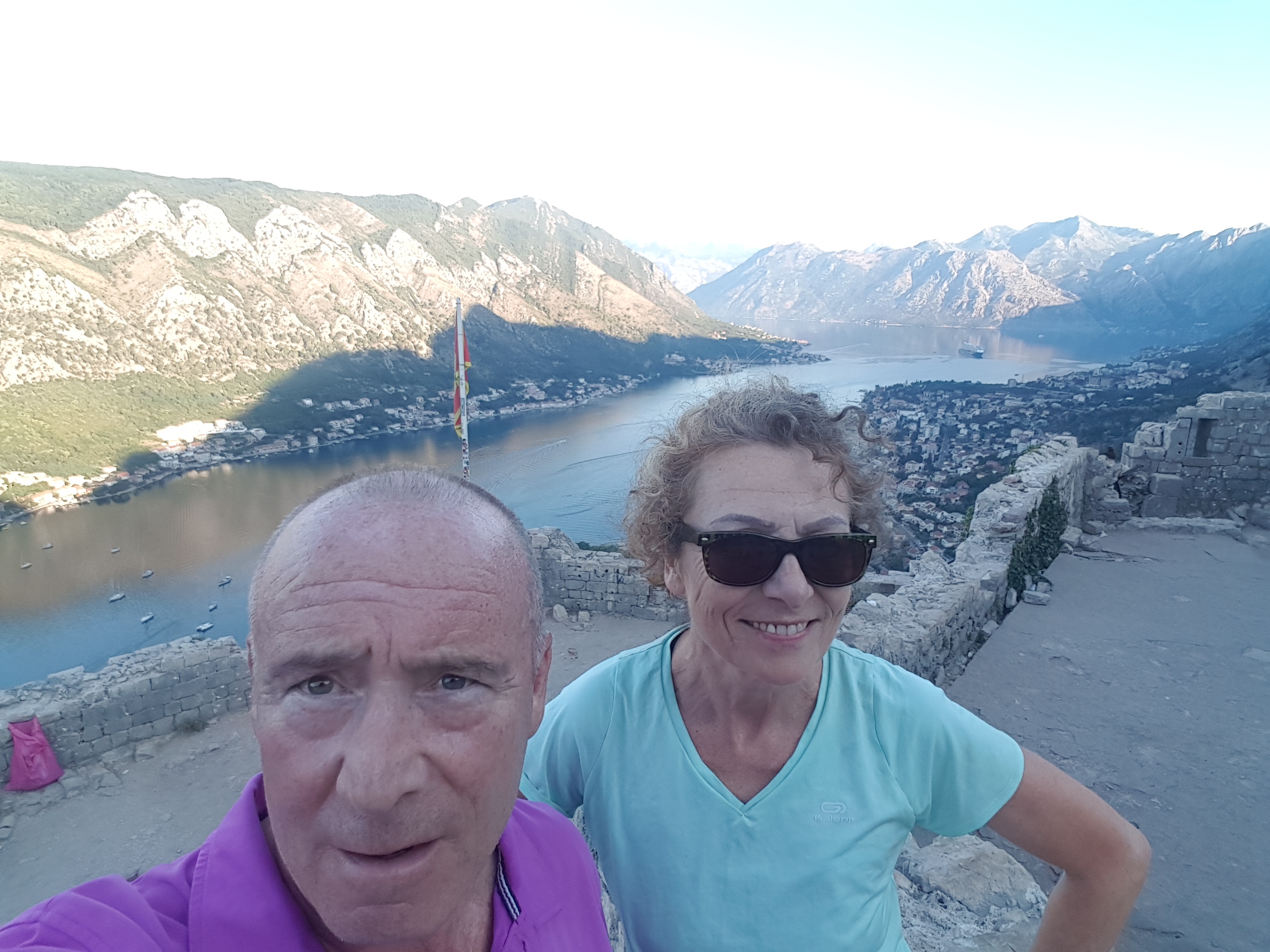
The view of Kotor Bay from the top was wonderful. It was reminiscent of a Norwegian fjord. We took the alternative path down along a path with lots of switchbacks. A lovely walk. Near the top we stopped to speak with a couple who had camped there overnight and asked us for directions to the fortress. I noted that there would be few camping spots anywhere in the world with a better view. It reminded me of the time I camped on top of Machu Picchu but thats a story for another time.
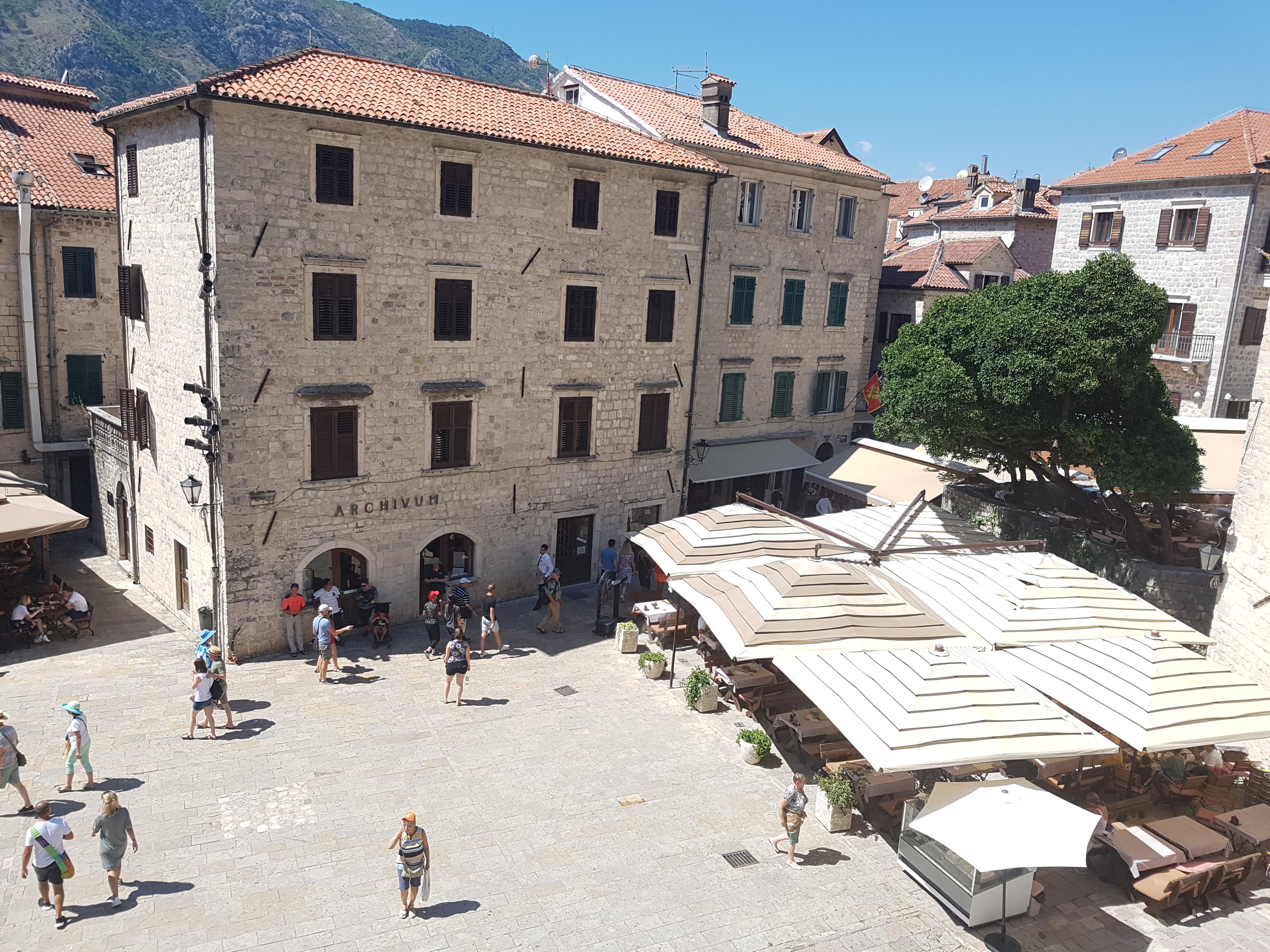
Our favourite spot in the Old City was a square, which nobody could tell me the name of. It has two restaurant’s and a reasonably priced bar. In the evening the Bar organises musicians to play for the customers of the three establishments. The music was relaxing and the atmosphere vibrant. I will remember it for a long time as one of my favourite places to relax.
Tourist tip of the day. If you want a long weekend of the east Adriatic, skip Dubrovnik and visit Kotor.
From Kotor we plan to take a bus south along the beguiling Adriatic coastline to Shkoder (Shkodra), Albania.
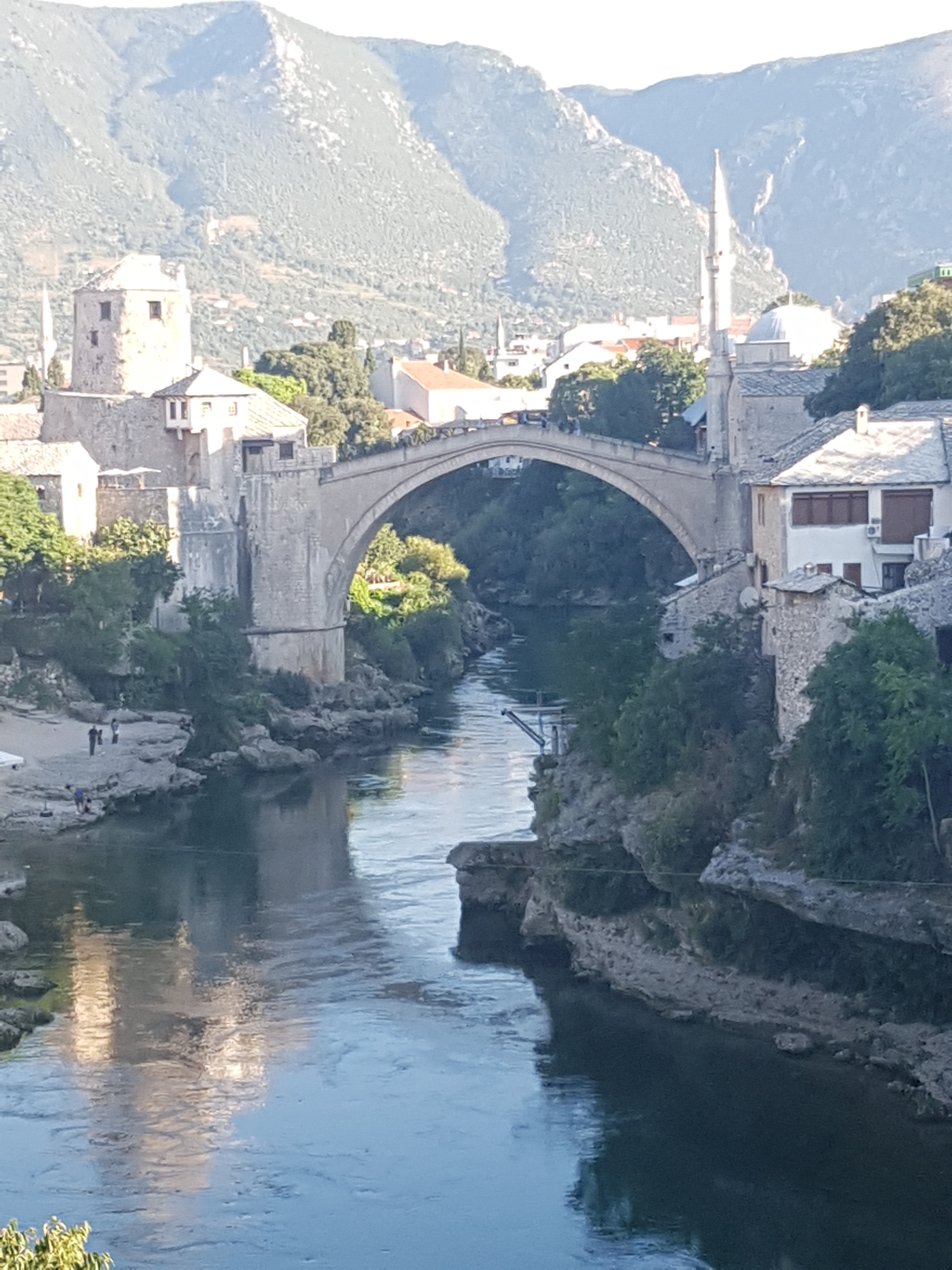
Day 103. We are currently in Mostar after spending a couple of days in Dubrovnik.
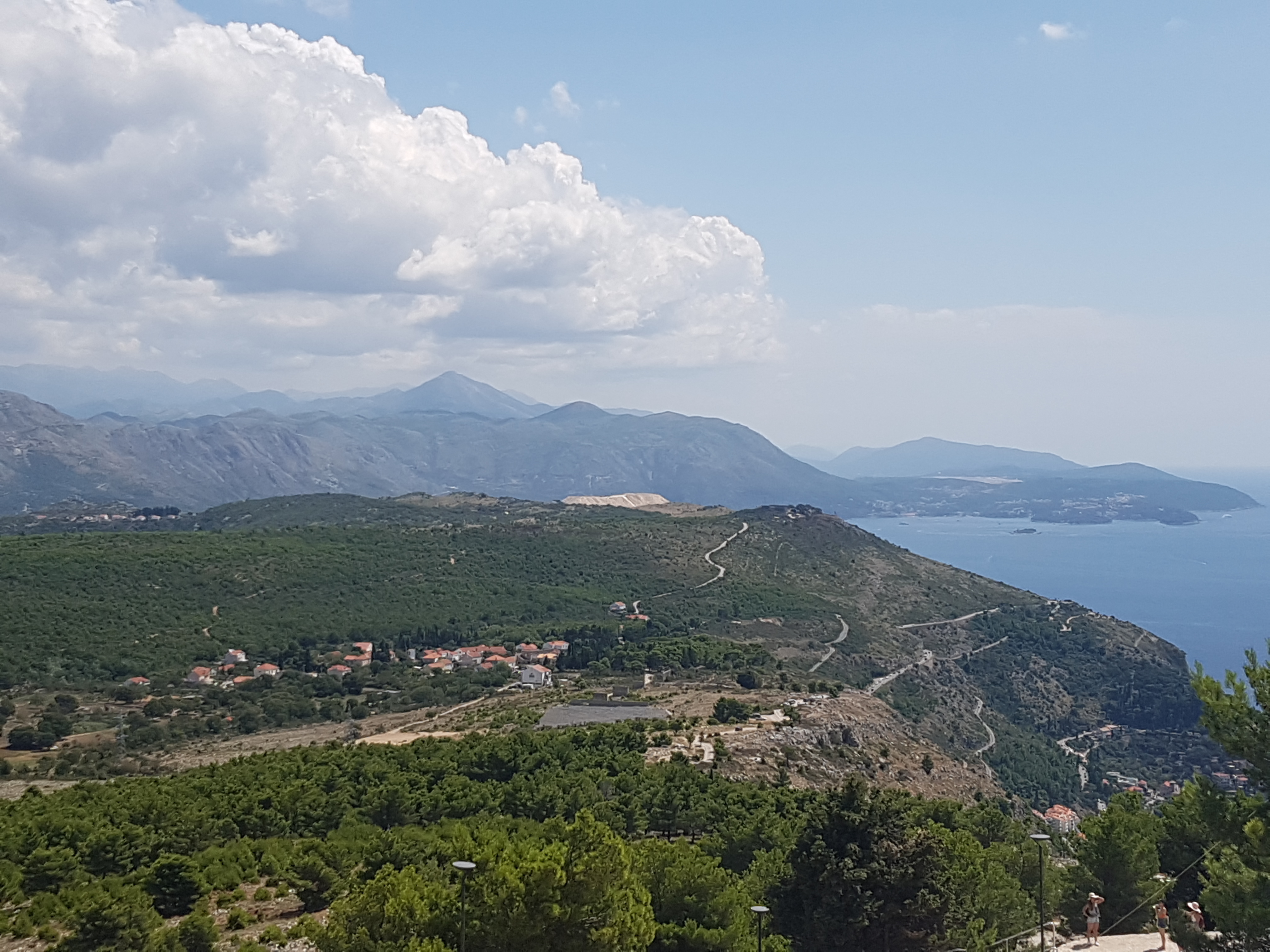
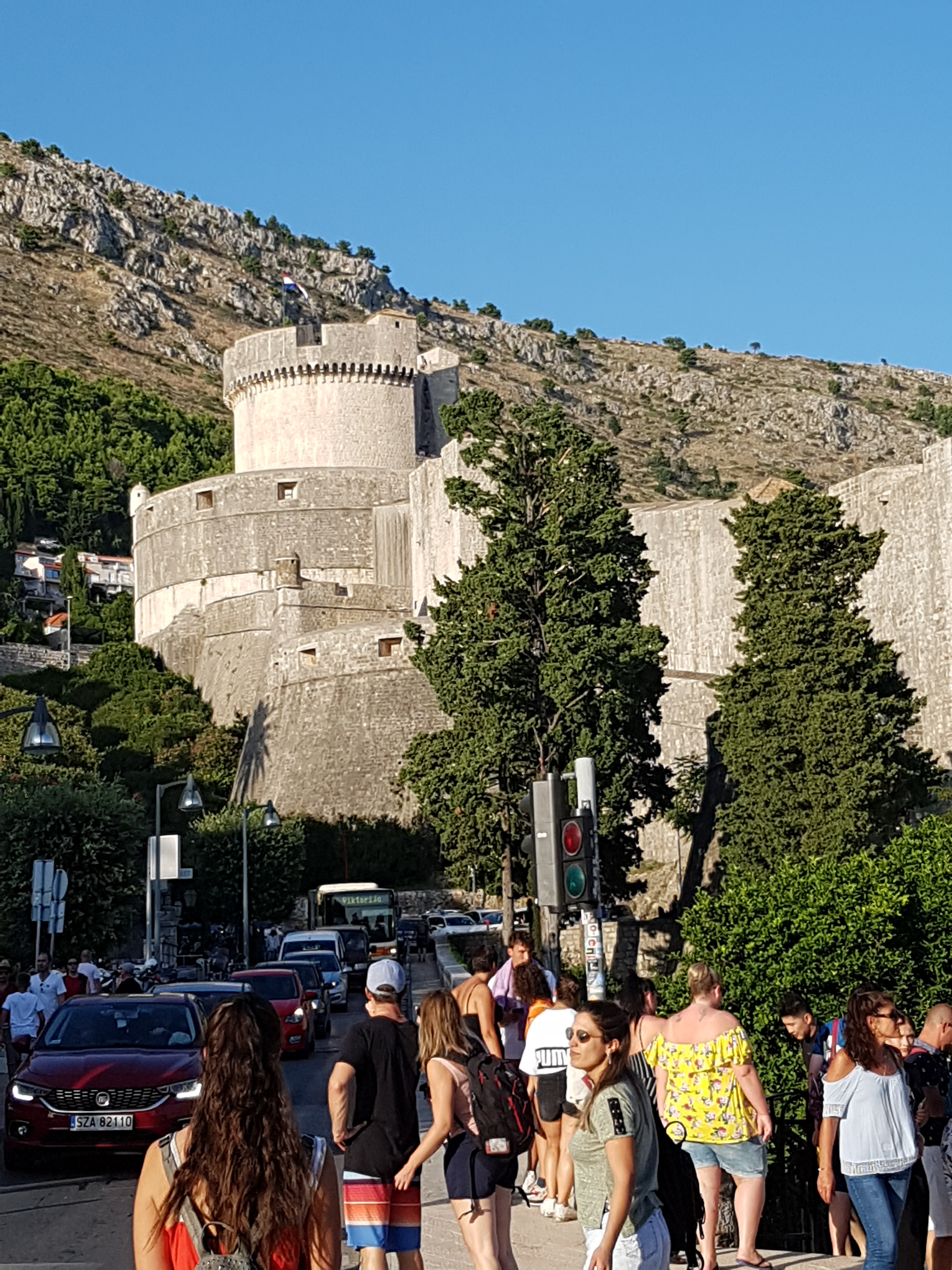
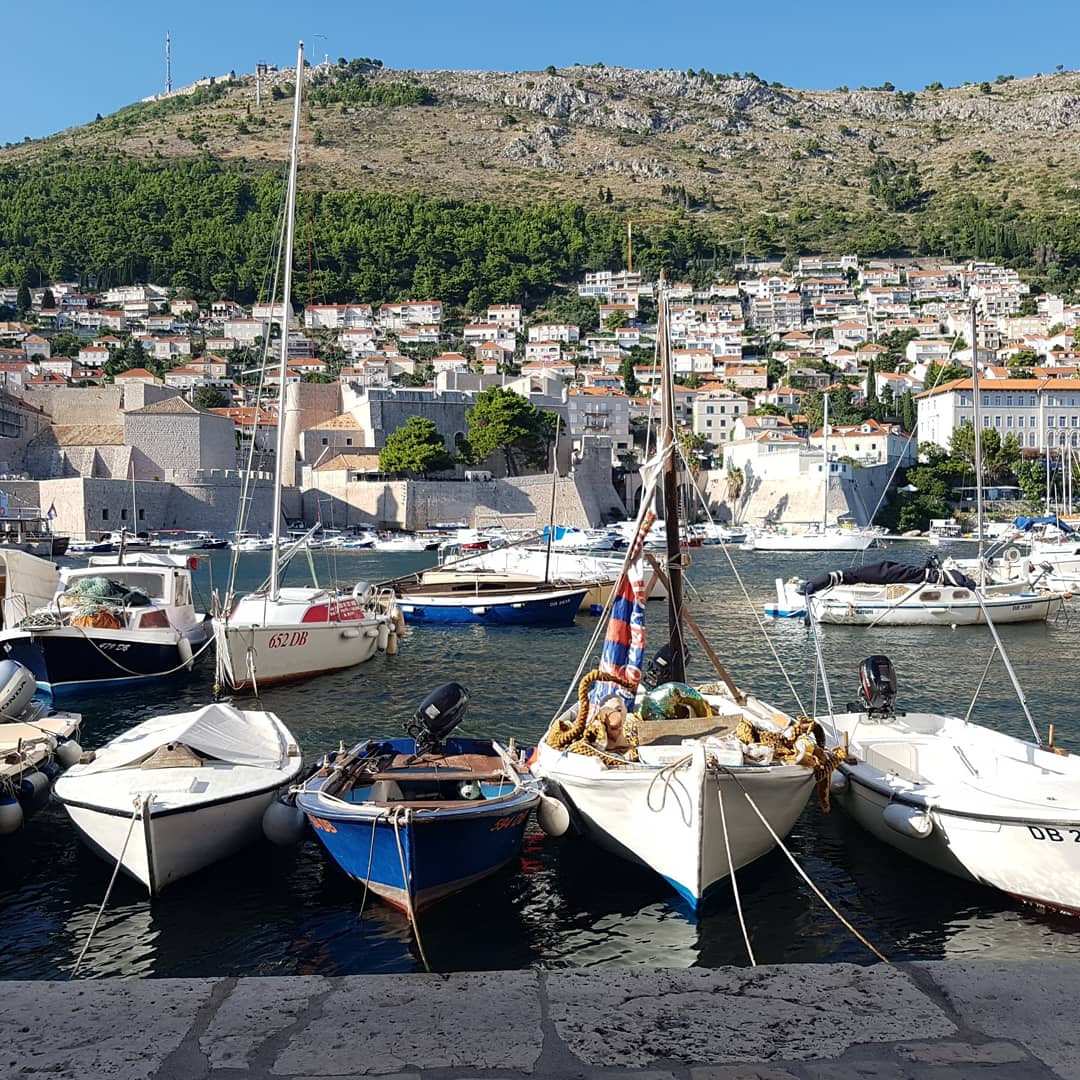
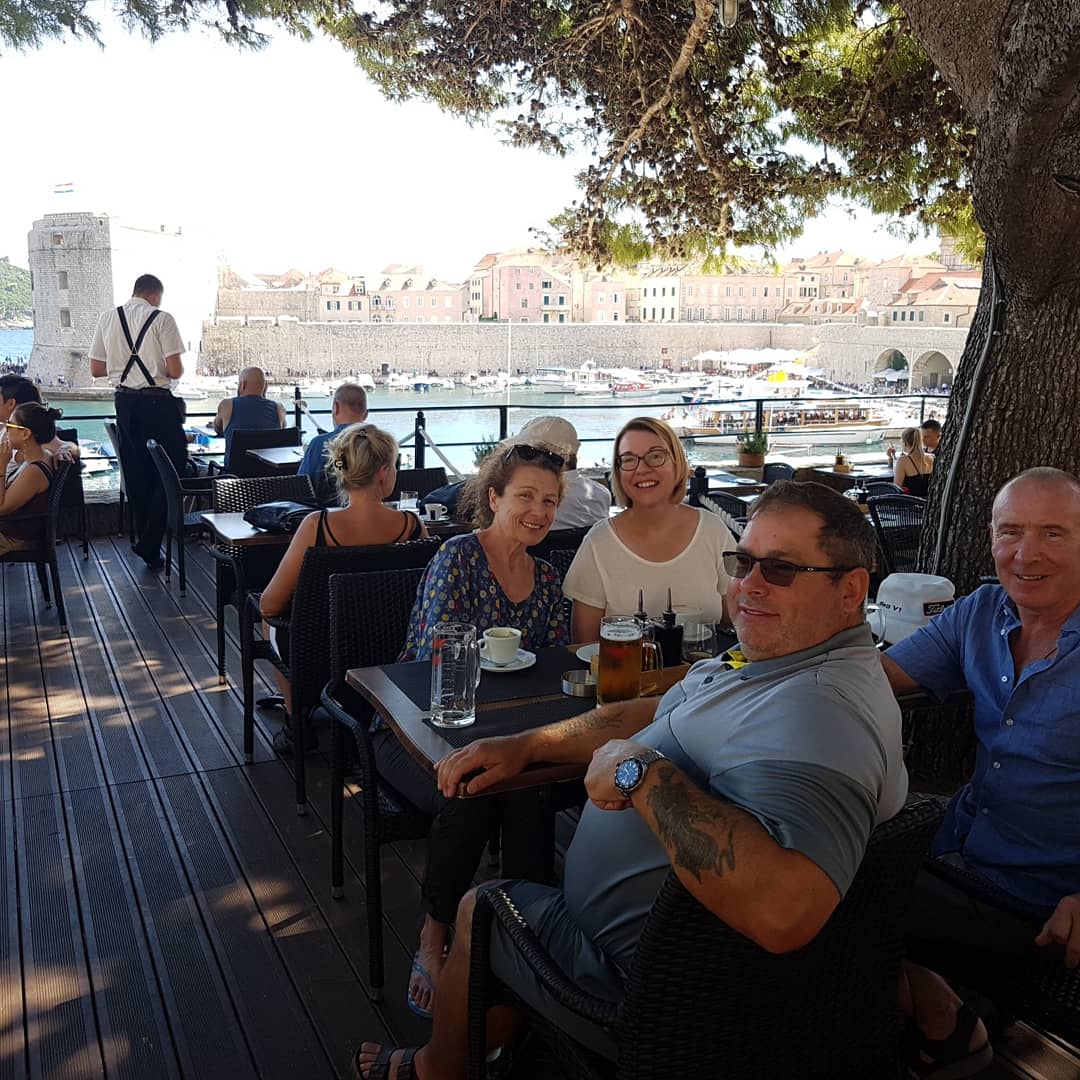
Sheila and I were very pleased to meet and spend a day with Keith and Clare in Dubrovnik. Their cruise ship docked in Dubrovnik. We enjoyed our day mooching around the Old Town and took the cable car up the mountain to get spectacular views up and down tbe coast and a birds eye view of the old town.
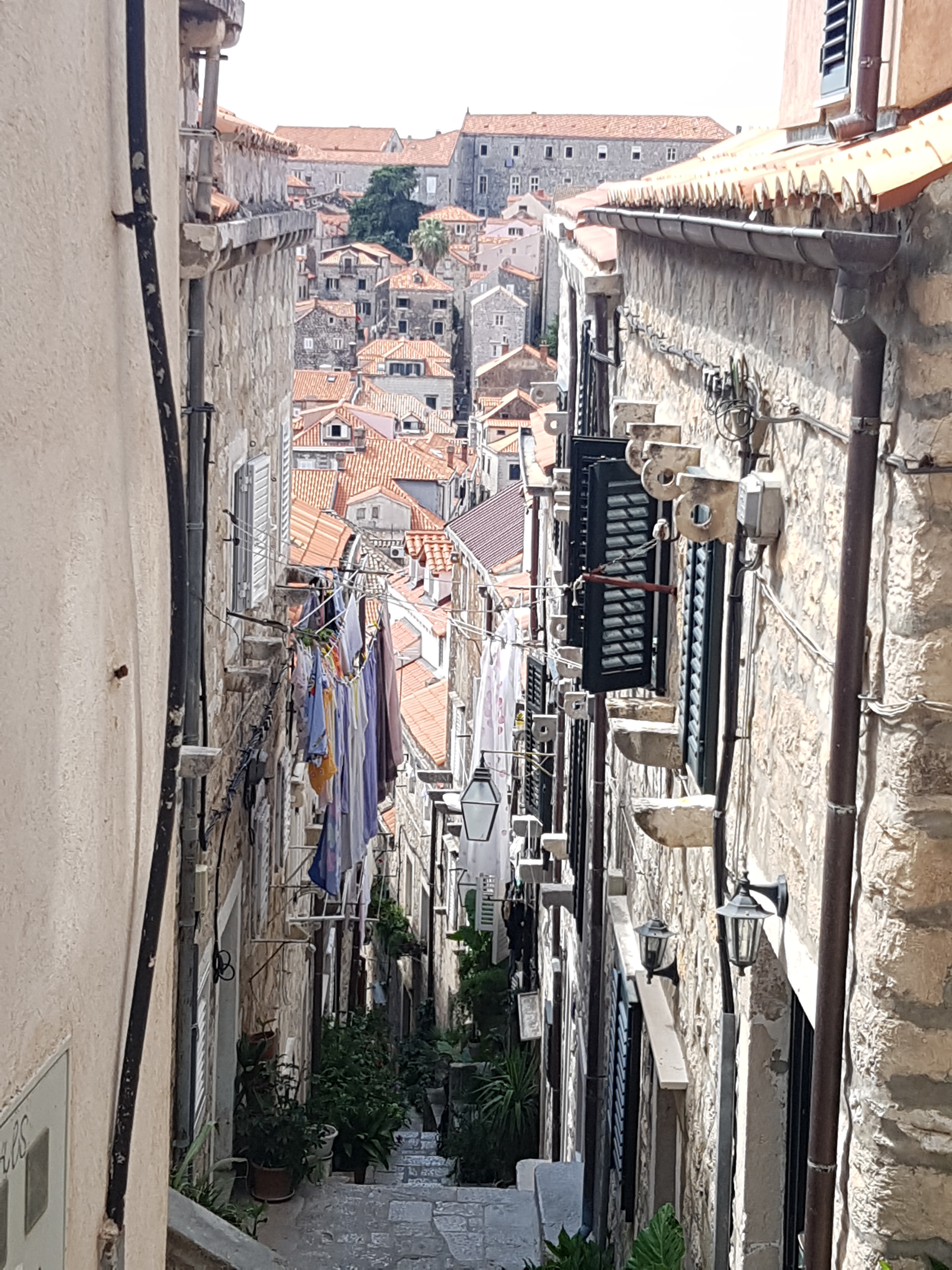
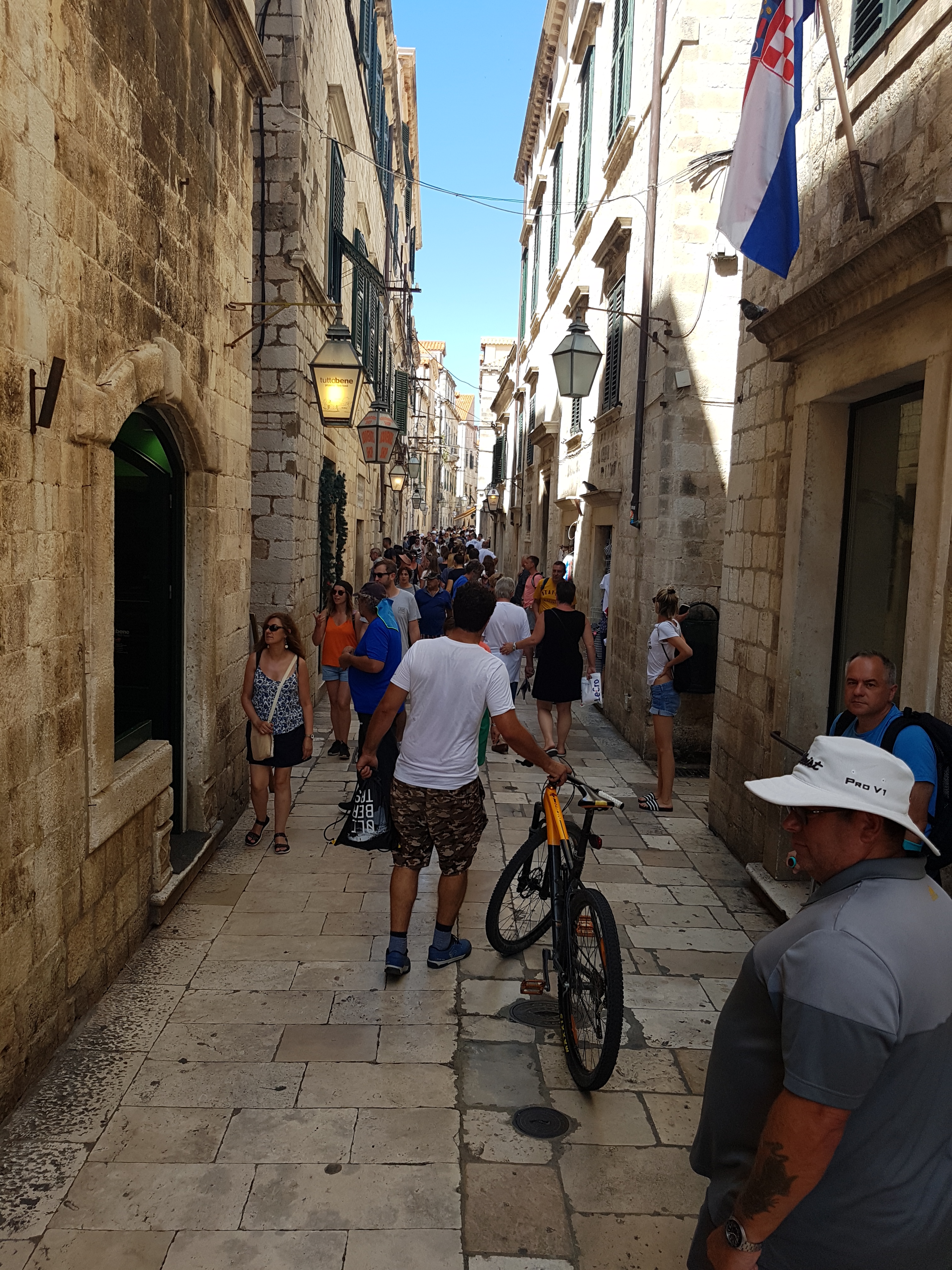
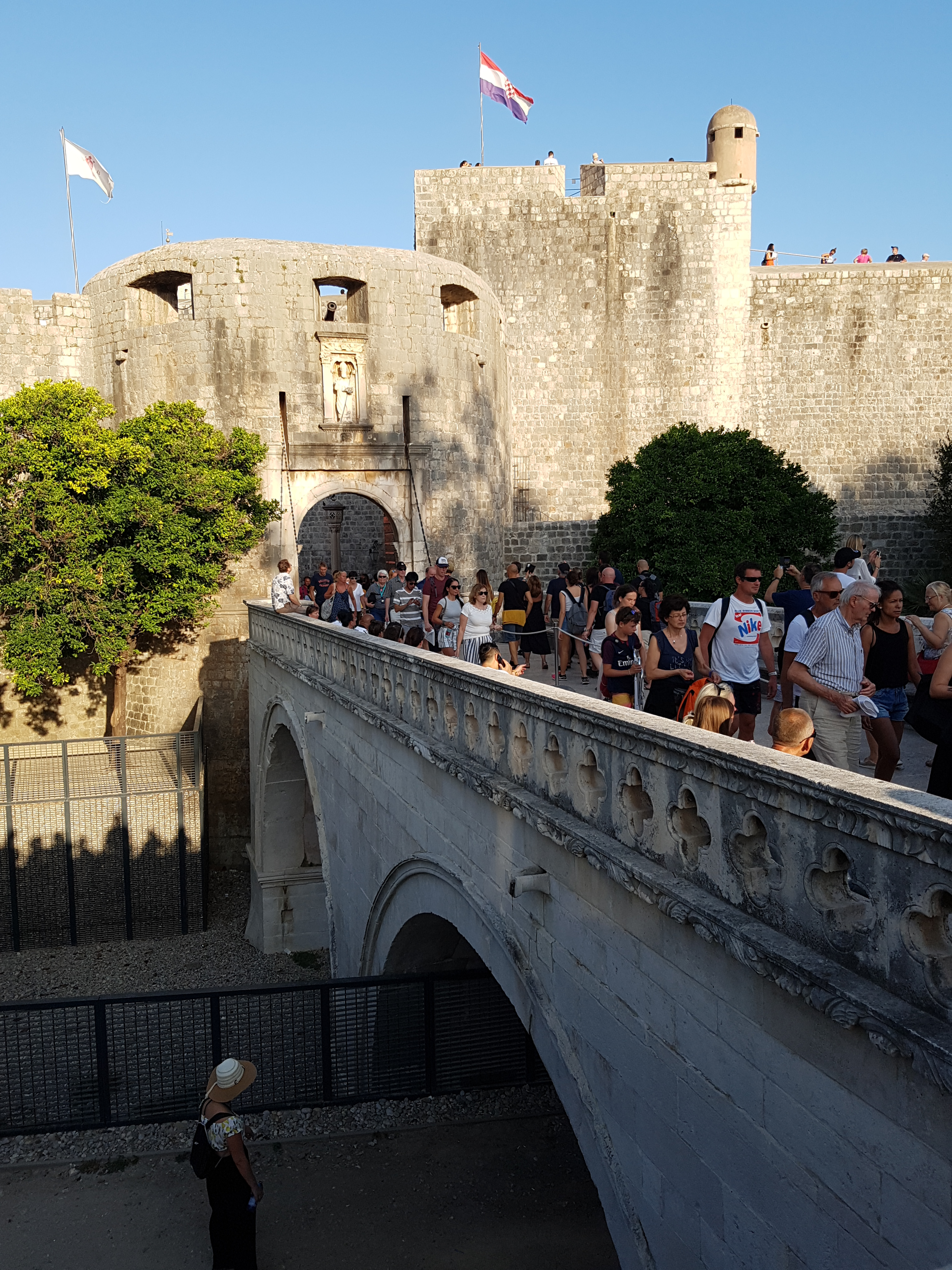
Our visit to Dubrovnik was spoiled by our hostel. It was a grubby establishment that was a 20 minute walk from the old town up a very steep hill. The temperature was in the mid 30’s and being the middle of August, it was absolutely rammed full of tourists. They say that tourism is a double edged sword. It provides much needed employment and revenue for local residents. However, too many tourists can change the charecter of a city.
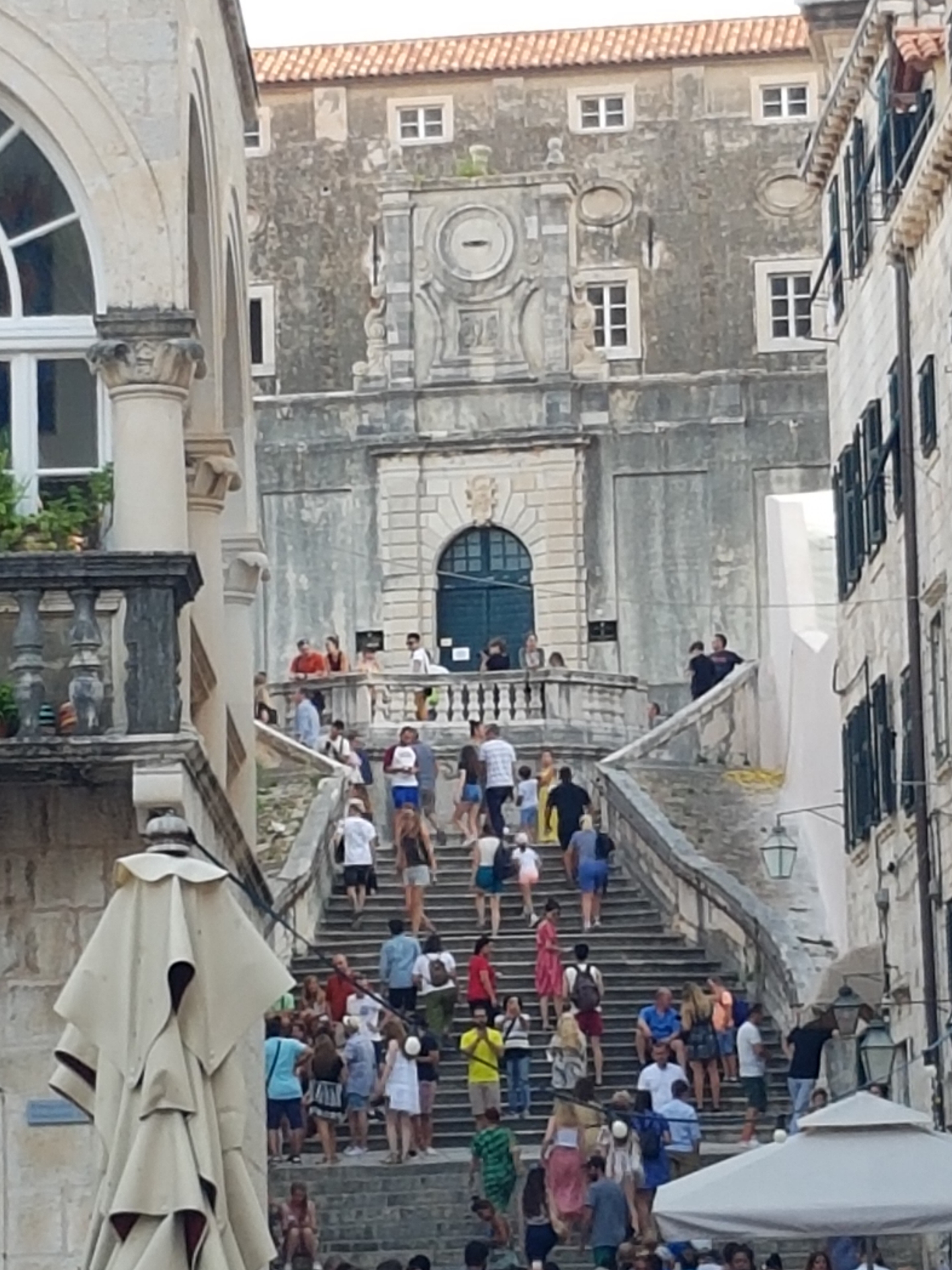
Game of Thrones has a lot to answer for. Tens of thousands of its devotees flock to Dubrovnik every year to see the setting of the series first hand.
Twenty years ago the resident pop of the old town was 6000+. Now, it is just 1000. Many of the residents have converted their homes in to tourist accommodation or sold up to someone who then converts the building in to tourist accommodation. The result is a homogenised ‘film set’ full of fancy restaurants and souvenir shops. For me, Dubrovnik now rates with Las Vegas. Somewhere I would not return to.
We left Dub and took a bus to Mostar. It was a long journey along the coast road but the beautiful views made it worth it. We were lucky enough to bag the front seats and so, had fabulous panoramic views. Tourist tip of the day: always reserve the front seats on a coach to ensure the best views.
After the dreadful accommodation in Dub, we took no chances and made sure we reserved good quality digs. We were not disappointed. Villa M is newly opened this year. High quality and spotlessly clean.
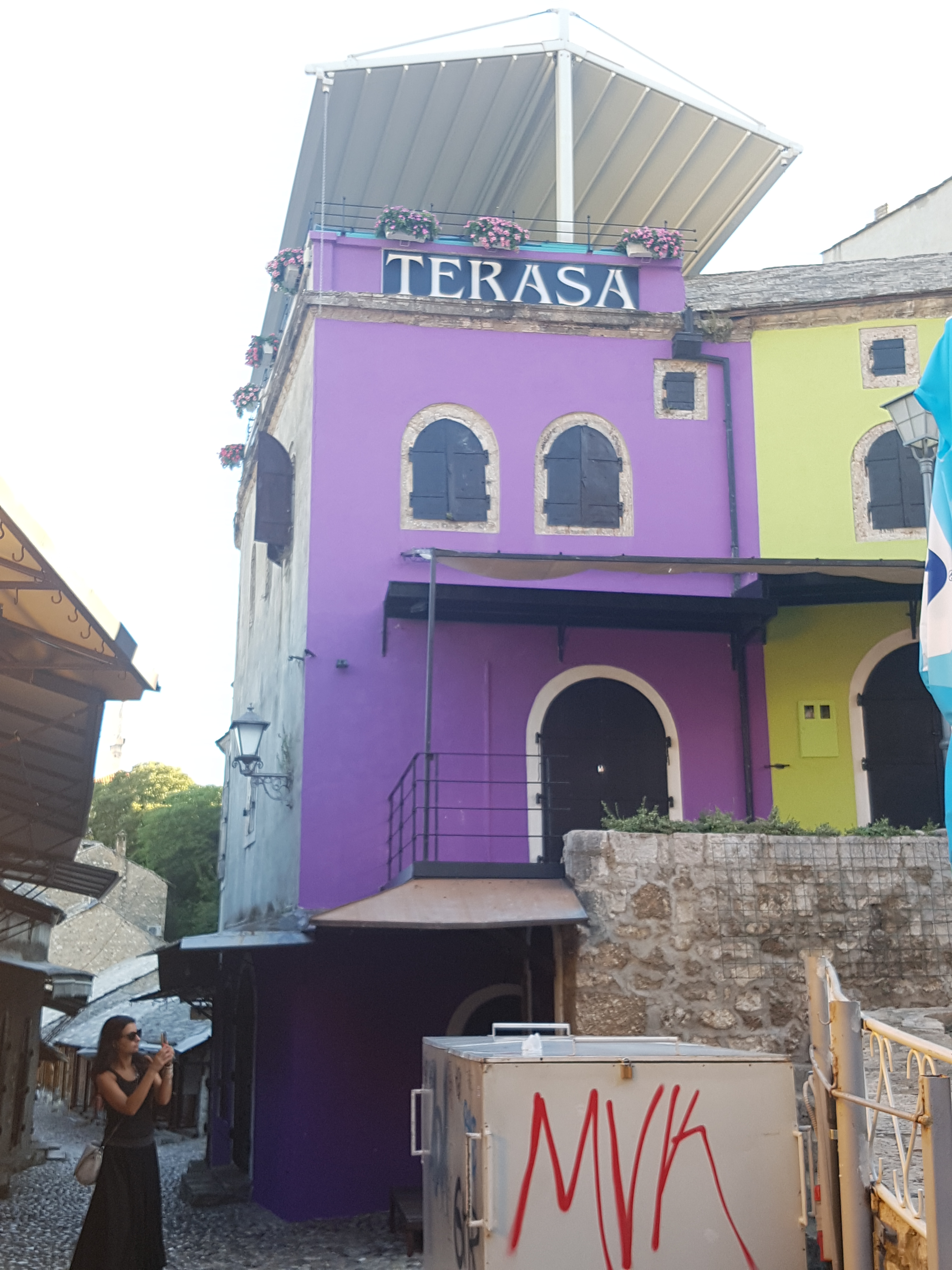
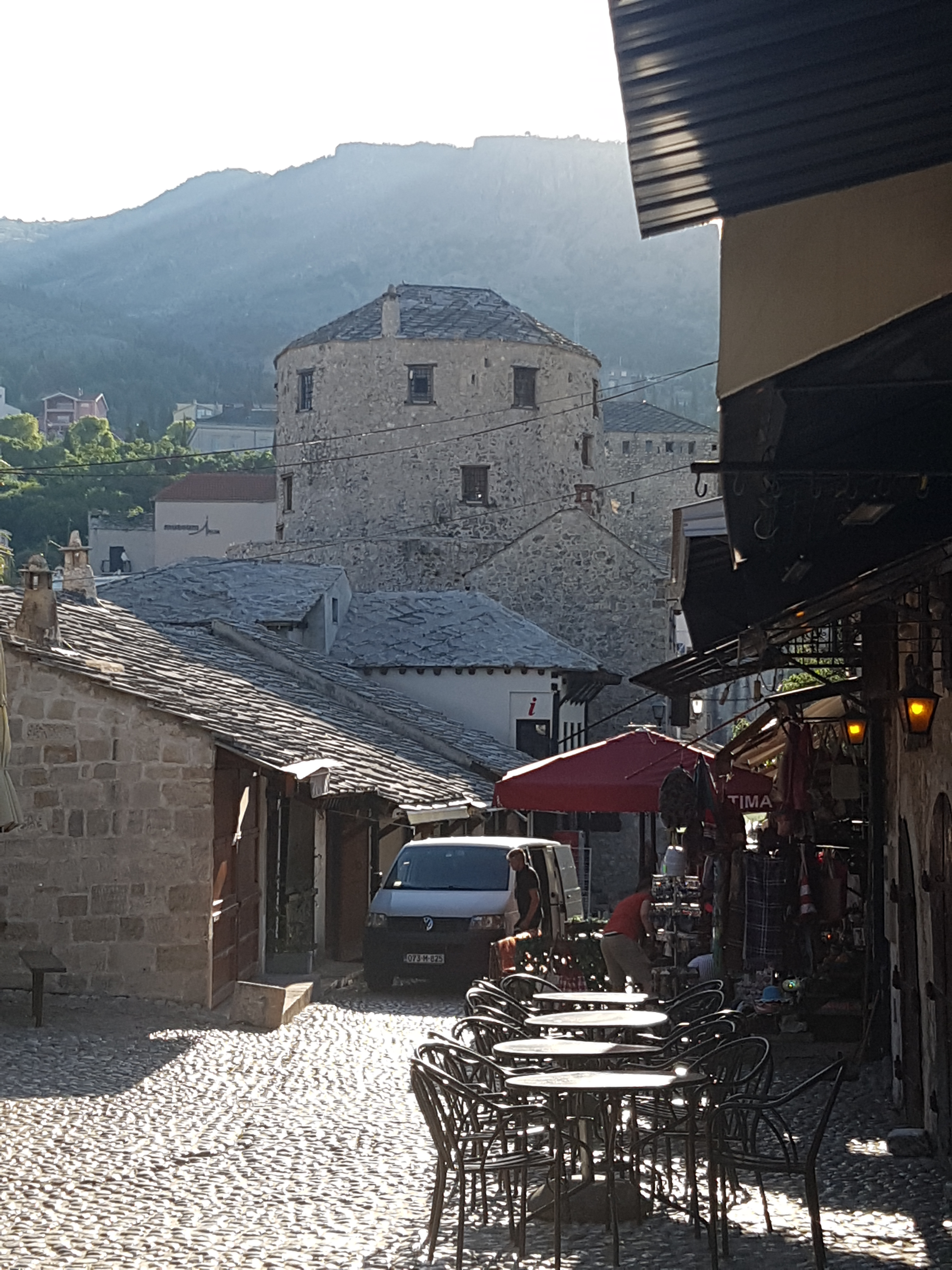
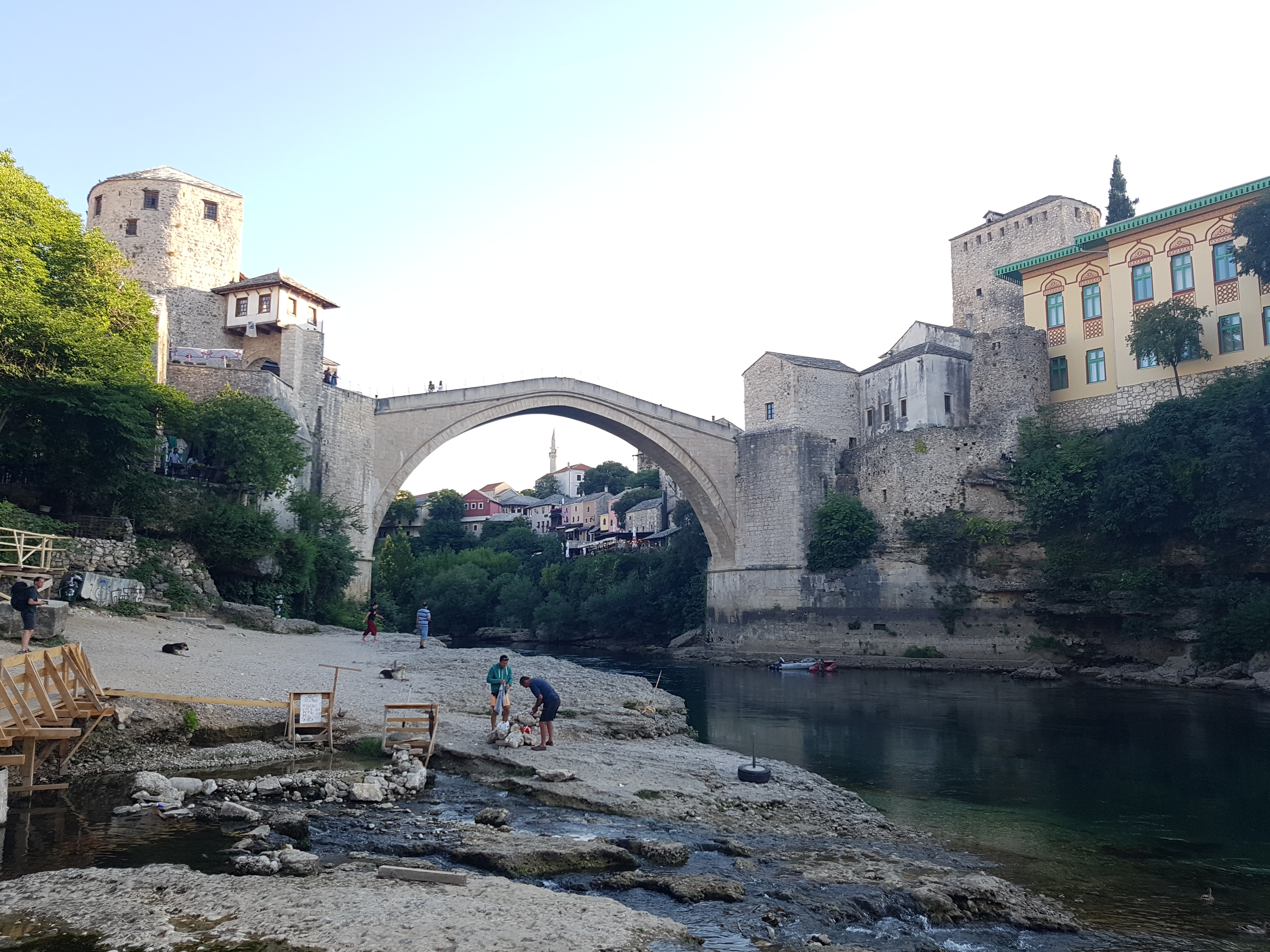
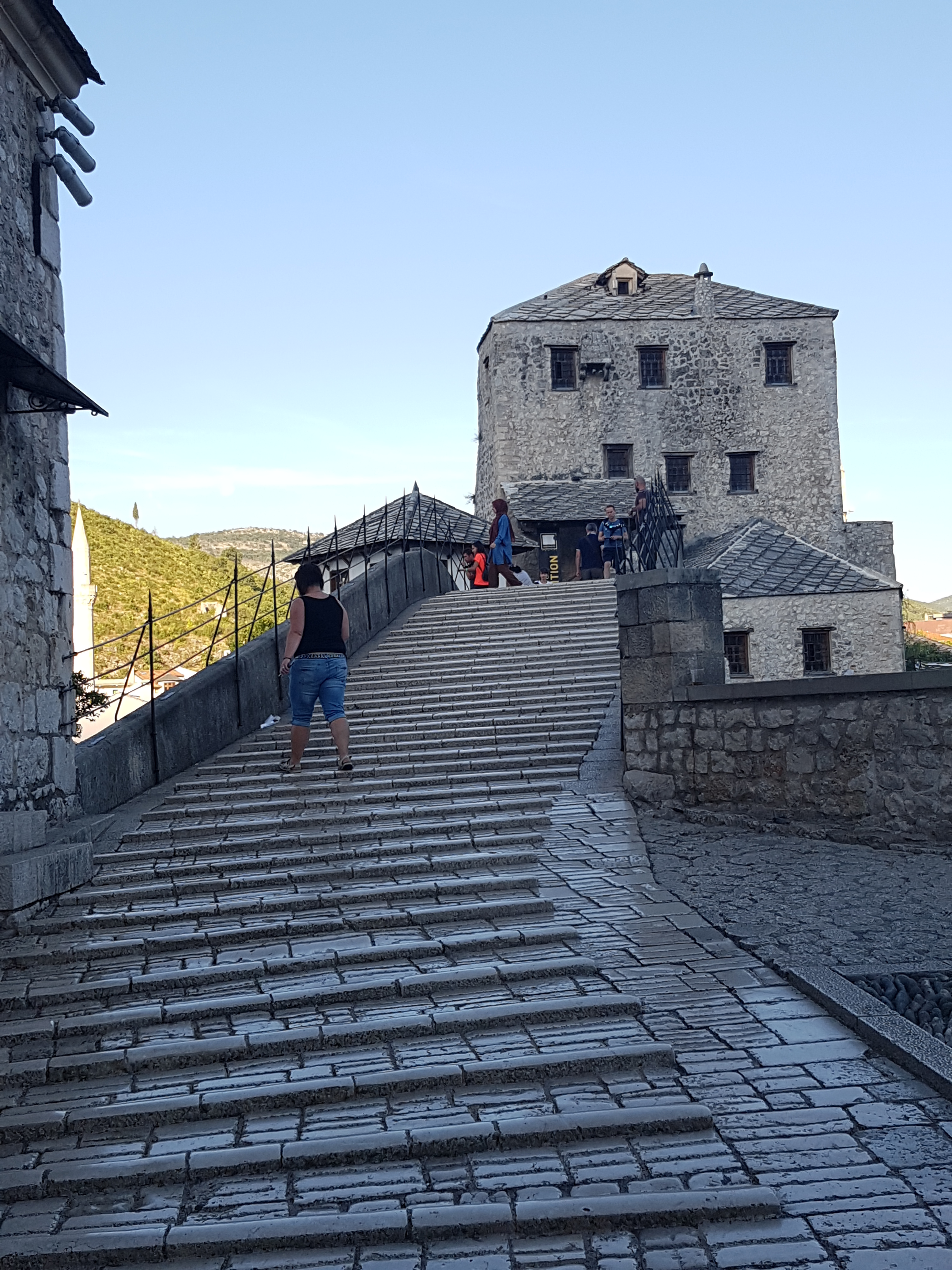
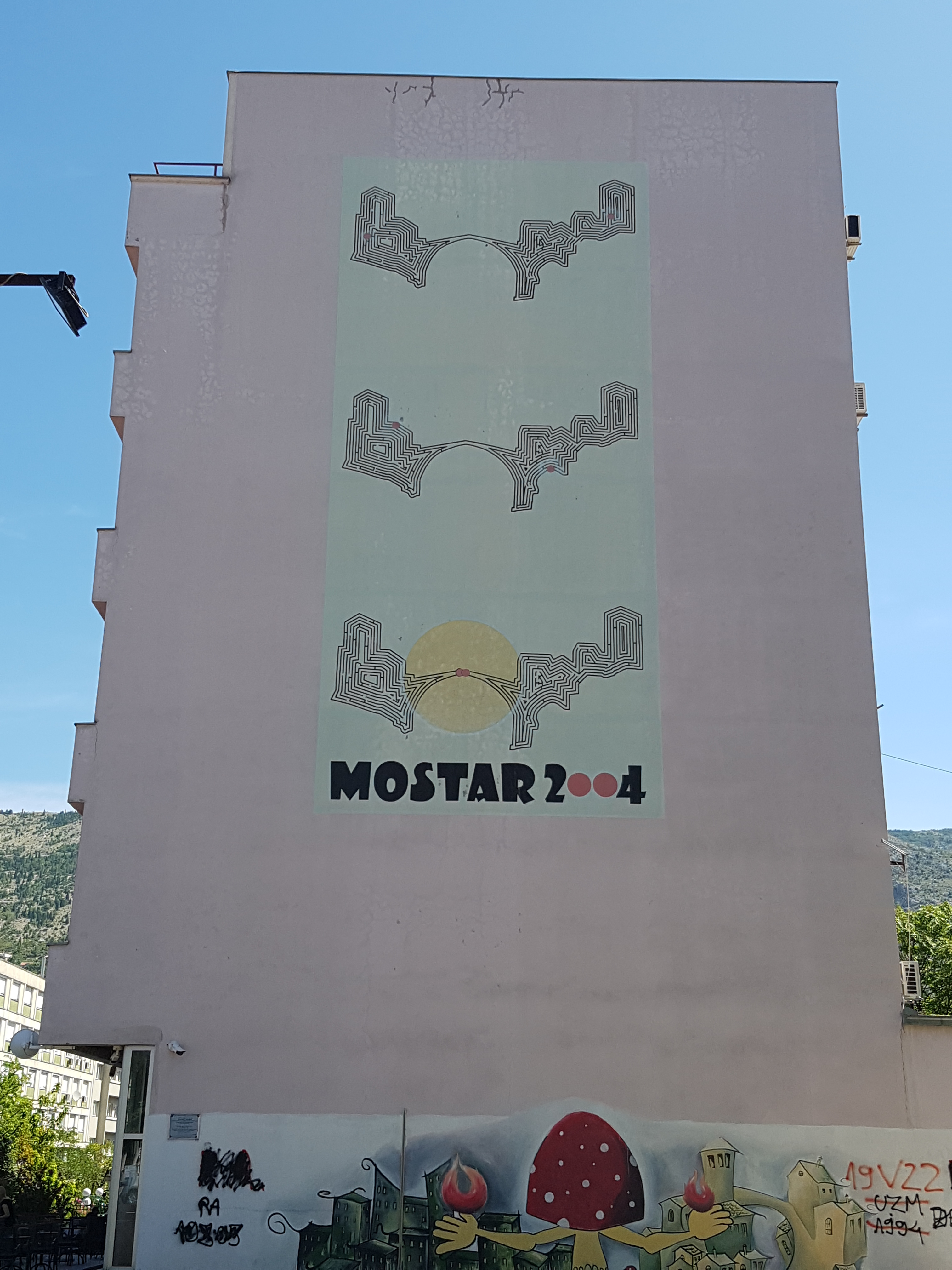
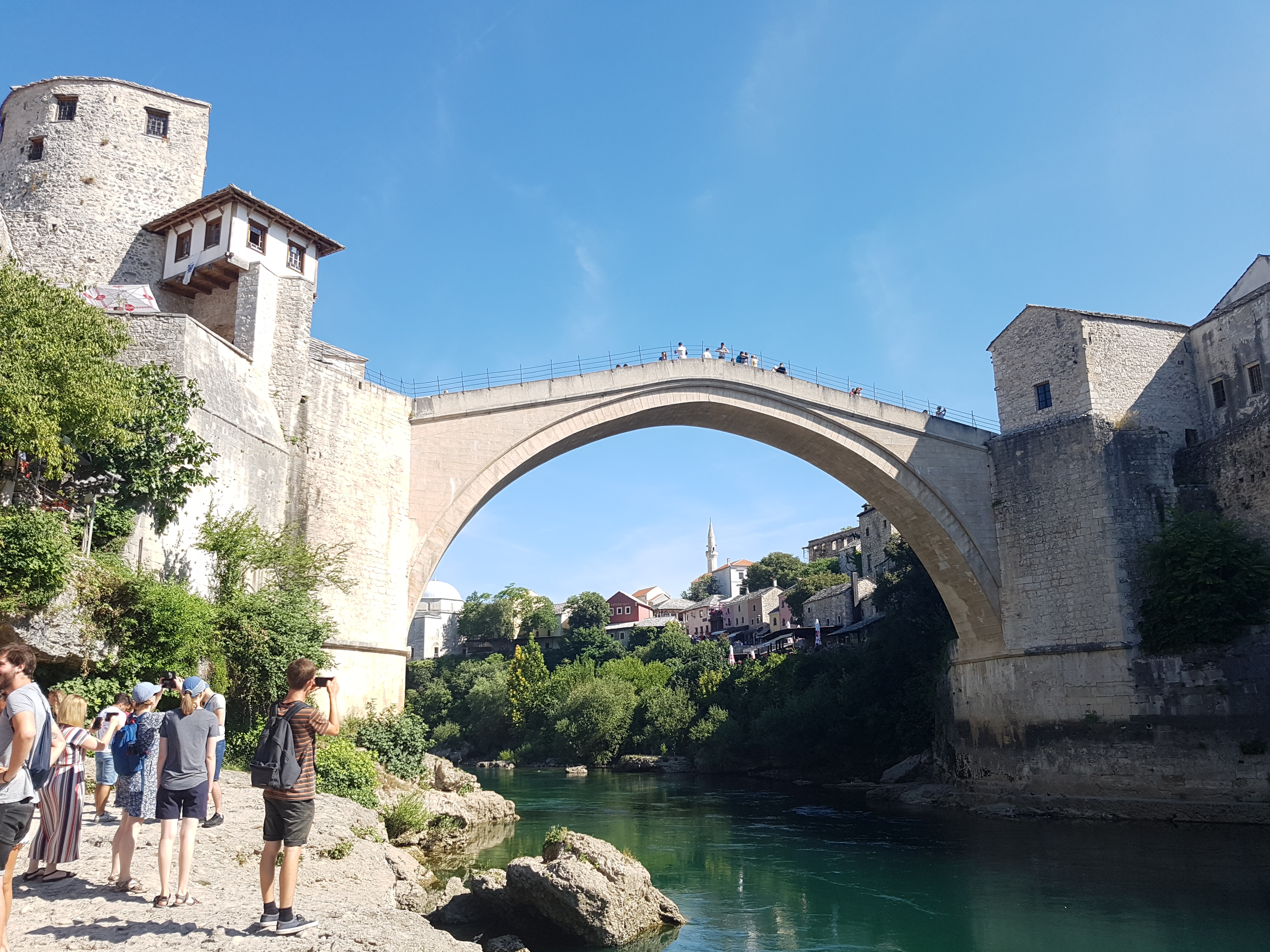
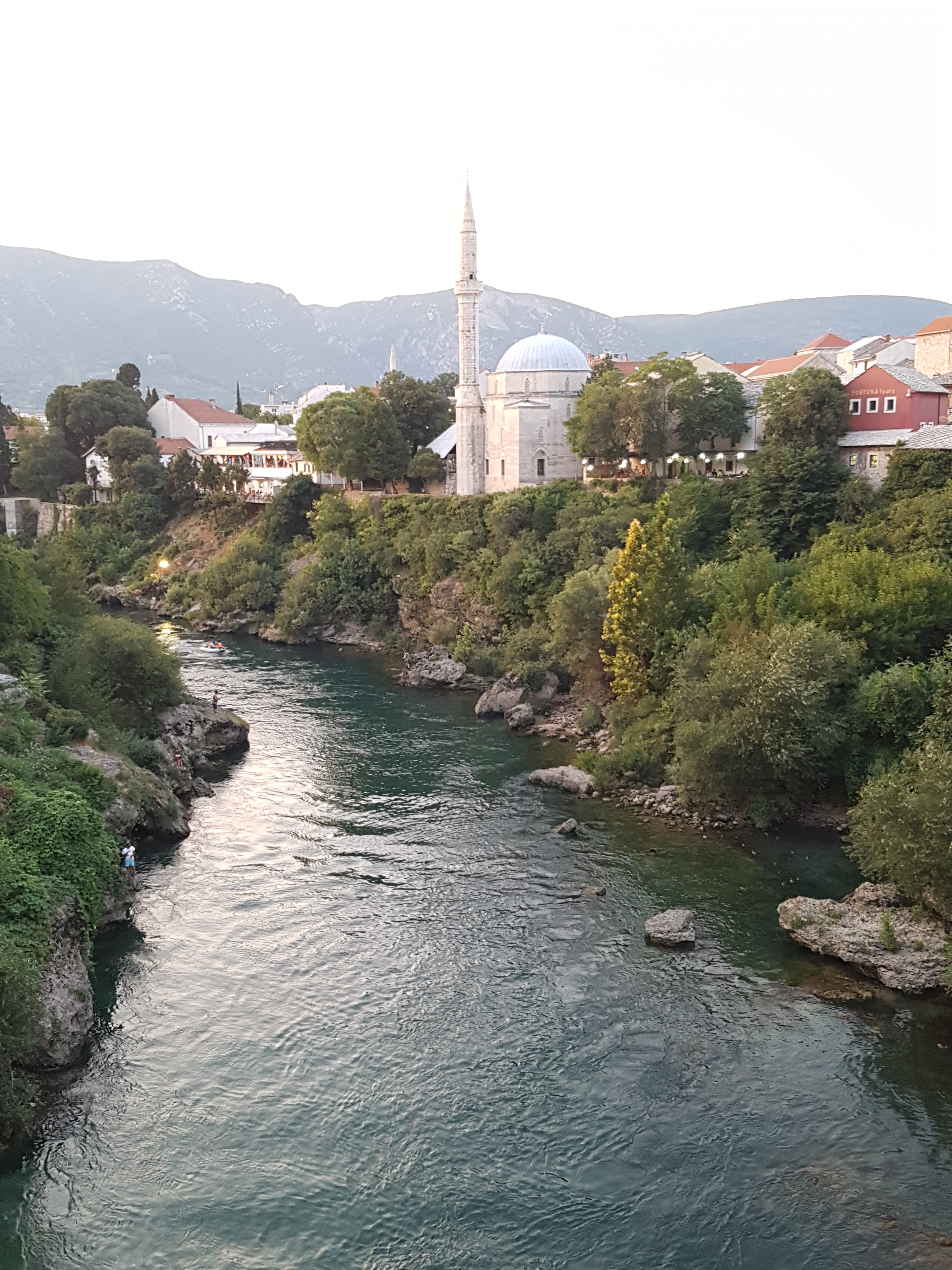
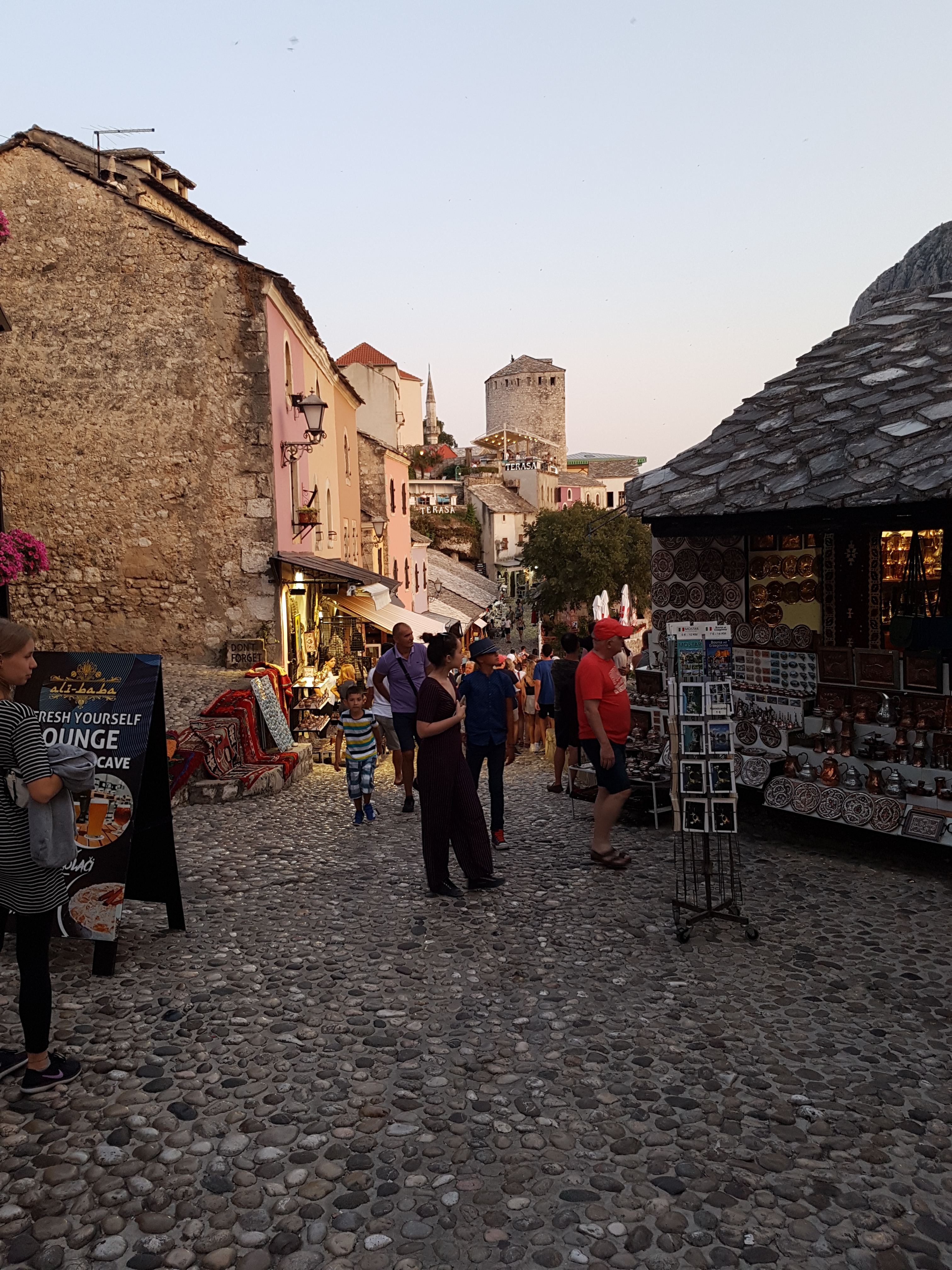
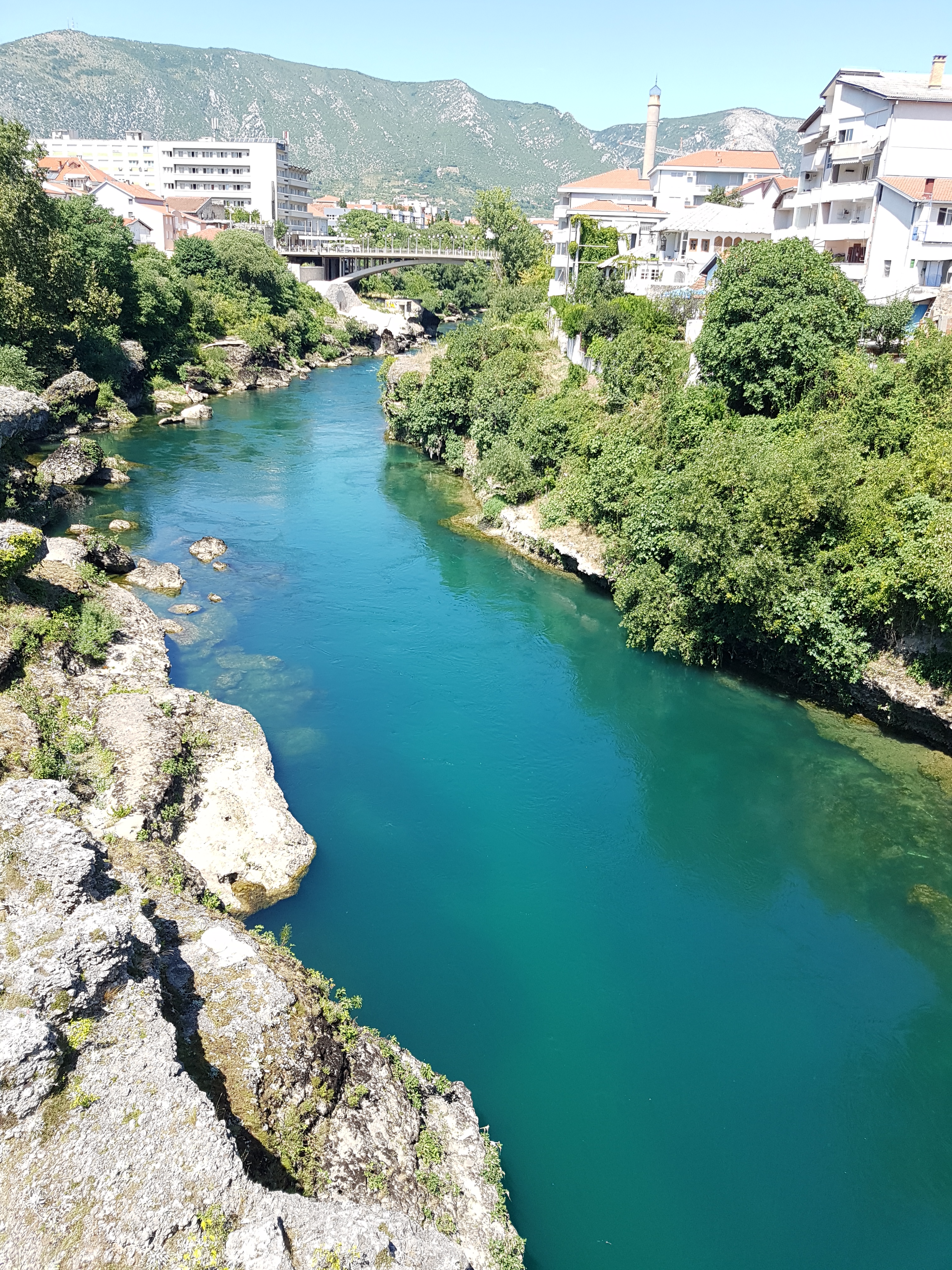
I have been looking forward to visiting Mostar for some time. Even so, it has been a revelation. The mix of Ottoman and Austro-Hungarian heritage. Its Bosnian, Croat and Serbian ethnicity. Its Muslim, Christian and Eastern Orthodox religions. The 92-95 War. A wonderfully exotic mix.
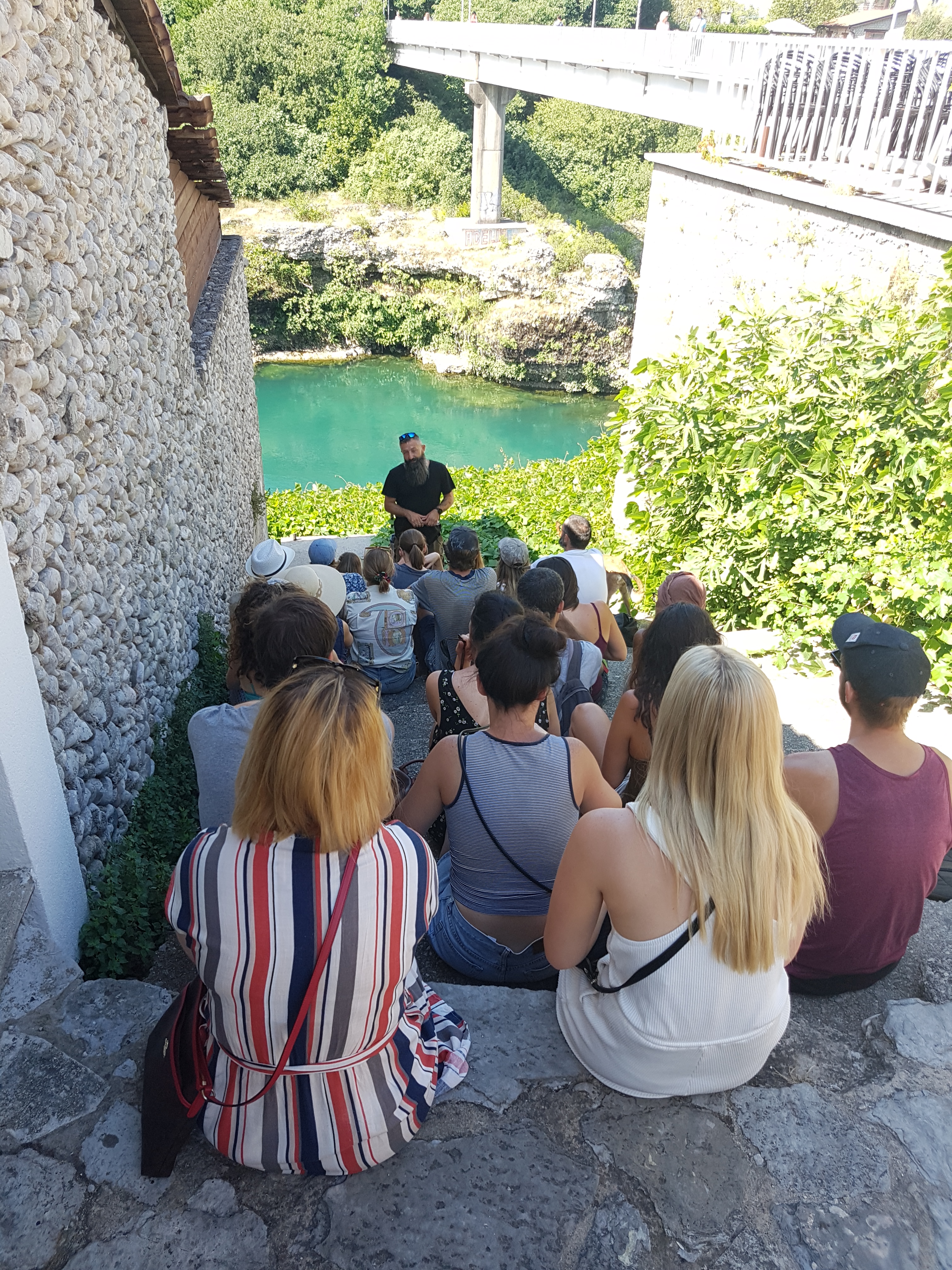
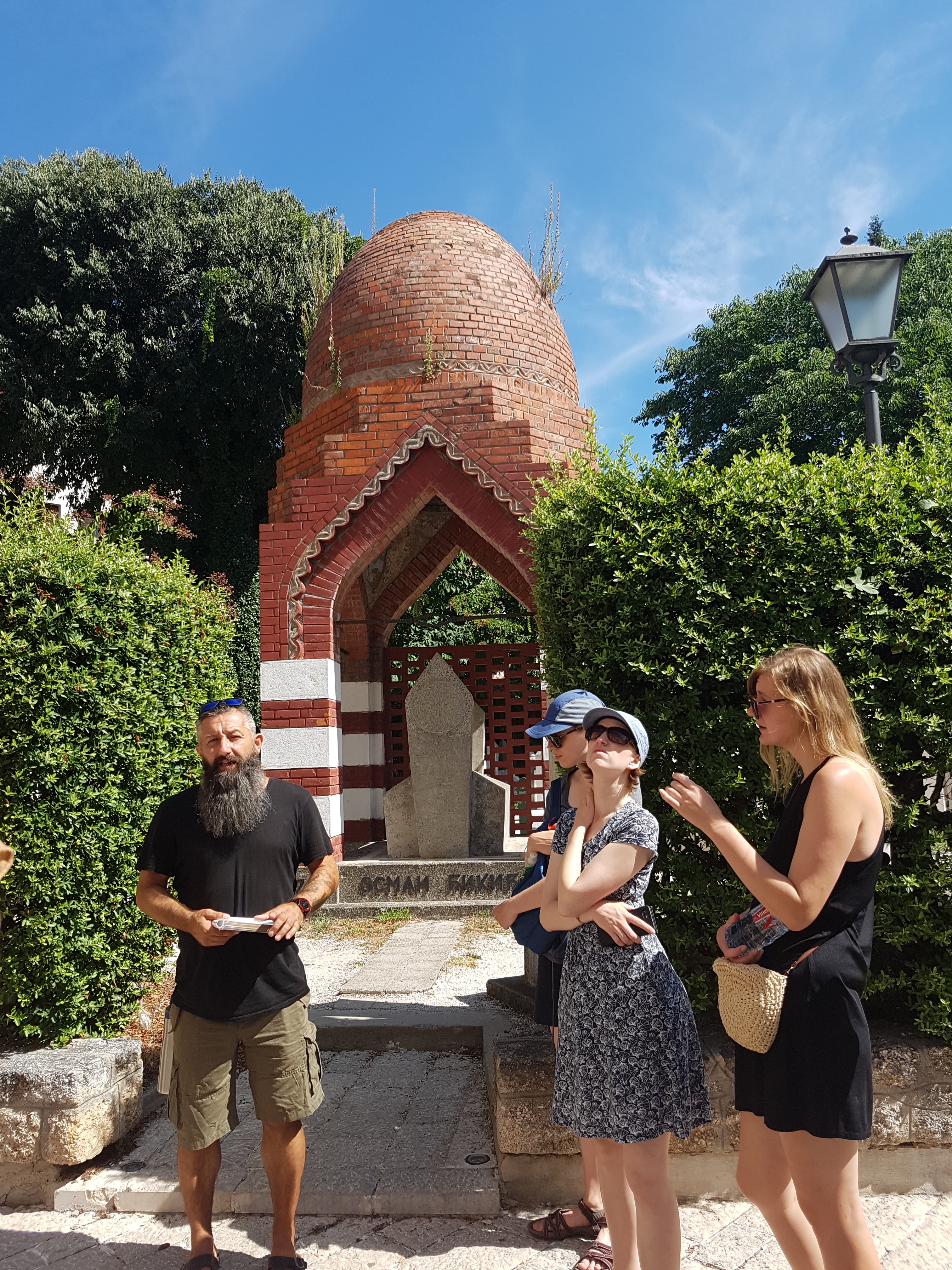
We took the obligatory ‘free’ walking tour. The two hour tour turned in to a 2.5 hour tour. Our Guide Sheva, who I estimate is 45ish, born and bred Bosniak from Mostar, not Bosnian, there is a subtle difference I am informed. I was spellbound. Sheva gave the Group a tour of the sights, added a historical context. It was however, his political perspective that fascinated me.
Pomegranate and Fig trees by our hotel balcony
Our tour guide Sheva addressing his rapt audience
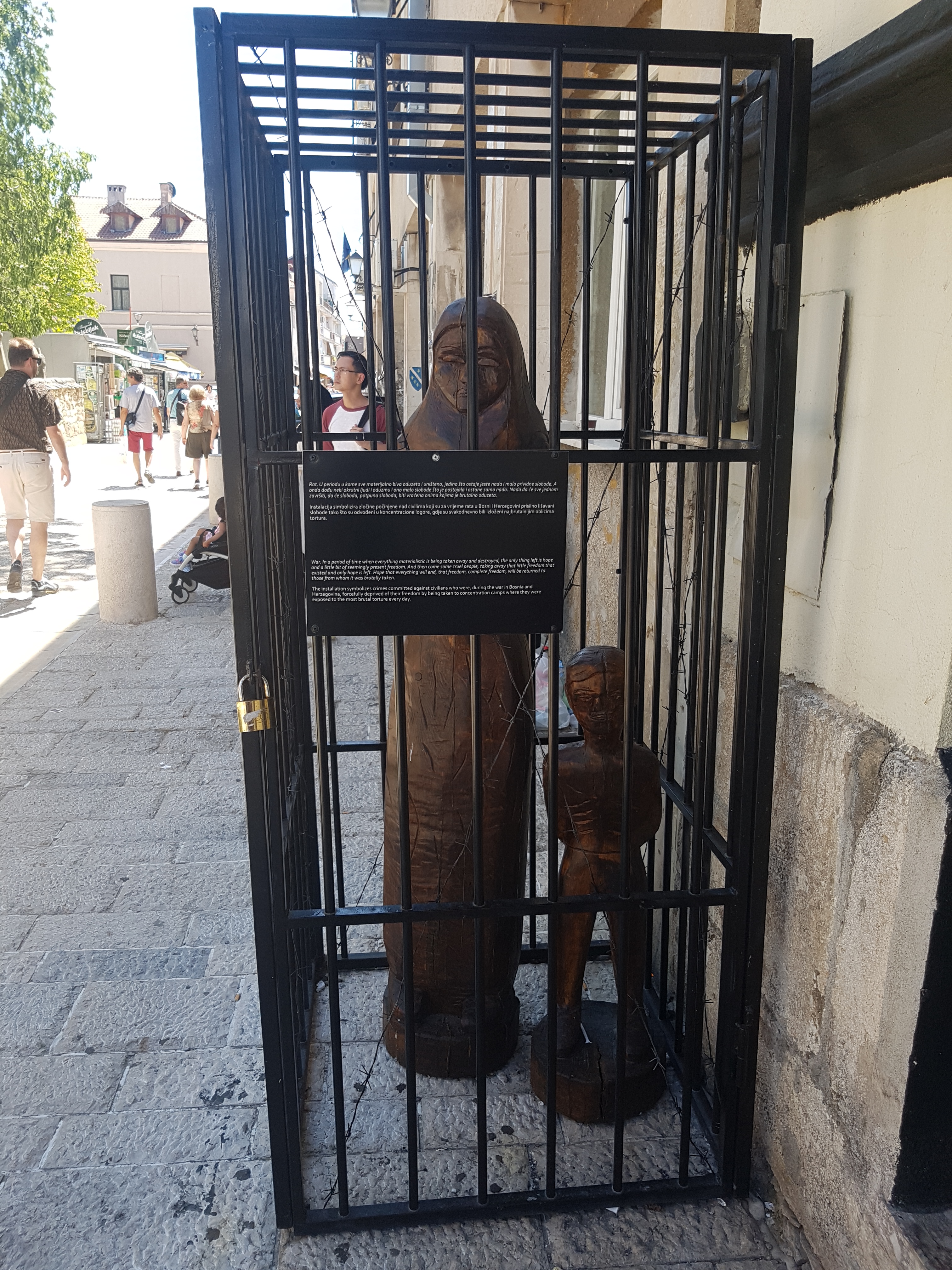
This morning Sheila and I visited the Museum of War and Genocide victim’s 1992-1995. It paints a stark picture of the atrocities of a barbaric war. I have previously visited the Holocaust Museums in both Tel Aviv and Berlin. I don’t remember either of them affecting me to the extent of the Mostar museum.
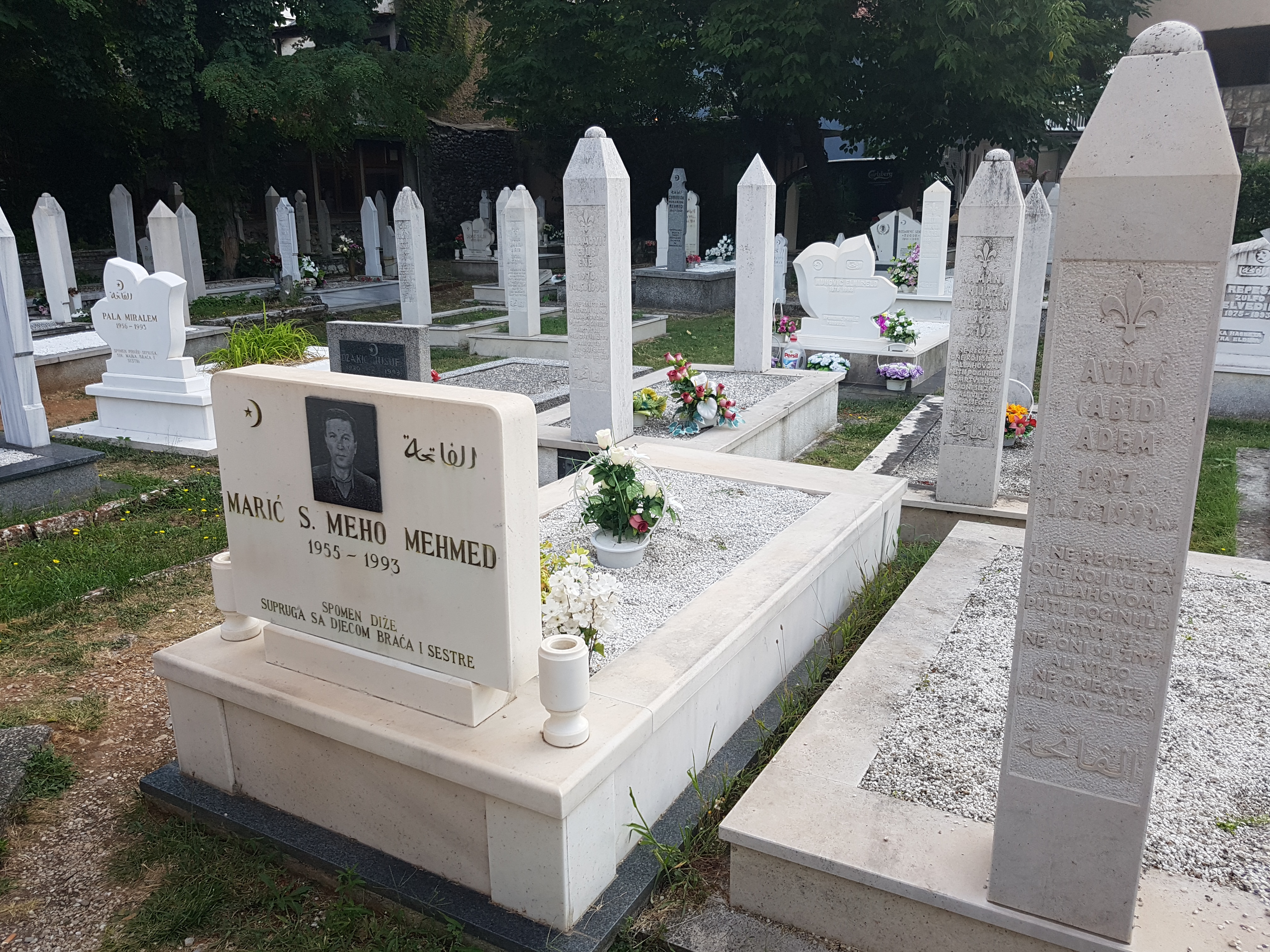
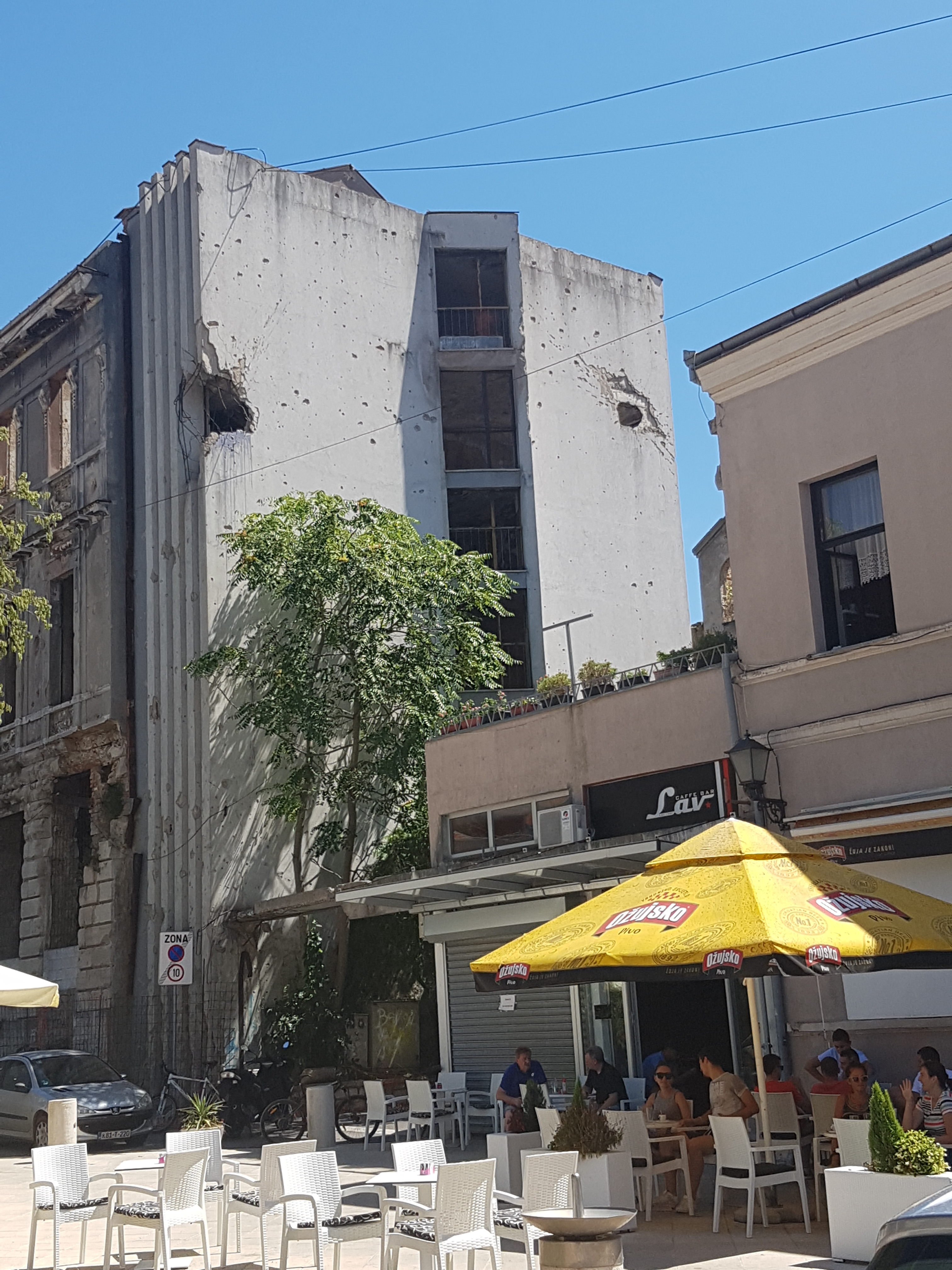
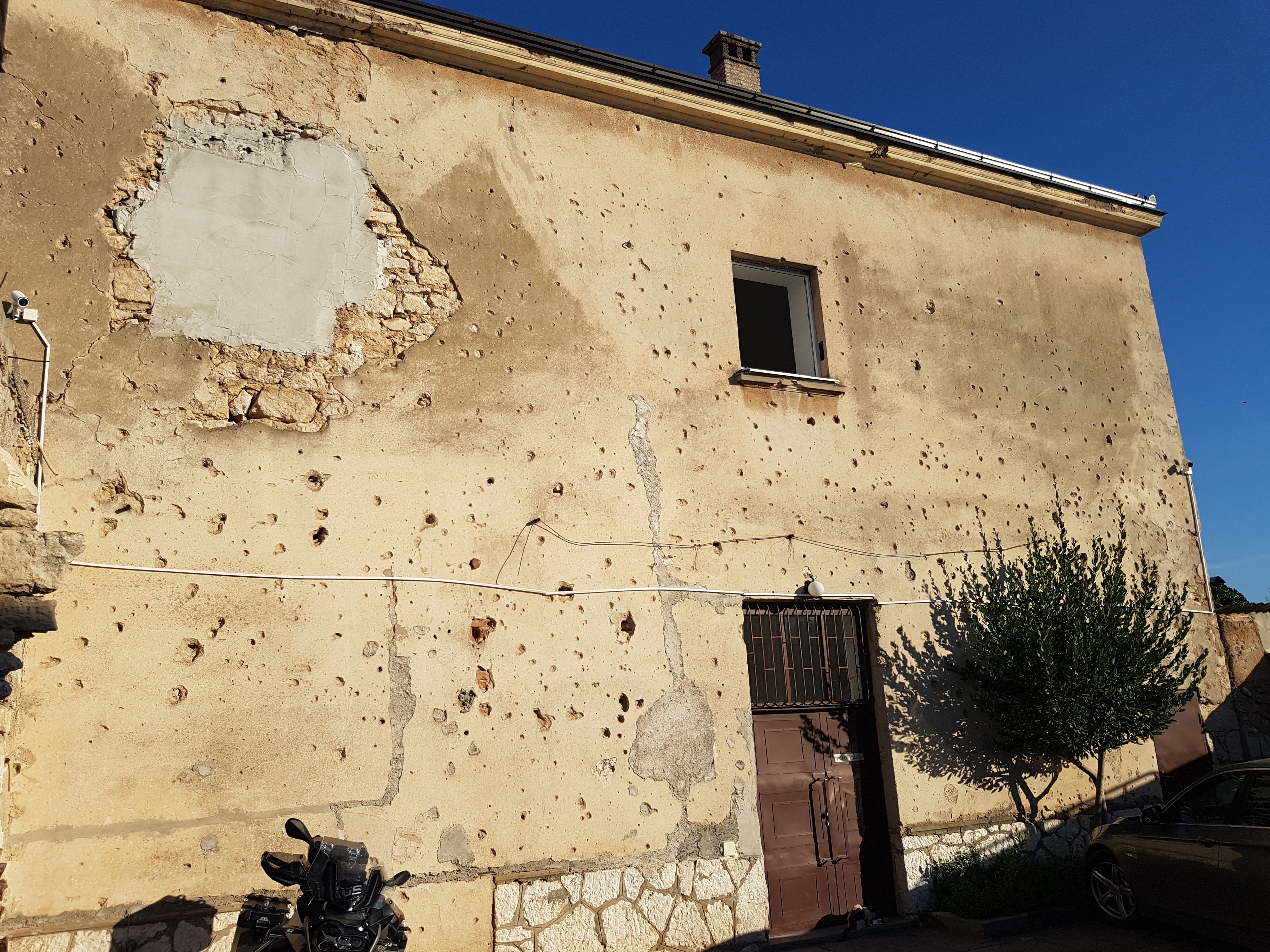
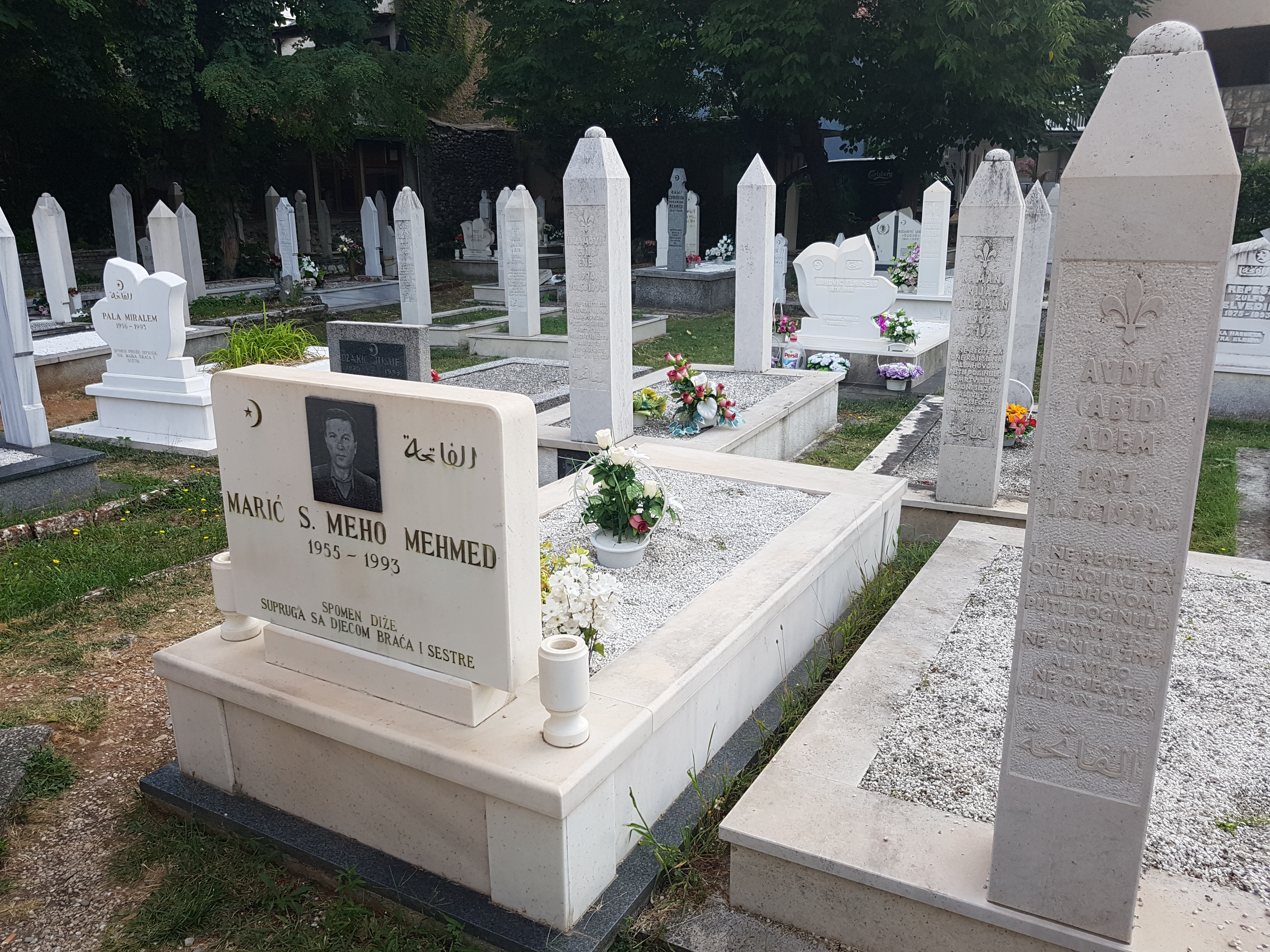
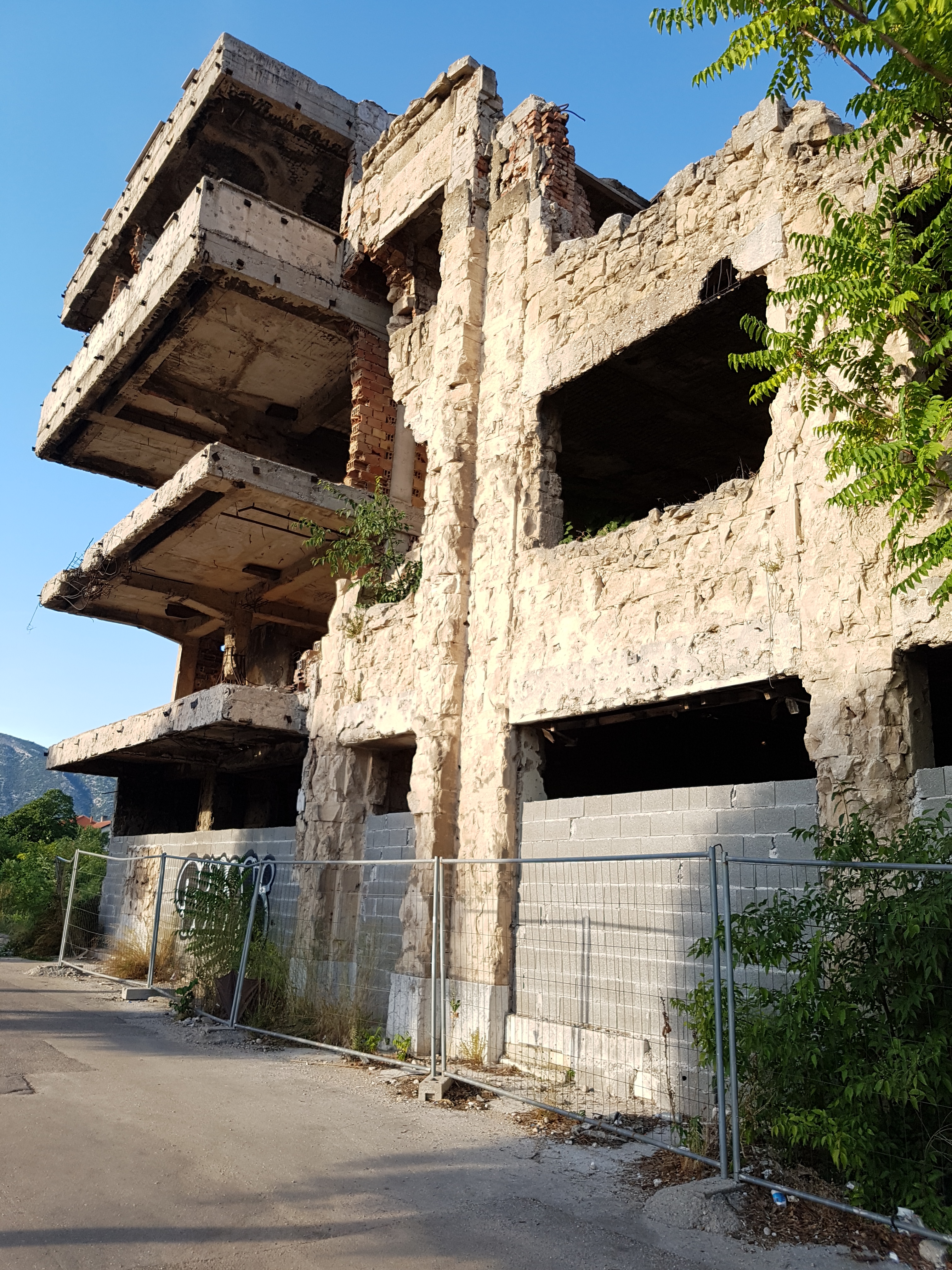
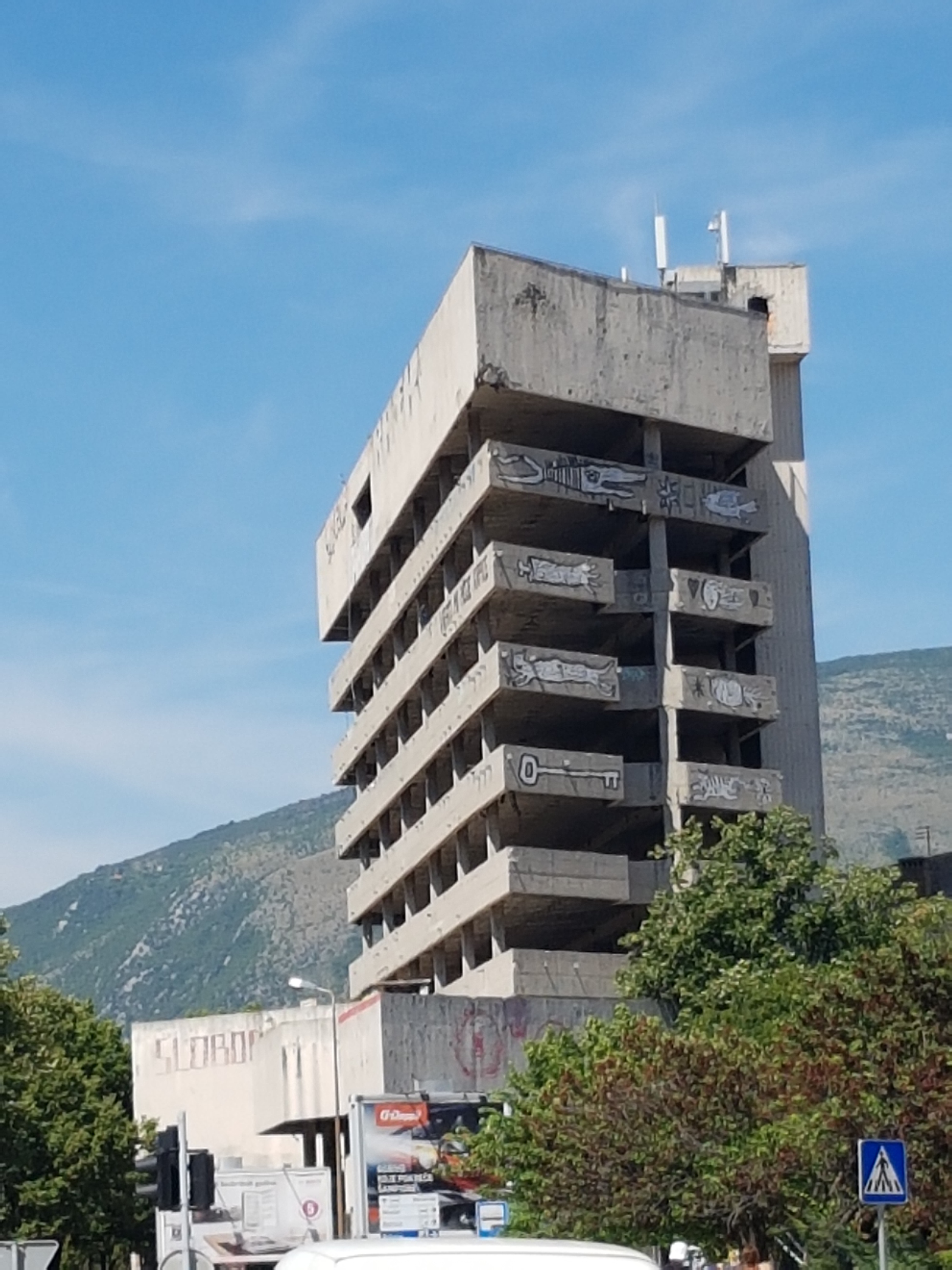
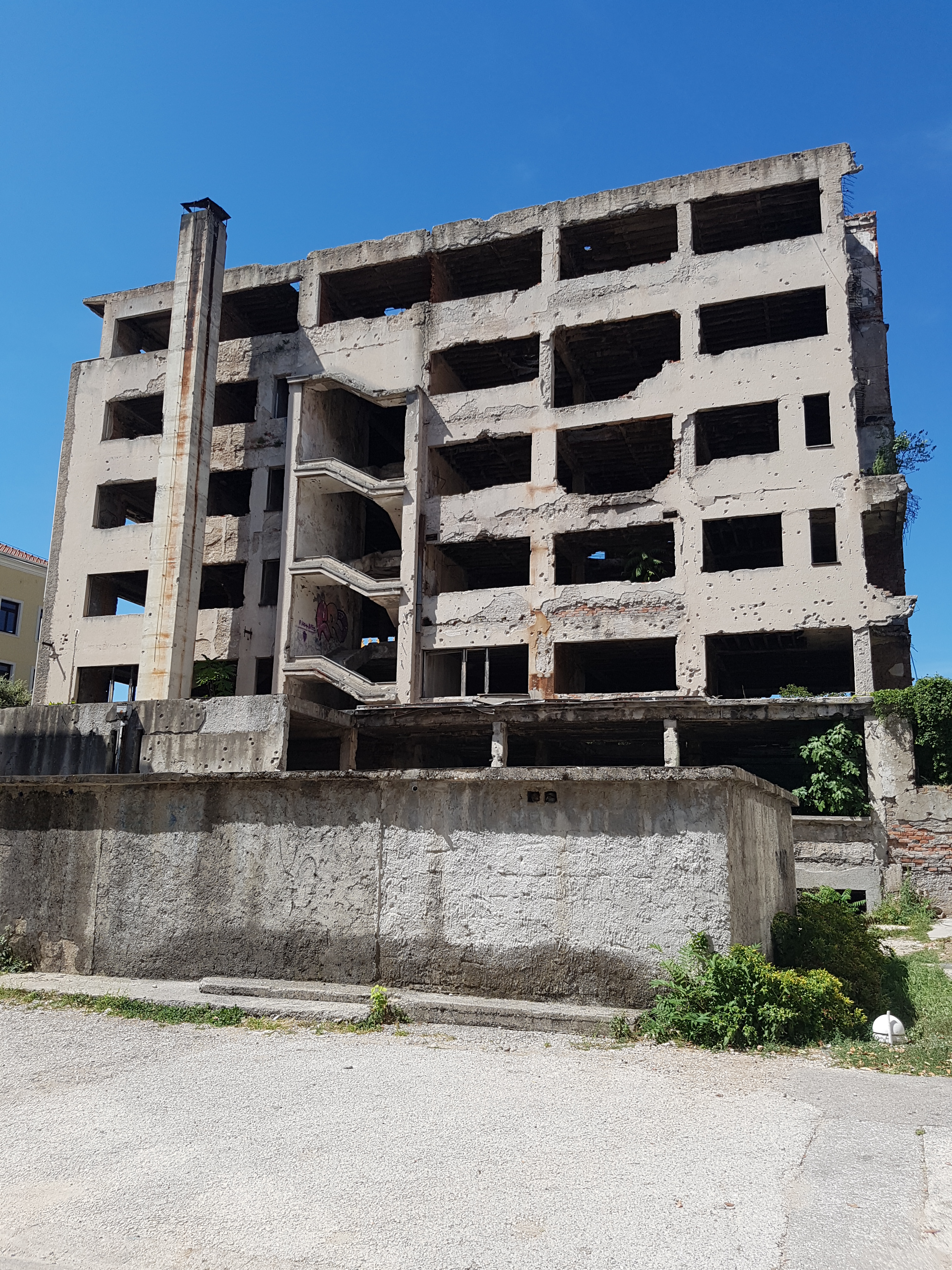
The War ended 24 years ago in 1995 and yet the scars on the buildings are all around to see. Sheva informed us that residents were trapped in the city during the war and couldn’t get too the cemetery on the edge of town to bury their dead. So, they were forced to bury them in the city parks and green spaces These areas are now full of graves. A fact that when I was told while I was looking at them, brought me to tears.
Mostar, I adore you but we must leave. We’re off tomorrow morning to the coastal town of Kotor in Montenegro for… you guessed it more R and R.
Day 97 (14 weeks): Our brief seven day tour of Kosovo has involved visits to three cities/towns, Prizren, Pristina (the capital) and Peje/Pec.
Quite by chance, our arrival in Prizren described as a cultural hub coincided with an annual film festival. That gave us our first challenge. The city was very busy. There were lots of cars with various European plates including, German, Italian, Swiss and Austrian. I assumed they were people here for the film festival until someone told me that many Kosovans work all round Europe and bring their big fancy cars home with them when they visit.
The second problem was that the roads in Prizren were not built to accommodate the number of vehicles that currently use them. Everywhere, motorists park on the pavements full blocking access. That provides the ridiculous situation where pedestrians are forced to walk along busy roads. It was unnerving and made worse because we had a 20 minute walk from our hotel in the old town.
The war in Kosovo ended 20 years ago in 1999. There are however, still stark reminders of the conflict. These include derelict sites when bomb damaged buildings have been demolished. We saw a number of both mosques and churches that were damaged and have yet to be repaired. St Georges Church in Prizren is currently being repaired and is not open to visit. Armed security guards challenged me when I approached the Church. On another occasion in Peja, at a Monestery, we were asked show identification before we were allowed to enter.
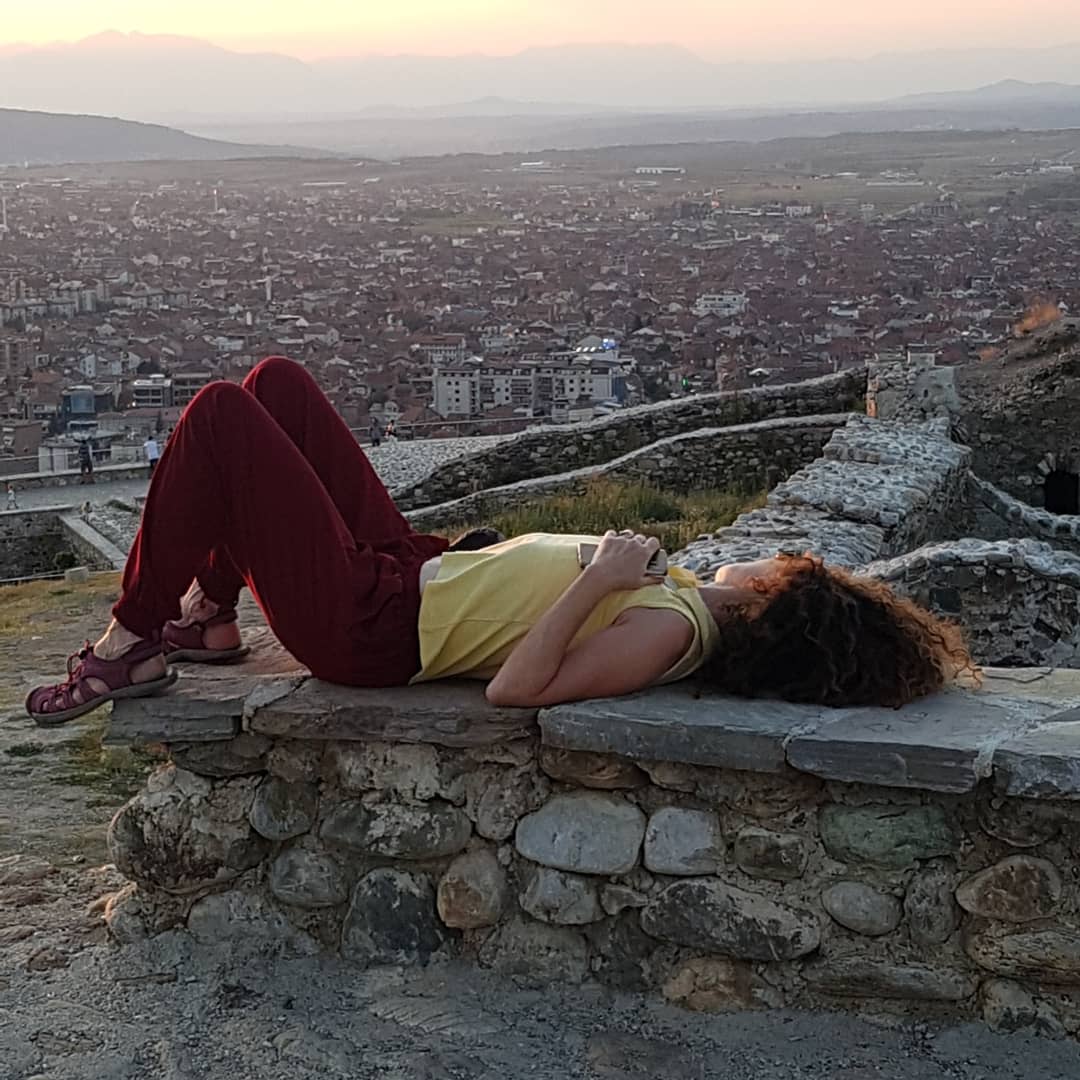
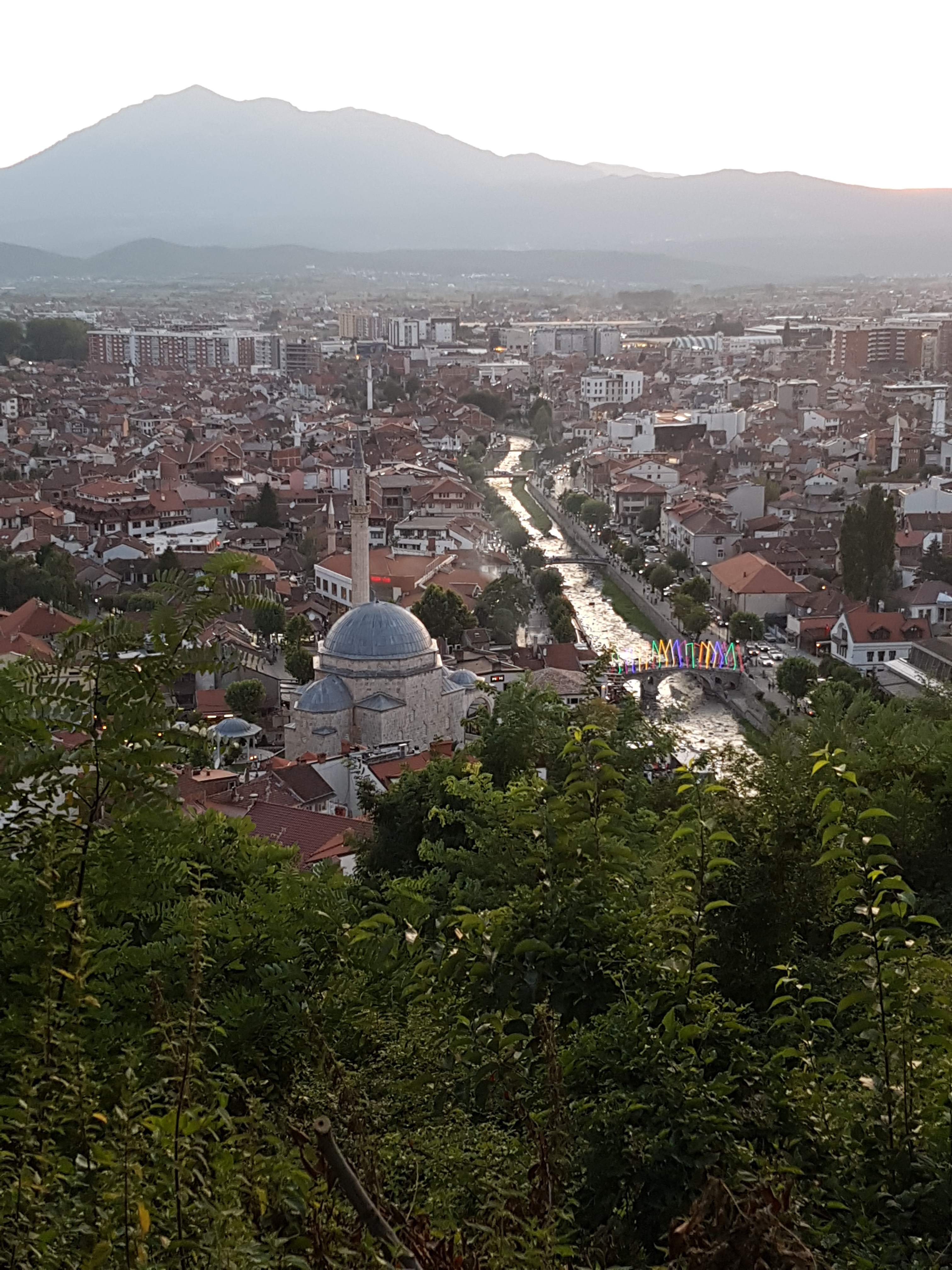
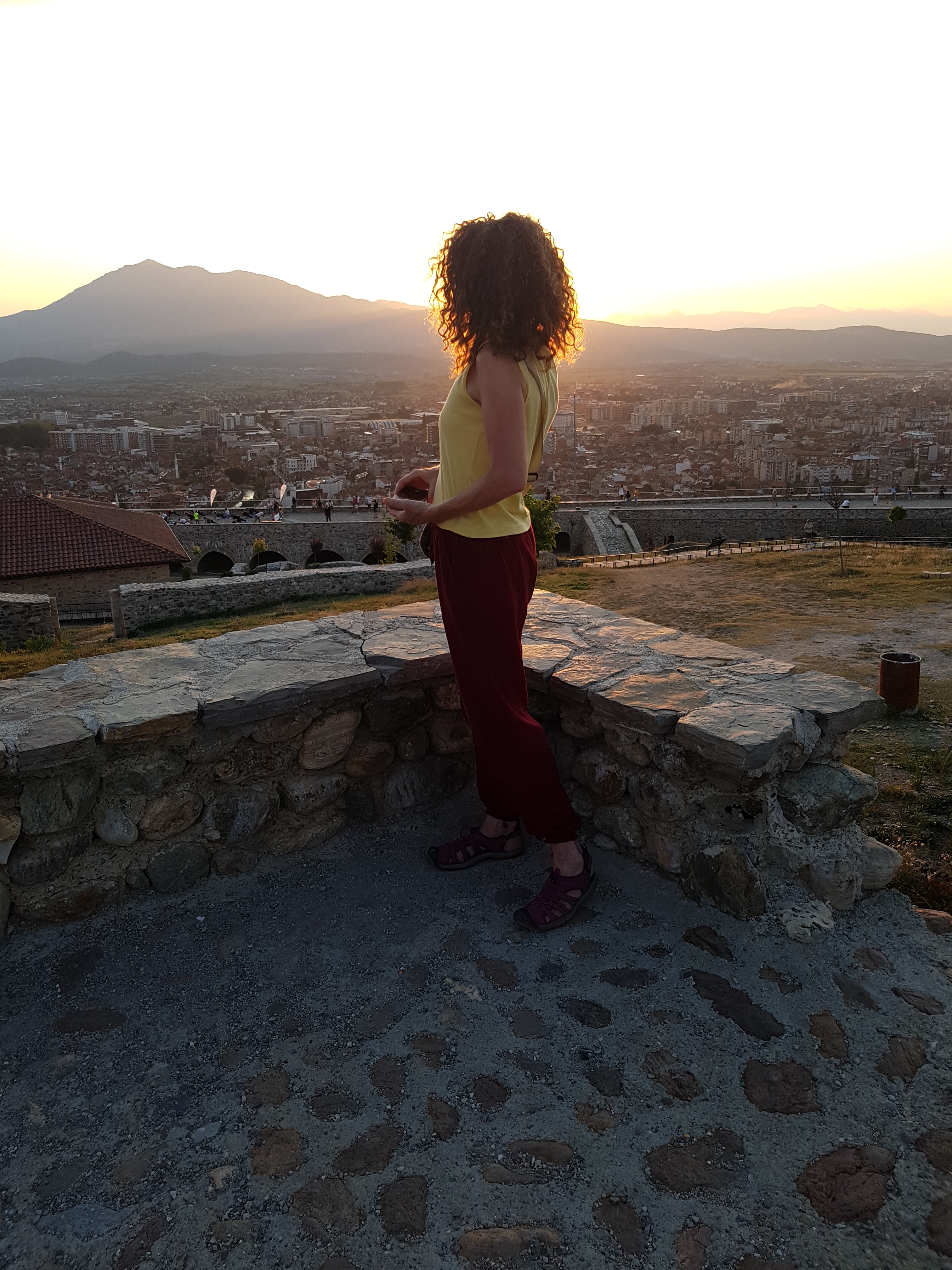
The highlight of our visit to Prizren was the 20 walk up to the fortress (Kalaja) to get the best view of the City and to watch the sunset.
We booked an apartment right in the centre of Pristina three nights a 2 minute walk from the Mother Teresa Boulevard. I suggested that it was so well equipped that I woudn’t mind living in it.
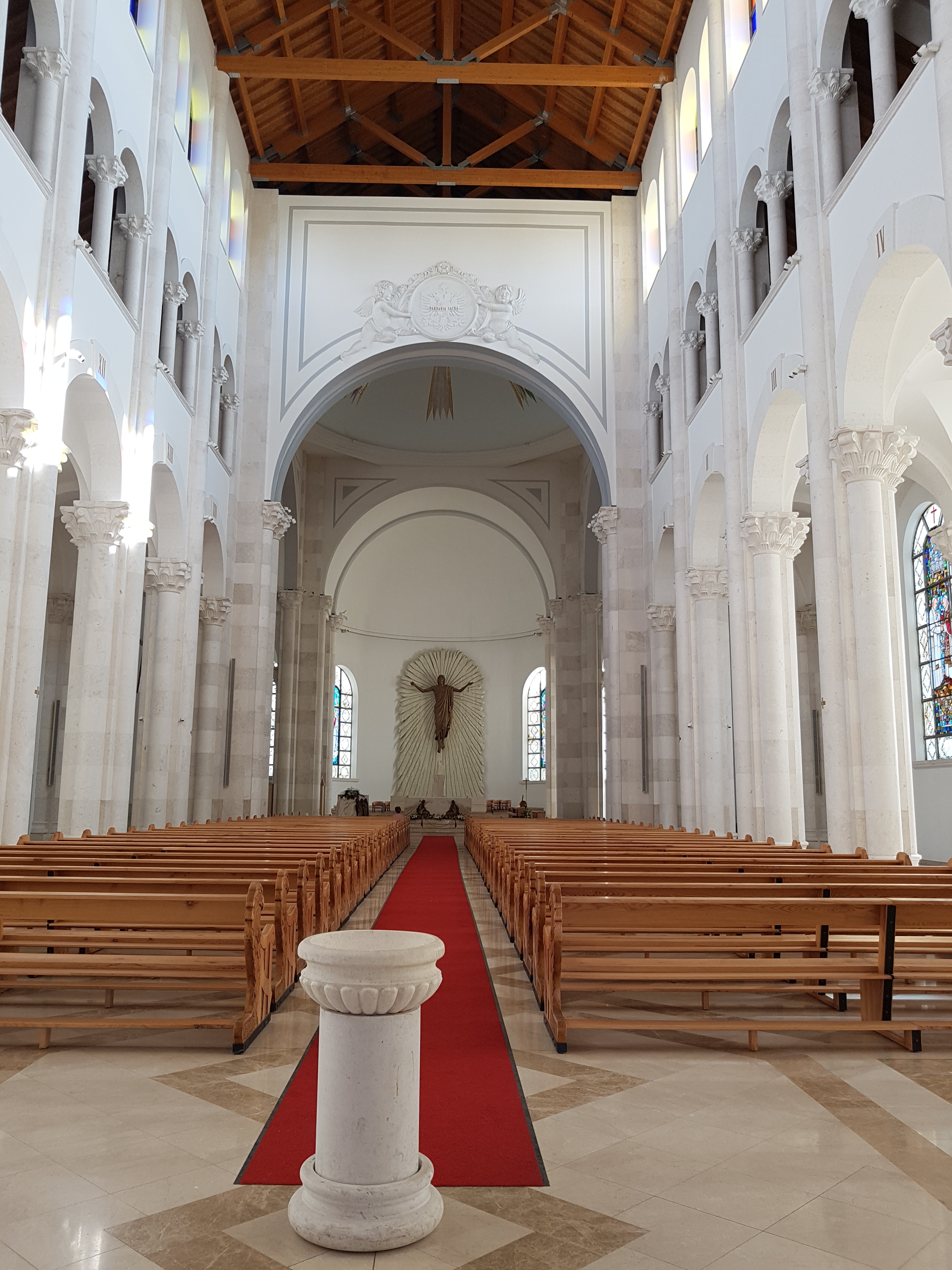
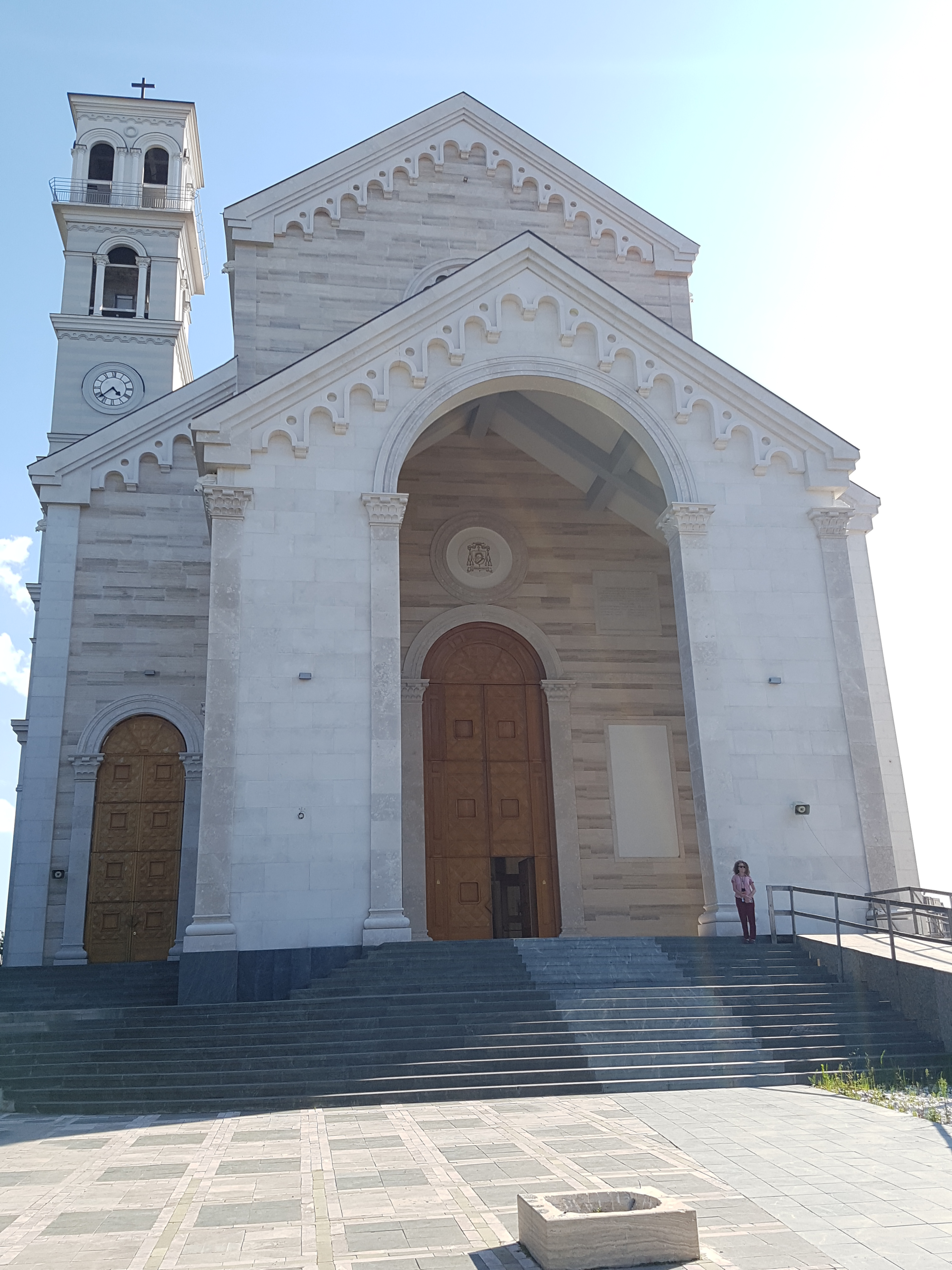
I must relay an anecdote. We were mooching around sightseeing when we visited the recently opened (2016) Cathedral of Mother Teresa, a large impressive modernistic cathedral in the centre of the City. The City fathers hope the building of a large Christian church in the heart of Muslim city will help with to build bridges between the religous communities.
A man of about 30, who appeared to be working in the Cathedral, called over to me, “where are you from?” “England” I responded, to which he burst out laughing. “What’s so funny?” I asked. “We don’t get many English here. German’s, Austrian’s, Dutch but not English. I used to work in London, opposite Harrods, he said. Oh! I said, have you moved back to Kosovo permanently? I asked. “Got deported” he said. Oh! I said, “Why?”. “I was imprisoned for 42 months for my part in a fatal stabbing” he said. “I got out after 6 weeks and they deported me”. “He went on, “I went to school in west London and my parents still live in Battersea”.
You can imagine, I was just a little uncomfortable, when he said, “my brother runs a restaurant down the road, where I work. Why don’t you come along for a meal”. To my shame, I made my excuses and fled. I now regret not taking the man at his word and accepting his invitation.
Itm think its fair to say, Kosovo isn’t, at the moment, fully geared-up for mass tourism. We couldn’t find a usable city map in Prizren. We struggled to find the Ethnological Museum in Pristina. When we eventually got there, there was no sign outside to let you know it was a museum.
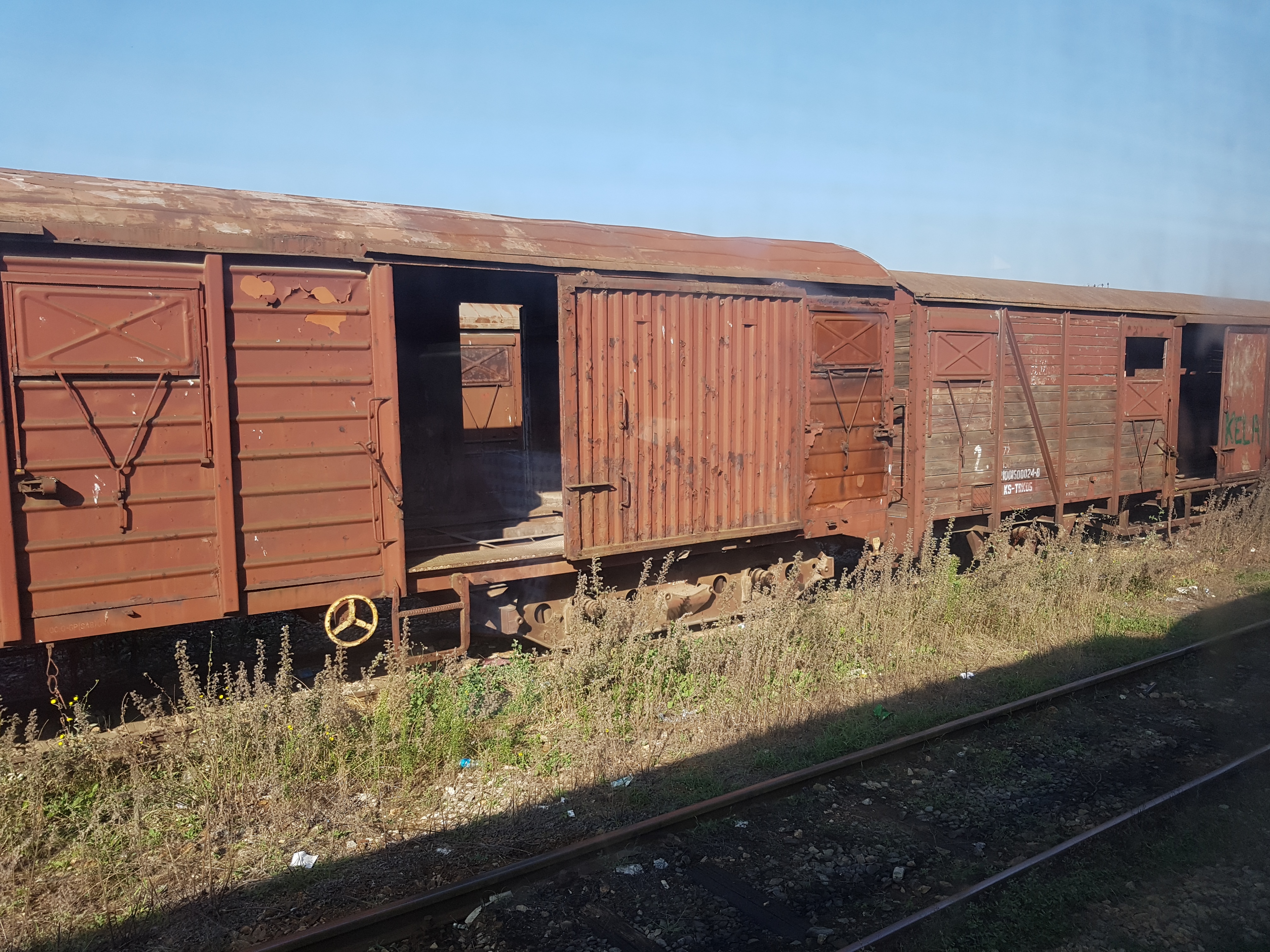
Using train in the Balkans has been an experience. In Bulgaria, the rail stock was antiquated and in a poor state of repair. The Railway Station at Popovo was a large ultaritarian building with a 300m platform and 8 lines but only 3 in use. It felt like I had stepoed back in to the communist era.
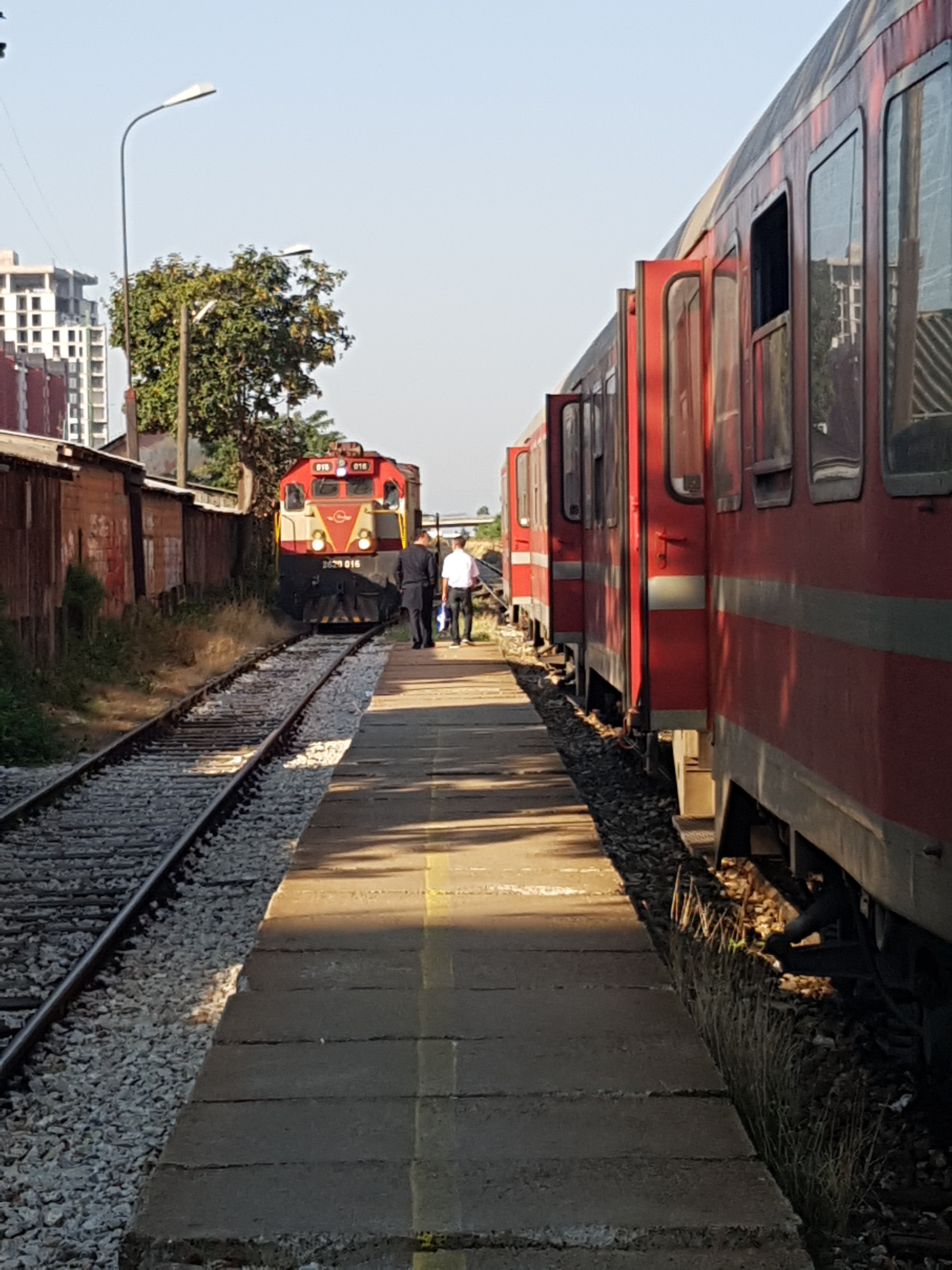
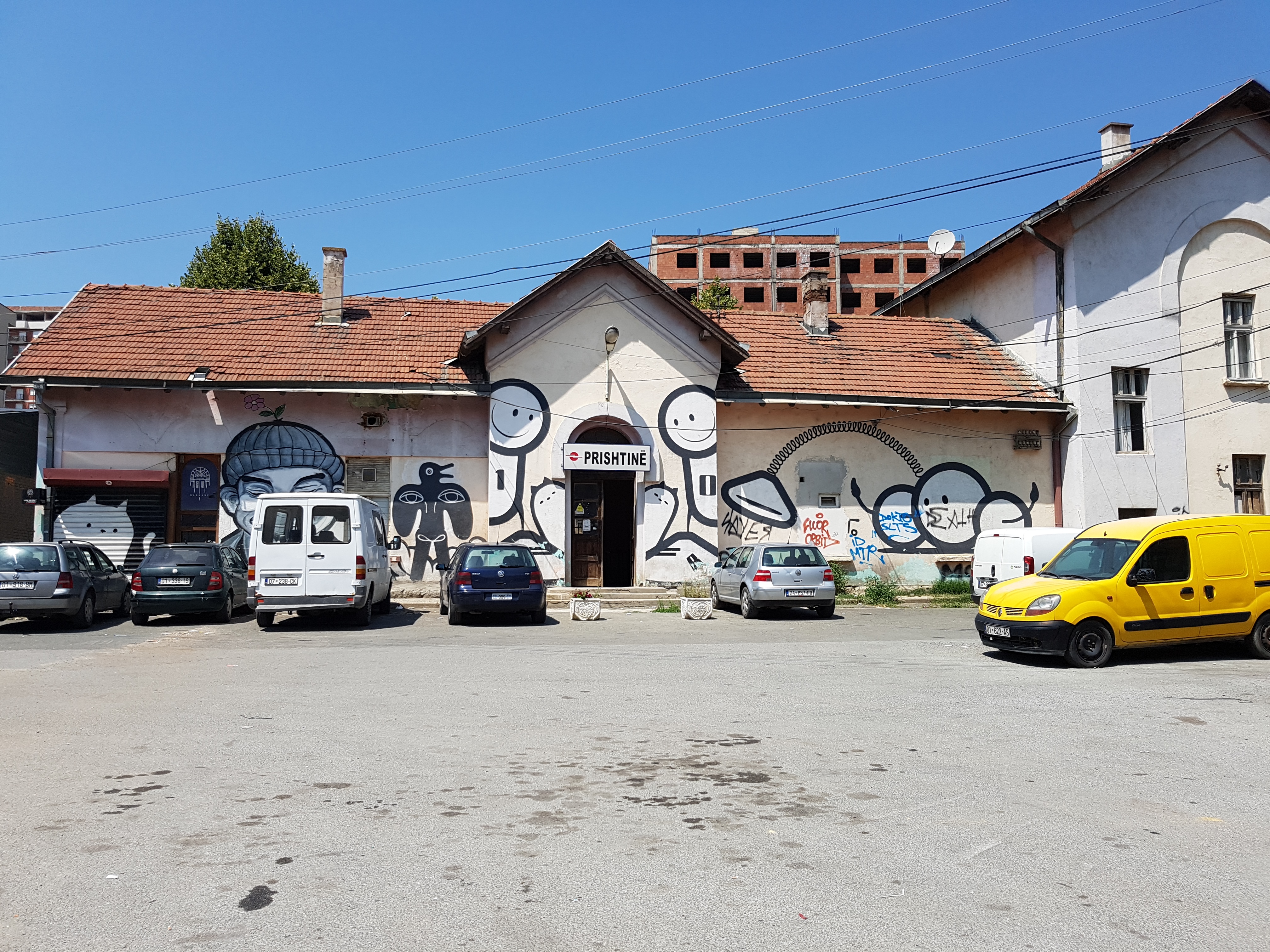
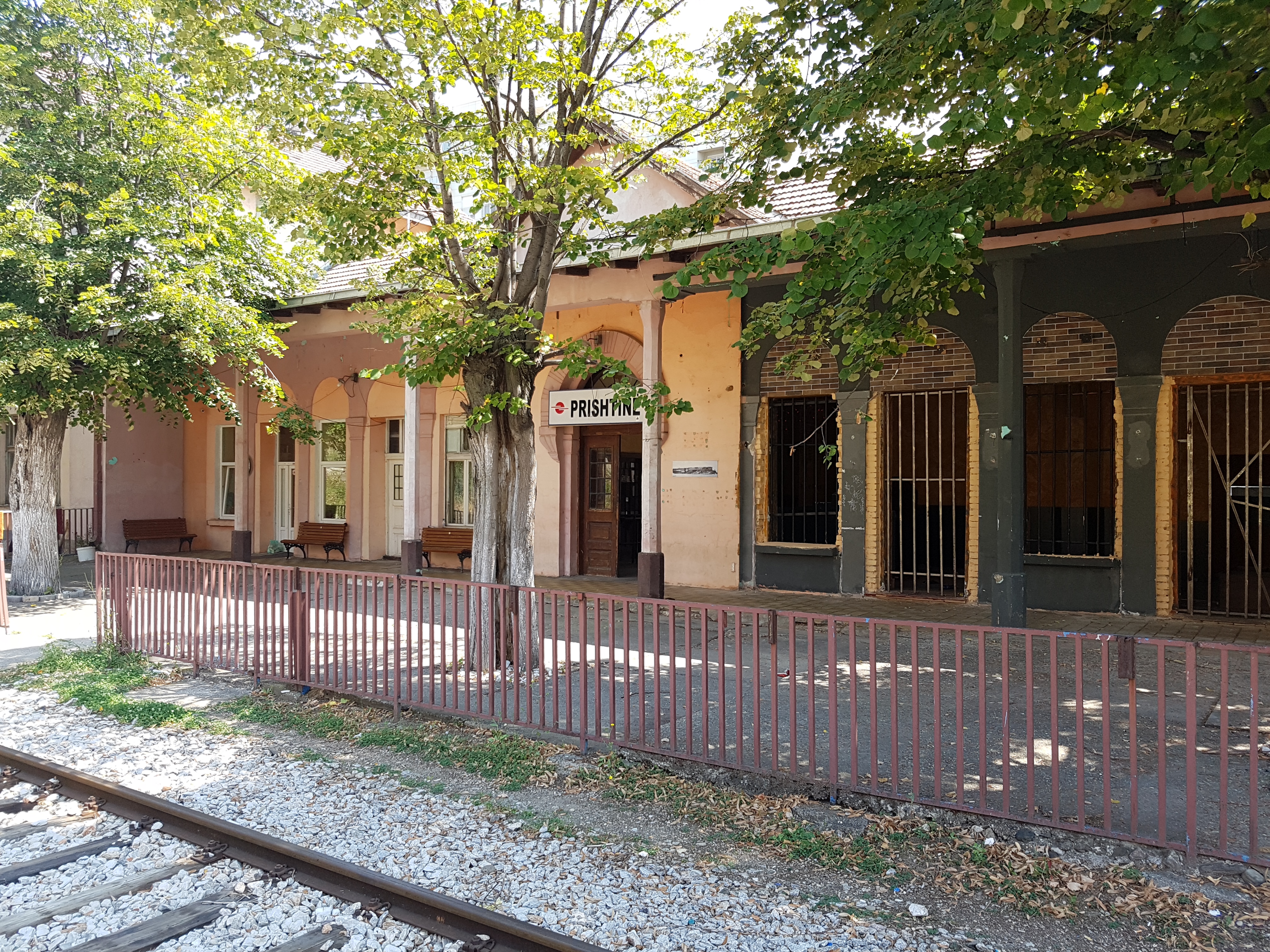
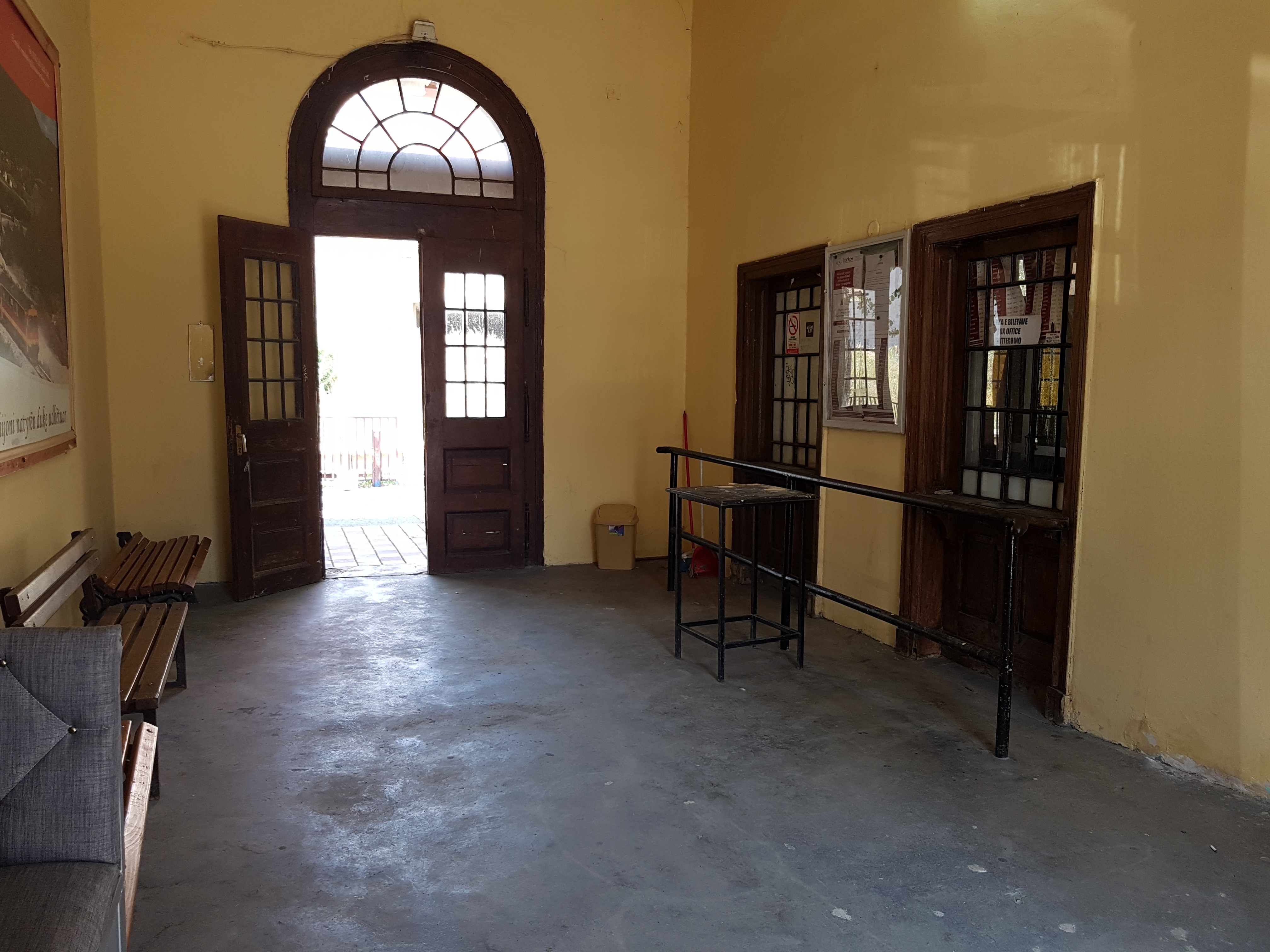
In Pristina, there was one line and a siding. When the train pulled in, the engine disengaged, moved along the siding and hooked on to the other end of the four carriages to take the train back in the other direction. The ticket office was unable to sell me a ticket as the computer was broken? With that said, the train was clean and on time and it was a pleasant journey even though, the driver blew the horn constantly throughout the two hour journey to Peja. See the photos below of the Station.
Peja is Kosovo’s fourth largest city. Estimates of its pop vary but its about 180,000. It seems much smaller. We arrived yesterday on a public holiday. The place was literally like a ghost town until early evening when some bars and restaurants ts thankfully reopened.
This morning we walked for 20 minutes just out of the City to a monestery dating back to the 13th century called The Patriarate of Peć. During the 1.5 hours we spend there including taking an audio tour. The church contains a marble throne on which Serbian bishops and patriarchs have been enthroned for many centuries, the last of which was in 2010. It is one of the most important sacred place. The frescos adorning the walls and ceilings inside are the most impressive I’ve ever seen.
The Patriarchate of Peć is an important sacred monument of spirituality, culture and Serbian history. The external area within the walls of the monastery contains the remains of medievil residences. It is beautifully maintained and landscaped. It has an ancient Mulberry tree,which legend has it was grown from a seed brought back from the holy land. Even if the legend is untrue, the tree is hundreds of years old and is a fine specimen. See below a photo ome standing under it.
Tomorrow we take a bus to Podgorica in Montenegro. I cant wait as we will drive through the majestic Accursed Mountains, one of the remotest areas in Europe. It has been too hot to hike and so i have made myself a solemn promise to return to Peć, in the not too distant future to hike in the fabulously named Accursed Mountains.
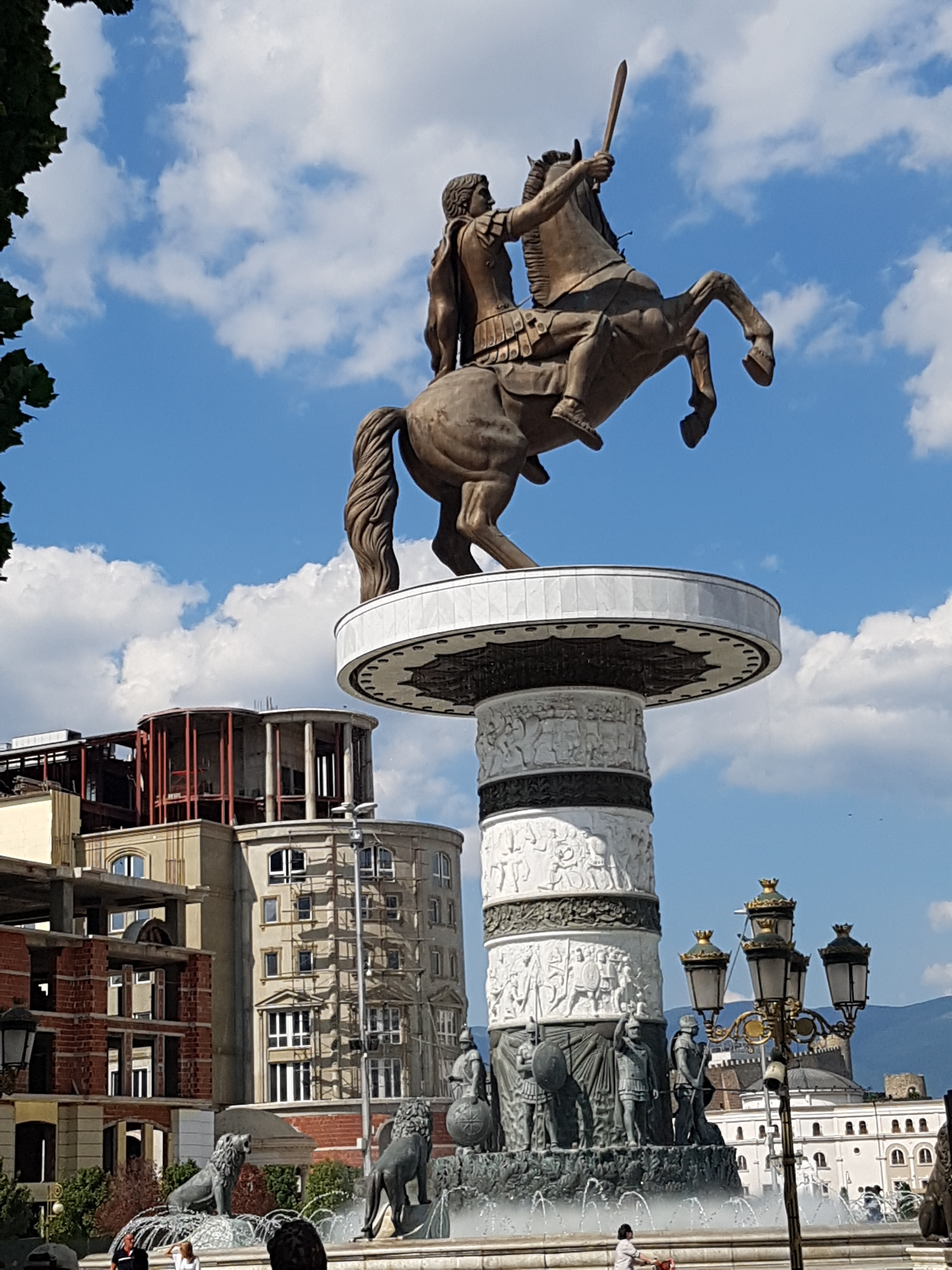
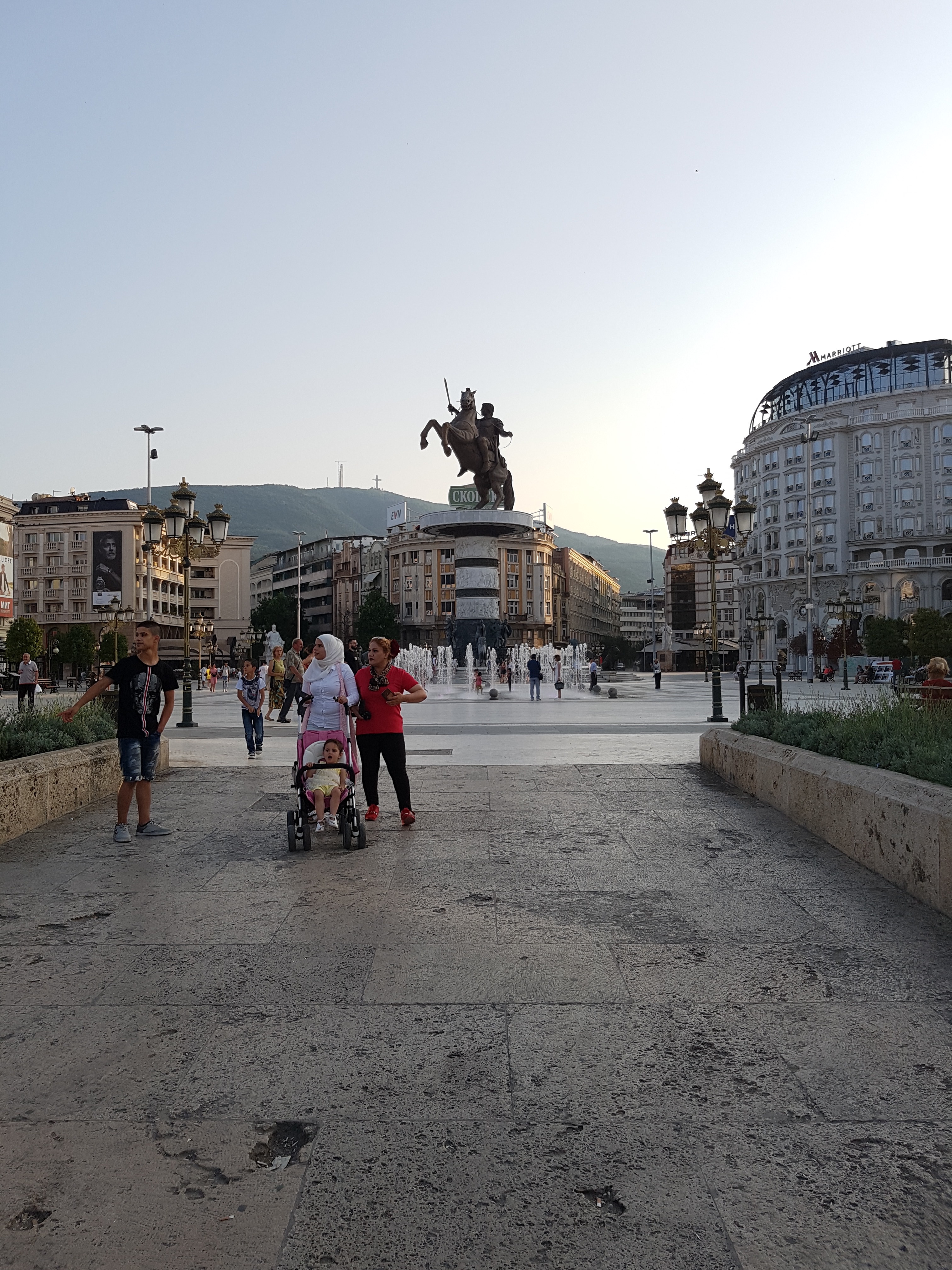
Statute of a warrior on a horse , Main Square, Skopje
What a fascinating city Skopje is. We spent four nights there staying in a comfortable hostel close to the Old Bazaar.
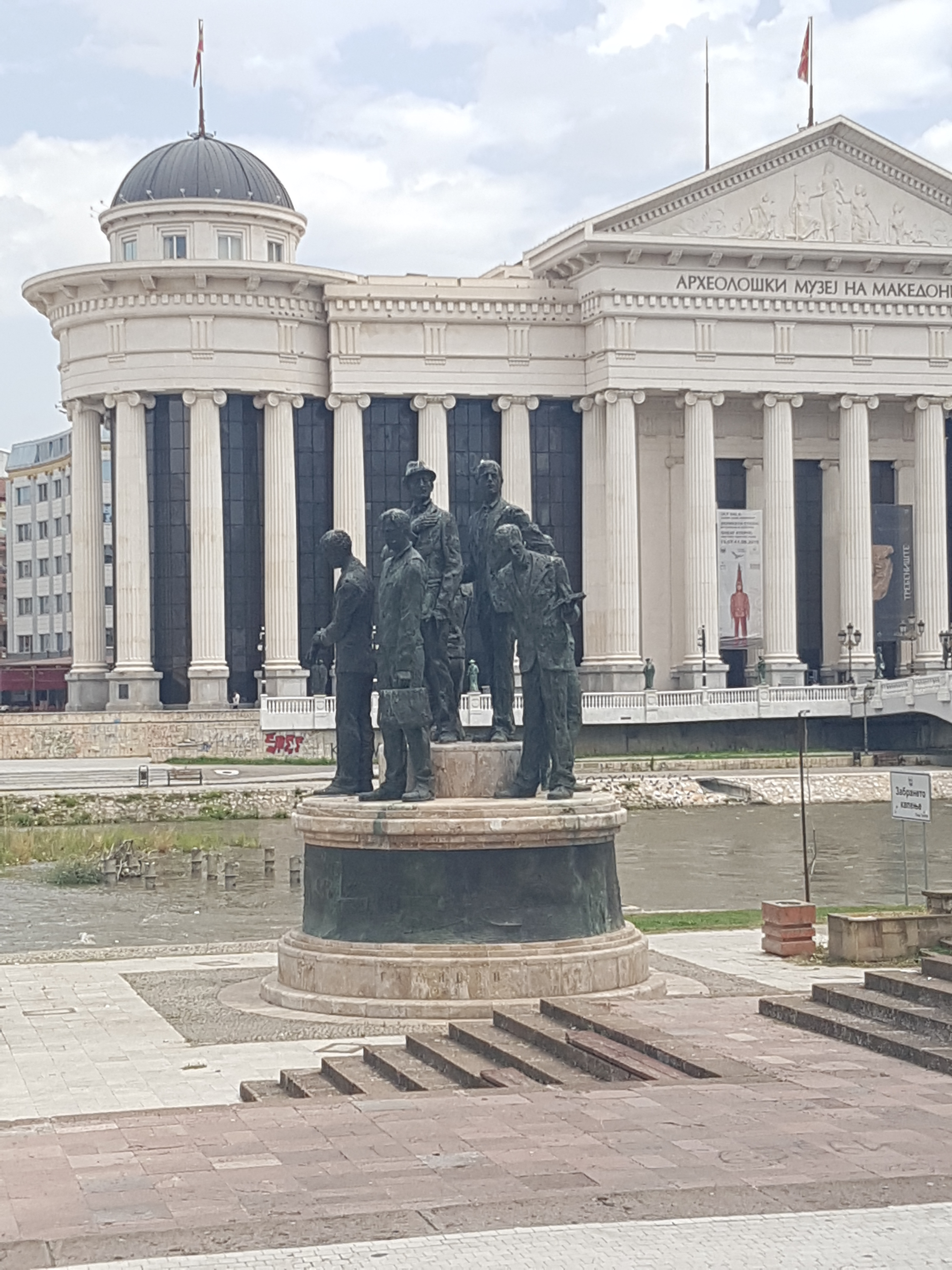
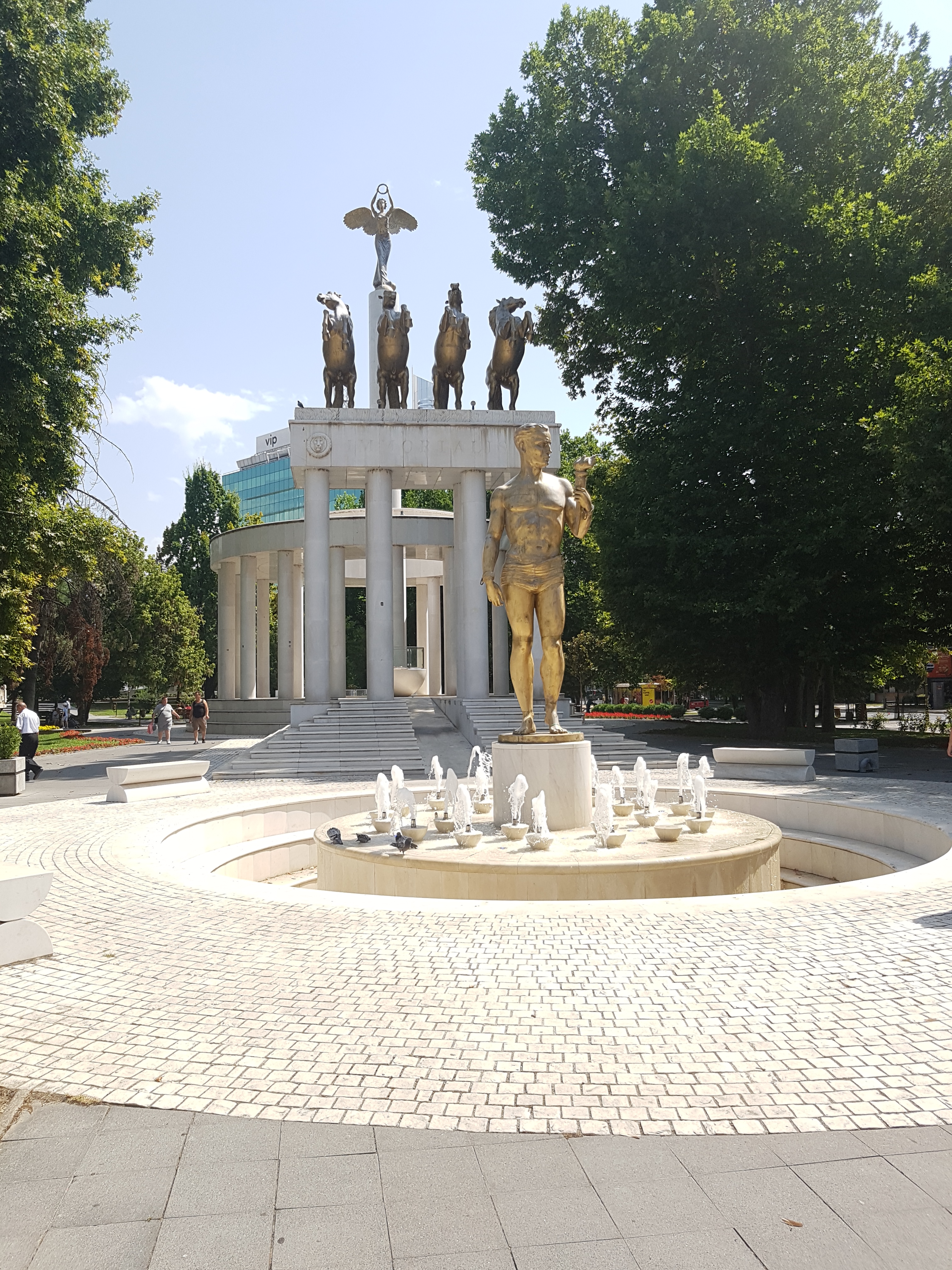
Skopje 2014 was a major capital building project in the city centre organised by the Macedonian government, the main object of which has been suggested was a nation-building exercise. There were ancillary objects, to give the city a more classical look architectually and make it more attractive to foreign tourists. The original budget was €80M but it is reported that it eventually cost €560m and some say much more. Check the You Tube vids. The official one bears little semblance to reality as it showss the grand new buildings and statutes but omits to show the surroundings.
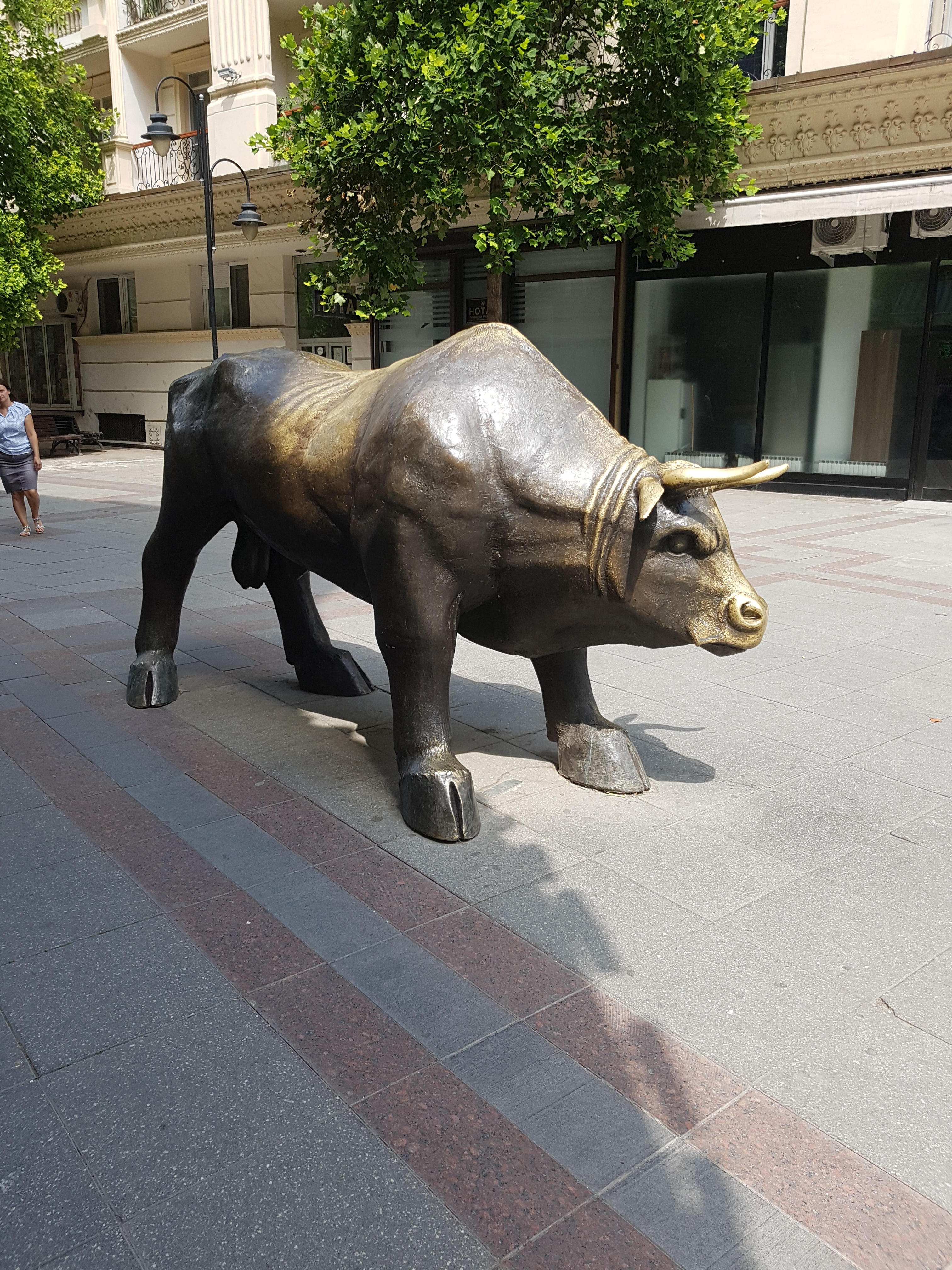
Our tour guide told us that he tried once to count the number of statutes and gave up at 120. He estimates there are 140. Some of them are interesting and impressive while others are, in my opinion, oversized monstrousities with little if any aesthetic appeal. Locals, in general, like the face-lift their city has received. Some suggest that it is now resembles a theme park where Las Vegas meets Disneyland.
The statute in the centre of the main square is named ‘Warrior on a horse’. Everyone knows it is a depiction of Alexander the Great. The Macedonians, however, have diplomatically resisted calling it that in order not to unnecessarily upset their Greek neighbours who have issues with the Republic of North Macedonia. Some Greeks beleive that the new country is attempting to ‘steal’ Greece’s regional identity and history.
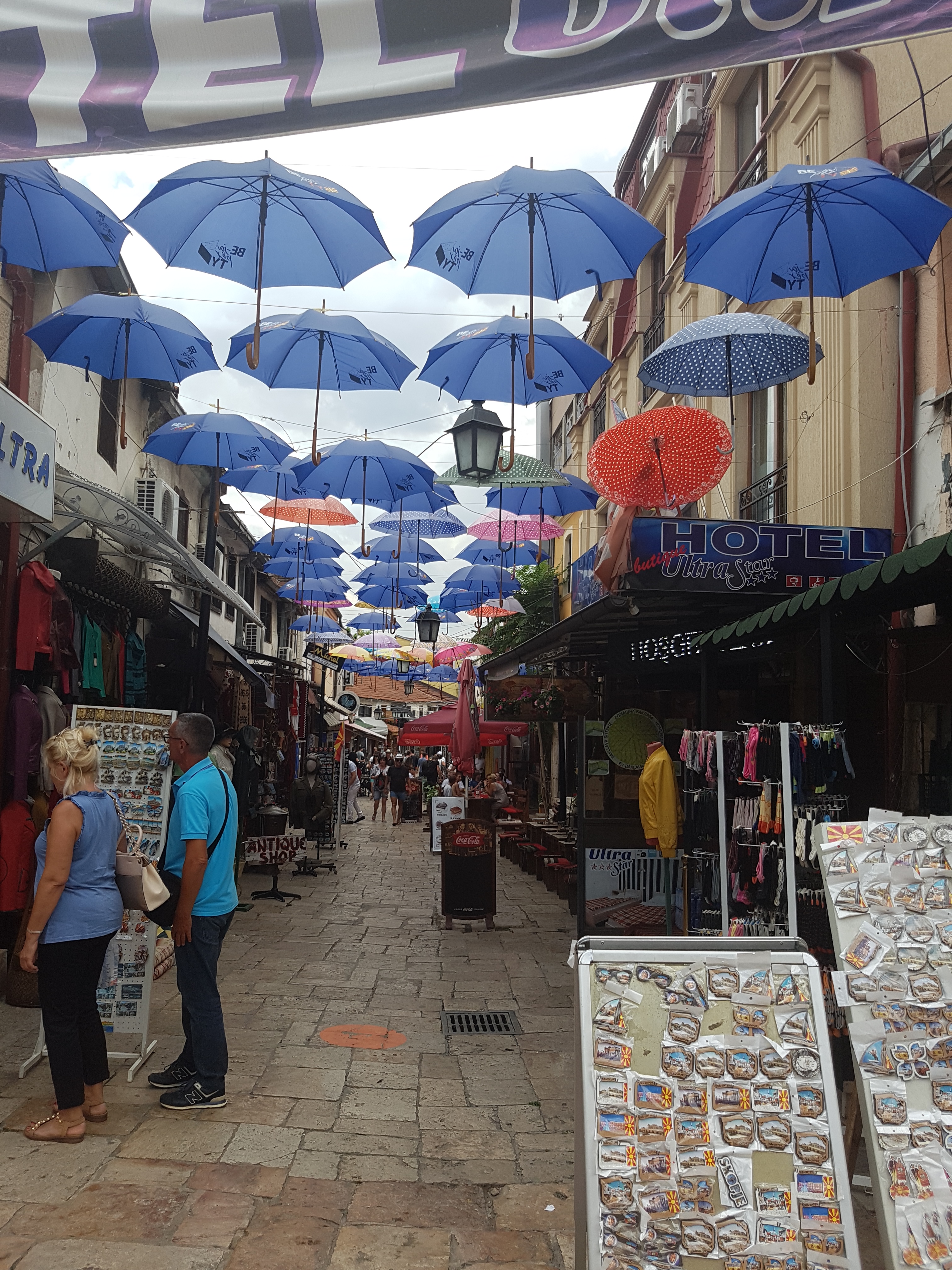
The major earthquake in 1963 flattened 80% of the City, however, the Old Bazaar remains today largely as it would have looked for a hundred years or more. I saw one photo taken in 1926 of the Old Bazaar and it could have been taken yesterday.
While we were in Skopje, we met up breifly with Eddie, a good friend of Luke Scullion. He works as a diplomat in the Foreign Office. It was fascinating to get his perspective.
It was just our luck that Skopje was experiencing a bit of a heatwave during our visit with temperatures in the mid 30’s. Mount Vodno overlooks the City and is just a short local bus ride. It was however too hot to venture up there for any hiking. We will now have to return to Skopje at some stage as I would love to hike over it and down the other side to Matka Canyon.
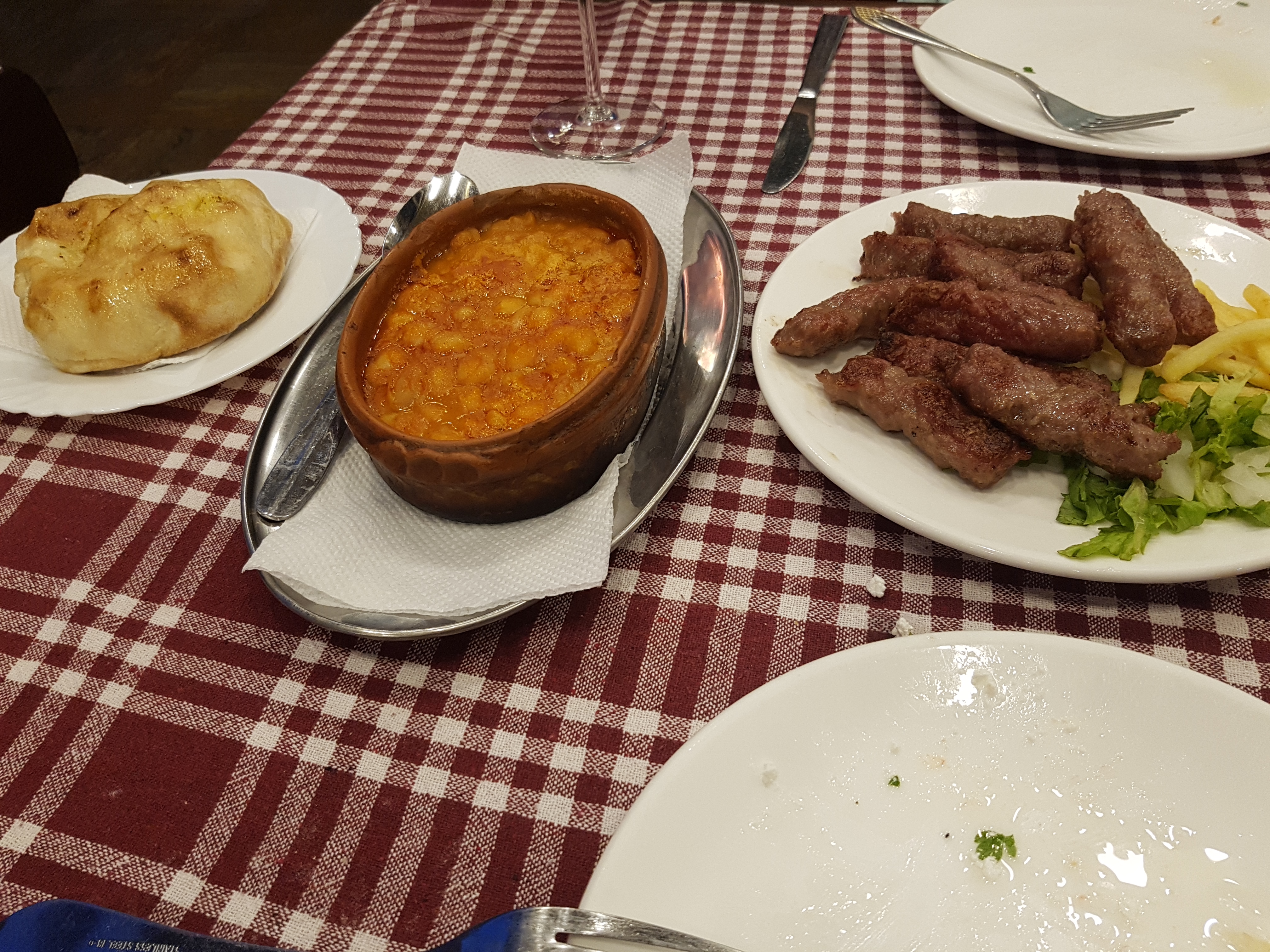
Traditional Macedonian fare
Old Bazaar
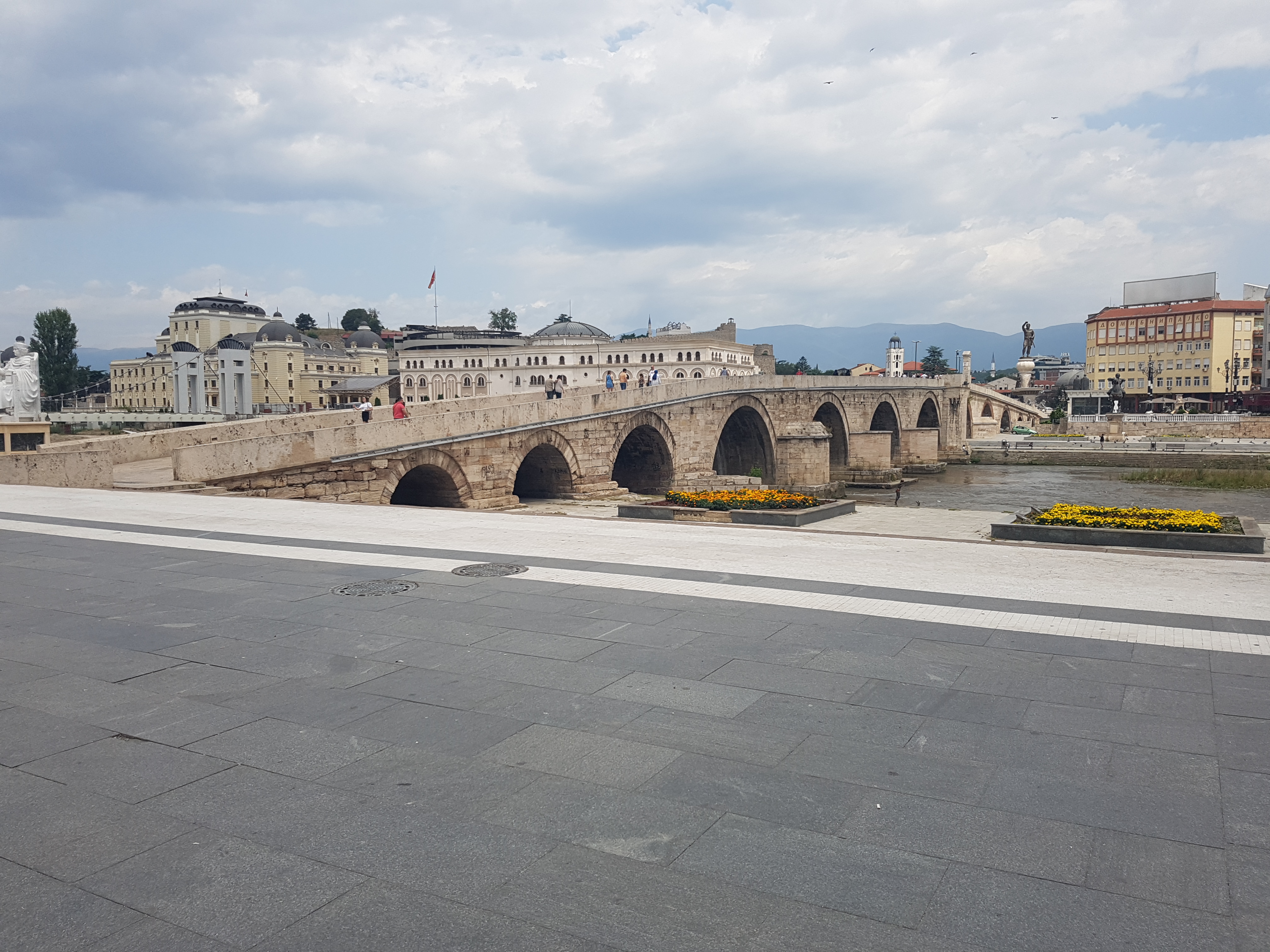
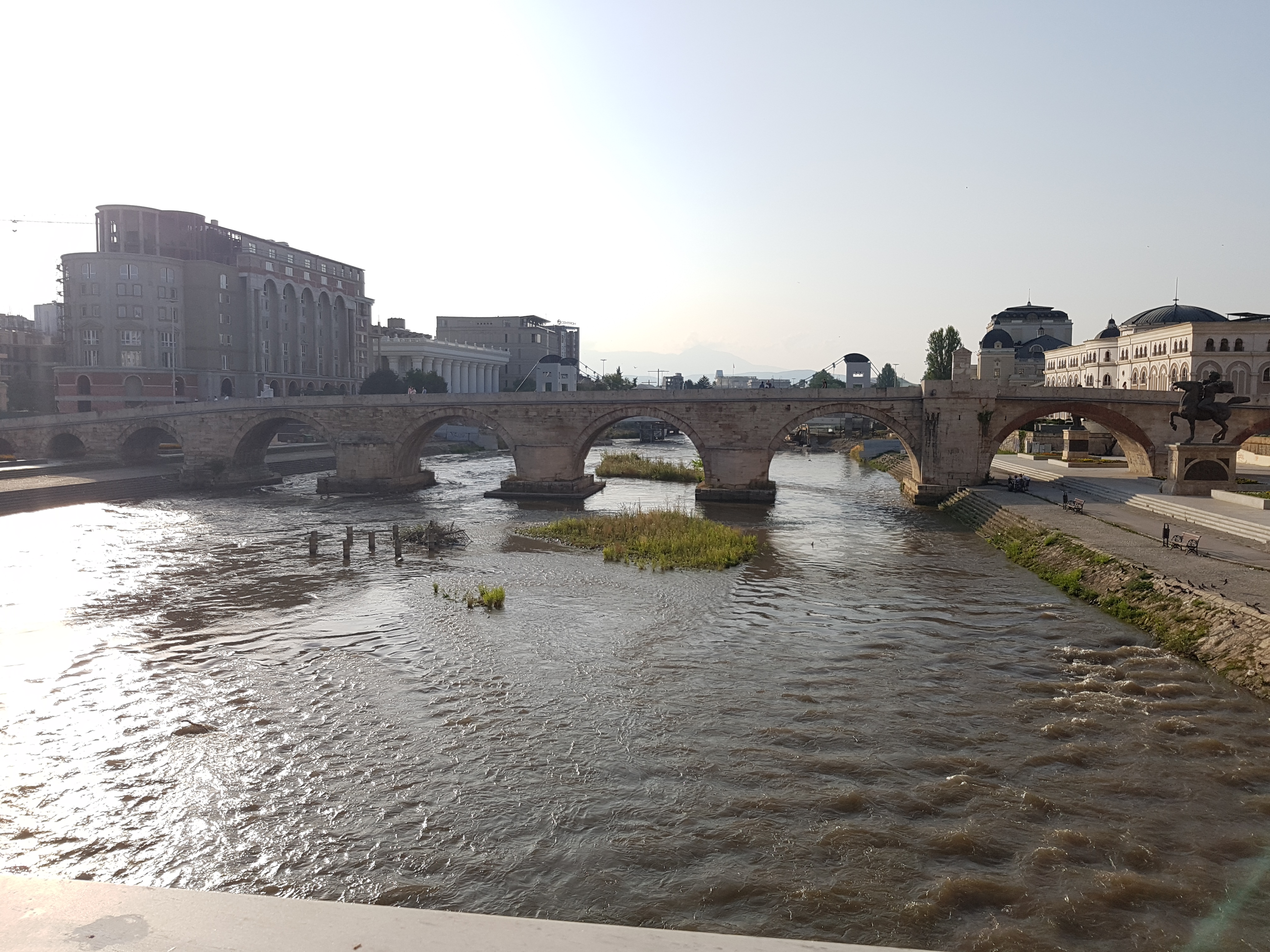
Stone Bridge
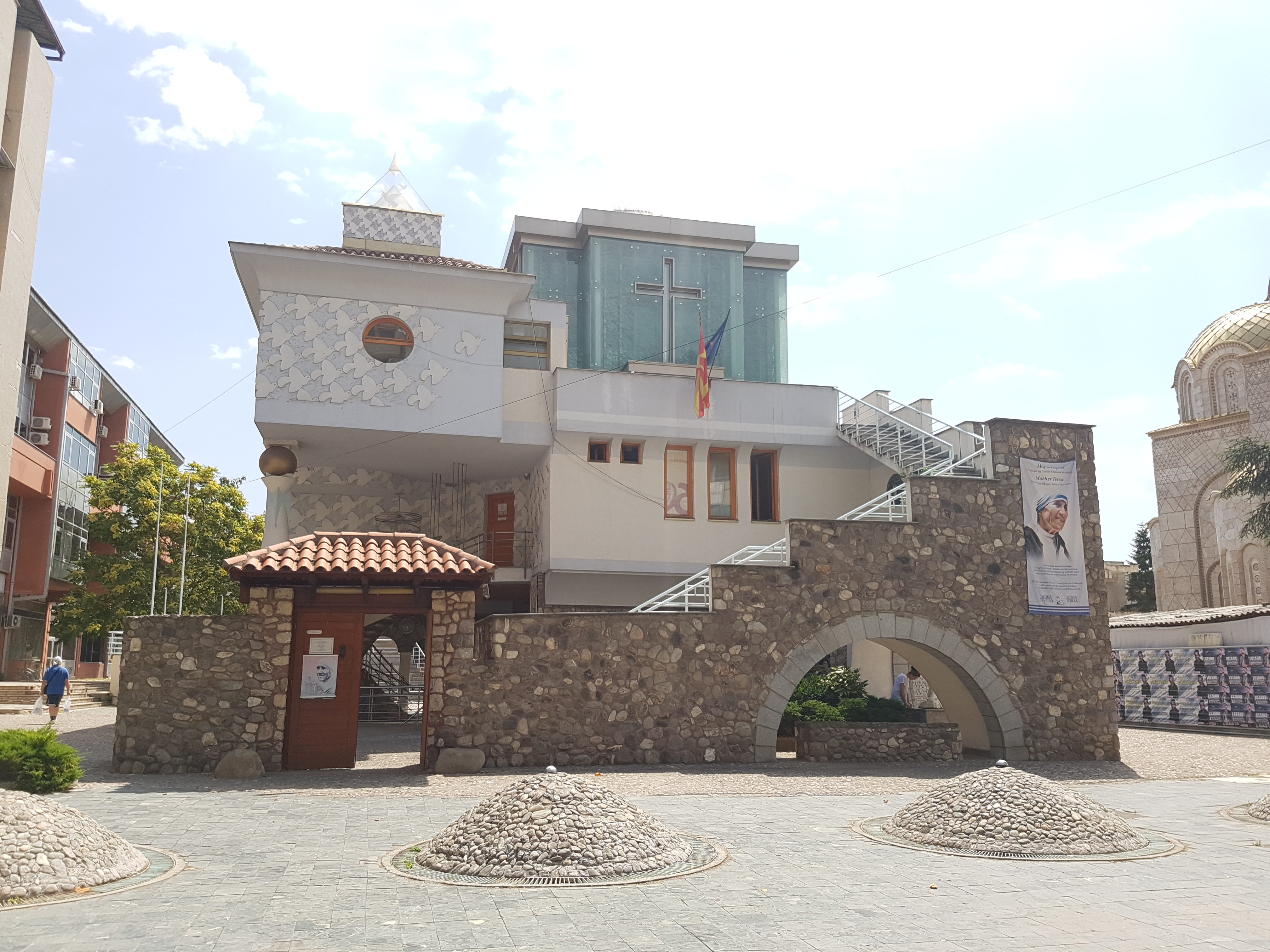
Memorial to Mother Teresa
Fun fact. Well, one I didnt know. Skopje was the birthplace of Mother Teresa, now, following her canonization, known as Saint Teresa of Calcutta. Her father was of Albanian. She grew up in Skopje until she left for Ireland when she was 18 years old.
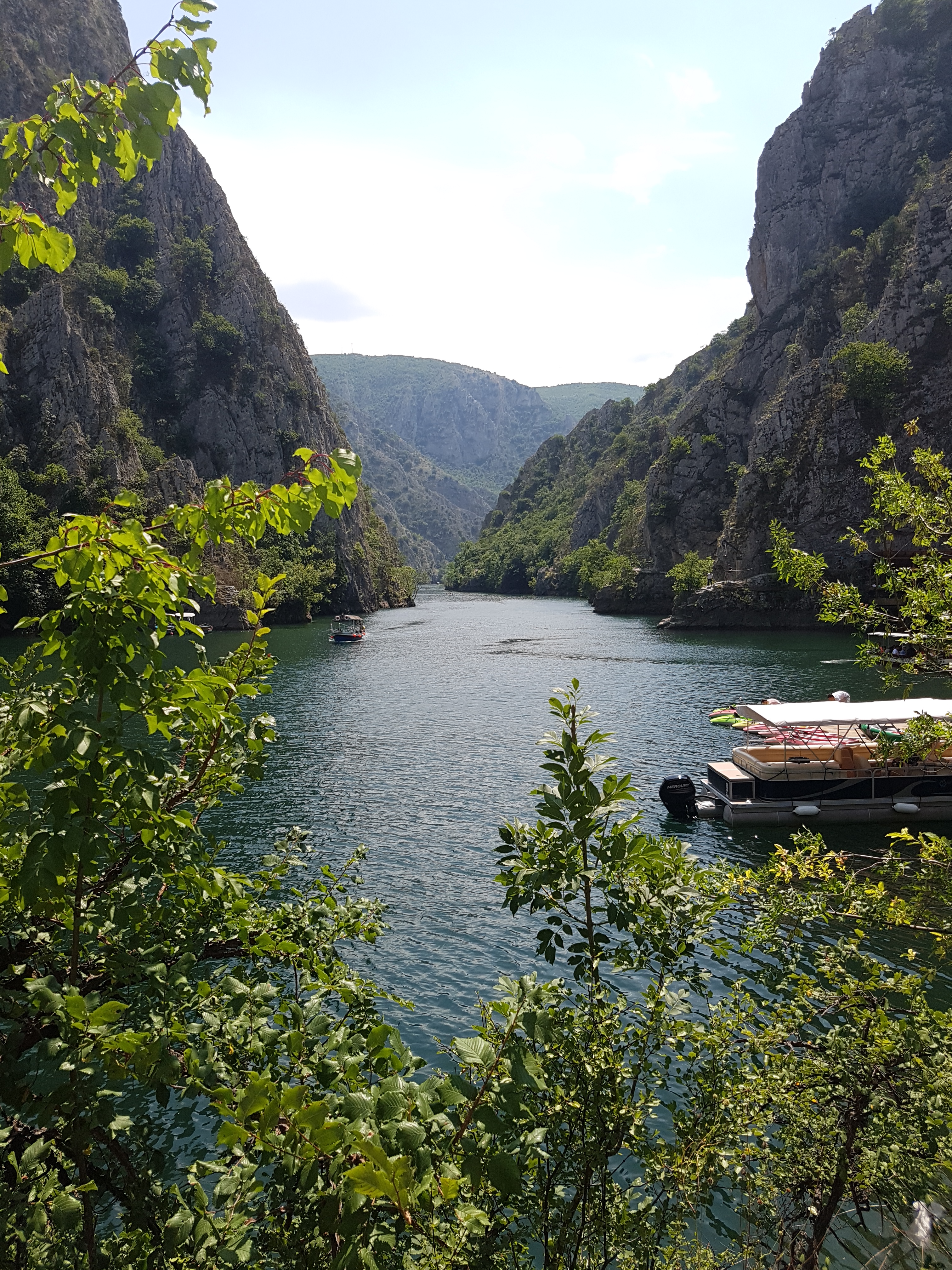
As a tourist in Skopje, you must visit Matka Canyon and so we did on Sunday. The Canyon is 15kms south west of Skopje and easily accessible by car, taxi and public bus.
We took the 45 minute bus ride out of the city. It was a pleasant journey. The bus was full with locals on their Sunday excursion and a small number of foreign tourists. They were mainly Spanish (7) and the obligatory two Germans.
As it is probably the biggest tourist destination close to Skopje, I expected to find some information, signs and/or maps when we arrived. Unfortunately, the Macedonian tourist industry has not felt the need to provide these types of things.
The bus dropped us at the mouth of the Canyon next to a couple of restaurants. I had wanted to hike the 40 minute climb to a Monestery on one of the mountains overlooking the Canyon. Sheila however, quickley and decisively erased that idea. “It’s too hot to hike up a bloody mountain” she advised me.
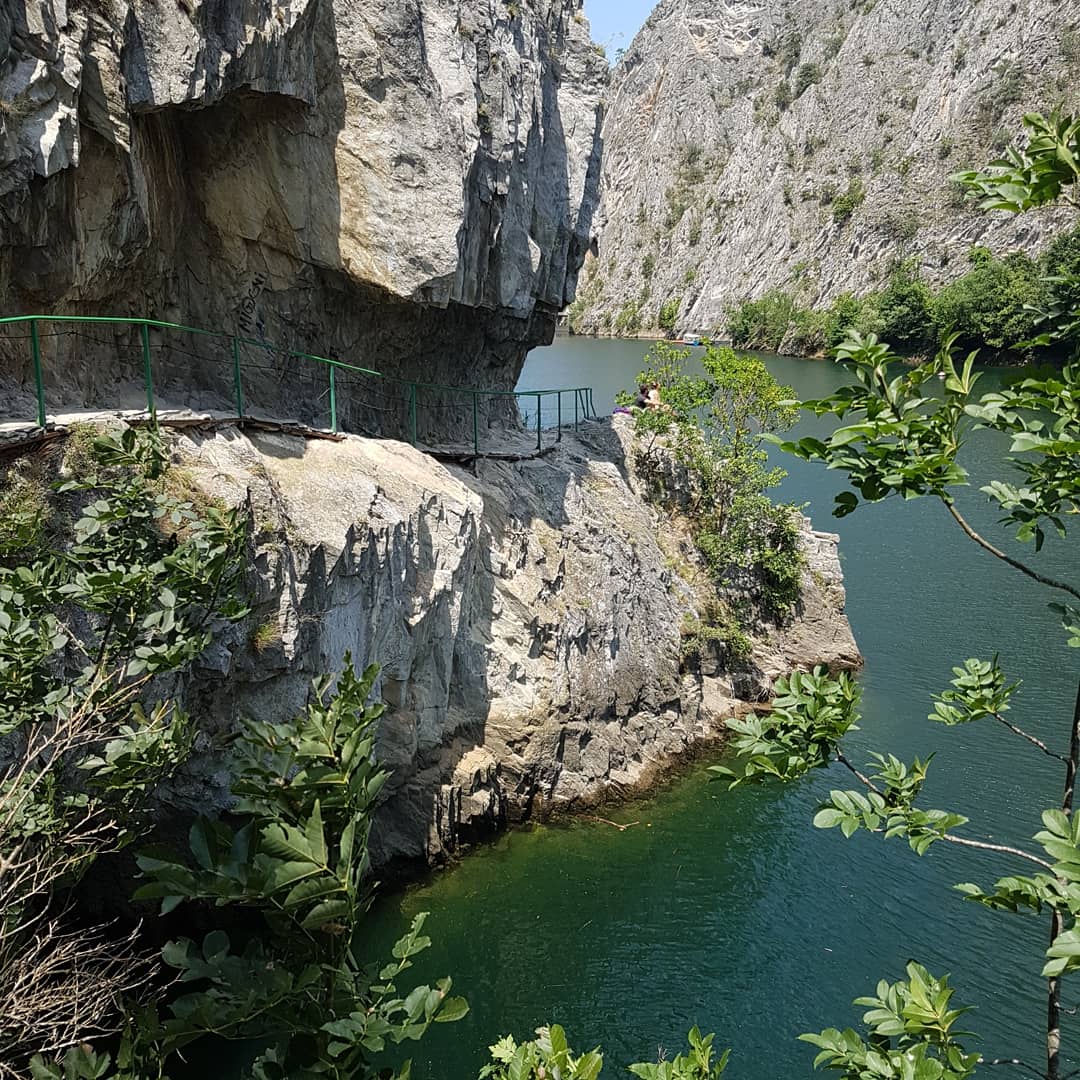
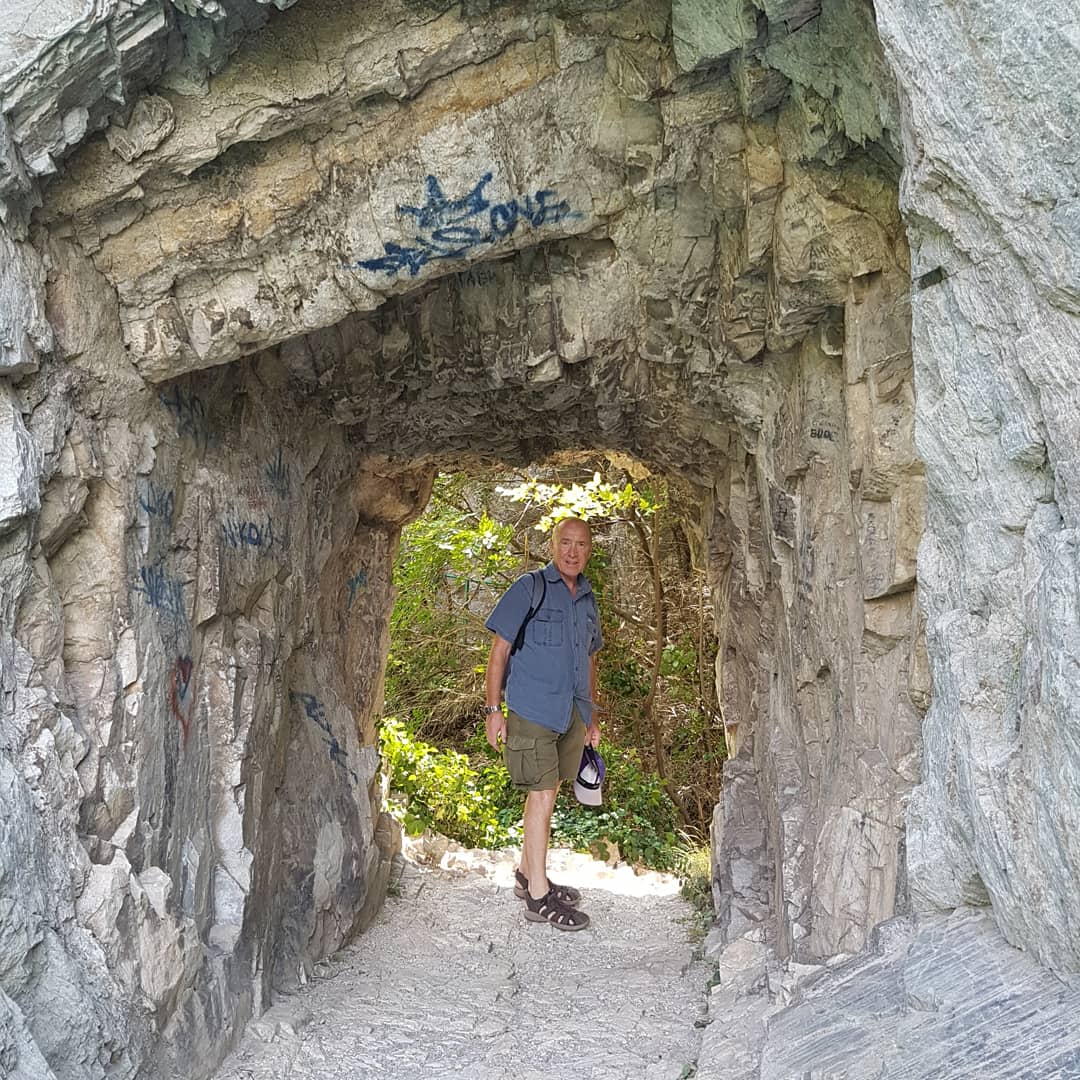
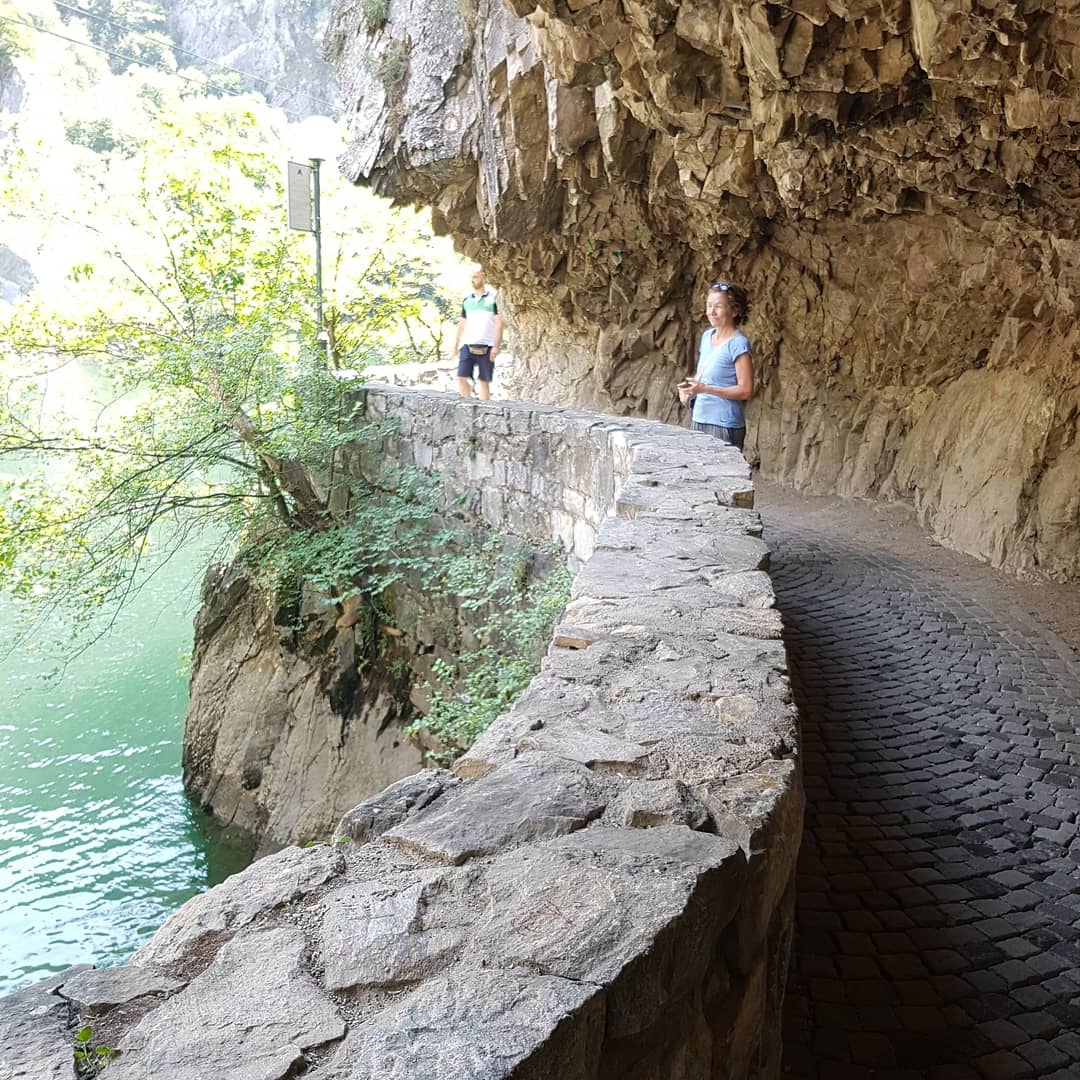
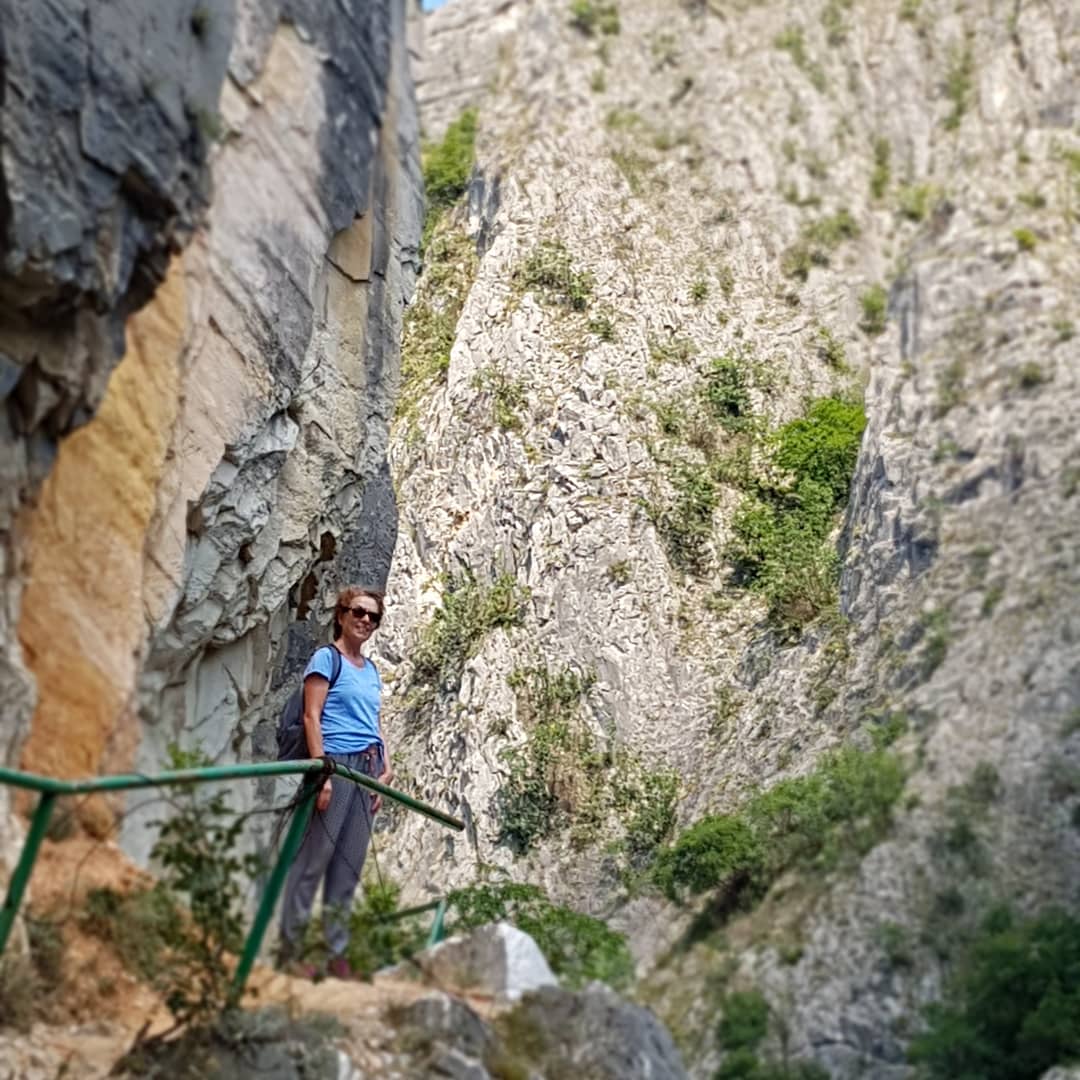
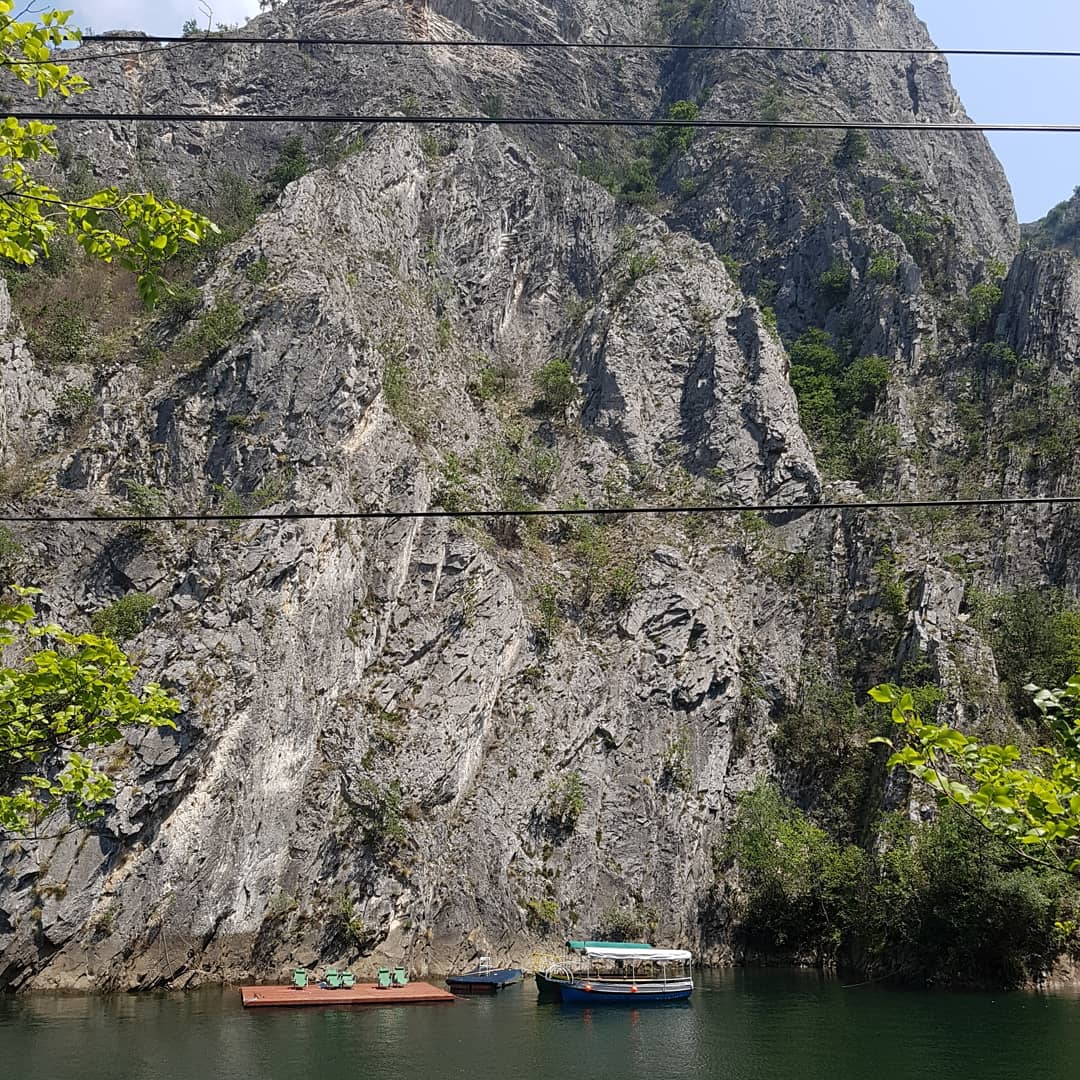
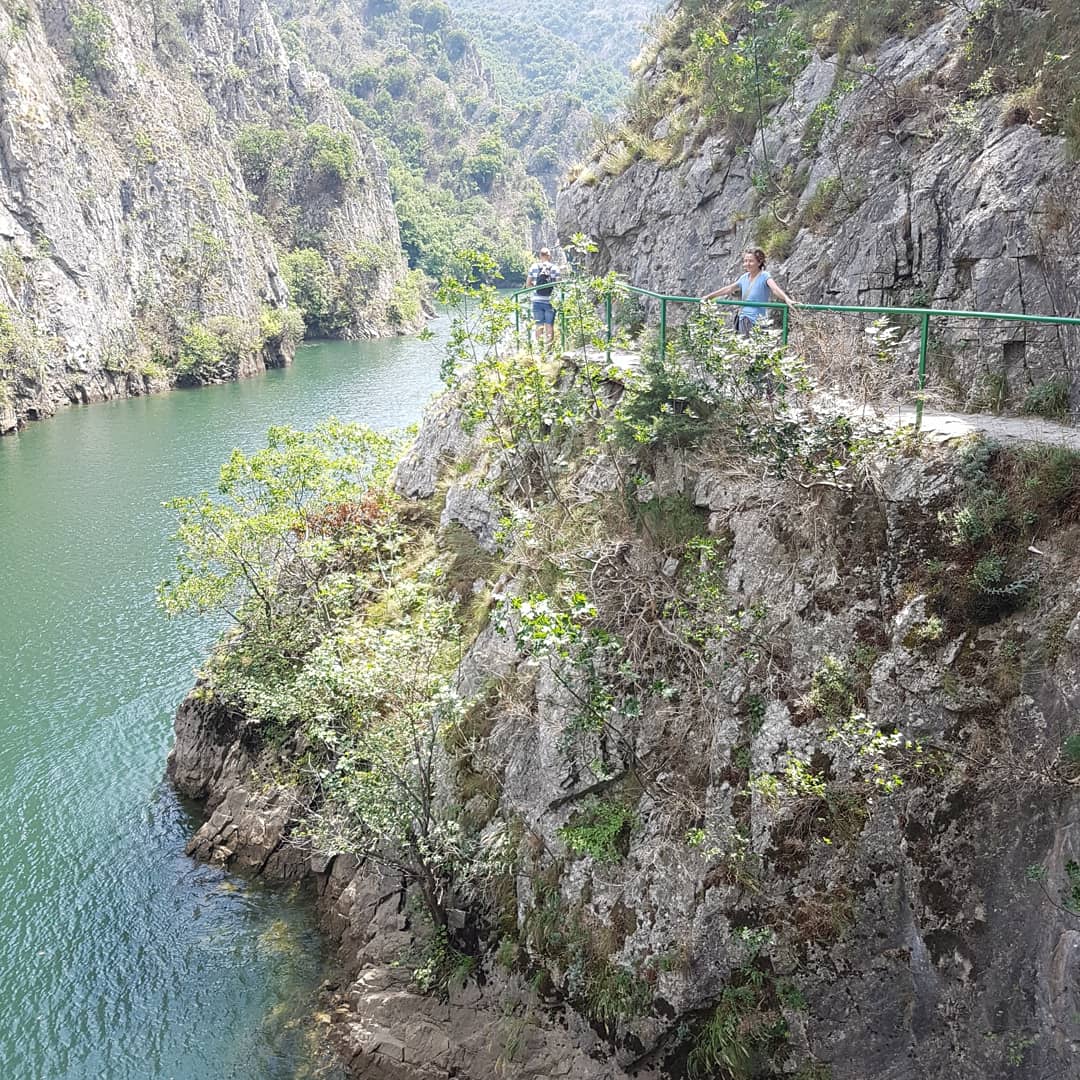
Instead we agreed (read, she agreed) to take the footpath that runs along the right side of the Canyon. In many places, the footpath has literally been carved out of the cliff face. It looks spectactular and reminded me of the Caminito del Rey at Chorro north of Malaga.
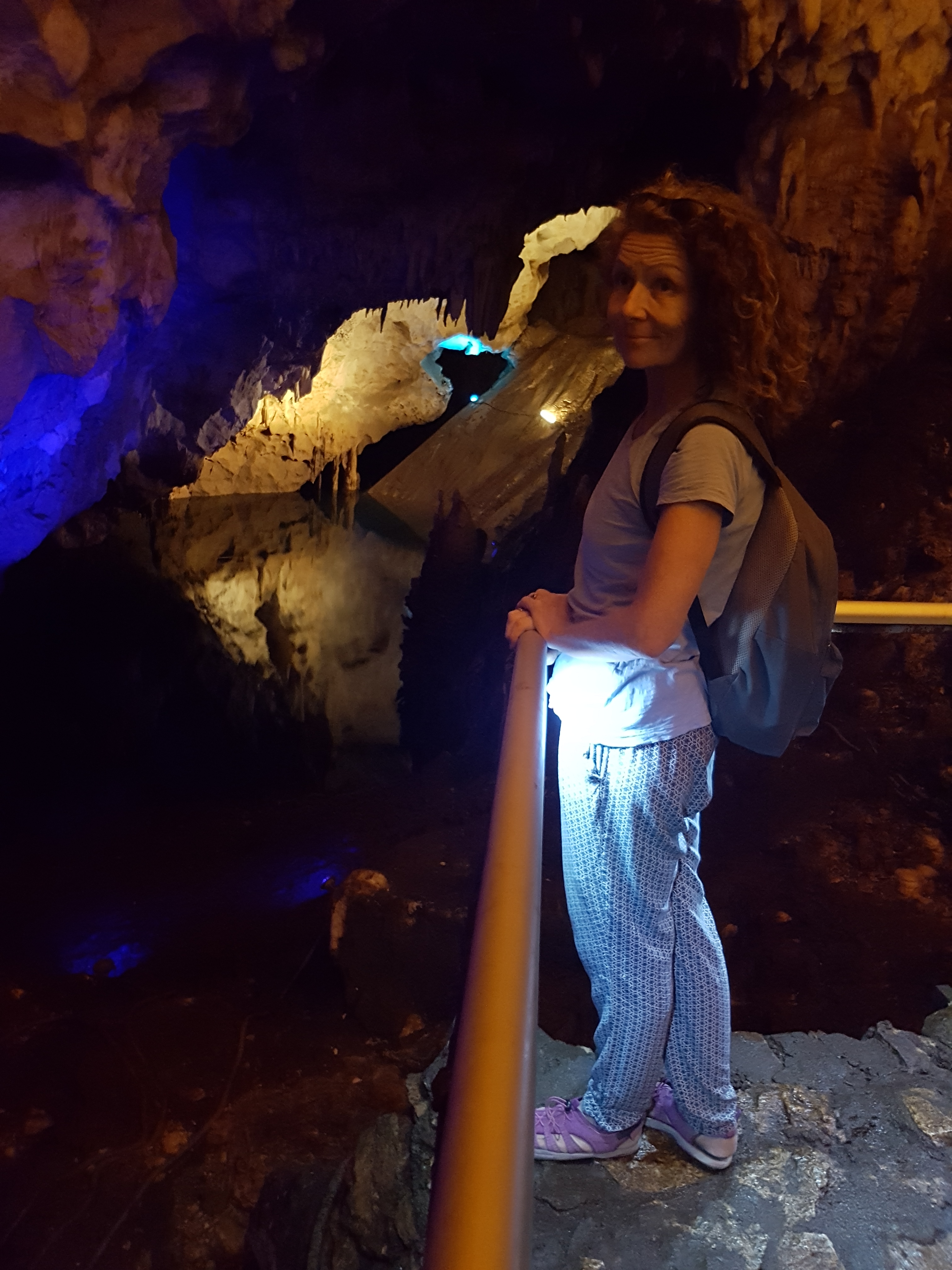
I’m informed the footpath is more than 10 kms long. We didn’t have enough tim and walked 45 minutes out and 45 back as we wanted to take a boat down the Canyon to see the famous underground caves. Excuse the poor quality snaps below.
It was a most enjoyable day even though our visit coincided with a local holiday weekend and so it was incredibly busy. There were cars parked along both sides of the approach road to the Canyon as there is no parking provision. The buses were unable to get to the mouth of the Canyon. We had to walk 1.5 kms to the nearest place the bus could get, to catch our return bus to Skopje.
The other negative was tbe amount of litter. The place was overflowing with litter. There was no charge whatsoever to enter the canyon. If I had a role withe the tourist authorities, i would reccommend levying a small charge and use the income to have the litter and refuse cleaned and to maintain the public paths. End of rant.
All things considered a most enjoyable day out.
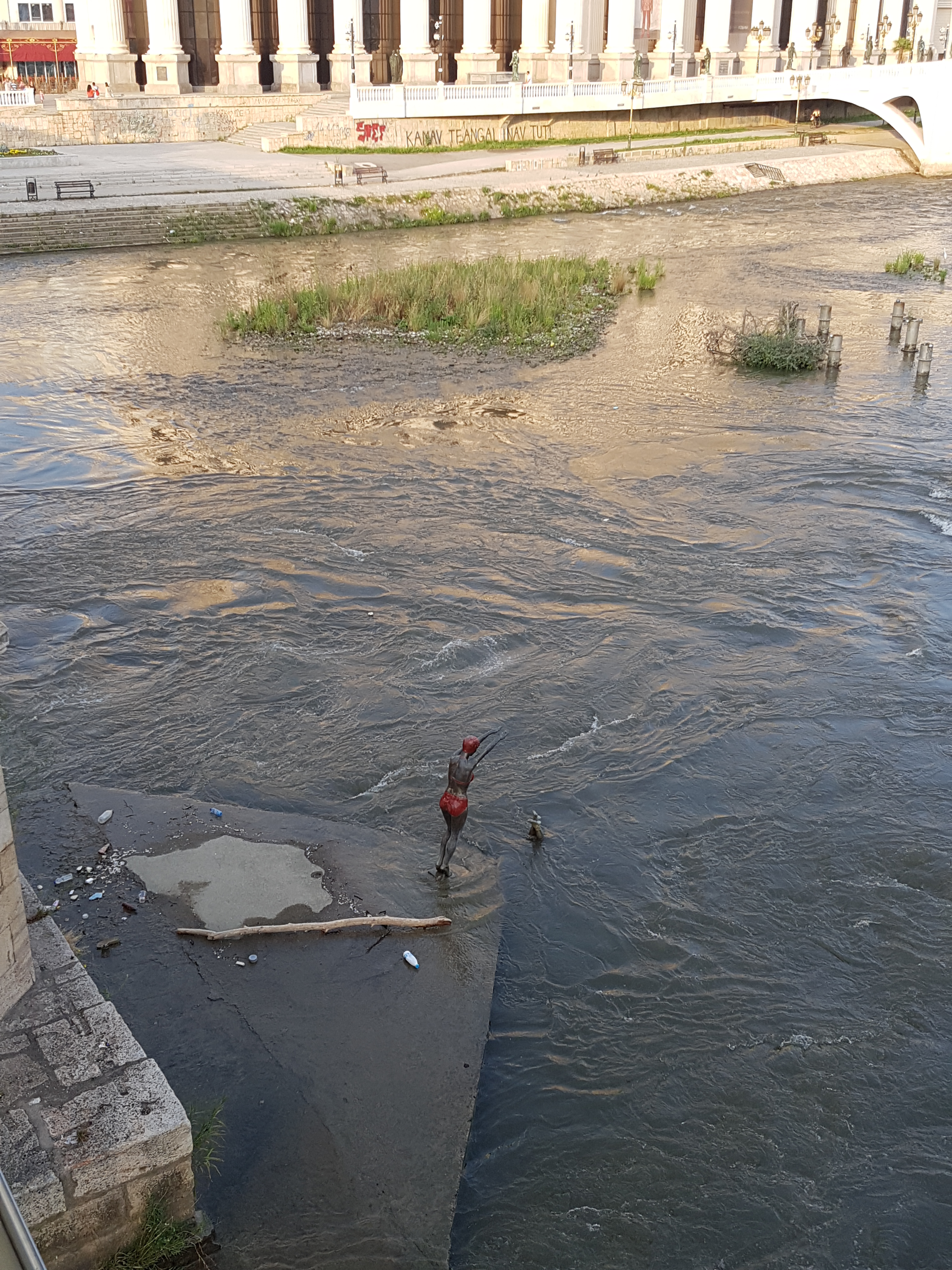
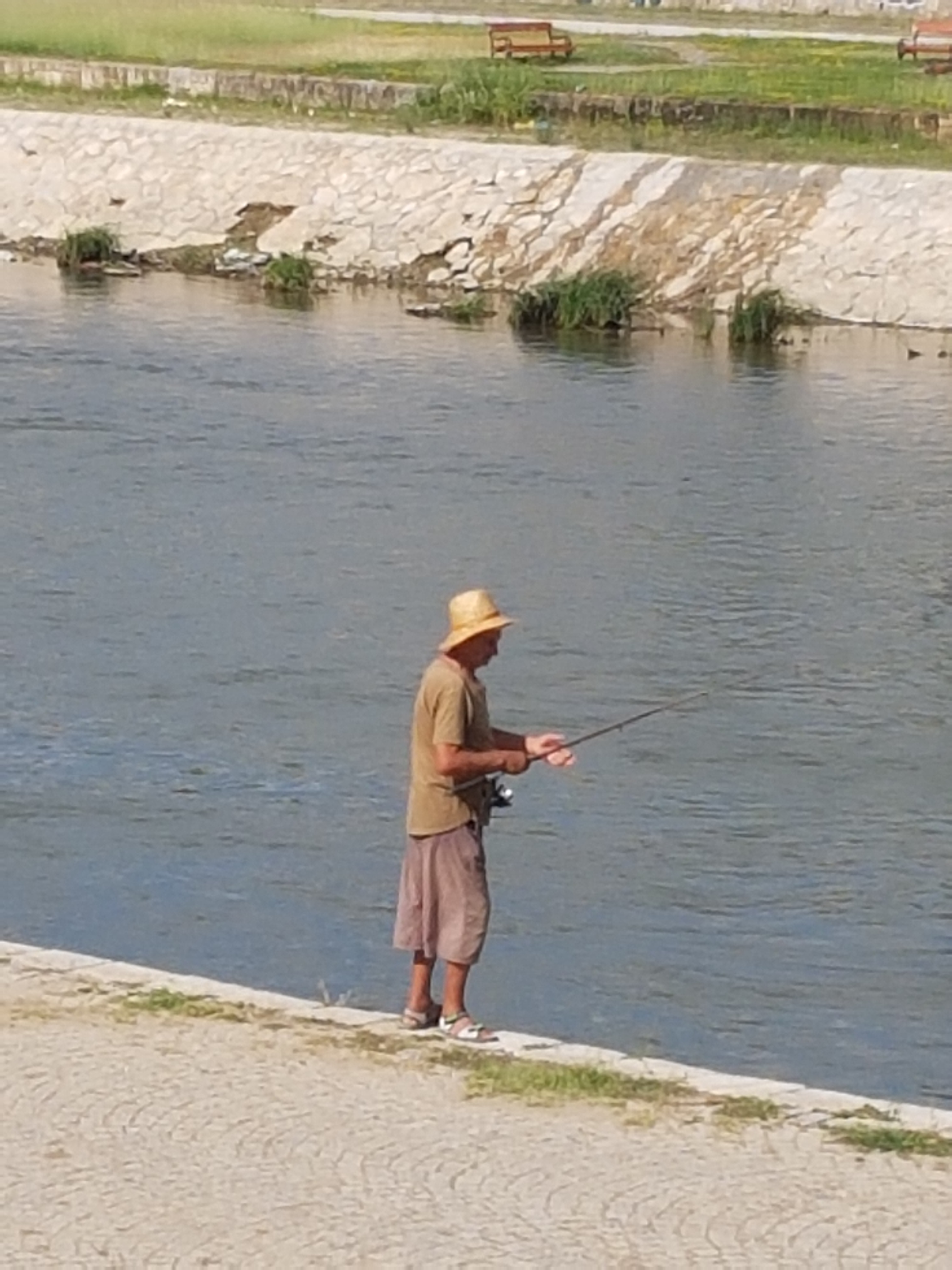
On the bank of the River Vardar in Skopje City Centre
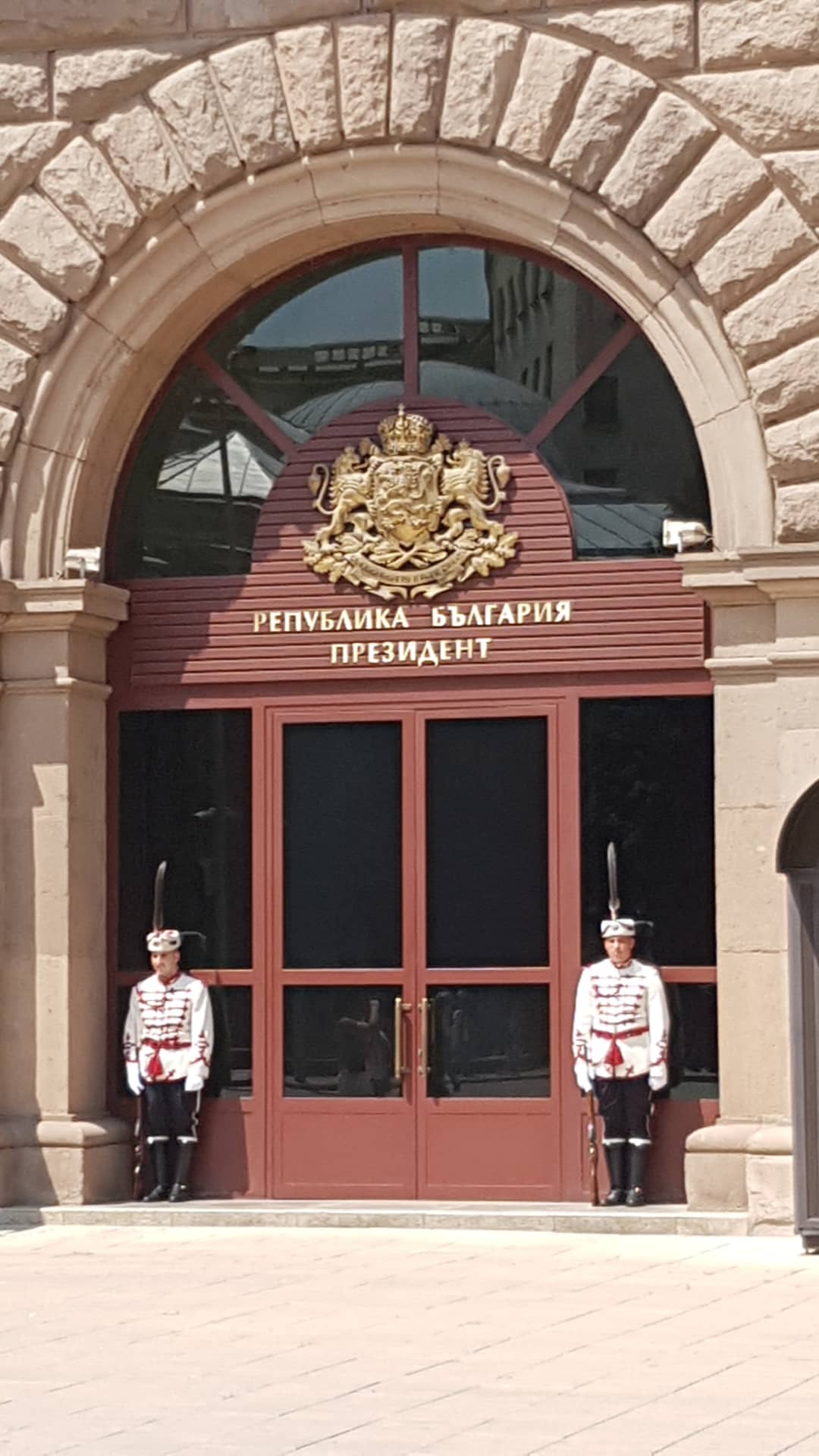
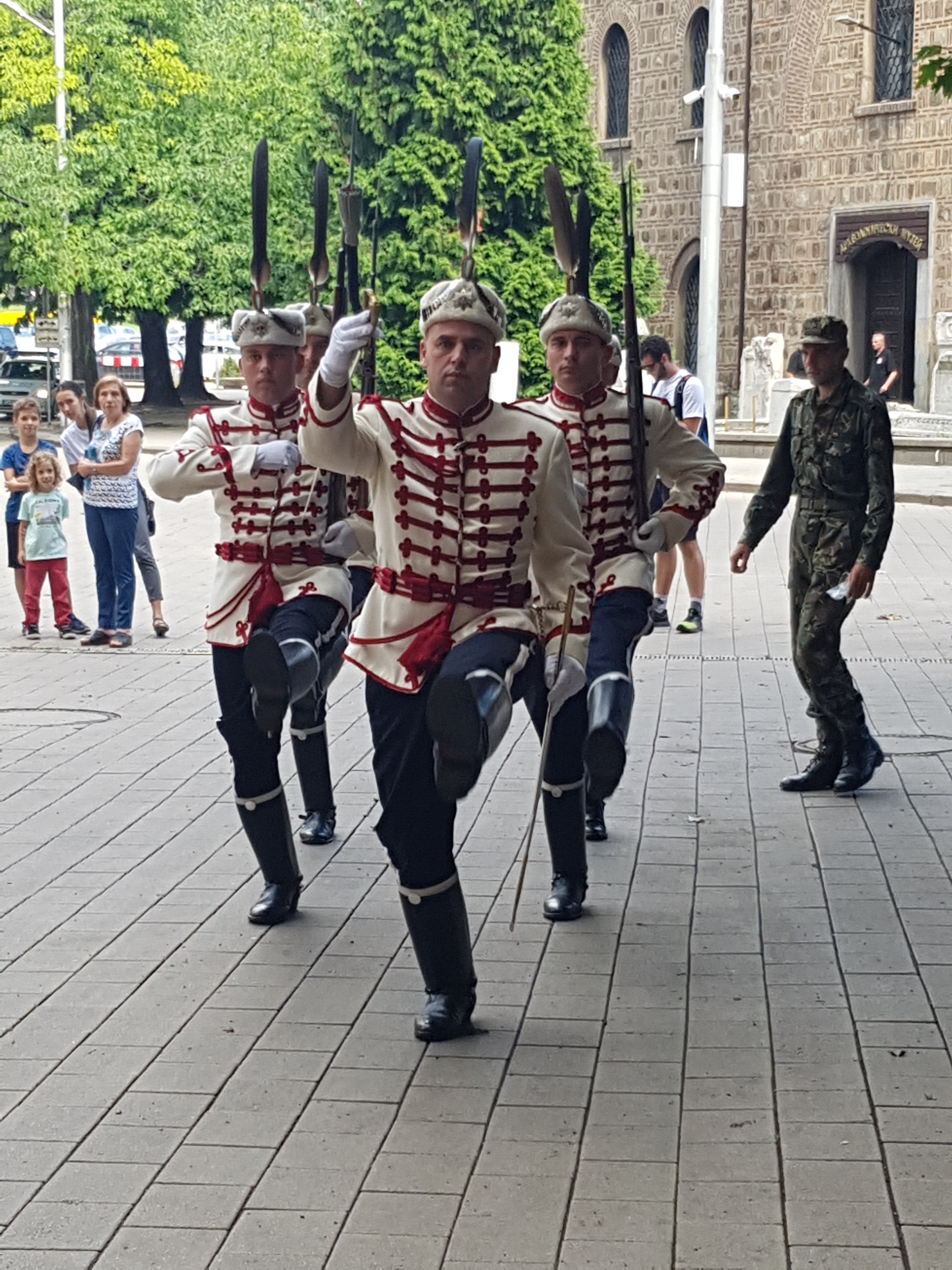
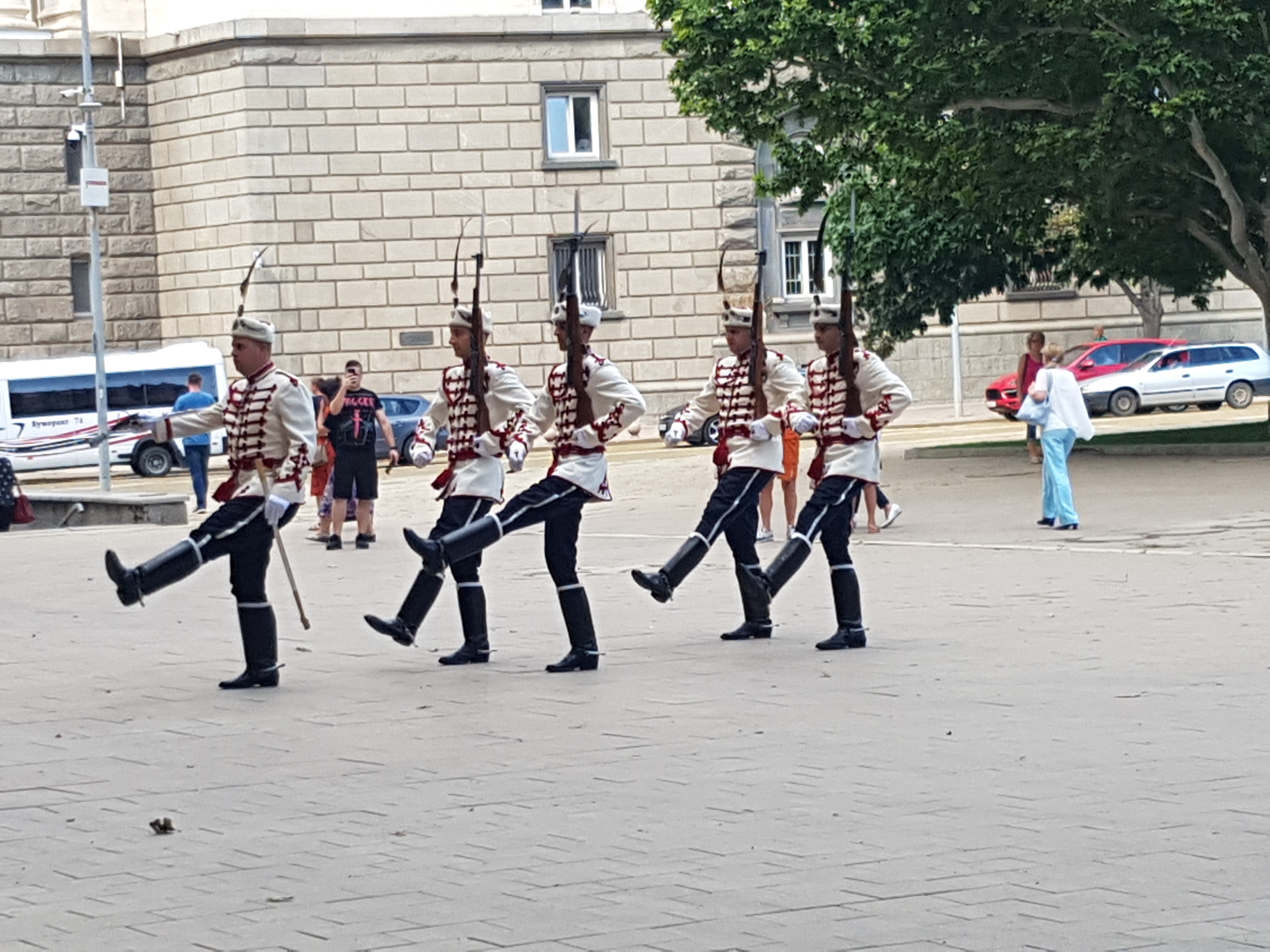
The guard outside the Presidential Palace in Sofia
Day 87. Sheila and I are back in Sofia en-route to Skopje in North Macedonia, where we go by bus morning.
Wherever you get coffee in Bulgaria, be it from a machine or any type of establishment, it is always very good. I am not a connoisseur but it is the best coffee I have ever had the pleasure to taste.
At first I was surprised to witness pedestrians obediently waiting on the kerb-side for traffic signals to change to allow them to cross the road even when there are no vehicles in the vicinity. I get the feeling that Bulgarians are in general law-abiding. They do not appear to be as loud and excitable as their southern European and latin neighbours.
I like Sofia. By capital city proportions, it is a small city with a pop of 1.25M. It is uncrowded and there is a feeling of space.
Yesterday we stumbled across the only second-hand English bookshop in the city and possibly the country. Sheila was especially pleased as she had run out of reading material. I had my Kindle stolen when we were in Athens and so, getting books has now become an issue.
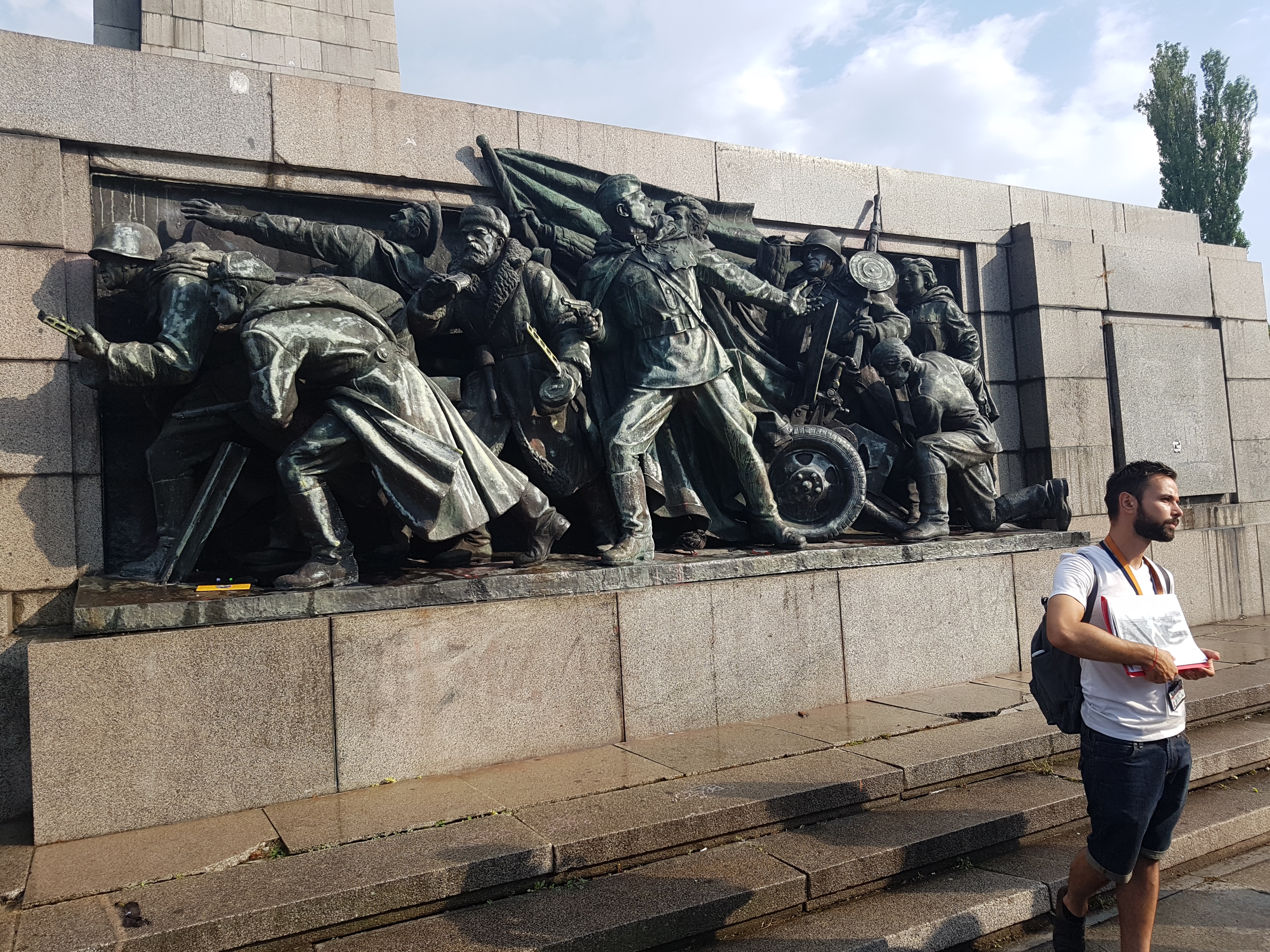
We have developed the habit of taking walking tours when we arrive in new cities. The tours in Varna and Sofia rate amongst the best I have been on. My favourite walking tour, however, was a 3.5 hour Communist Tour yesterday afternoon where I learned about the 45 year communist period in Bulgaria. Our guide Vasco, outlined the benefits provided by communism. Access to education for all for the first time. Full employment and a universal health care system. On the downside, communism was a brutal regime. They ruthlessly eliminated all political opposition, executing tens of thousands of their political opponents. It is estimated that one in four Bulgarians were recruited to spy and inform on their families and neighbours by the secret service. Nowadays, Bulgarians have polarised views about communism. Some, those who perhaps have not done as well, miss the obvious benefits it provided while others despise communist ideology and the brutal regime. I found the Tour fascinating.
On a different note, I have been surprised by the amount of pizza Bulgarians eat. Pizza is on sale on virtually every street. It must be their favourite takeaway food. It’s very tasty.
Day 76: 38% of Greeks smoke making them the heaviest smokers in Europe. Second place in the smoking league table is Bulgaria with 35% of the population smokers. Both countries have similar smoking in public laws as the UK e.g. one cannot smoke in a public buildings e.g. bars and restaurants. What makes Bulgaria a worse country for a non-smoker, in my opinion, is that a large percentage of Bulgarians pay no heed to the no smoking rules.
In virtually every bar, restaurant or cafeteria we visited in Sofia, there were people sitting nearby smoking. To be fair, we sat mostly in the outdoor areas because of the high temperatures. Murphy’s rule applies. No matter where I sit, the smoke from the nearby smoker will drift towards me. If I change seats, invariably, the smoke changes direction and again seeks me out. My message to the Bulgarian authorities is, sort it out.
One of the pleasant surprises I’ve had since arriving here is the Bulgarian food. Its excellent. Their soups are great as well as their savoury pastries. The food is full of spices and herbs. I’m a fan.
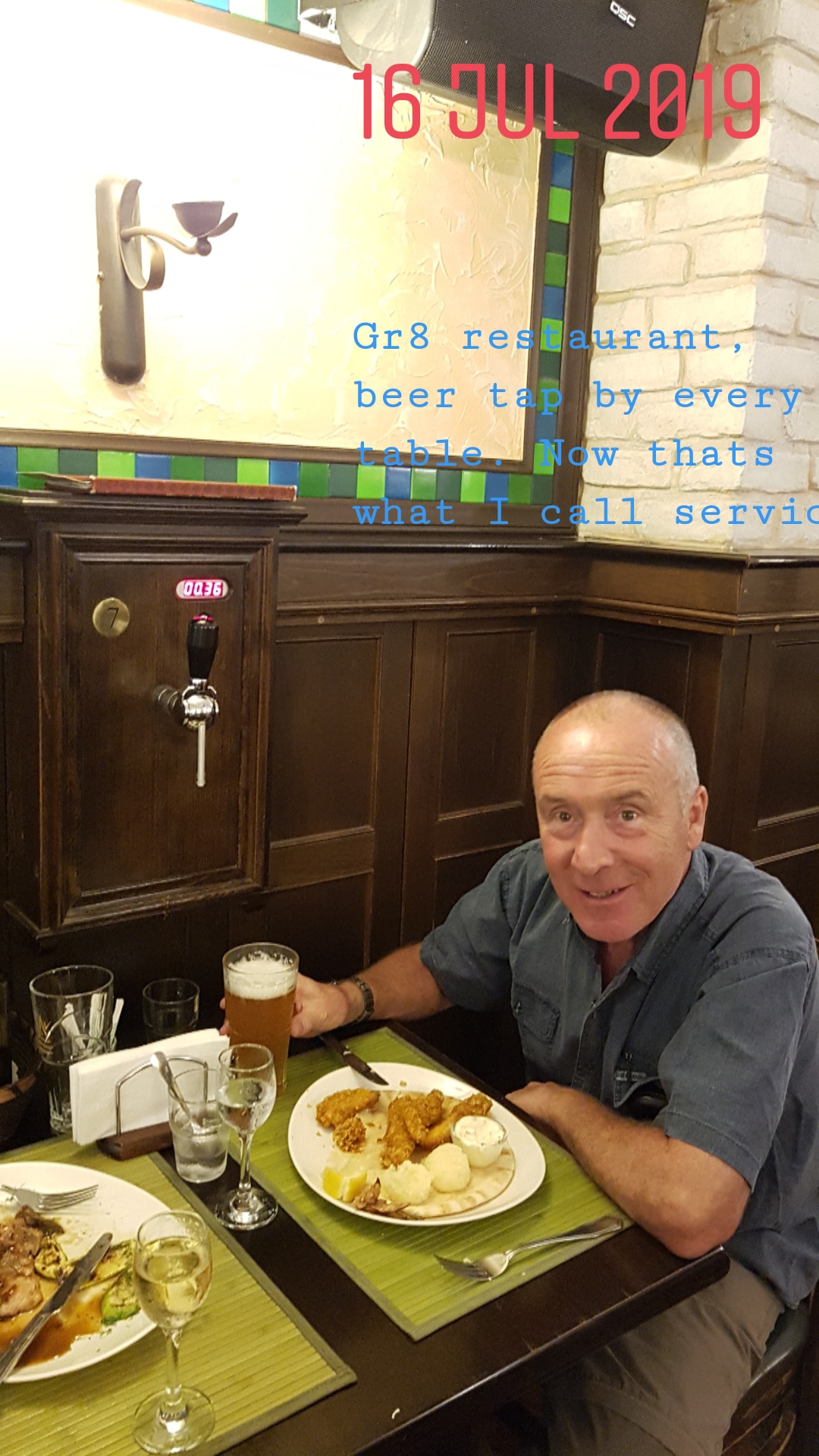
We eat at a restaurant in Sofia called The Alehouse. It was a pleasant meal but what really impressed me was that there was a draft beer pump (with an LED counter) on every table.
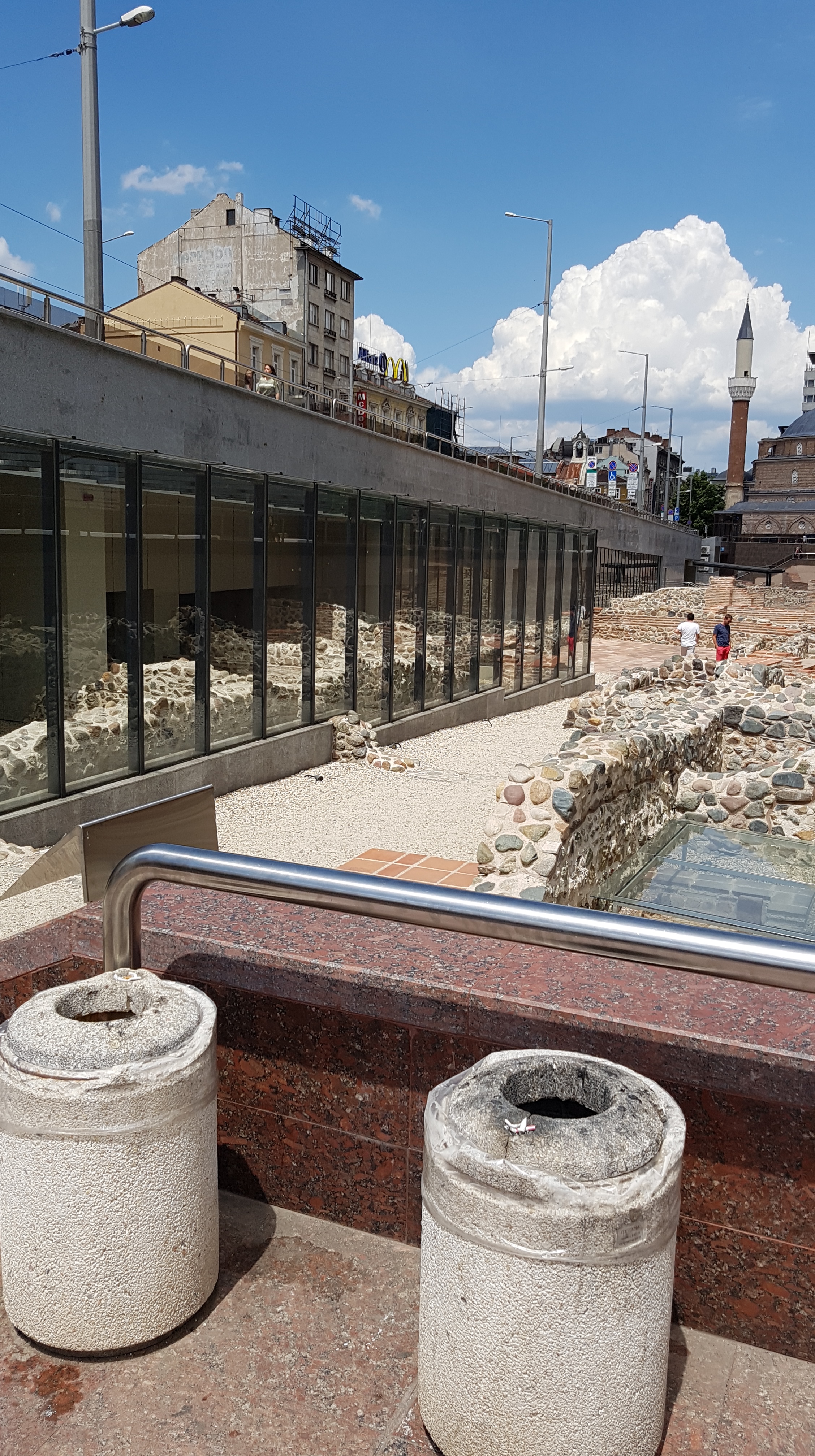
Sofia, I have learned has a long proud history going back 2000 years. We visited the Natural History Museum. Only as recently as 2009, they found and excavated in the heart of Sofia, remains of the city dating back to the 3rd and 4th century AD. They have preserved it, building a city centre road elevated over it. Fascinating.
We arrived two days ago in Voditsa, a tiny village of 200 residents. It looks and feels a lot bigger because it is spread out. Voditsa like rural Bulgaria in general has suffered with depopulation as people seek work opportunities in the cities. Since Bulgaria joined the EU in 2007 many Bulgarians have taken the opportunity presented by the ‘freedom of movement rules to relocate to other EU countries.
Voditsa village facilities include a library, three general stores that apparently sell the same merchandise. They used to have a Bar run by a local villager. He is currently working in England. His mum took it over when he left but she closed it when she went to visit her son. So, no Bar at the moment.
Our voluntary work consists of gardening and landscaping. Its heavy work for a pen-pusher like me but I’ve managed the first two days without too much of a problem or getting the sack.
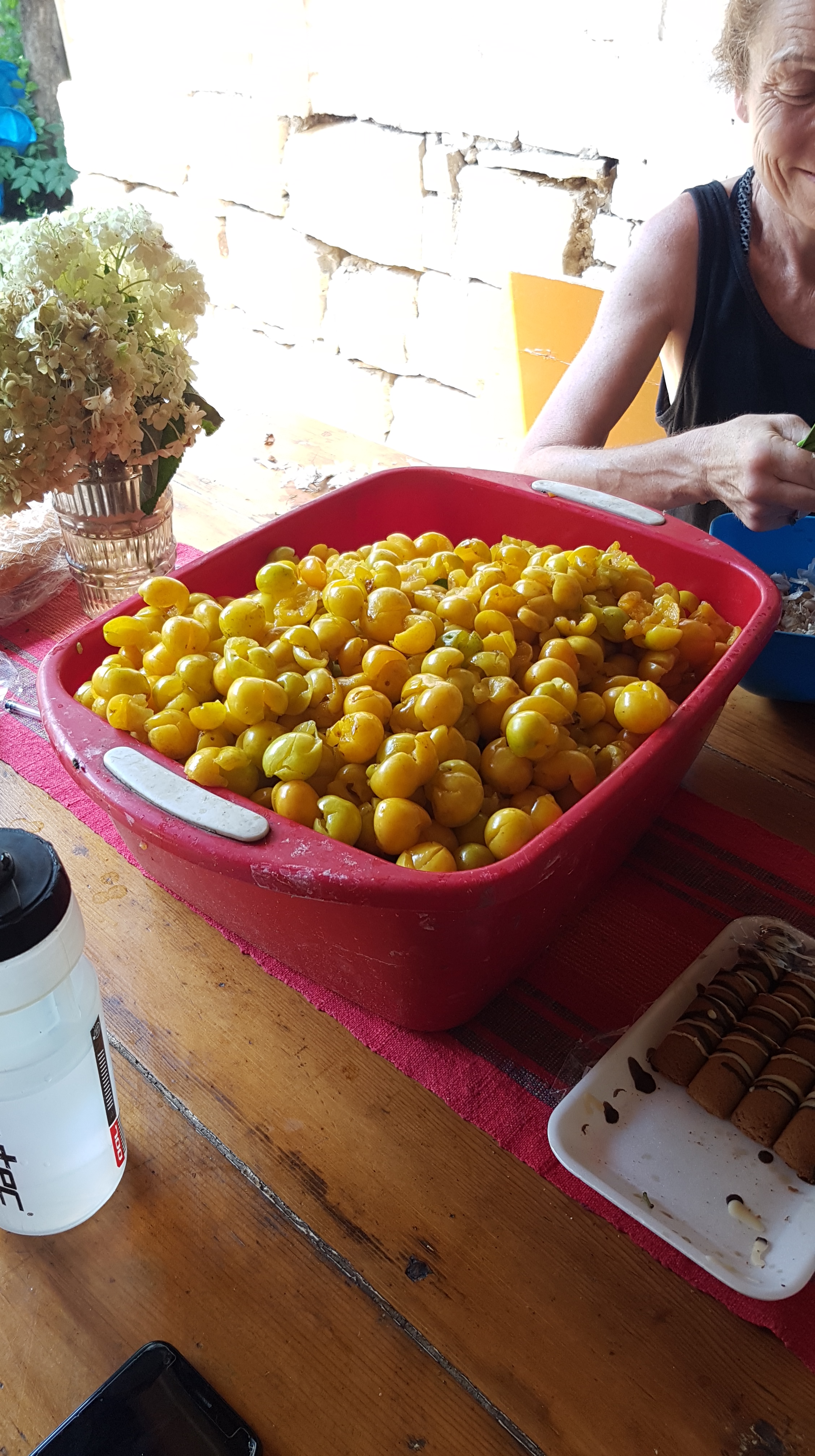
The temperature has increased to 30°+ so its too hot to work outside in the middle of the day. Sometimes, we would work split shifts. Three hours first thing then a couple of hours early evening. Today, after doing some rotavating (thats hard), I was put on stoning plumes… now thats my kind of work, one for me, one for the pot.
Historical remains on display in Sofia City Centre
Day 71 of our adventure. My considered assessment is that it rates right up there amongst the most pleasant days of the trip. It was filled with fine walking, good weather and delightful people. What more could a man ask for.
While we were in Greece, we decided to look for some voluntary work. I had wanted to do something to help the refugee crisis in Greece. Unfortunately, I was unable to get Sheila to agree to this so we looked elsewhere. If at some time in the future I can do anything to assist refugees, I would like to do so.
After researching volunteering opportunities in the region, we applied and have been accepted to assist with some gardening and landscaping work in a rural area in Bulgaria near the city of Plovdiv. I don’t know much else at the moment. We go on Saturday and start working (5 hours a day, 5 days a week) on Sunday.
So, we took a ferry back to Athens and then a twelve hour bus ride to Sofia. Easyjet flies from Athens to Sofia so we could have flown for only a little more than the bus fare. Sheila remains a very nervous air passenger and she chose to take a bus.
My experience taking long bus journeys in Latin America (albeit many years ago) readied me for the trip. Sheila, without ‘long-bus-journey’ experience, didnt really know what to expect and I decided to keep my counsel.
The bus was old. It was full. It was dirty and had no seat belts. Neither of us got any sleep. Sheila announced when we arrived safely in Sofia yesterday that she would probably make a different decision, if faced with the same choice of transport for a 580 km journey in the future. All I will say is that it was an experience.
My first impressions of Sofia is that its residents are friendly and with exceptions, very keen to help foreigners. The cost of living is considerably lower than Greece. The weather is cooler (26° today) than the oppressive temperatures in Greece. Public transport is efficient. We took the metro and buses today.
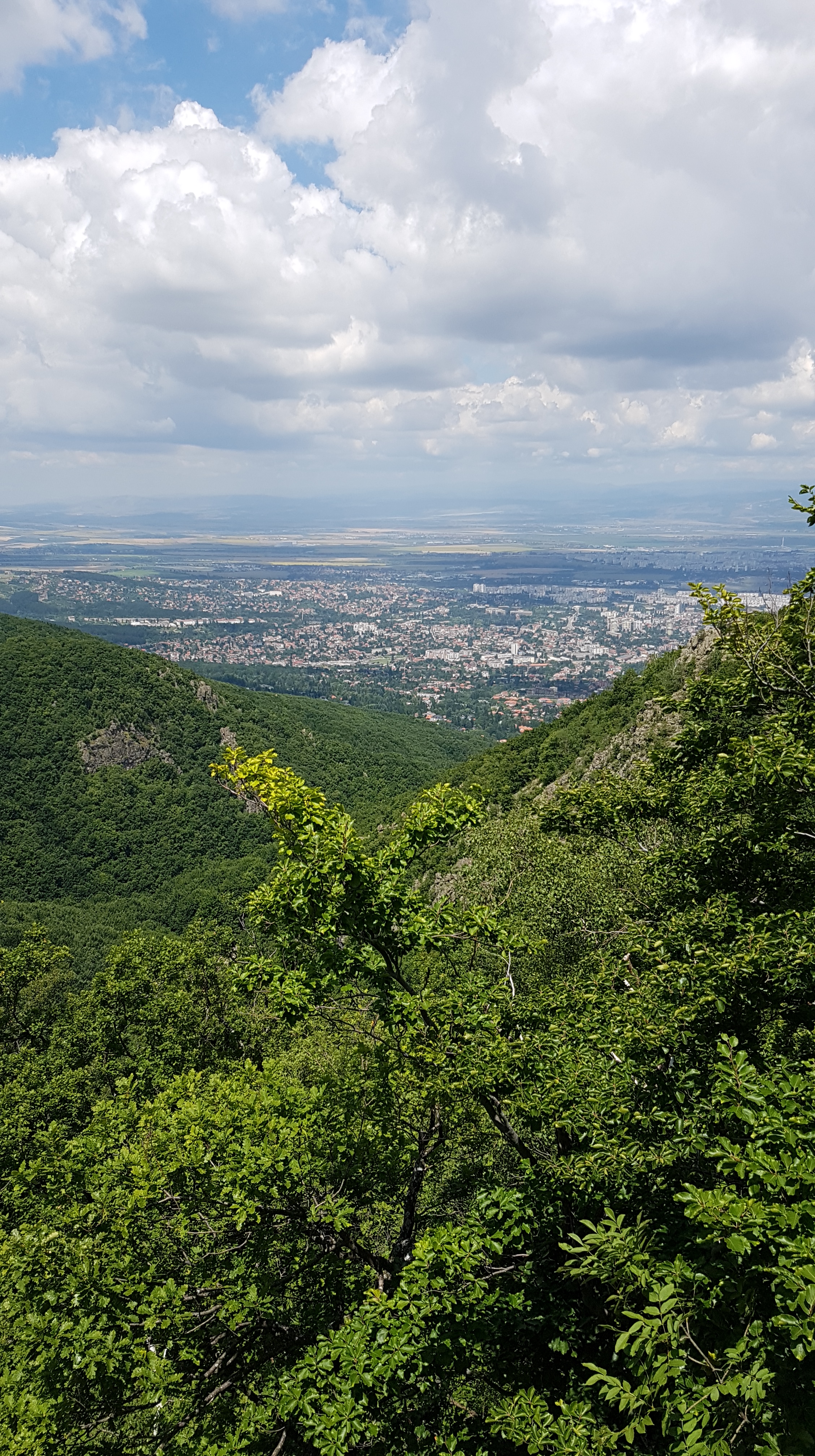
Today, we made a plan to visit Boyana Church at the foot of Mount Vitosha and then take a two hour hike up to Boyana Waterfall partway up the mountain.
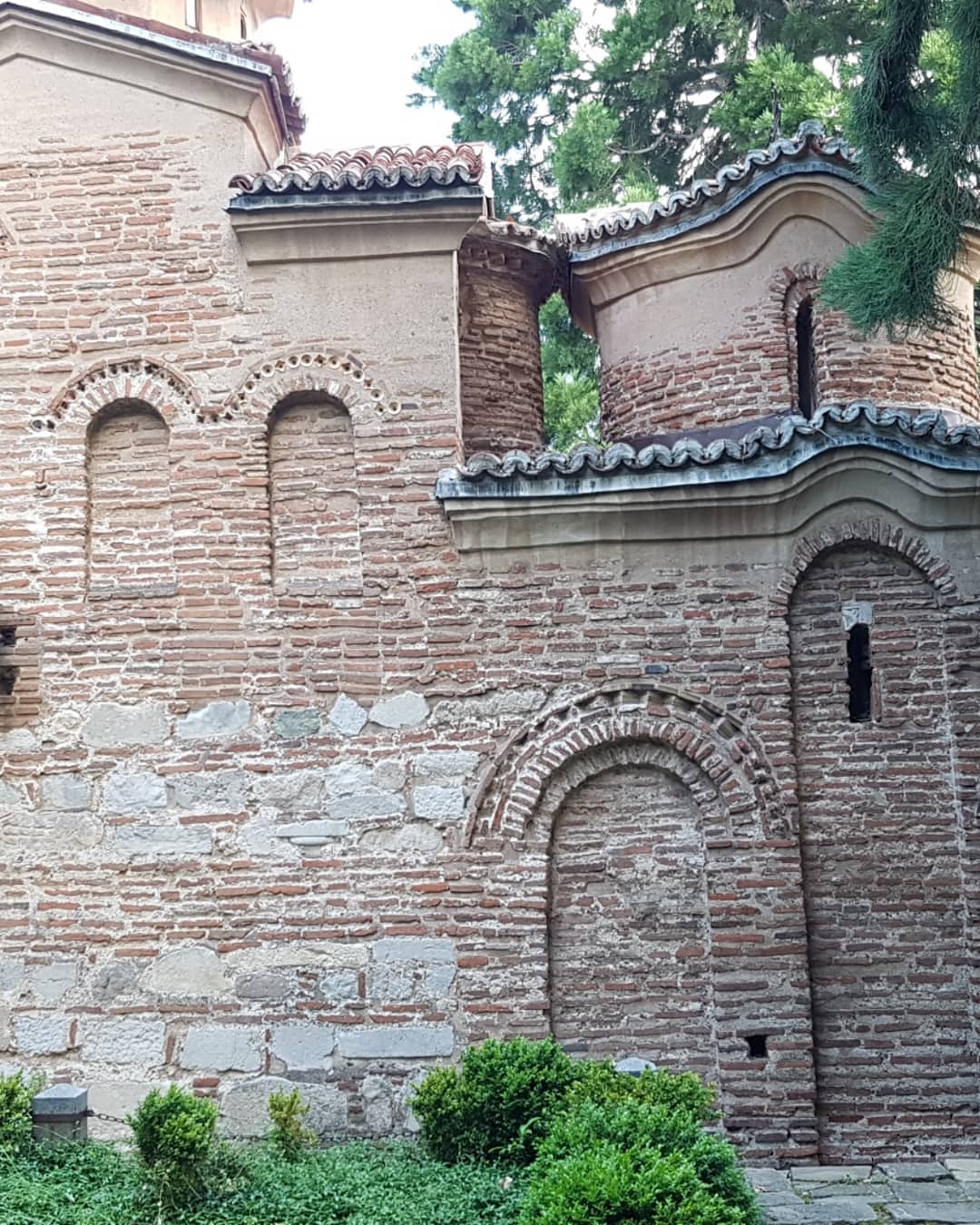
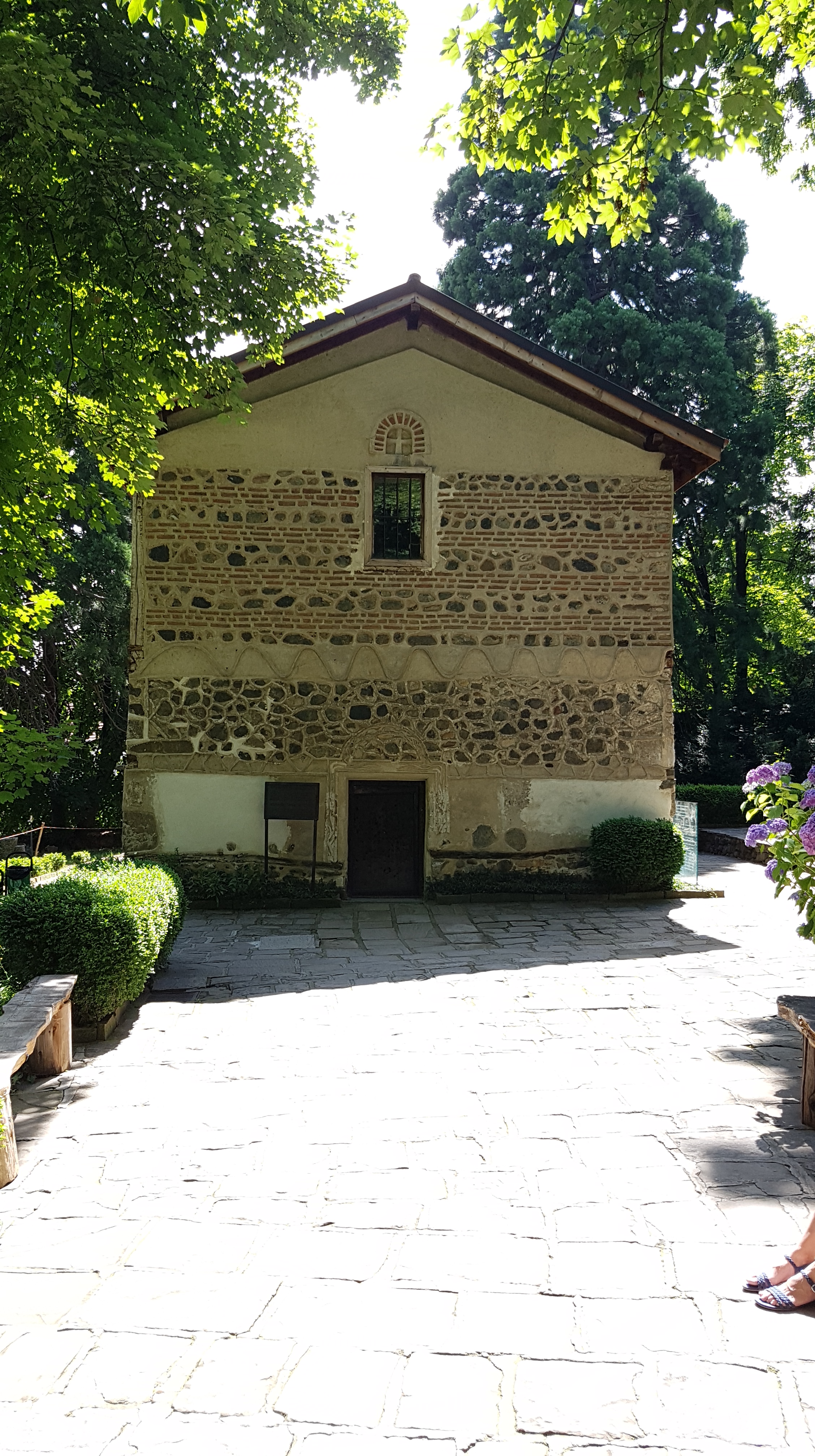
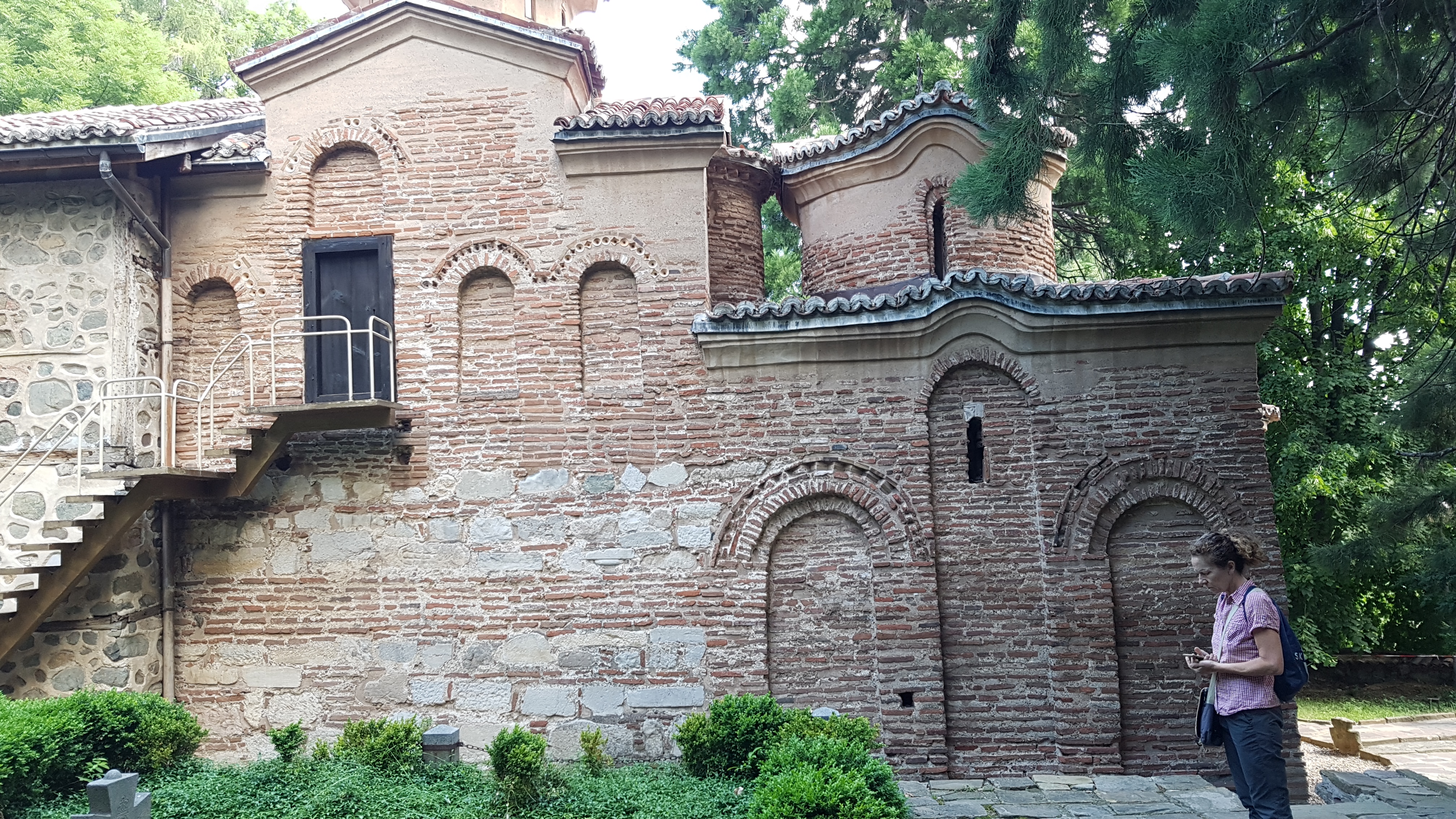
Boyana Church was built between the 11th and 13th centuries. It is a small church, the inside of which is covered in painted murals. They represent some of Bulgarias finiest works of art. The Church is listed as a UNESCO world heritage site. Entrance is strictly limited to 8 people at a time and you are allowed 10 minutes in the Church. Photography is not allowed so no blog pic folks. You know how you can sometimes get a bit ‘churched-out’ visiting one after another. Well, this visit was fascinating and helped by a very knowledgeable steward who took time to answer all my banal questions… highly recommended to visit.
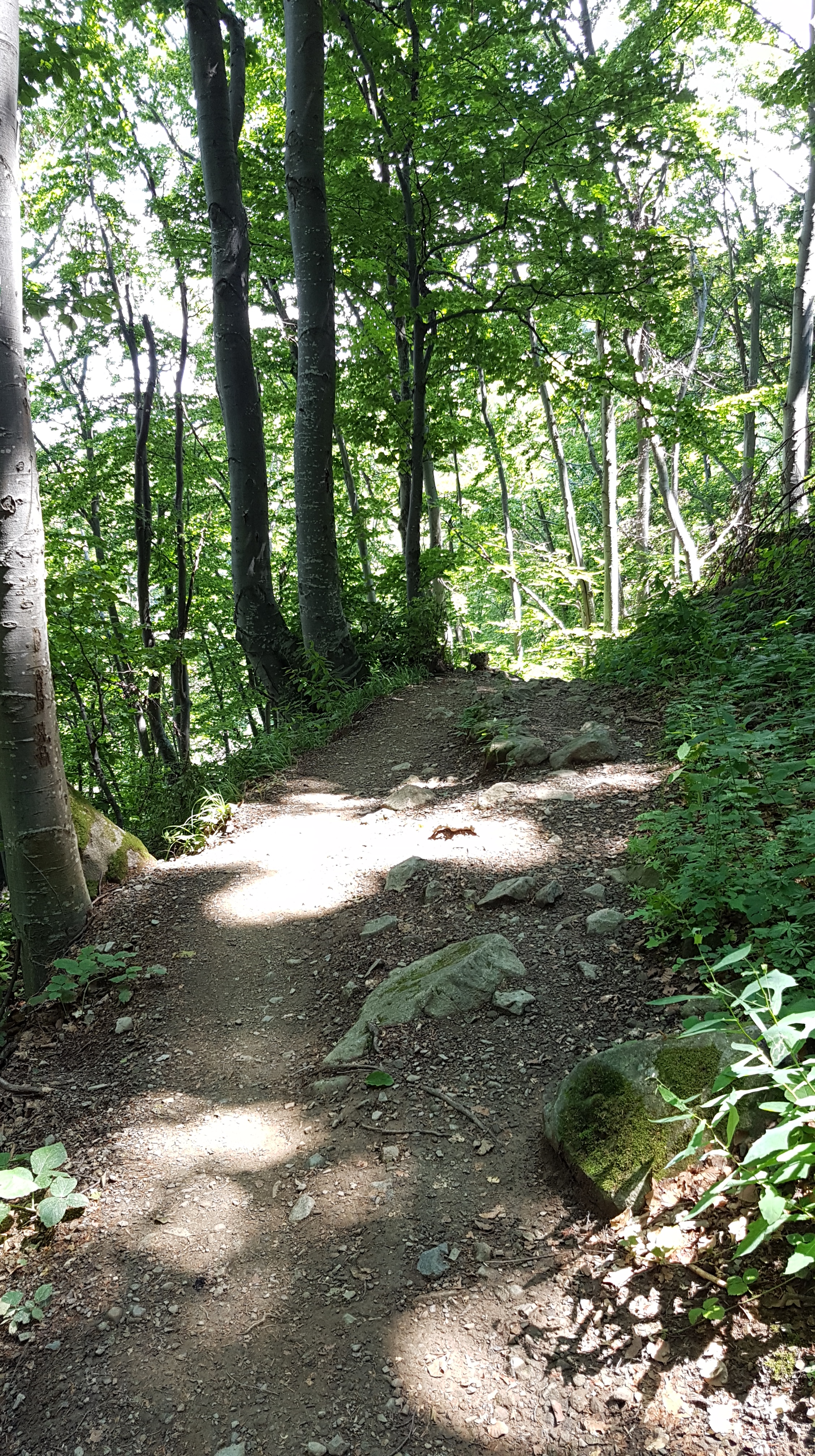
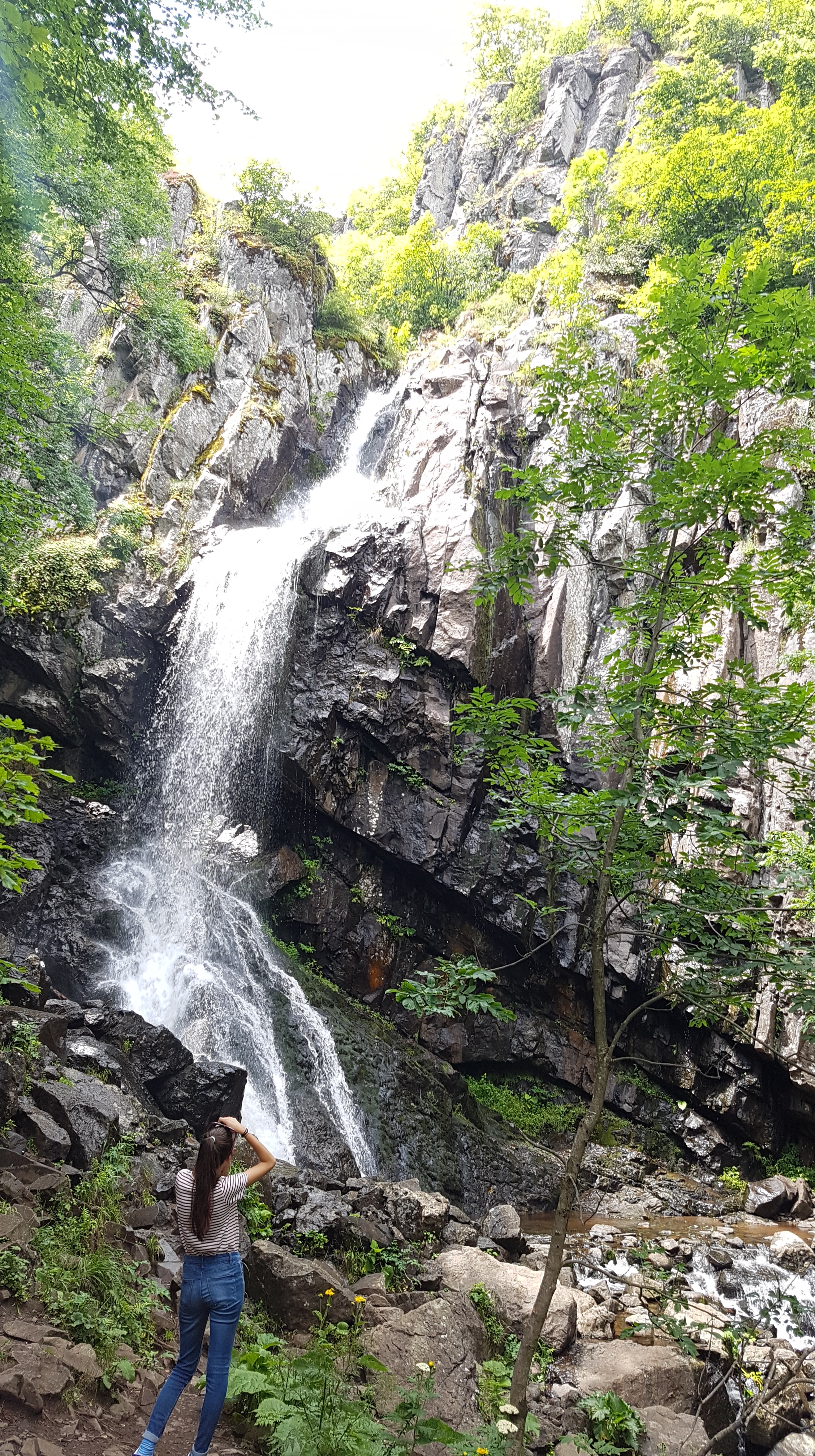
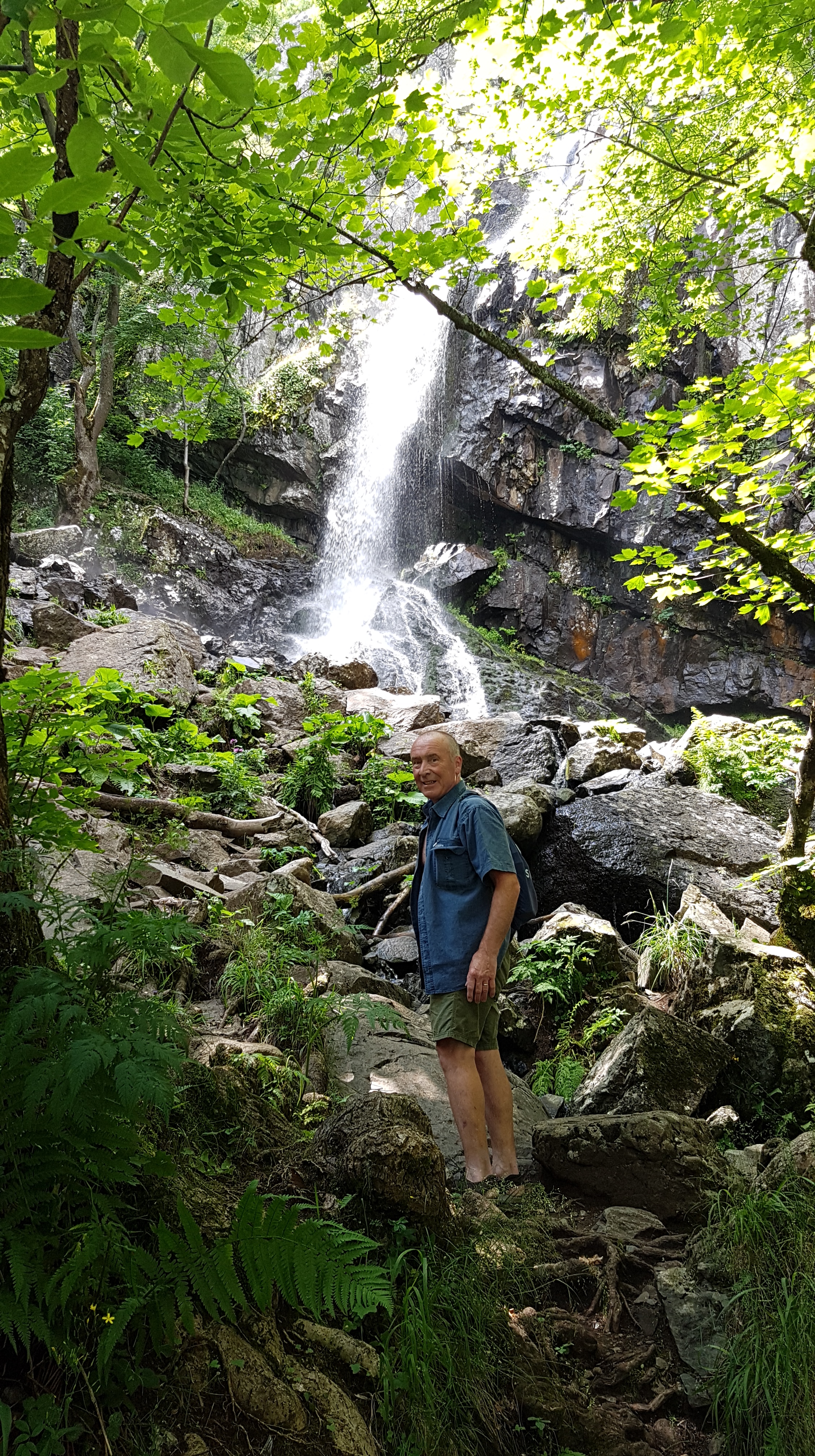
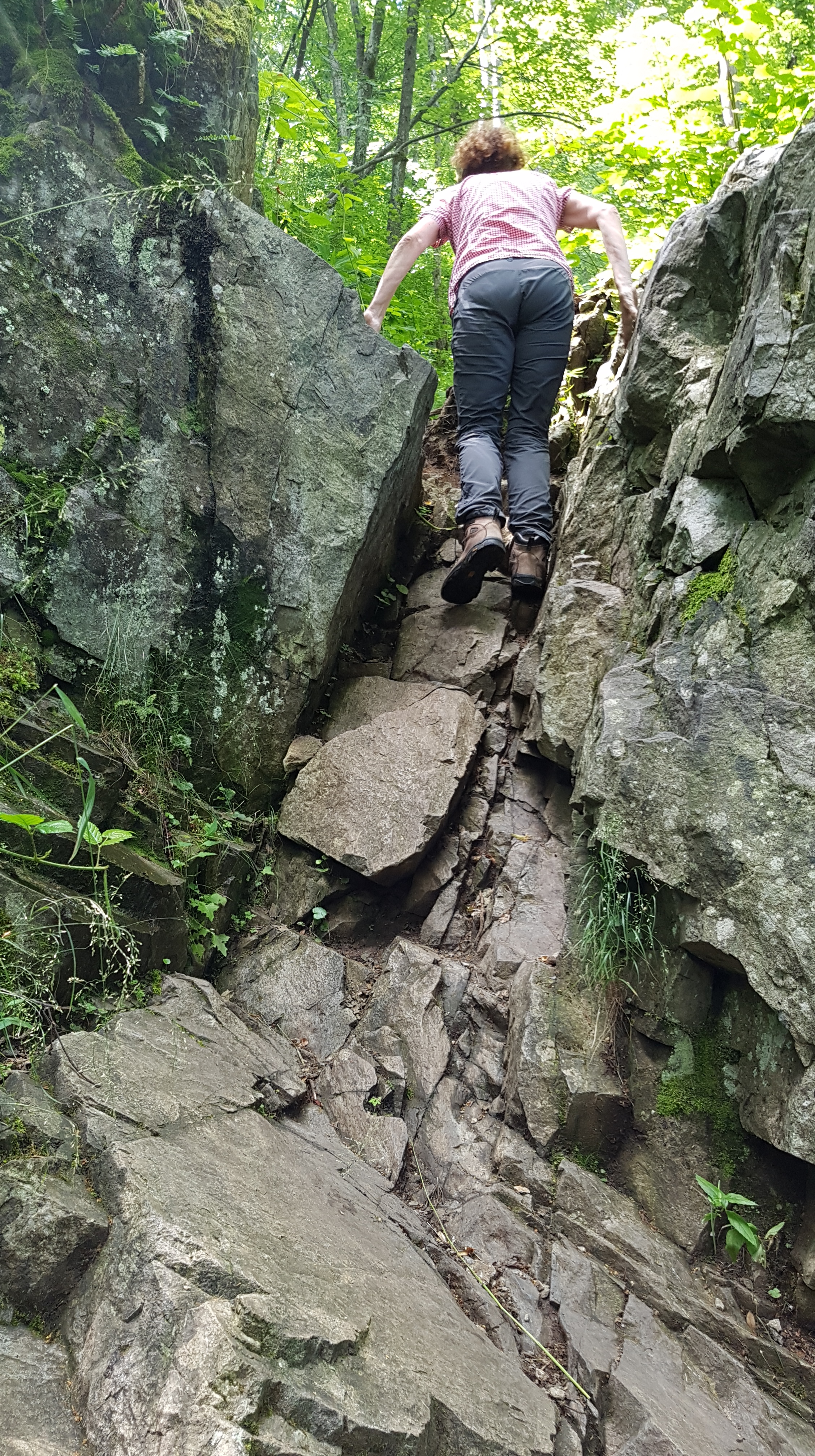
We went from the Church to the trail up to the waterfall. We were told it would be a two hour loop. To be fair, the guy said, “this is not a walk in the park”. He was right on that one. It took an hour to climb to the waterfall through thick forest. The path was well defined but it was very difficult. At times, we edged along narrow paths with sheer drops. We literally climbed 50% of the time. It was a most exhilarating experience.
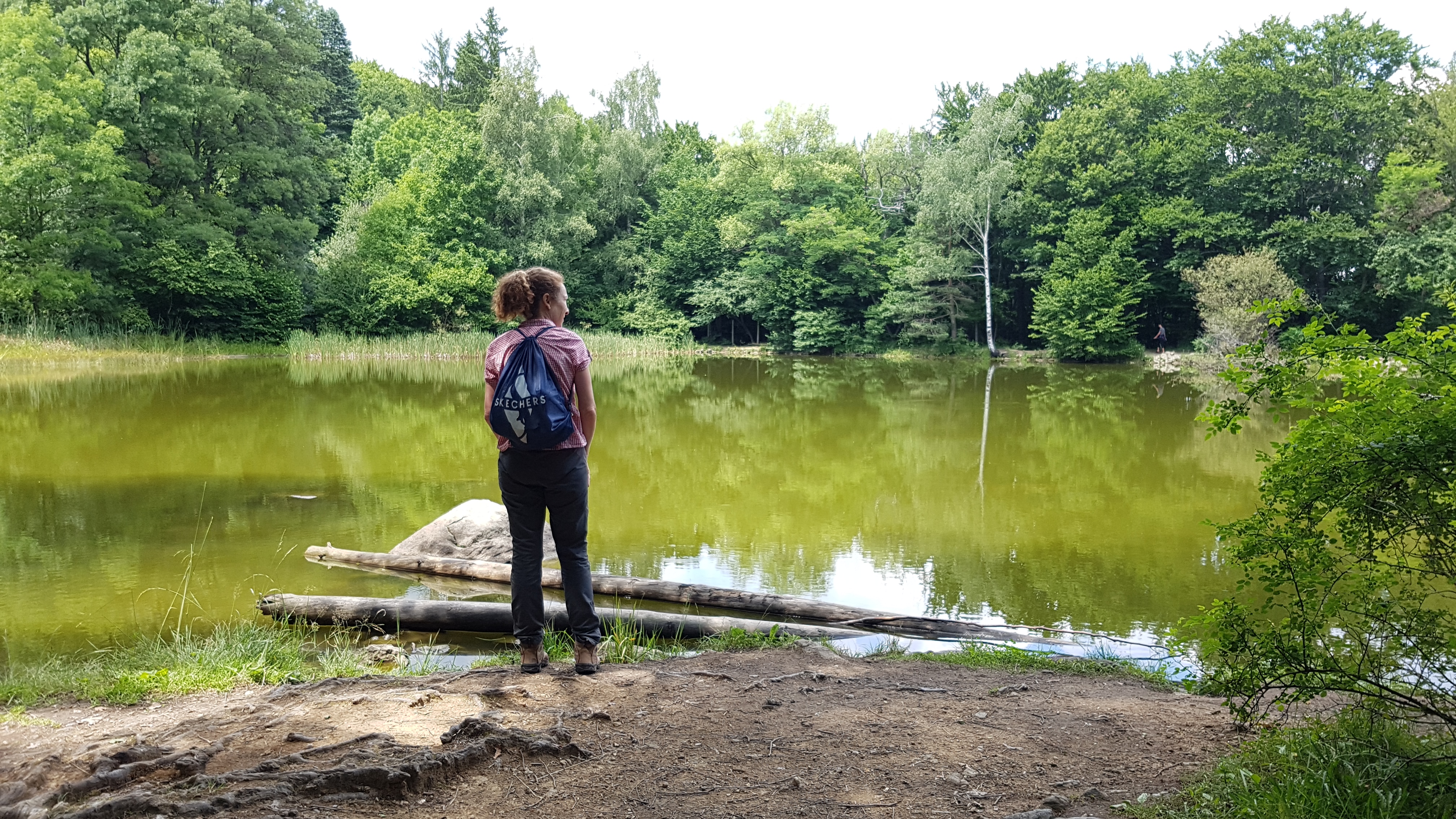
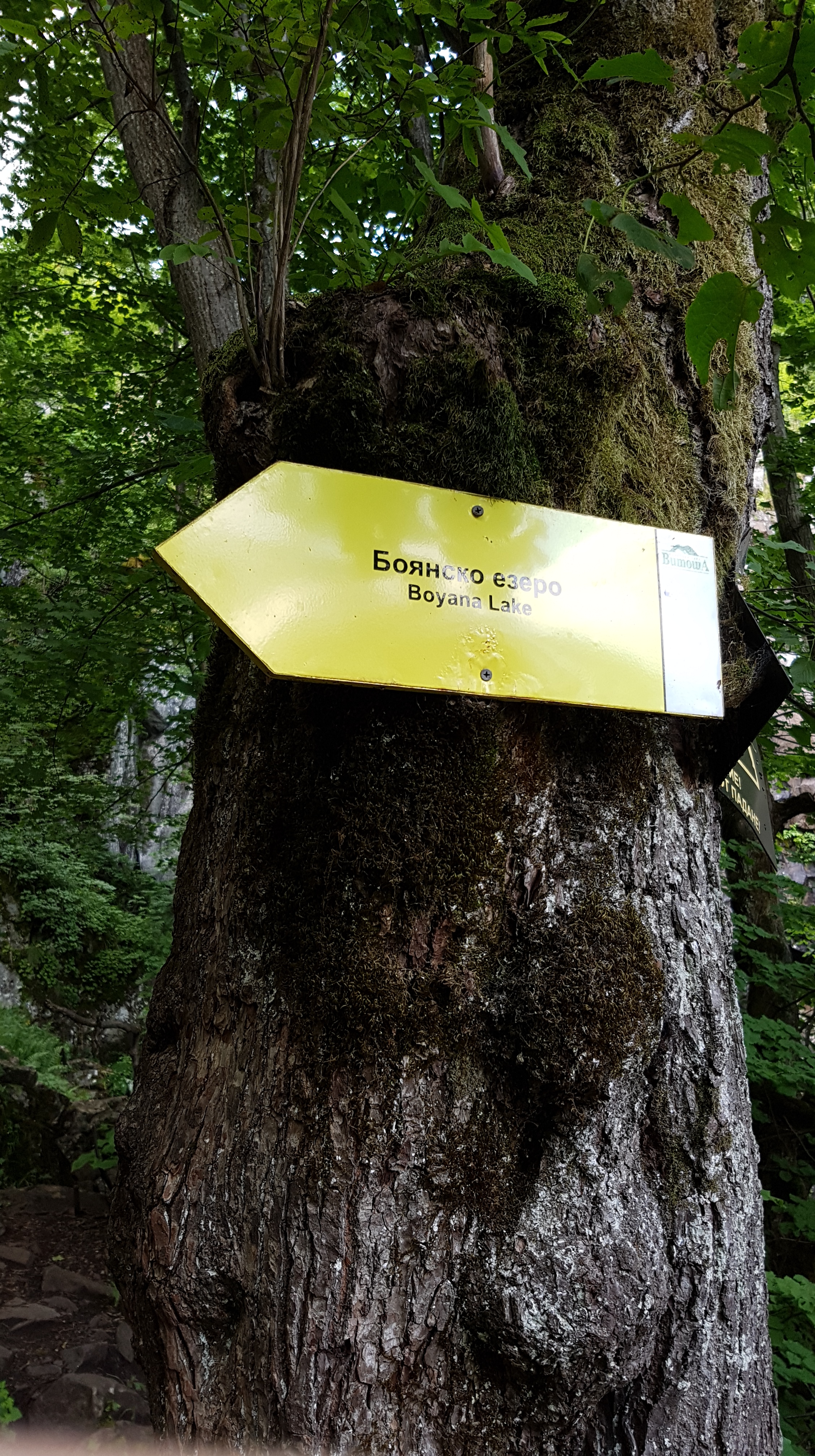
After the waterfall, we completed the circular route at a casual pace, stopping to rest at Boyana Lake, a secluded mountain lake. During our walk, we stopped at length to talk with, first, a student from Berlin who is studying in Sofia. A couple of Israeli kibutzniks, who invited us to their kibutz and two elderly ladies from Sofia. One of them works in the American Embassy to supplement her pension, which she complained is not enough for all the work she had done over 40 years. The other works in Brussels. I would have liked to talk with them all day.
We were on the mountain more than 3.5 hours. I loved every minute of it. The conditions were ideal, walking in a forest sheltered from the sun. Those who know me will have heard me say previously, “one of my favourite walks” well, this was my favourite. The memory will stay with me.
Tip of the day. If a Bulgarian ever tells you, “its just a tourist trail” ensure you pack crampons, ropes and ancillary mountain safety equipment.
We spent two days in Athens and to be candid could not wait to leave the city. The weather did not help. It was 35°C. After spending the past two months hiking in the mountains, landing in a heavily congested city of 3 million souls during a heat wave was a bit of a culture shock.
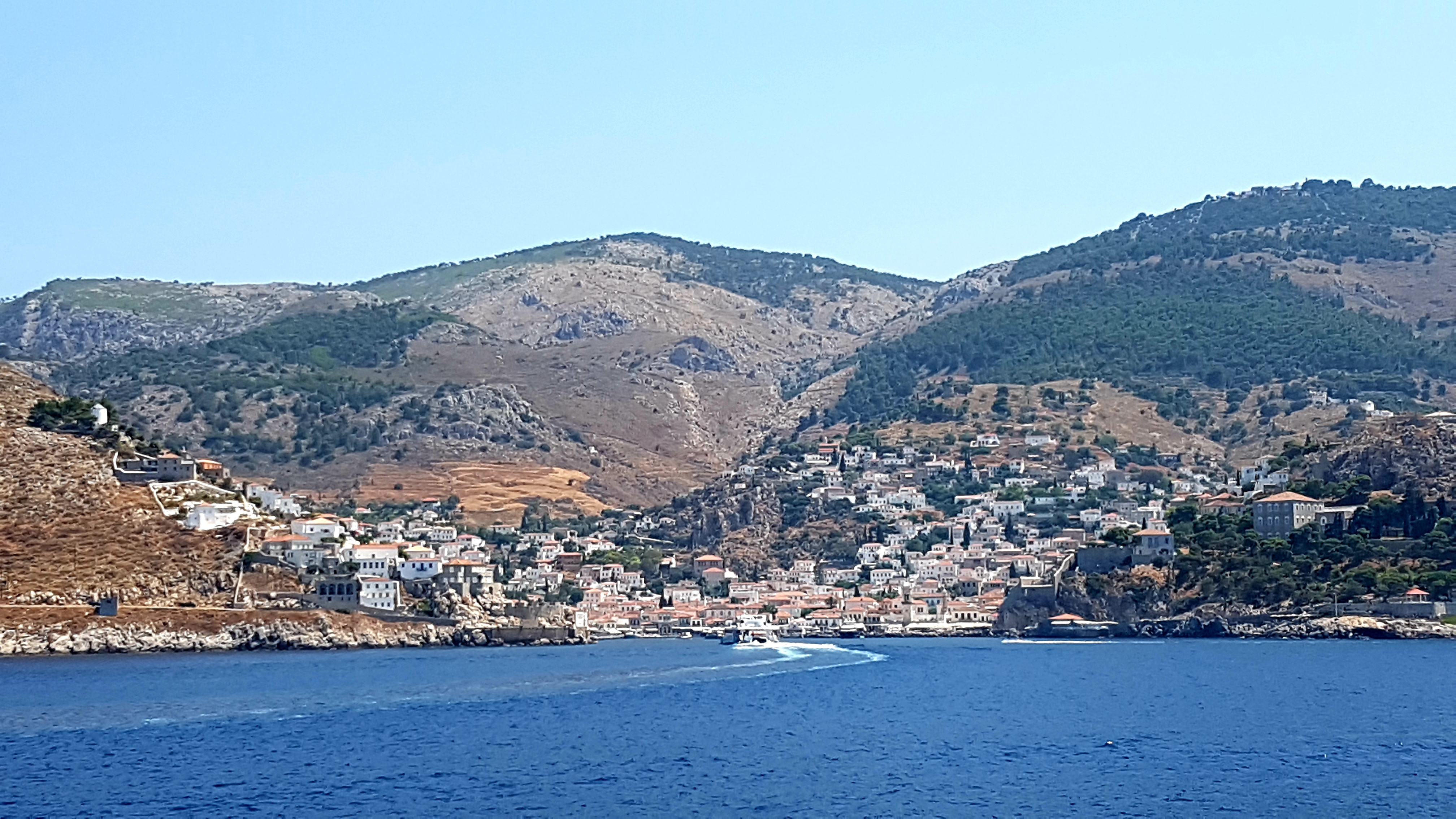
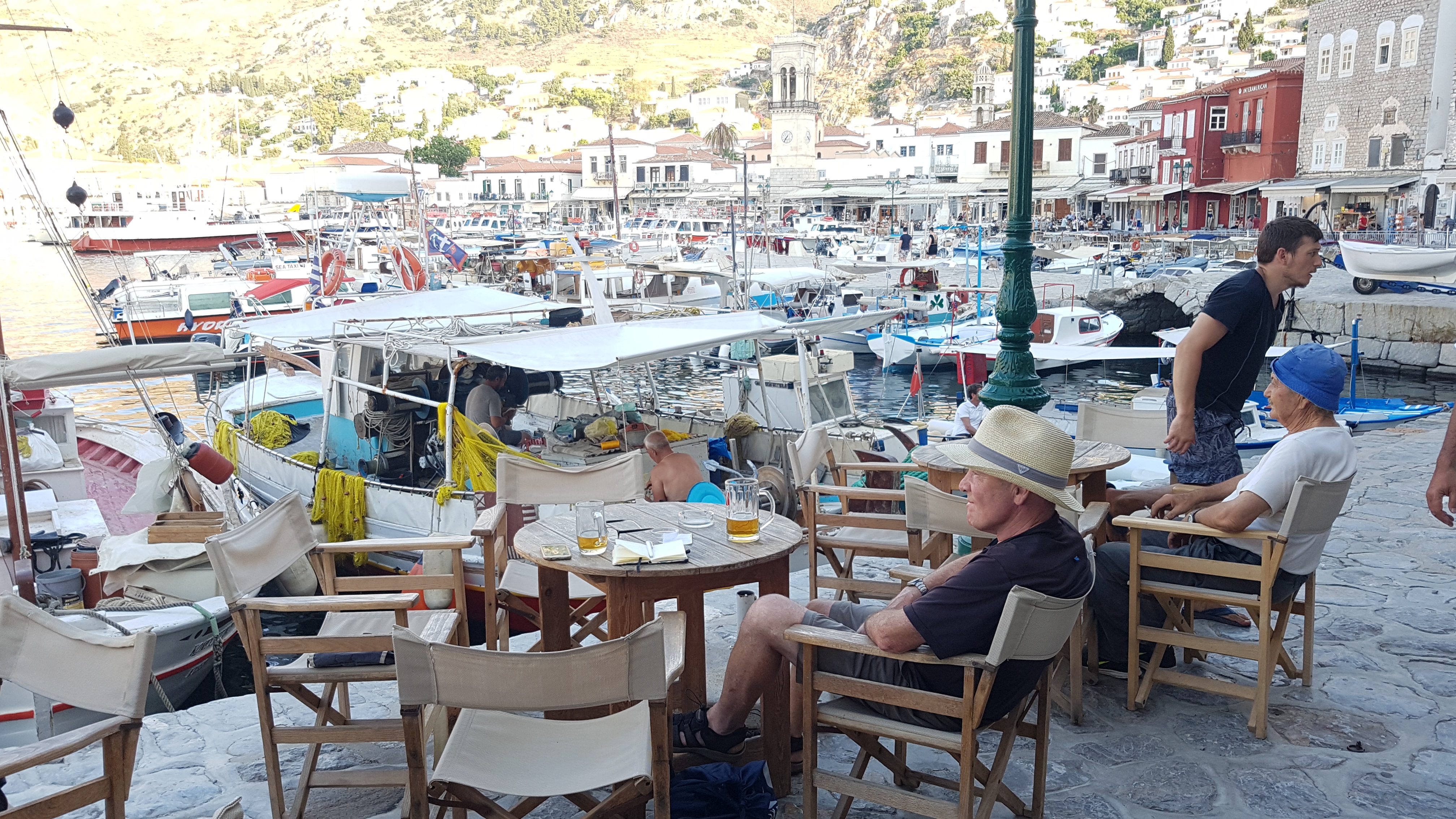
We decided to go to one of the Greek islands. Without any preference, we did a little research and agreed to take a ferry to Idra. It is a three hour ferry ride south of Athens. The main reason for our decision is that motorised transport is banned on Idra. The was appealing after our experience in Athens.
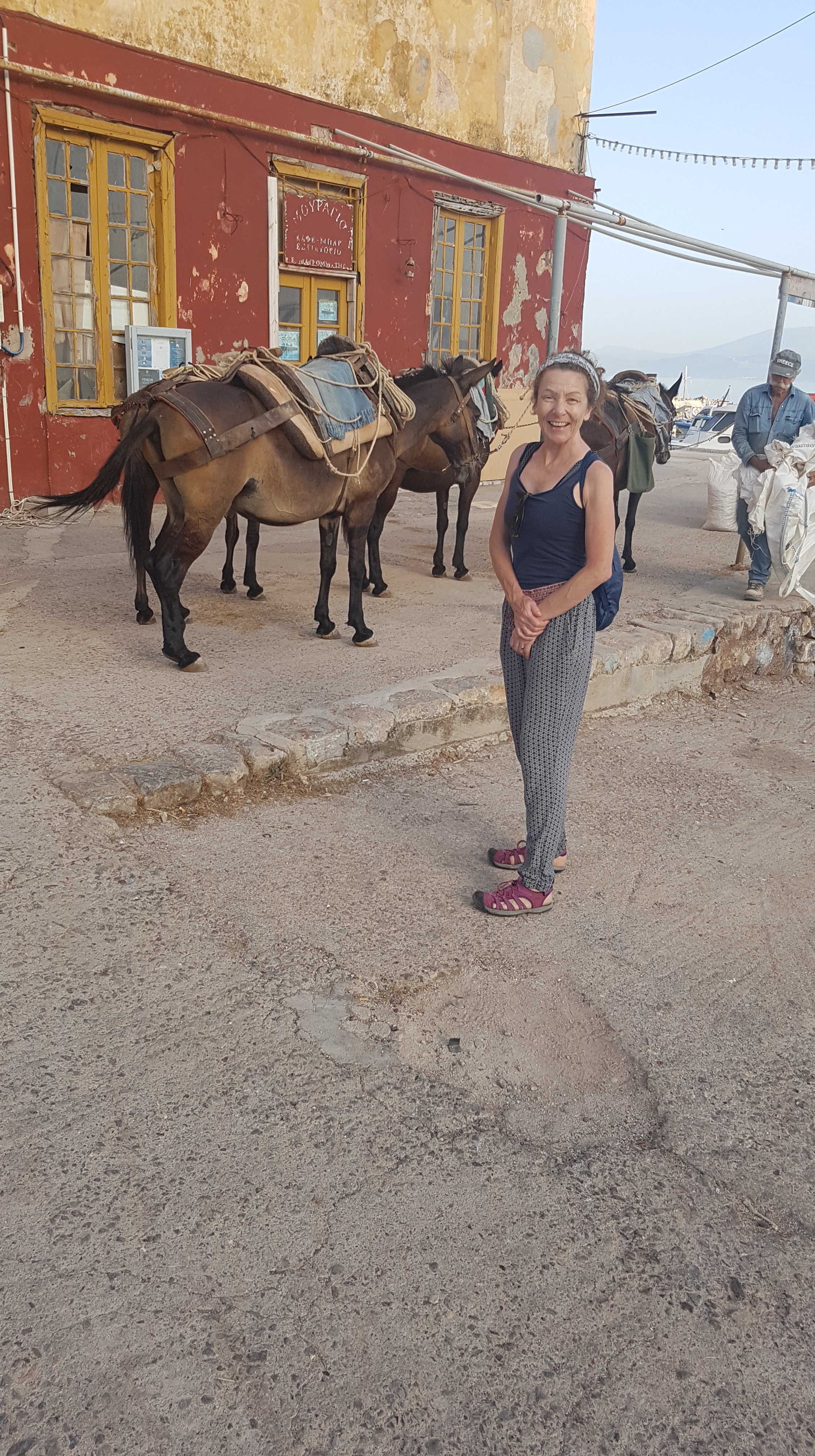
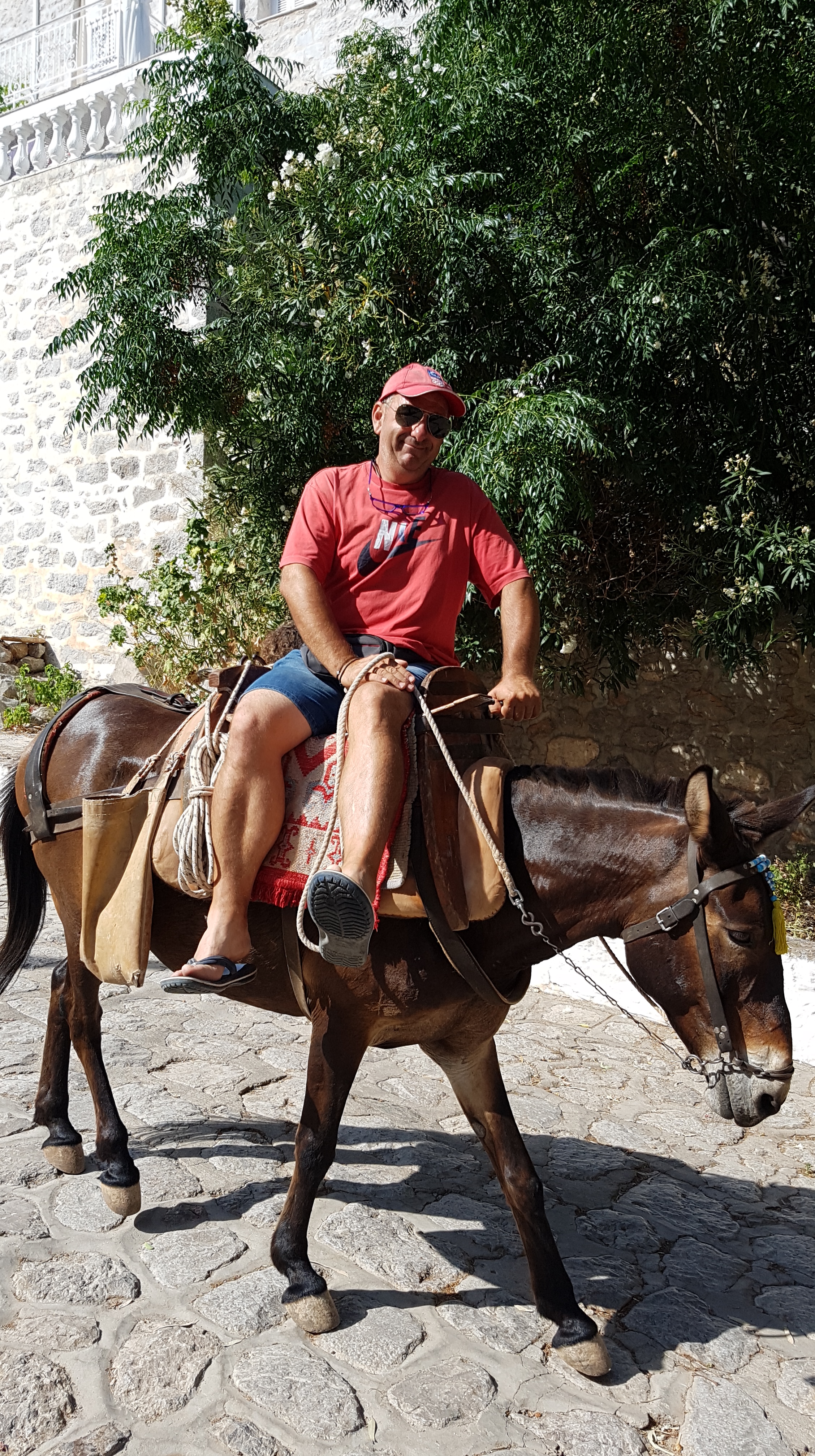
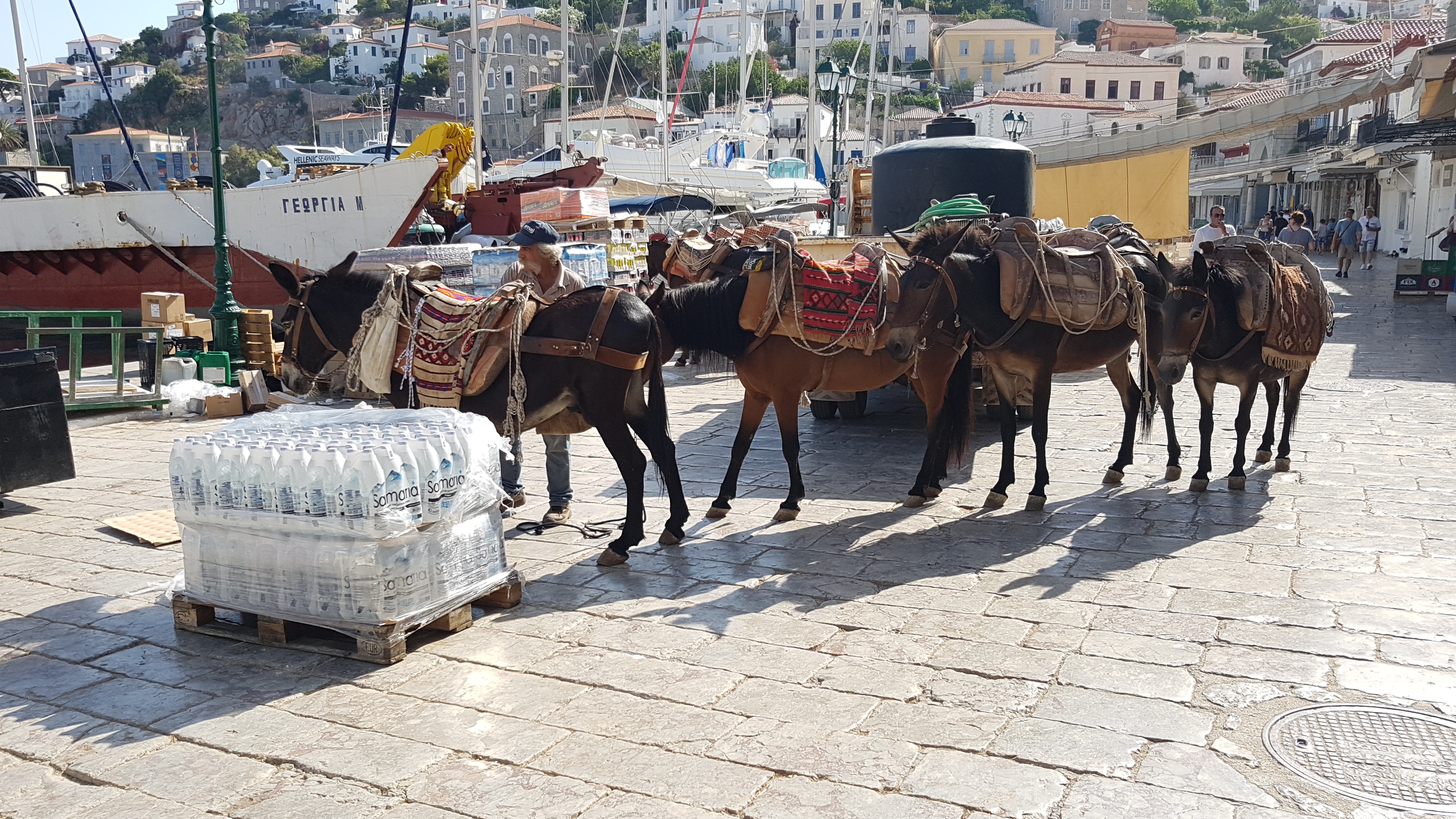
Idra has been described as “paradise. The resident pop. is 2,000. Wikipedia informed me that there are 1,200 cats on the island! It is an island for the well-heeled with many people arriving in private yachts. The only mode of transport is shanks’ pony. Everything is imported on to the island and moved around by mules this gives it a real charm.
We are staying in an airbnb. In fact, we are the first guests and that provided us with a 20% discount. It has just been fully and I mean fully refurbished. Its a 2 bed apartment. So, had we organised ourselves we could have offered two friends FOC accommodation for a week. Next time perhaps.
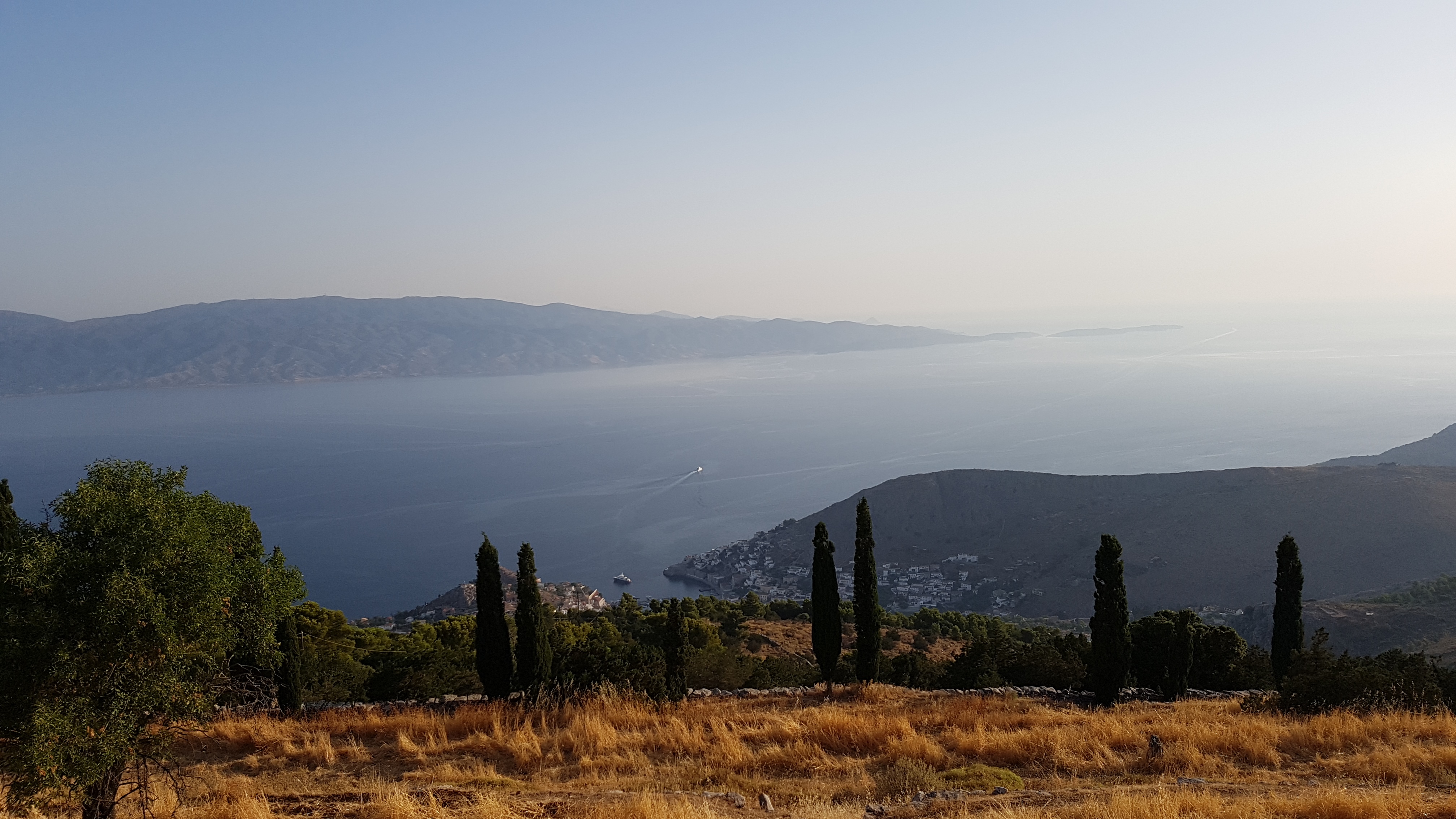
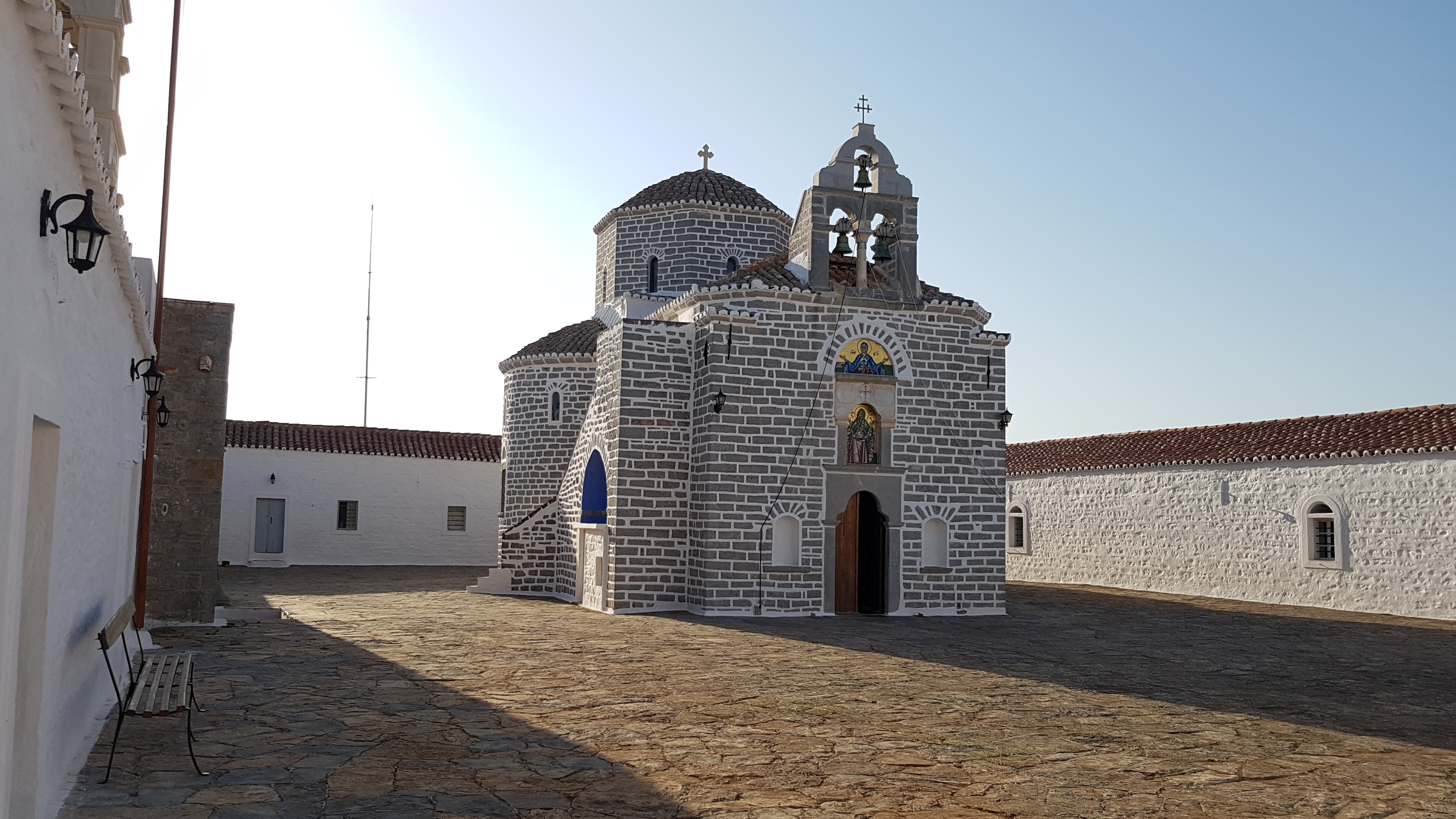
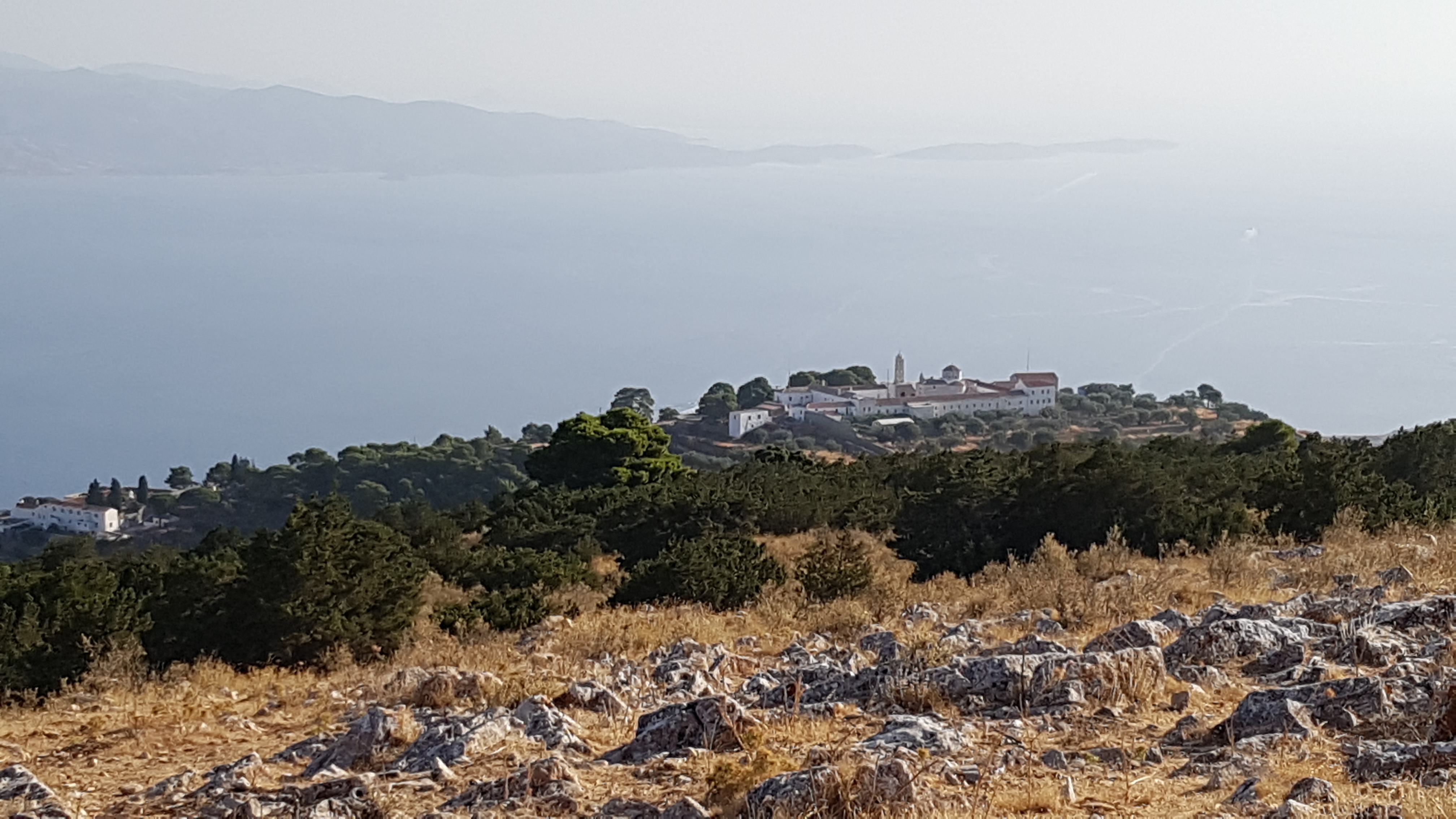
We hiked up to the Prophet Elias Monestery. The Greek Orthodox monks were filing out of mass from the beautiful chapel as we arrived. There is a great view down to Port Idra from the Monastery. See below.
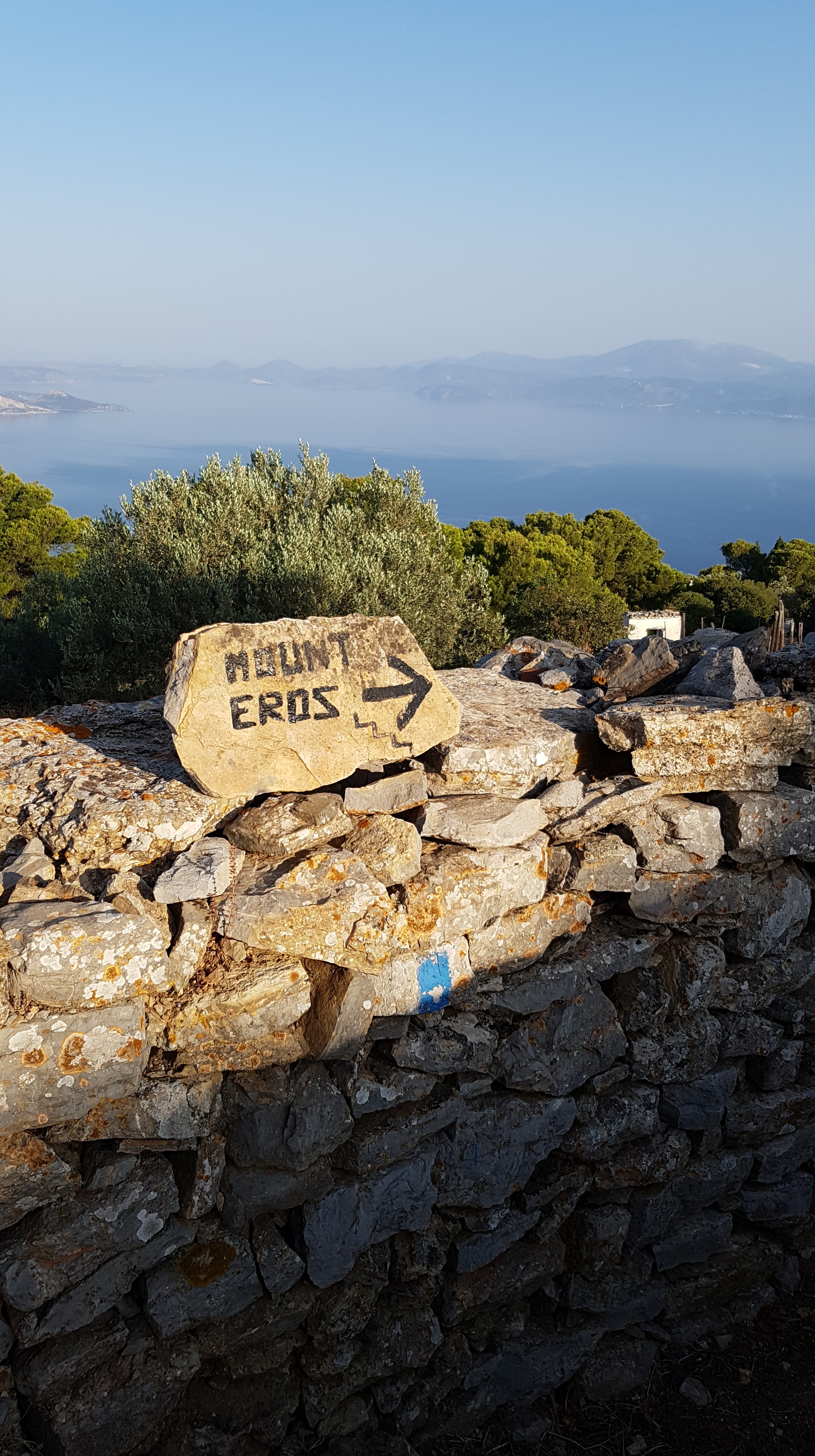
This morning I decided to hike up to Mount Eros, the highest point on the island and about 30 minutes further on from the Monastery. Sheila decided not to join me, so, i set out by myself. It was a delightful 2 hour hike in the early morning. I started at 6.30am after day break and about 20 minutes before the sun rose above the mountains. When i got to the summit, i was rewarded by a spectacular 360° view of the island. I could see the mainland and a number of other islands and rocky outcrops. The memory of the climb and the views will stay with me.
PS On the way down the mountain, I saw a man leading a mule with two fully grown goats in saddlebags being carried by the mule. Their heads and shoulders were poking out. A strange sight and one, I unfortunately, did not take a photo of.
I had not heard of the Peneda-Gerês National Park before we went there. So, I surfed the web to obtain what information I could. We were interested in hiking so thats principally what I looked for. There is only a limited amount of information on the web. And that is contradictory. Everything indicated that a car is a necessitity as public transport (read buses) is very limited.
Without a vehicle we went with low expectations. How wrong we were. We were there for 5 days (plus one each side travelling to and from) and hiked on four days. We chose to take a day off as hiking three days in succesion in high temperatures was tough.
The tourist information centre in Gerês was a great help. The staff gave us leaflets showing all the practical hiking trail options. They also, advised which buses to take to where and gave us the timetables.
Two of the trails we accessed directly from our hotel and on the other two days we took buses. The hike on the last day required us to take two buses each way. It sounded like it would be a bit of a hassle. In fact, the bus timetable is synchronised making the changes seamless. I say that as somone who lives in rural Essex where private bus companies run services for a profit paying no mind to synchronizing timetables.
The hiking was tough. That is the opinion of a pair who have just recently hiked nearly one thousand kilometres on the Camino de Santiago.
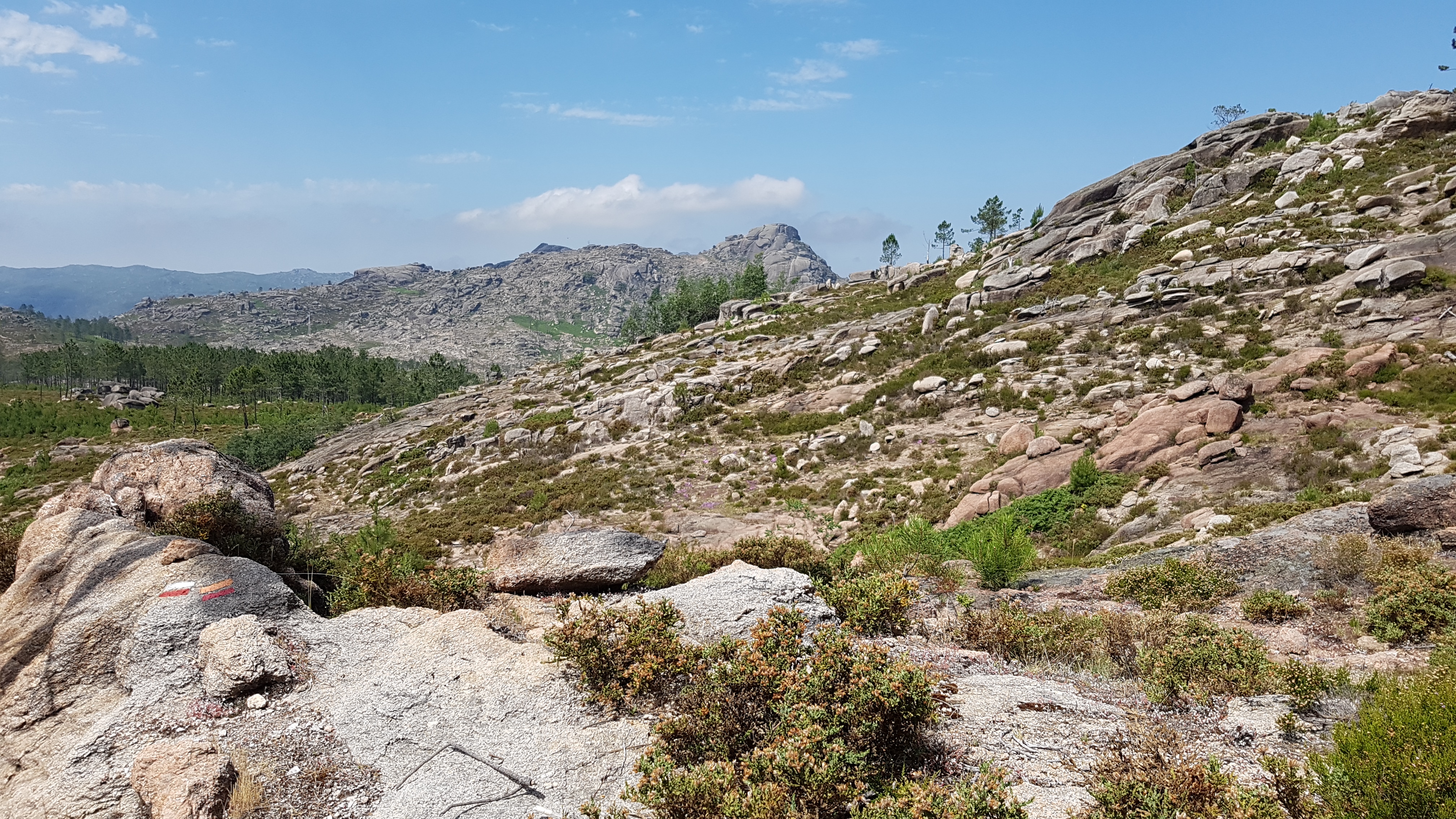
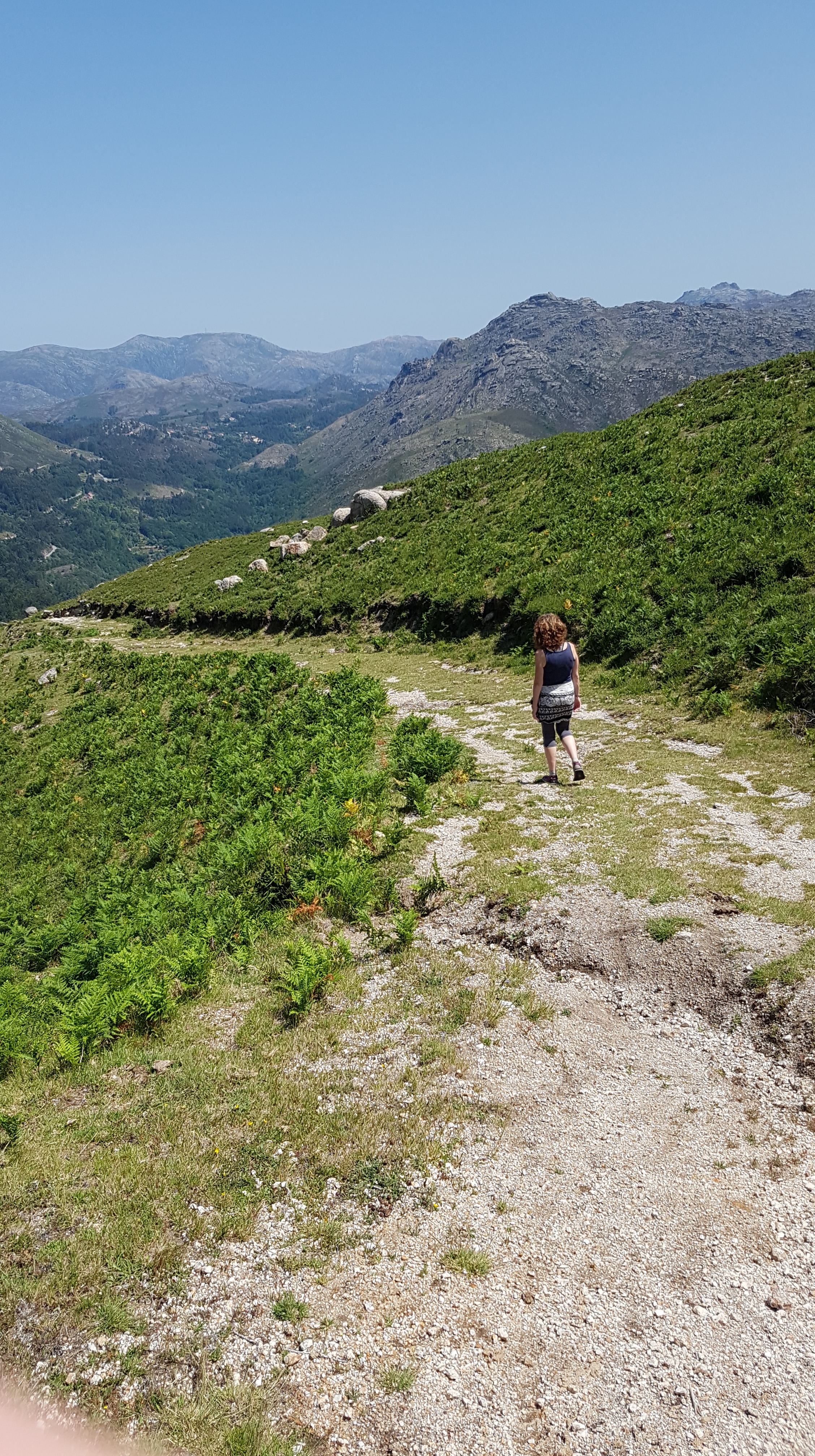
Tough hiking for a number of reasons. The trails are only just adequately marked. We went ‘off-piste’ on multiple occasions. The maps on the leaflets could be described as ‘pictorial sketches’ and are not in any circumstance to be relied upon. But the thing that made it hard was the degree of difficulty of the trails. You need a level of fitness and agility to tackle the trails in Gerês. There were parts of all the trails we walked that were very steep going up and down. The hike on the last day involved proper rock climbing for a large part of it. That took its toll on an old boy like me. And finally, there is ones’ interpretation of what constitutes a clear footpath. Many of the paths are inadequately maintained.
The truth is I loved the hiking in Gerês, its just that it was tougher than I anticipated. I would highly recommend Gerês for a hiking holiday.
We left Gerês and returned to Porto to take our flight to Athens. We treated ourselves on our one night stop over, booking in to the Sandeman Hostel. It was voted the 7th best hostel in the world and I can see why. All I would say is I would like to stay at the six that beat it.
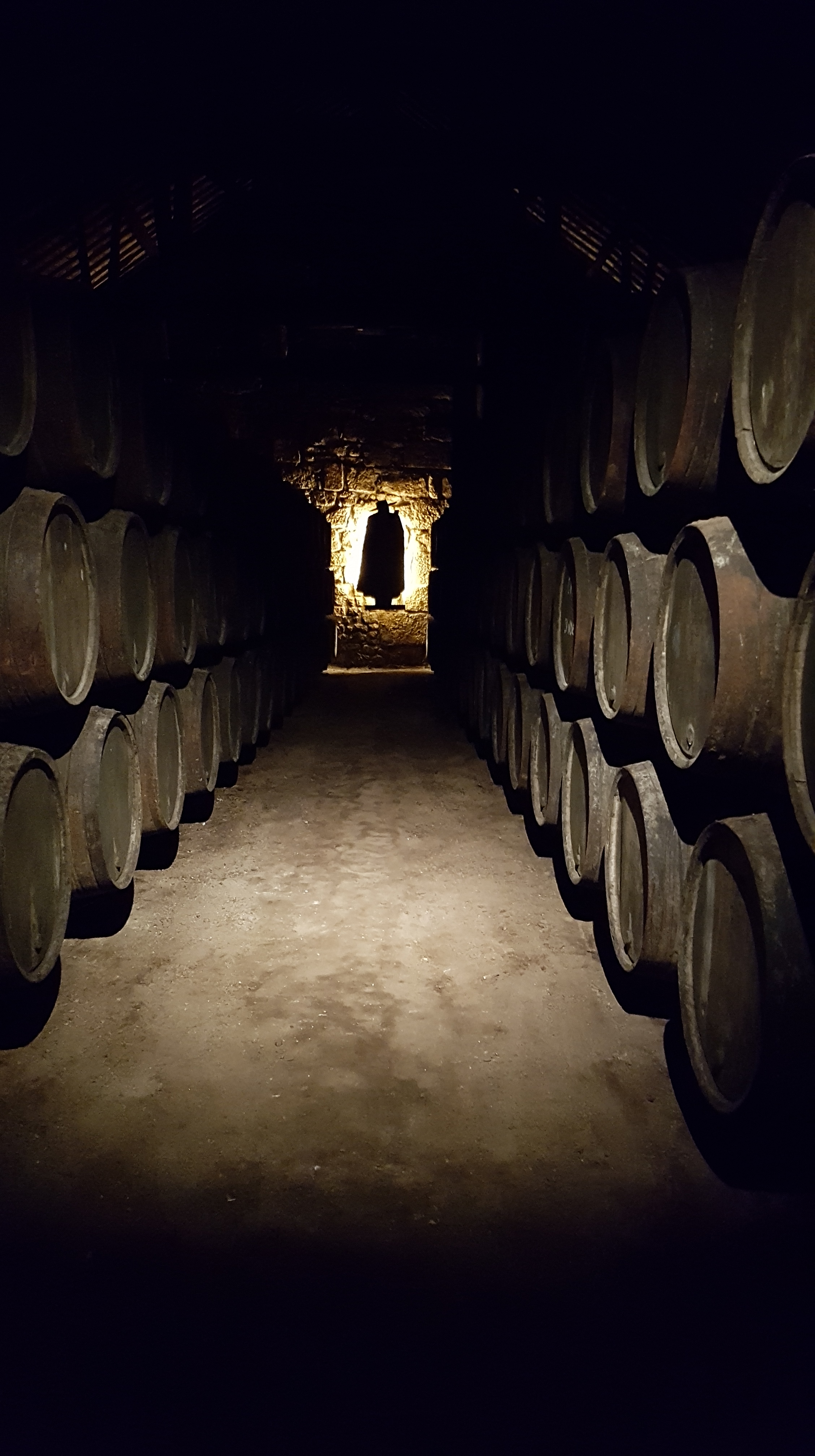
While we were at tbe Sandeman, Sheila treated me to a Sandeman port tasting tour. The cellars where they age the port are the originals and are more than two hundred years old. The effort and detail Sandeman goes to, to make high quality port is staggering. I was fascinated and found the history of the company very interesting. Check it out on You Tube.
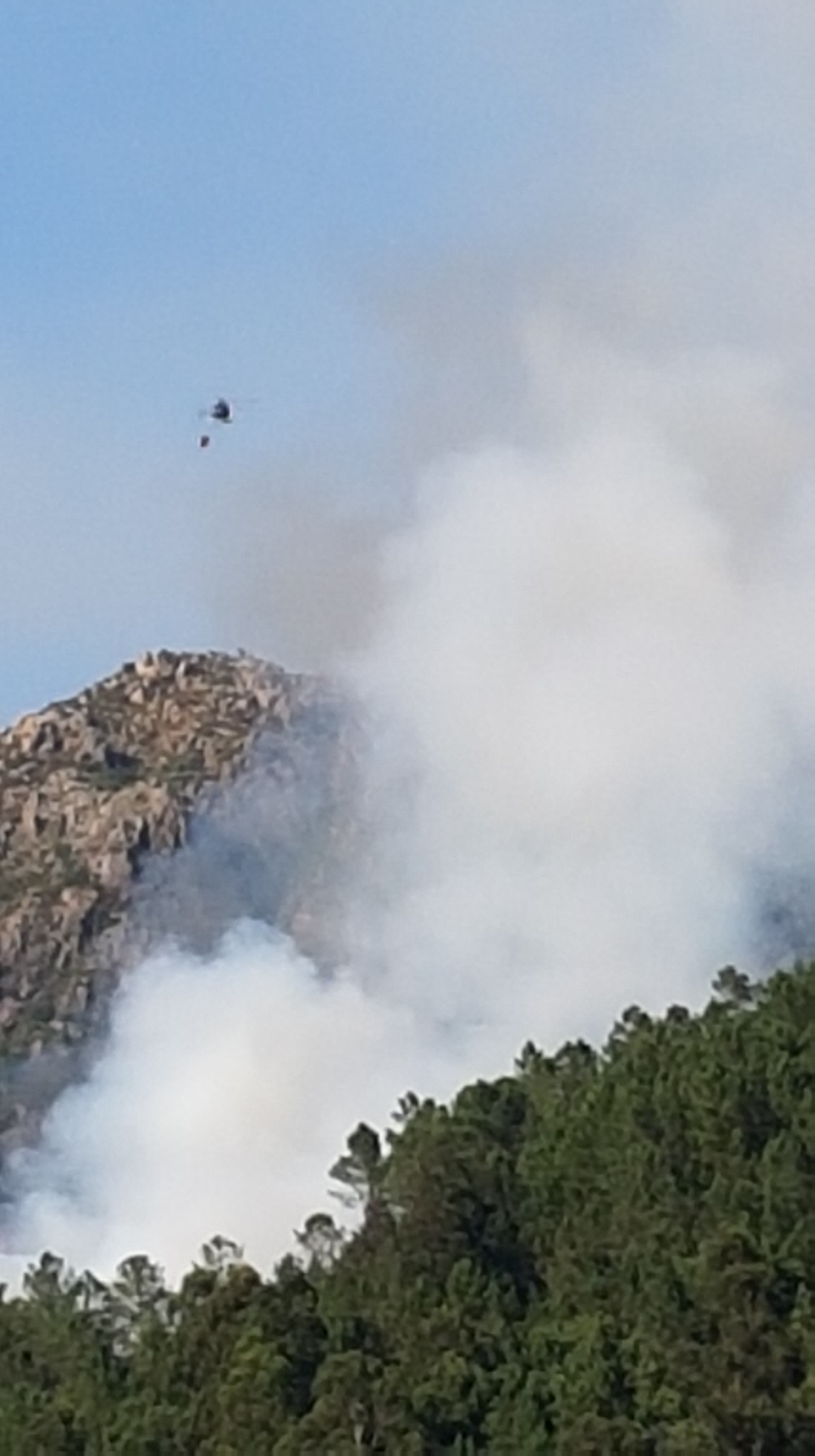
Forest fire above Geres. Photo taken from our hotel
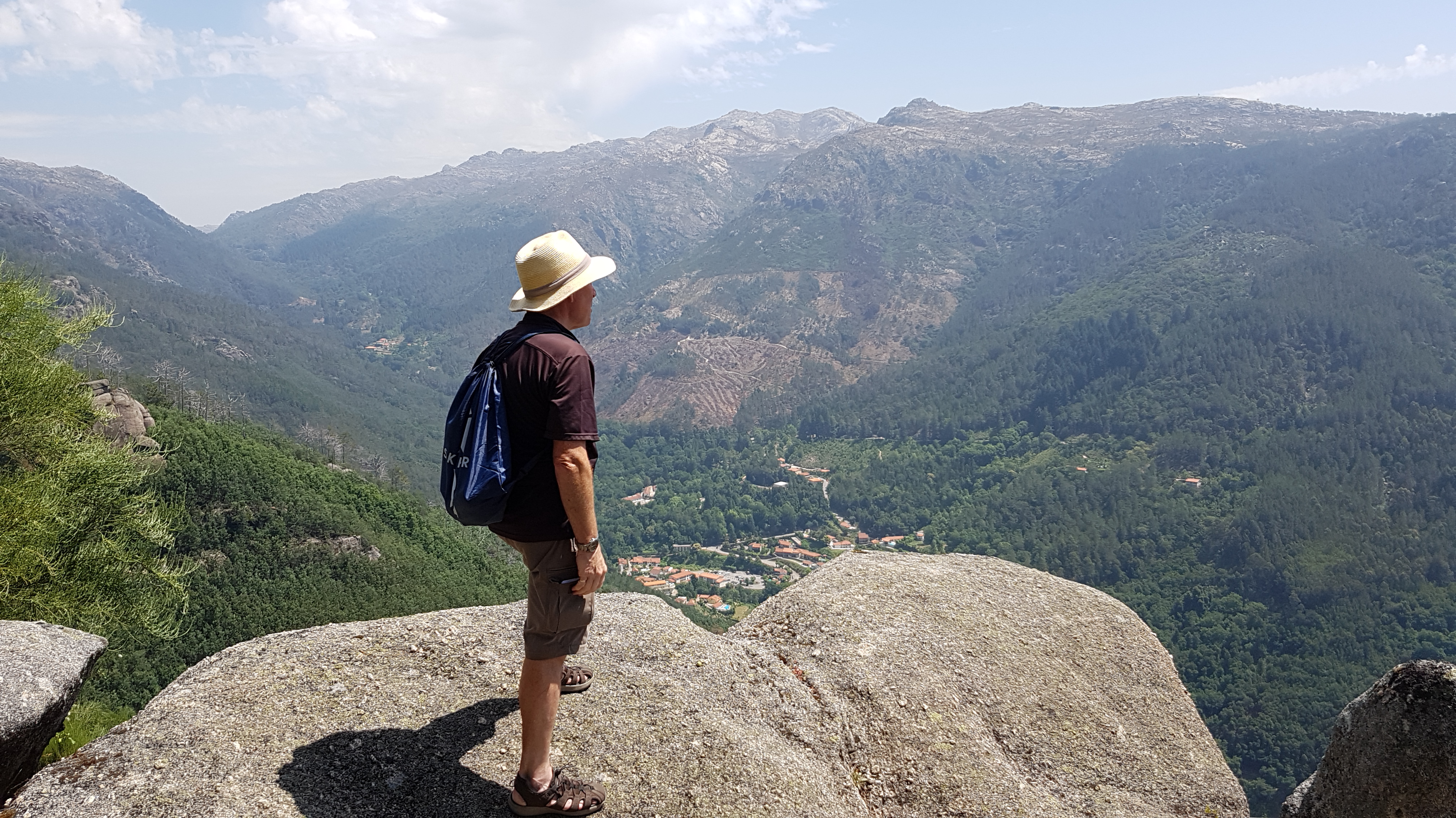
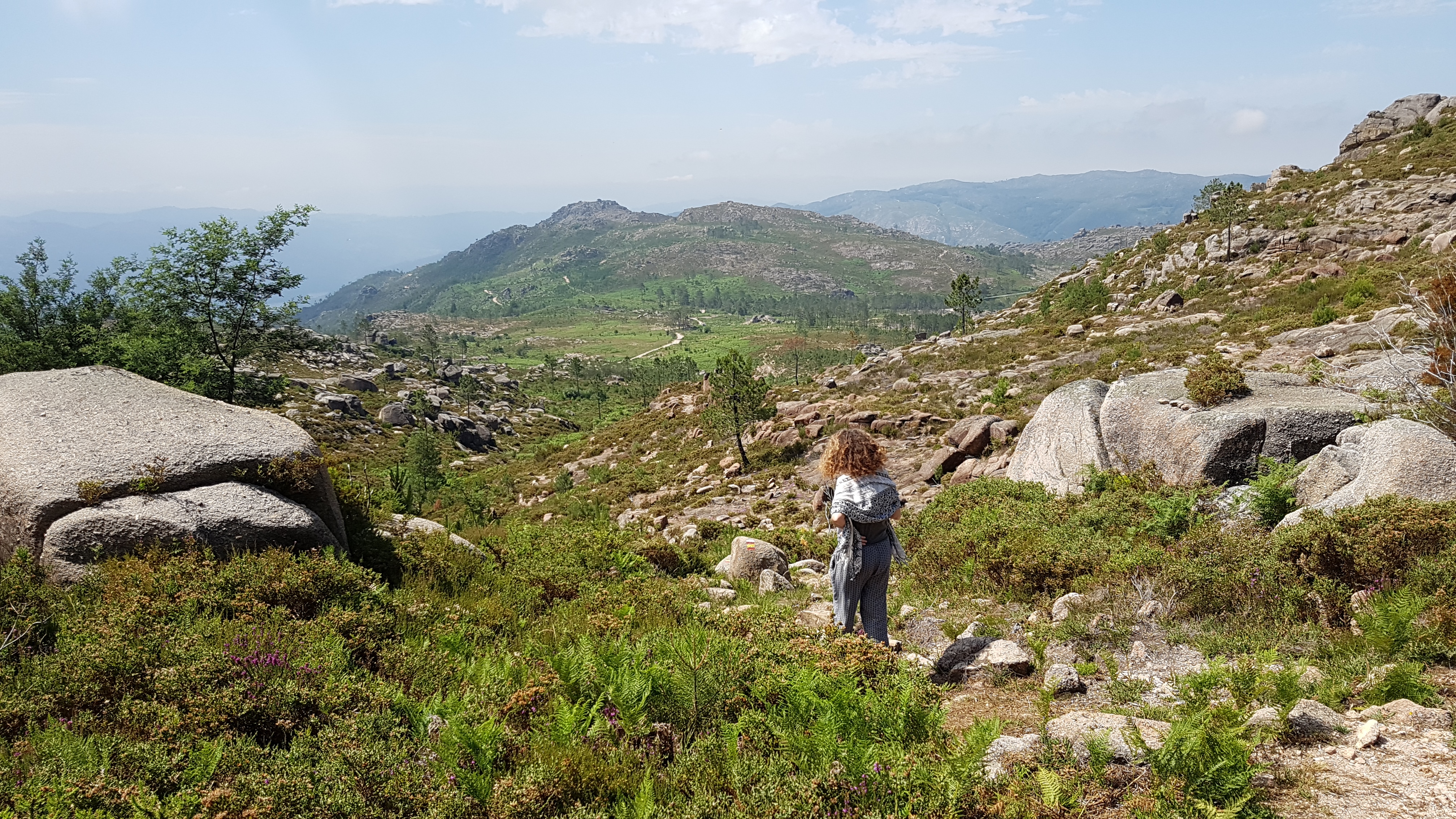
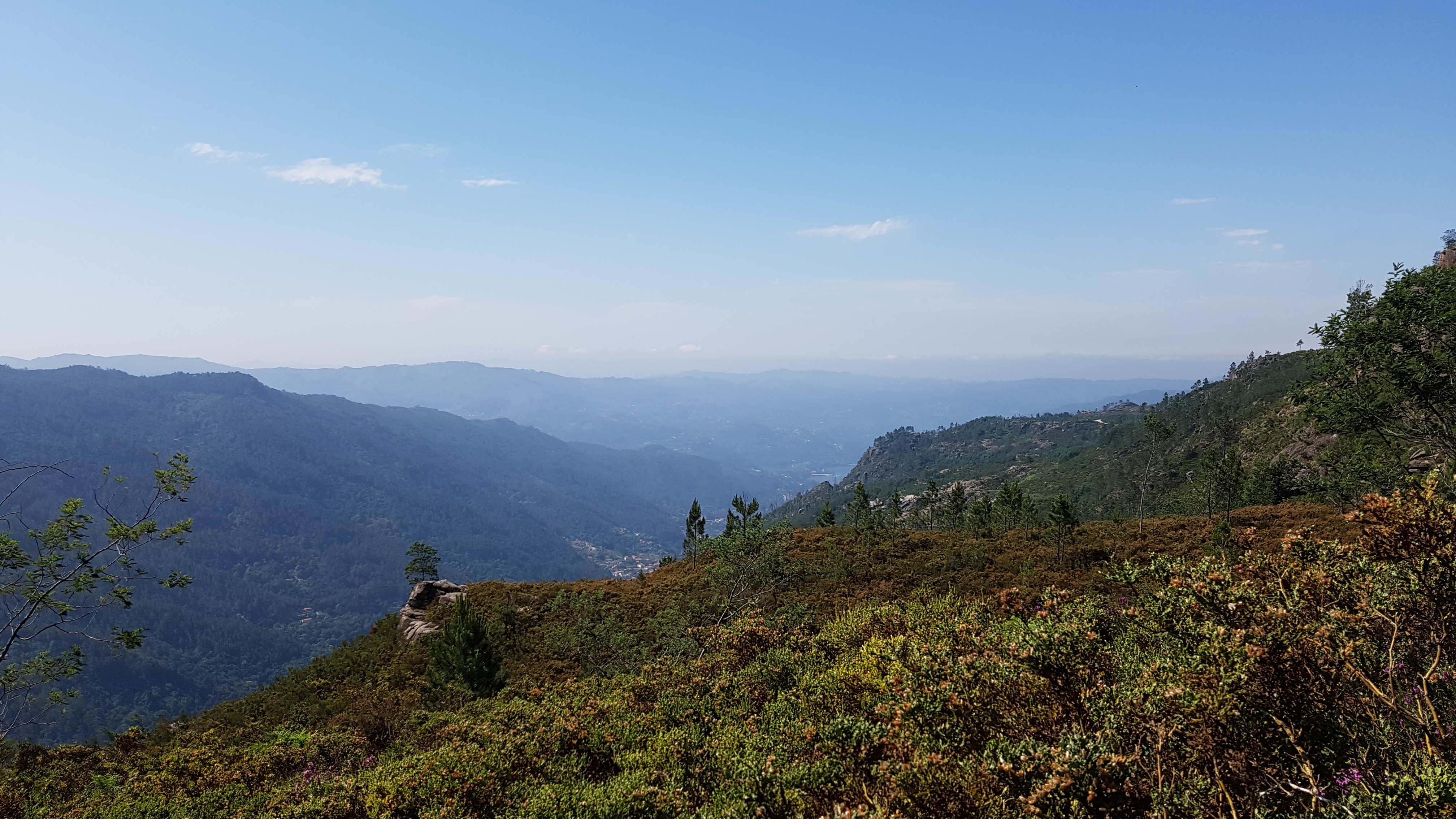
The Peneda Gerês National Park has breathtaking scenery. Pretty villages, pine forests and rugged mountains. It’s been a joy and a tonic to spend some time here.
There was some excitement on Friday evening. Sheila and I were having supper on the terrace of our hotel. I looked up at mountain in front of me and saw smoke in the forest. Within minutes there was a lot more. Sheila said it must be a forest fire. I said they sometimes burn areas of forest in a managed way. As I spoke, two helicopters flew overhead carrying hoppers of water to extinguish the fire.
We sat for an hour or so and watched the whole thing play-out in front of us. At first, the fire appeared to be getting out of hand. We could see the flames from a distance of, I estimate of 1.5 kms. The two helicopters continuously refilled and returned every two minutes. Luckily, the reservoir is only a few kms down the road. I watched in awe as the pilots dove down towards the centre of the fire to release their payloads. The extinguishing effect of the water was clearly visible from where we sat.
Eventually, the fire was brought under control and the helicopters were able to stand-down. They deserved a cold beer for their efforts. The next morning as Sheila and I set off on our hike, the smell of an extinguished wood fire was clearly noticeable.
We’ve now hiked three days in succession in tough hot conditions and have decided to have a day off and sit by the pool. I’ll provide a little more detail next time.
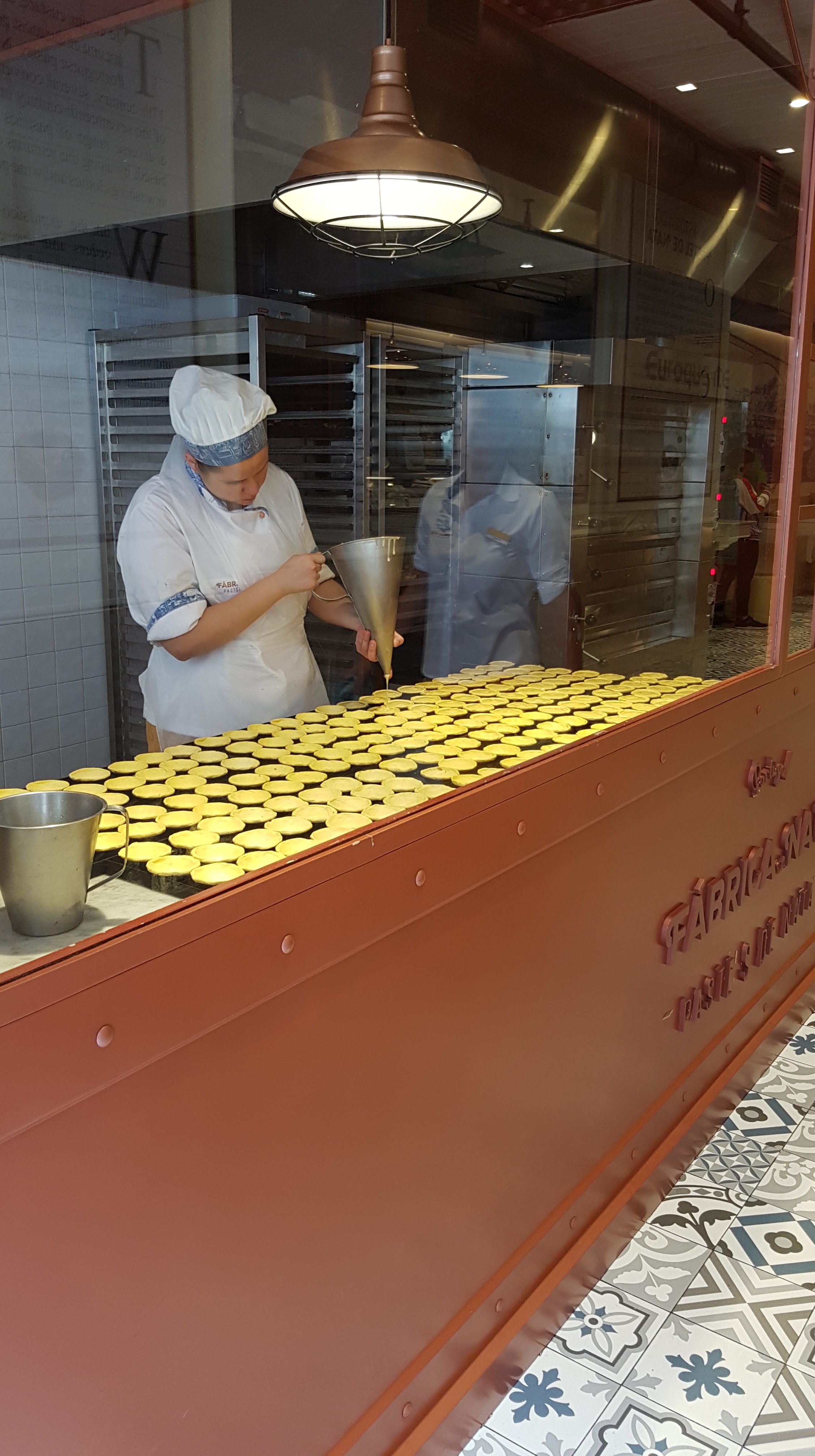
We left Porto this morning after a splendid week sight-seeing. The last thing we did was visit the world famous Majestic coffee house. It opened in 1923 and was, at the time, the place for society types to visit and be seen. Now its full of American, Korean and Japanese tourists and is wildly over priced. With that said, I thoroughly enjoyed my pot of english breakfast tea and a pastel de nata.
We travelled from Porto to Vila do Geres in the Peneda-Geres National Park. To get there we took a train followed by two buses. It took just over 3 hours. Lets talk public transport. I bought two train tickets, Porto to Braga. A distance of 50 kms (31 miles) and a one hour journey on a slow train. I paid €3.75 per ticket. The same ticket in the UK would cost €20. Finn’s 5+ hour bus ride from Porto to Santiago cost €9. Why can’t the UK provide public transport at the prices the Europeans enjoy?
The journey to Geres was a surprise. The scenery was beautiful as we climbed in to the mountains above the Cãvado river and reservoir. Perhaps I should have been expecting lovely scenery but i wasn’t.
It must be low season because Geres is not busy. A number of the bars and restaurants are not open and those that are have not got many customers.
Luckily the town has a small tourist information office that was open when we visited. Our luck got even better when the woman informed us there are a number of marked hiking trails that we can access from Geres during our 6 day stay in the National Park.
Trip Advisor came up trumps. We had a wonderful dinner at Lurdes Capella, a family restaurant that has been in the same family for 13 generations.
The time has flown by. We left Finisterre to collect our left luggage in Santiago en route to Vigo. I liked what I saw of Vigo but as we were there only 24 hour’s. While we were there I encouraged Sheila and Finn to climb up to ‘El Castro’, a tanquil park built on a hill in the centre of the city.
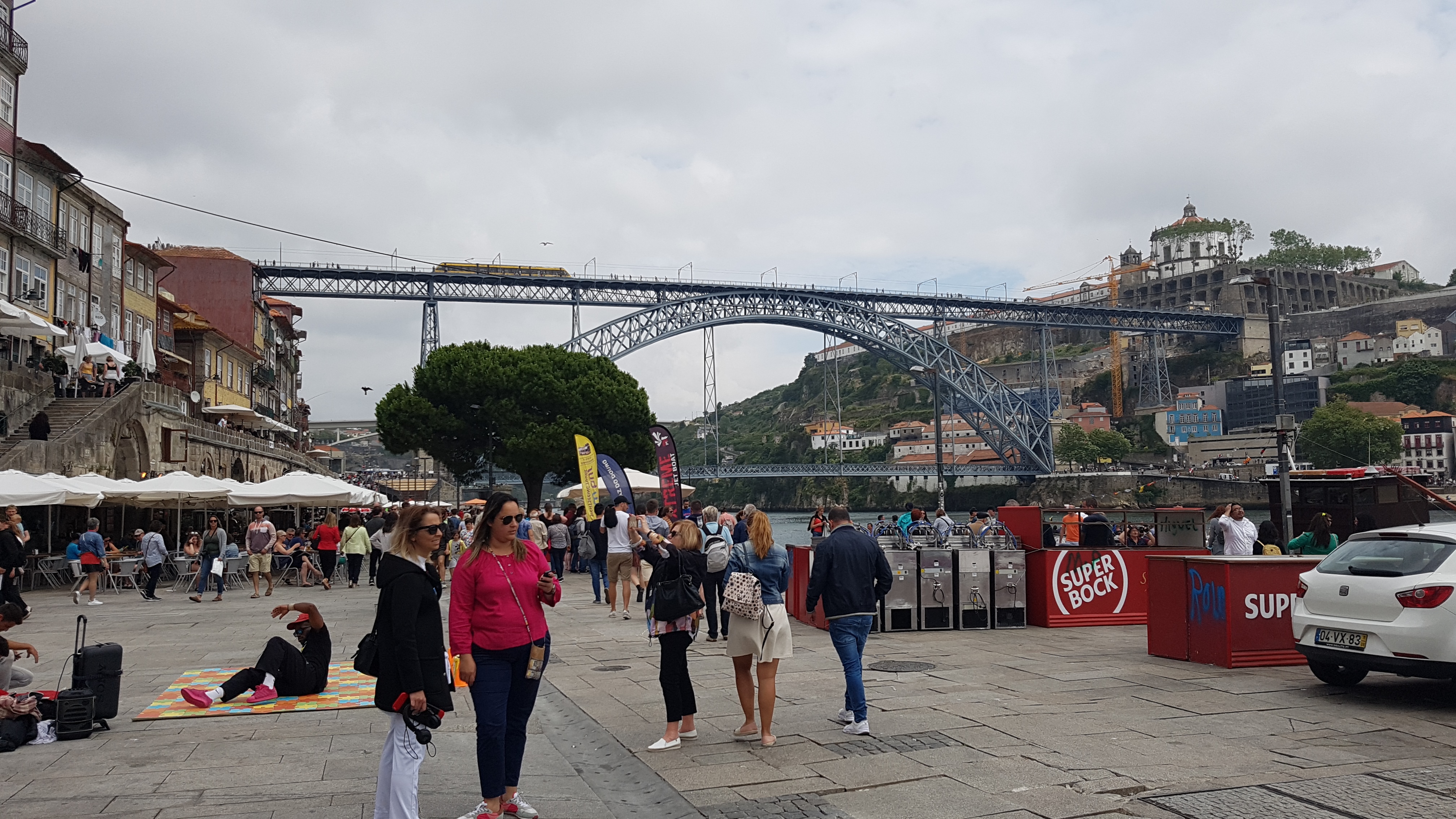
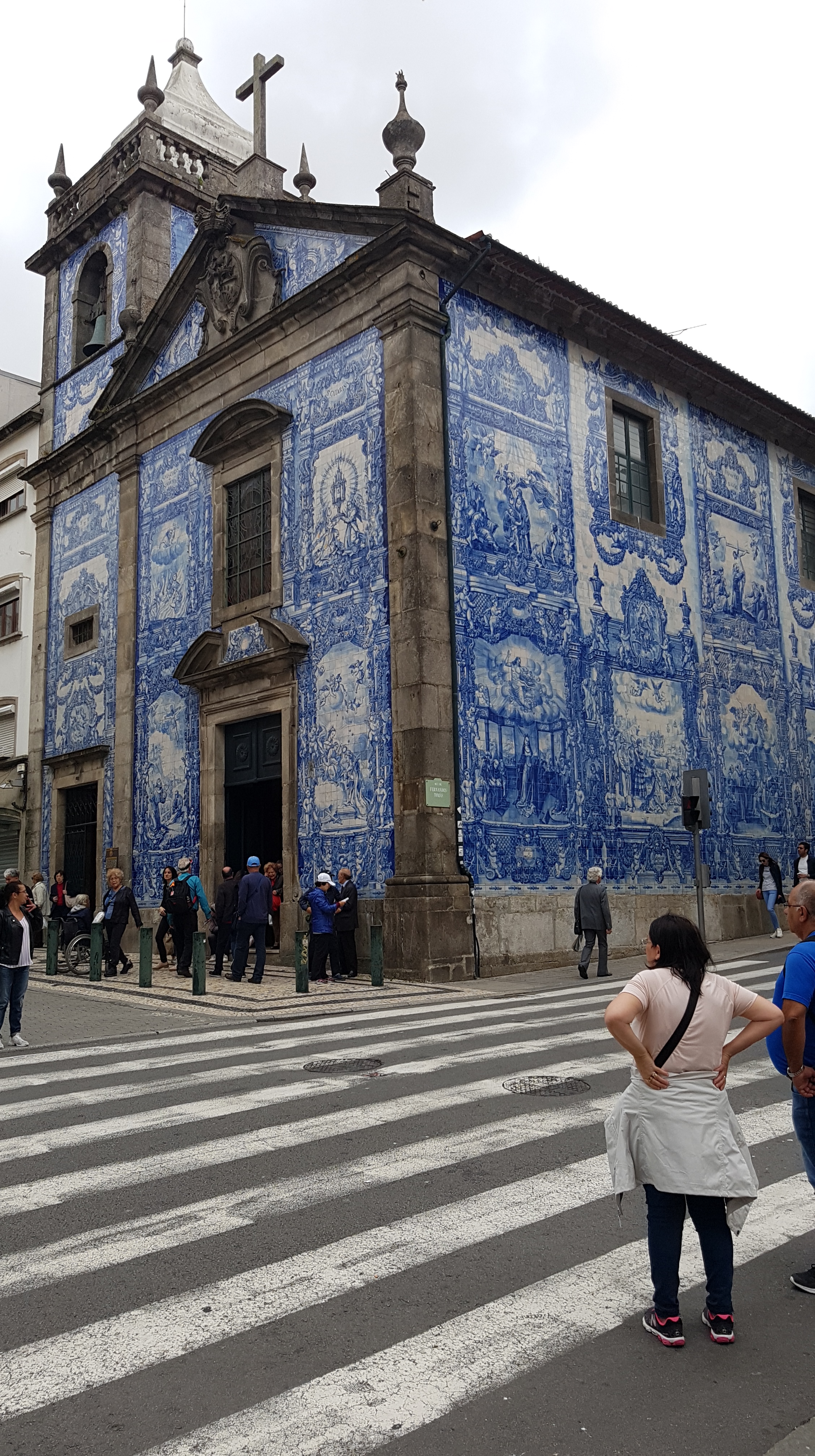
We took a bus to Porto having booked an Airbnb apartment for a 7 day stay. What a surprise Porto is. We arrived in the build-up to the annual festival of Sao Jao on 24 June, which happens to be my birthday It is the biggest annual festival in Porto and the city is literally packed with tourists. I don’t recall seeing more tourists in one place and that counts visits to Prague and London.
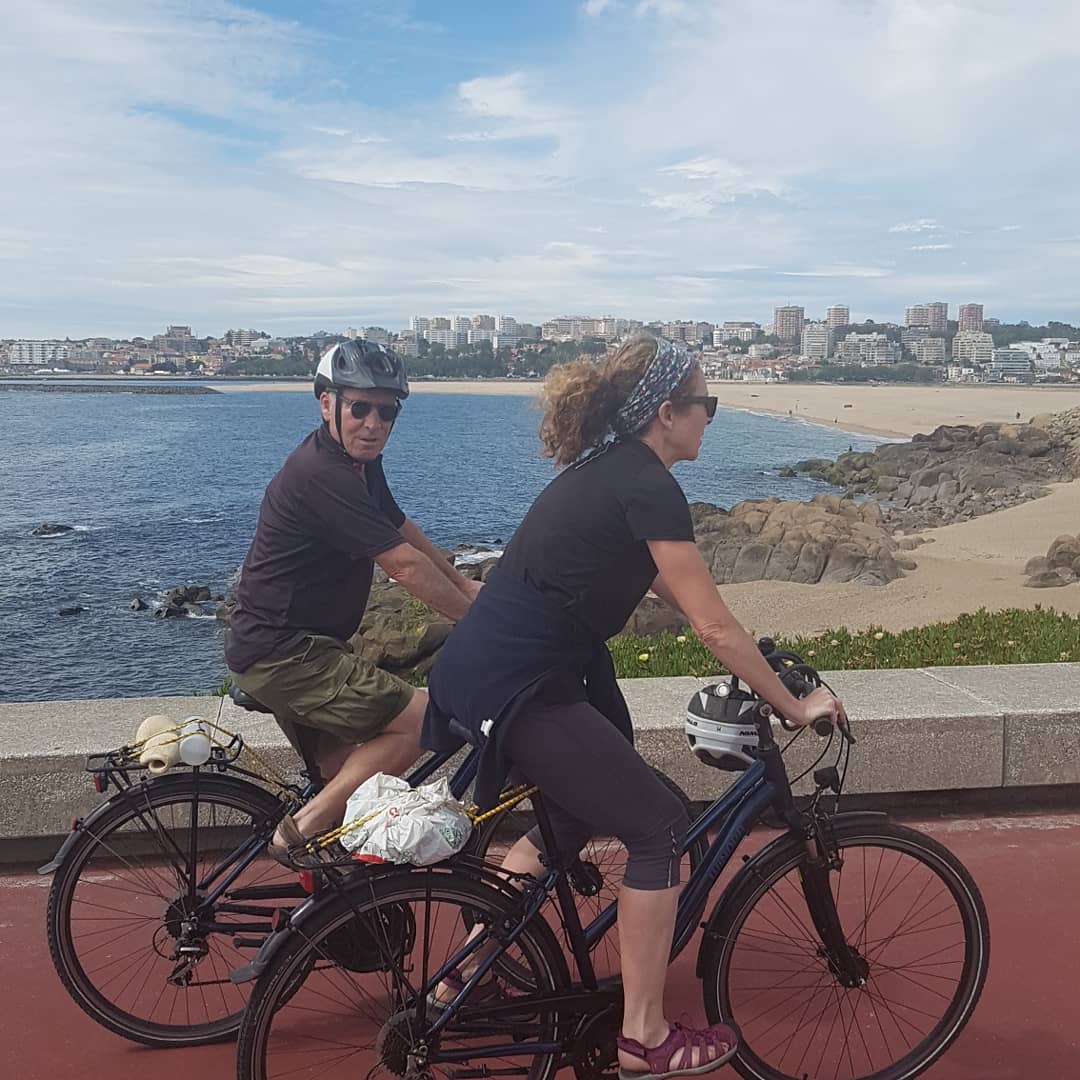
The weather has been kind to us. We have spent time walking around the city. It’s very hilly and yesterday we hired bikes for the day and were able to get about and see a bit more.
The food here is good and we’ve sampled Portos’ speciality grilled sardines. I’ve got to say its good having an apartment that allows us to cook for ourselves. Eating out is nice but I get bored with it day after day, week after week.
We are excited and a tad nervous about tonight’s party. The fireworks start at midnight over the iconic Ponte Luiz 1 (D. Luiz 1 bridge). After the firework display there is a massive street party. No-one goes to bed. The advice I was given was “if you don’t like tbe crowds, stay away from the riverside until 3am when it starts to thin-out a little.
Finn leaves us on 25th after two weeks to fly home. He received notification that he passed the first year of his Uni course. That’s a relief for us all. Now he has to organise himself jumping through all the necessary hoops to confirm his second year study in Amsterdam.
We have today booked accommodation in Geres for 6 days. Geres is in the Peneda-Geres National Park north east of Braga. It is Portugals only national park. The country has a number of natural parks but just the one National Park. We intend to do some easy hiking. By easy, I mean, low mileage.
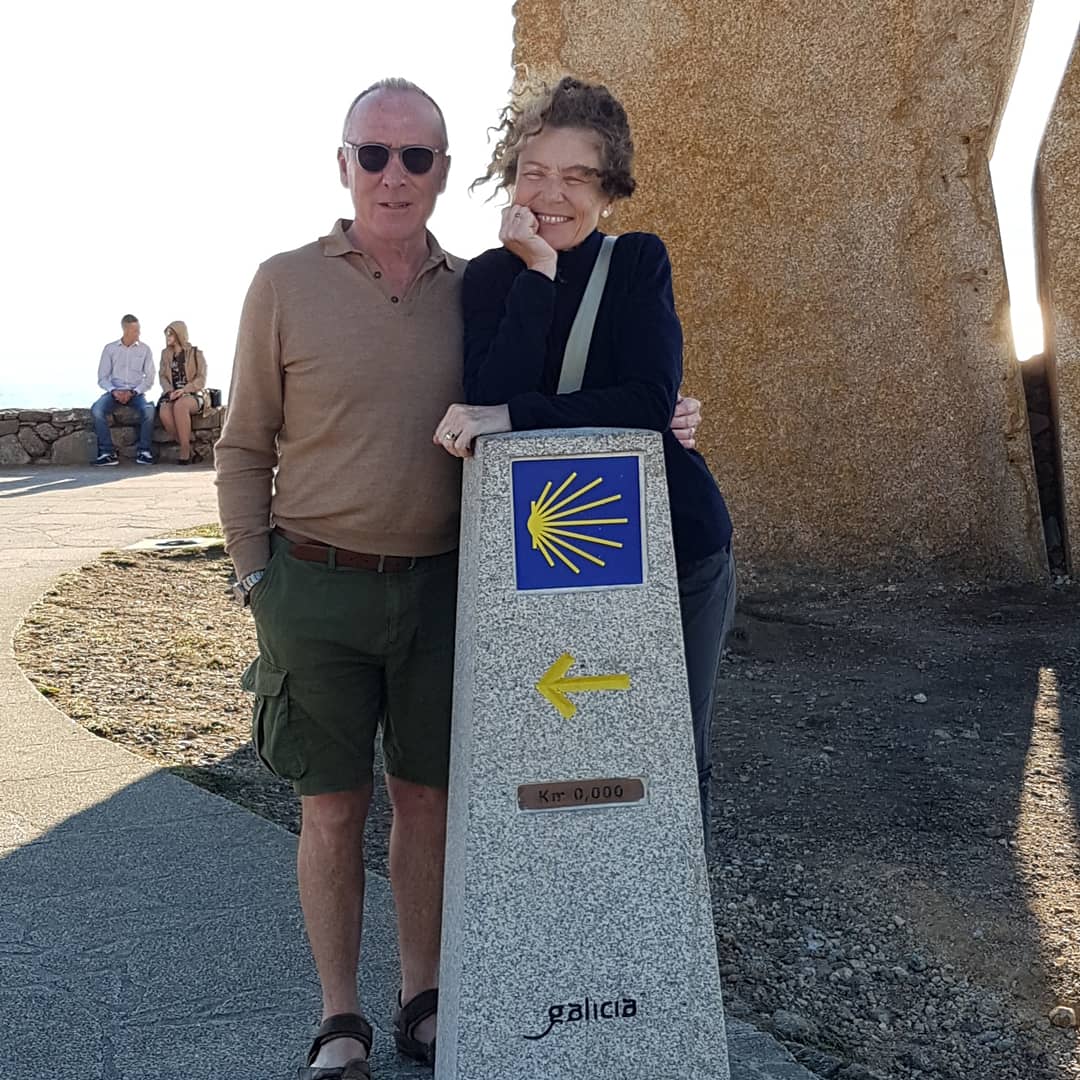
We walked in to Finisterre tired and with aching feet on Monday 18 June after a 41 day, 950 km pilgrimage. My first observation is that I was not aware, until a couple of days ago that the furthest point west is in fact 3 kms outside Finisterre. That in itself was a significant issue for people who had already walked 30+ kms that day. Because that was going to add an additional 6 kms to our walk to get out and back to our hotel.
We had debated whether to make the hike from Santiago to Finisterre a 4 or 5 day trip. The 4 day option was selected by a majority decision. That resulted in a 20 km hike, followed by 33 kms, then another 33 kms day and finally a 30 kms plus 6 kms. A grand total of 122 kms. That’s hard going for weary pilgrims. I was especially impressed with Finn for staying the course. I realise he is young and fit but you still need to be conditioned to cover those distances day after day.
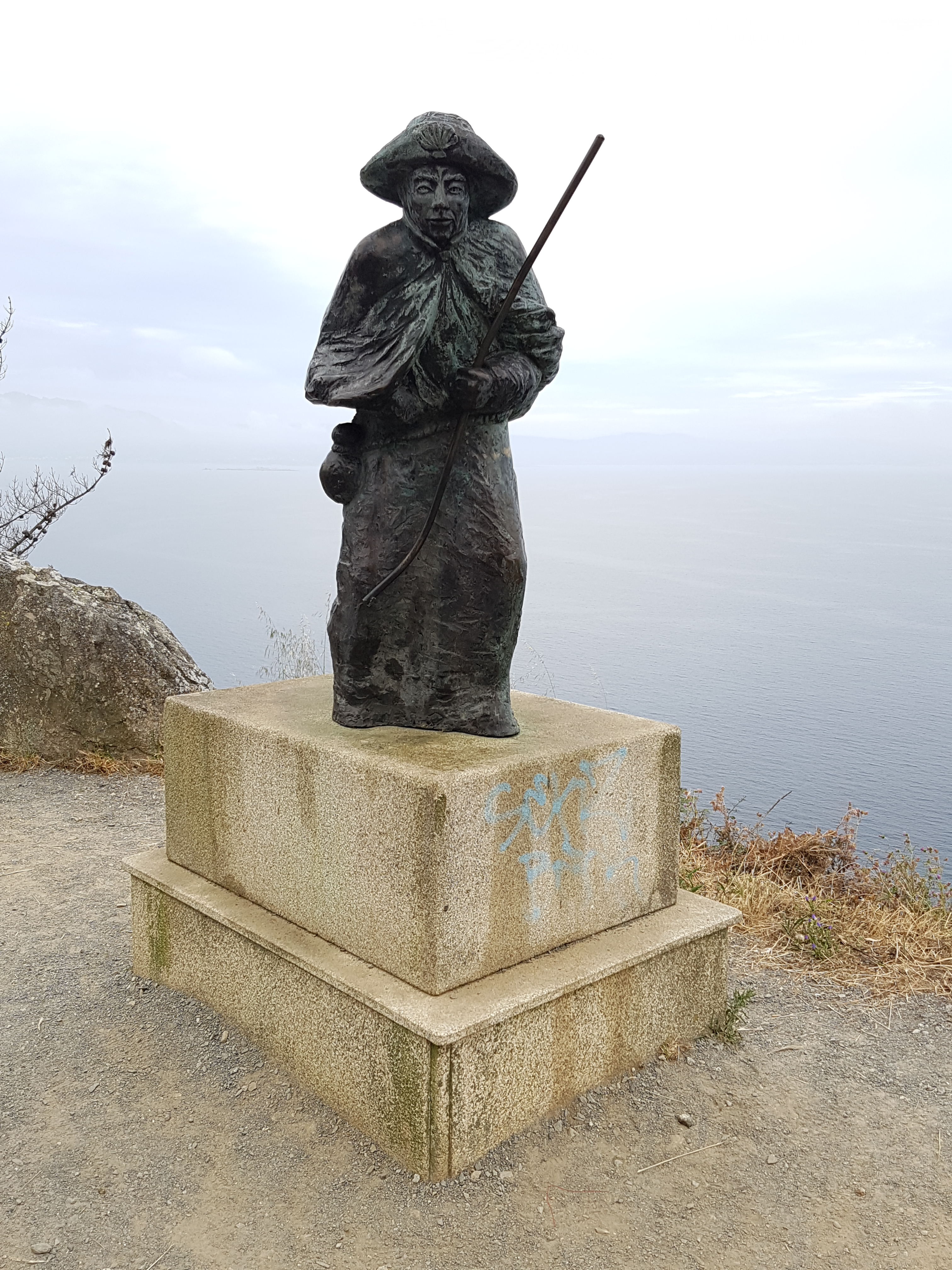
I am informed that the Romans named this coast Costa da Morte (the coast of death). They thought they had reached the end of the Earth when they arrived in Finisterre and saw the sun set on the Atlantic Ocean. Some believed that your soul followed the sun off the end of the Earth when you died.
People have been going to Finisterre for thousands of years to watch the sun set. Unfortunately, it was overcast on the day we were there. Whilst it was special to be there at sunset we did not witness an iconic sunset.
And so, with a mixture of emotions, among which, is relief that it’s over and a sense of satisfaction that we have managed to complete our pilgrimage, we’ve finished. Now, we’re off to Porto, via Vigo, for a little well earned R and R.
































 w
w




 Wandering Boomers